非接触式卡专用纸
CN → US| HS Code | Tariff Rate | Origin | Destination | Doc |
|---|---|---|---|---|
| 4823903100 | 35.0% | CN | US | Official Doc |
| 4823906700 | 35.0% | CN | US | Official Doc |
| 3926909989 | 22.8% | CN | US | Official Doc |
| 4811596000 | 35.0% | CN | US | Official Doc |
| 4811516000 | 35.0% | CN | US | Official Doc |
Product Images
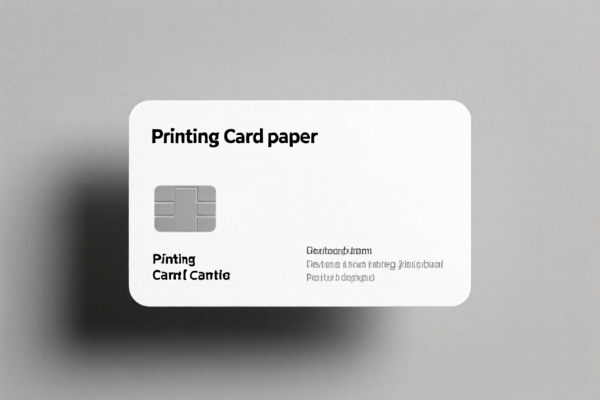

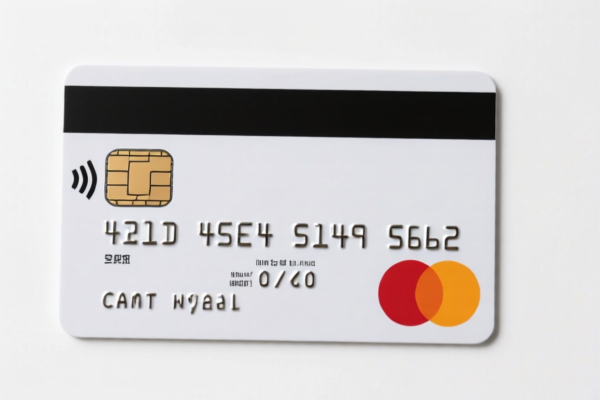
AI Analysis
📄 Non-Contact Card Special Paper (Smart Card Paper)
🌐 HS Code Classification & Customs Clearance Guide | 2026 Updated Tariff Analysis | Expert-Level Import Strategy
📌 One, Product Definition & Classification: What Exactly Is “Non-Contact Card Special Paper”?
Non-contact card special paper — also known as smart card paper, RFID-enabled paper, or contactless card substrate — is a high-performance, specially treated paper designed to function as the base material for non-contact smart cards used in access control, transportation, payment systems, and identification.
These cards are typically thin, flexible, and durable, with embedded RFID or NFC chips (or conductive ink traces) that allow wireless communication with readers. The paper substrate is not just a carrier — it is engineered to support surface coatings (e.g., conductive ink, antenna patterns), printability, and signal transmission integrity.
⚠️ Critical Distinction:
- If the paper is only a blank sheet of specialty paper (no chip, no antenna, no functional coating) → Classify by material & shape
- If the paper is already processed with conductive ink, antenna, or embedded chip → May fall under electronics (e.g., 8542.39.00.00), but only if functional
- In this case, we assume raw or semi-finished specialty paper used for non-contact cards → Classify as paper product
📦 Two, HS Code Classification Details (2026 Updated Tariff Authority)
| HS Code | Product Description | Applicable Use Case | Material/Shape Match? | Functional Component? |
|---|---|---|---|---|
4823.90.31.00 |
Other special paper, not otherwise specified, used for cards or labels | Non-contact card substrates, cut or shaped for use | ✅ Yes (paper material) | ❌ No (only base material) |
4823.90.67.00 |
Other special paper, cut or shaped into specific forms | Cards, tags, ID cards, RFID labels | ✅ Yes (paper + shaped) | ❌ No (no electronics) |
3926.90.99.89 |
Other articles of other materials, not specified | Paper-based non-plastic items | ✅ Yes (non-plastic) | ❌ No (no plastic) |
4811.59.60.00 |
Other paper, coated or printed, for special purposes | Paper with surface treatments (e.g., for RFID) | ✅ Yes (coated paper) | ❌ No (no functional chip) |
4811.51.60.00 |
Paper, specially treated or processed, for specific uses | Smart card base paper with special coatings | ✅ Yes (treated paper) | ❌ No (no active electronics) |
🔍 Key Insight:
All five codes are valid for non-contact card special paper, depending on form, treatment, and processing level.
The correct choice depends on whether the paper is cut, coated, or shaped — not just its name.
💰 Three, 2026 Latest Tariff Breakdown (With Full Tax Clause Explanation)
✅ Applicable Country: United States (US)
✅ Origin: China (CN)
✅ Effective Date: November 10, 2025 (including subsequent imports)
🎯 1. 4823.90.31.00 — Special Paper for Cards (Unspecified)
| Item | Detail |
|---|---|
| Base Duty | 0.0% (ad valorem) |
| USITC Section 301 Tariff | +25.0% (from USTR List 3, China-specific) |
| IEEPA Section 102 Tariff | +10.0% (under International Emergency Economic Powers Act) |
| Total Effective Rate | 35.0% |
| Tax Calculation | CIF Value × 35.0% |
| De Minimis Exemption? | ❌ No (denied under 19 CFR 152.22) |
| Legal Basis Path | IEEPA:9903.01.25 → IEEPA:9903.01.24 → USITC:4823.90.31.00 → FOOTNOTE:9903.88.01 |
📌 Explanation:
- USITC 25% = U.S. Trade Representative’s Section 301 retaliation against Chinese goods
- IEEPA 10% = Emergency economic powers law targeting China/Hong Kong
- Combined = 35% — Very high for a paper product
- No de minimis means even small shipments (under $800) are fully taxed
🎯 2. 4823.90.67.00 — Special Paper, Cut or Shaped
| Item | Detail |
|---|---|
| Base Duty | 0.0% |
| USITC Section 301 Tariff | +25.0% |
| IEEPA Section 102 Tariff | +10.0% |
| Total Effective Rate | 35.0% |
| Tax Calculation | CIF × 35.0% |
| De Minimis Exemption? | ❌ No |
| Legal Basis Path | IEEPA:9903.01.25 → IEEPA:9903.01.24 → USITC:4823.90.67.00 → FOOTNOTE:9903.88.01 |
📌 Note:
- "Cut or shaped" is the key — if your paper is already die-cut into card shapes (e.g., 85.6×54 mm), this code applies
- Even if it’s just pre-cut, 35% applies — no reduction
- No difference in tariff from4823.90.31.00— form matters more than function
🎯 3. 3926.90.99.89 — Other Articles of Other Materials
| Item | Detail |
|---|---|
| Base Duty | 5.3% |
| USITC Section 301 Tariff | +7.5% |
| IEEPA Section 102 Tariff | +10.0% |
| Total Effective Rate | 22.8% |
| Tax Calculation | CIF × 22.8% |
| De Minimis Exemption? | ❌ No |
| Legal Basis Path | IEEPA:9903.01.25 → IEEPA:9903.01.24 → USITC:3926.90.99.89 → FOOTNOTE:9903.88.01 |
📌 Why This Code?
- Used when the product is not plastic, but not clearly paper either
- Applies if the paper is coated with non-paper materials (e.g., metalized film, polymer layer)
- Lower rate (22.8%) than paper codes — if applicable
- Only use if material is not purely paper — otherwise, misclassification risk
🎯 4. 4811.59.60.00 — Coated or Printed Paper for Special Purposes
| Item | Detail |
|---|---|
| Base Duty | 0.0% |
| USITC Section 301 Tariff | +25.0% |
| IEEPA Section 102 Tariff | +10.0% |
| Total Effective Rate | 35.0% |
| Tax Calculation | CIF × 35.0% |
| De Minimis Exemption? | ❌ No |
| Legal Basis Path | IEEPA:9903.01.25 → IEEPA:9903.01.24 → USITC:4811.59.60.00 → FOOTNOTE:9903.88.01 |
📌 When to Use:
- If the paper has coating (e.g., conductive ink, dielectric layer)
- If it’s printed with RFID antenna patterns
- Even if no chip, coating = 35% tariff
- Best fit for functional smart card substrates
🎯 5. 4811.51.60.00 — Specially Treated Paper for Specific Uses
| Item | Detail |
|---|---|
| Base Duty | 0.0% |
| USITC Section 301 Tariff | +25.0% |
| IEEPA Section 102 Tariff | +10.0% |
| Total Effective Rate | 35.0% |
| Tax Calculation | CIF × 35.0% |
| De Minimis Exemption? | ❌ No |
| Legal Basis Path | IEEPA:9903.01.25 → IEEPA:9903.01.24 → USITC:4811.51.60.00 → FOOTNOTE:9903.88.01 |
📌 When to Use:
- If the paper is chemically treated, laminated, or engineered for signal transmission
- Common for NFC-enabled paper cards
- Same 35% rate as other paper codes — no discount
🛠️ Four, Customs Clearance Best Practices (Pro Tips to Avoid Penalties)
✅ 1. Required Documentation (Must-Have Checklist)
| Document | Required? | Notes |
|---|---|---|
| ✅ Product Specification Sheet | ✔️ | Include thickness, coating type, size, weight, substrate material |
| ✅ Technical Drawing / Cut Pattern | ✔️ | Show if paper is pre-cut into card shapes |
| ✅ High-Res Product Photos | ✔️ | Show both sides, edges, and any coating/antenna |
| ✅ Third-Party Test Report | ✔️ | RoHS, FCC, CE (if applicable) |
| ✅ Commercial Invoice | ✔️ | Clearly state: “Special Paper for Non-Contact Cards” |
| ✅ Certificate of Origin (CO) | ✔️ | Required for tariff eligibility |
| ✅ Packing List | ✔️ | Specify quantity per carton, total weight |
✅ 2.申报技巧(Key Rules of Thumb)
🔥 “Shape matters, coating matters, chip doesn’t — but paper does!”
| Scenario | Correct HS Code | Wrong Code | Risk |
|---|---|---|---|
| Blank specialty paper, uncut | 4823.90.31.00 |
4811.51.60.00 |
Lower rate → underpayment risk |
| Paper cut into card shape | 4823.90.67.00 |
4823.90.31.00 |
Under-declaration → penalties |
| Paper coated with conductive ink | 4811.59.60.00 or 4811.51.60.00 |
4823.90.31.00 |
Misclassification → audit |
| Paper with embedded chip | ❌ Not paper → Reclassify as electronics | 4811.51.60.00 |
Severe penalties |
| Paper with polymer layer | 3926.90.99.89 |
4823.90.31.00 |
Lower tariff = better |
✅ 3. Special Cases & Solutions
| Situation | Recommended Action |
|---|---|
| Paper is coated but no chip | Use 4811.59.60.00 or 4811.51.60.00 → 35% |
| Paper is pre-cut into cards | Use 4823.90.67.00 → 35% |
| Paper has metalized layer or film | Use 3926.90.99.89 → 22.8% |
| Product is used in RFID tags, not cards | Still use same codes — non-contact card paper is broad |
| Shipments under $800 (de minimis) | ❌ No exemption — still taxed at 35% |
🌍 Five, Global Market Comparison (2026)
| Country | Recommended HS Code | Tariff | Certification | Notes |
|---|---|---|---|---|
| 🇺🇸 USA | 4823.90.31.00 / 4811.51.60.00 |
35.0% | FCC, RoHS | No de minimis |
| 🇨🇳 China | 4823.90.31.00 |
5% | CCC | No extra tariffs |
| 🇪🇺 EU | 4823.90.31.00 |
0% | CE | No extra tariffs |
| 🇦🇺 Australia | 4823.90.31.00 |
5% | RCM | No extra tariffs |
| 🇯🇵 Japan | 4823.90.31.00 |
0% | PSE | No extra tariffs |
📌 Takeaway:
- USA is the only market with 35% tariff on this product
- China, EU, Australia, Japan are much more favorable
- Consider shifting production or distribution to avoid U.S. high tariffs
📌 Six, Common Mistakes & How to Avoid Them
❌ Mistake 1: Using 4823.90.31.00 for pre-cut cards
👉 Result: Under-declaration → penalties, delays, or seizure
❌ Mistake 2: Using 3926.90.99.89 for pure paper
👉 Result: Wrong code → higher risk of audit
❌ Mistake 3: Not disclosing coating or treatment
👉 Result: Misclassification → reassessment + fines
❌ Mistake 4: Assuming de minimis applies
👉 Result: Full 35% tax on $500 shipment — no relief
✅ Correct Declaration Example:
“Special Paper for Non-Contact Cards, 85.6×54 mm, pre-cut, coated with conductive ink, no embedded chip, for RFID applications, 1000 pcs per carton”
🎯 Seven, Final Verdict: Precision Pays Off
🎯 Remember the Rule:
🔹 “If it’s paper, shape it, coat it — but don’t embed a chip!”
🔹 “35% tariff applies if it’s paper for non-contact cards — no exceptions.”
🔹 “Only3926.90.99.89gives 22.8% — but only if not pure paper.”
📌 Pro Tip:
📞 Apply for an Advance Ruling (Pre-Clearance) from U.S. Customs before shipping
🚀 Avoid surprises, reduce risk, and lock in the correct HS Code
📣 Act Now:
📞 Contact a licensed customs broker + provide product photos + specs
📊 Request HS Code pre-ruling for your non-contact card special paper
💼 Ensure smooth, fast, and cost-effective U.S. entry — every time!
✨ Smart Paper, Smarter Tariffs — Classify Right, Pay Less, Ship Faster!
💼 Your product’s success starts with the right HS Code.
Customer Reviews
About HS Code Classification
The Harmonized System (HS) is an internationally standardized nomenclature developed by the World Customs Organization (WCO) to classify traded products. Over 200 countries use the HS system as the basis for customs tariffs, trade statistics, and import/export regulations.
Each HS code follows a hierarchical structure:
- Chapter (2 digits) — Broad category of goods (e.g., Chapter 84: Machinery and Mechanical Appliances)
- Heading (4 digits) — More specific grouping within the chapter
- Subheading (6 digits) — Internationally standardized breakdown, used by all WCO member countries
- National subdivisions (8-10 digits) — Country-specific extensions for further classification, such as US HTSUS 10-digit codes
Correct HS code classification is essential for smooth customs clearance, accurate duty payment, and compliance with trade regulations. Misclassification can lead to customs delays, overpayment of duties, or penalties.
When importing from CN to US, the applicable tariff rates may include:
- Most-Favored-Nation (MFN) rate — The standard duty rate applied to WTO members
- General rate — Applied to countries without trade agreements
- Trade remedy duties — Additional tariffs such as Section 301 (anti-dumping), Section 232 (national security), or countervailing duties
The information provided on this page is for reference purposes only. For official classification, please consult with your local customs authority or a licensed customs broker.