非石油基制动液
CN → US| HS Code | Tariff Rate | Origin | Destination | Doc |
|---|---|---|---|---|
| 3820000000 | 24.0% | CN | US | Official Doc |
Product Images
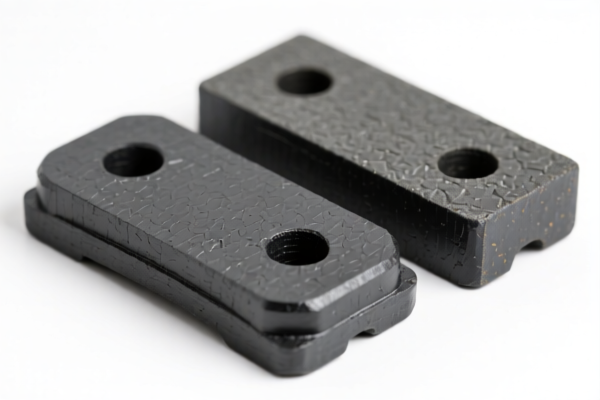
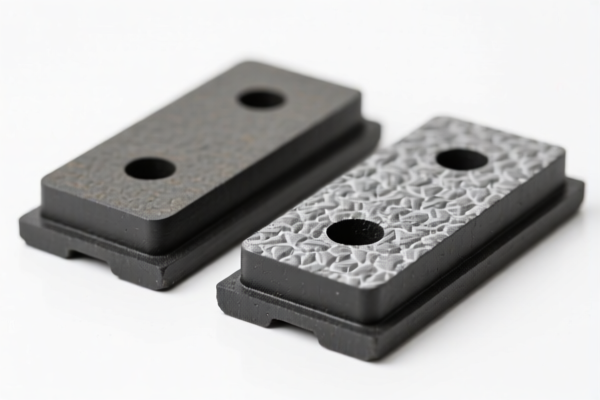
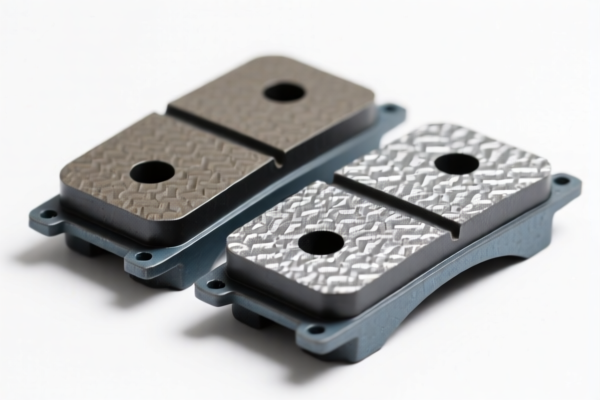
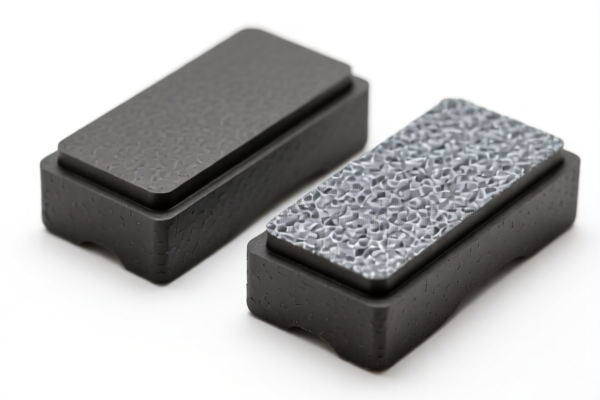
AI Analysis
🚗 Non-Petroleum-Based Brake Fluids: HS Code Classification & U.S. Customs Clearance Strategy (2026 Update)
🌐 HS Code Reference & Clearance Guide | 2026 Latest Tariff Rates | Professional Customs Strategy
📌 I. Product Definition & Classification: What is "Non-Petroleum-Based Brake Fluid"?
Non-petroleum-based brake fluid refers to liquid formulations used in hydraulic braking systems that do not derive their base composition from petroleum oils (often containing ≥70% weight percentage of petroleum). These fluids are typically synthetic, glycol-ether based, or silicone-based.
In international trade, the classification depends on two key factors: 1. Primary Function: Is it primarily a brake fluid (hydraulic fluid for braking), a general hydraulic fluid, an anti-freeze/defrosting agent, or a general lubricant? 2. Chemical Composition: Does it meet the specific exclusions for "petroleum oil content" under specific HS chapters?
⚠️ Key Distinction:
- If defined as a specific brake fluid/hydraulic brake fluid → Look to HS 3819.
- If defined as a chemical preparation not elsewhere specified or a mixture → Look to HS 3824.
- If defined as an anti-freeze/defrosting preparation → Look to HS 3820.
- If defined as a lubricant excluding petroleum >70% → Look to HS 3403.
📦 II. HS Code Classification Details (2026 Latest Tariff Authority对照)
| HS Code | Product Description | Application Scenario | Key Classification Logic |
|---|---|---|---|
3819.00.00.10 |
Hydraulic brake fluids; brake fluids containing petroleum oil <70% by weight | Non-petroleum-based brake fluids; matches "hydraulic brake fluid" use case. Material restrictions on petroleum content do not conflict. | ✅ Primary Choice: Specific function (brake) + Material compliance. |
3819.00.00.90 |
Other hydraulic brake fluids; meets material limit of ≤70% petroleum oil weight | Non-petroleum-based brake fluids; complies with "no petroleum oil or ≤70% by weight" material restriction. Use is hydraulic brake fluid. | ✅ Valid Alternative: Same function, broad category. |
3820.00.00.00 |
Non-petroleum-based anti-freezing and de-icing preparations; liquid preparations within this category | Non-petroleum-based brake fluid classified under "liquid preparations for anti-freezing and de-icing." | ⚠️ Risk: Only if product is explicitly marketed/tested as anti-freeze/defrosting for braking systems. |
3824.99.93.30 |
Non-petroleum-based brake oil; chemical preparation. Non-petroleum attribute does not conflict with chemical mixture definition. | Chemical preparations; non-petroleum property is a chemical characteristic, not a functional classification. | ⚠️ Generic: Used if specific brake fluid classification fails. "Chemical preparation" bucket. |
3403.99.00.00 |
Non-petroleum-based preparations; excludes petroleum oil ≥70% by weight. Use: Lubricating/functional oil preparations. | Lubricants/functional oils; excludes high petroleum content. Used for lubrication/functional purposes. | ⚠️ Lubricant Category: Only if classified as a lubricant rather than a functional hydraulic fluid. |
🔍 Critical Reminder:
- HS 3819 is the most precise classification for brake fluids, as it specifically covers hydraulic brake fluids.
- HS 3824 is a "catch-all" for chemical mixtures not specified elsewhere. Use only if 3819 is deemed inappropriate by customs.
- HS 3820 is risky unless the product is primarily an anti-freeze agent (e.g., for winter de-icing of brakes), not a standard operating brake fluid.
- HS 3403 is for lubricants. Brake fluids are hydraulic media, not just lubricants, so this is generally incorrect for standard brake fluids.
💰 III. 2026 Latest Tariff Rate Breakdown (Including Surtaxes & Policy Add-ons)
✅ Applicable Country: United States (US)
✅ Origin: China (CN)
✅ Effective Date: Post-November 2025 (Current 2026 Tariff Regime)
🎯 1. 3819.00.00.10 & 3819.00.00.90 —— Hydraulic Brake Fluids (Recommended)
| Item | Content |
|---|---|
| Basic Tariff | 6.5% (ad valorem) |
| Section 301 Surtax | +25% (Based on USITC 301 Action List) |
| Section 122 Tariff | +10% (U.S. Duties on Imports from China) |
| Total Tariff Rate | 41.5% |
| Tax Calculation | CIF Value × 41.5% |
| De Minimis Exemption | ❌ Not Eligible (High-value chemical/hydraulic fluid) |
| Legal Basis Path | Section 122: 10% → Section 301: 25% → HTSUS: 3819.00.00.10/90 → Base Rate: 6.5% |
📌 Explanation:
- Section 301 (25%): Standard surtax on many Chinese industrial chemicals and automotive fluids.
- Section 122 (10%): Additional tariff imposed on imports from China to protect national security/economic interests.
- Base Rate (6.5%): Standard MFN rate for hydraulic brake fluids.
- Total: 41.5% is a high burden. Must be budgeted carefully.
🎯 2. 3820.00.00.00 —— Anti-freezing & De-icing Preparations
| Item | Content |
|---|---|
| Basic Tariff | 6.5% |
| Section 301 Surtax | +7.5% (Note: Lower 301 rate for this specific subheading) |
| Section 122 Tariff | +10% |
| Total Tariff Rate | 24.0% |
| Tax Calculation | CIF Value × 24.0% |
| De Minimis Exemption | ❌ Not Eligible |
| Legal Basis Path | Section 122: 10% → Section 301: 7.5% → HTSUS: 3820.00.00.00 → Base Rate: 6.5% |
📌 Note:
- This rate is significantly lower (24%) than the brake fluid rate (41.5%).
- However, it is only applicable if the product is officially classified as an anti-freeze/defrosting preparation.
- Risk: If customs determines the product is primarily a brake fluid (hydraulic function) and not an anti-freeze, this classification may be rejected, leading to audits, back-taxes, and penalties.
🎯 3. 3824.99.93.30 —— Other Chemical Preparations
| Item | Content |
|---|---|
| Basic Tariff | 5.0% |
| Section 301 Surtax | +25% |
| Section 122 Tariff | +10% |
| Total Tariff Rate | 40.0% |
| Tax Calculation | CIF Value × 40.0% |
| De Minimis Exemption | ❌ Not Eligible |
| Legal Basis Path | Section 122: 10% → Section 301: 25% → HTSUS: 3824.99.93.30 → Base Rate: 5.0% |
📌 Note:
- 40.0% is slightly lower than the 41.5% for 3819.
- This classification treats the product as a generic chemical mixture.
- Risk: Customs may argue that "brake fluid" is specifically covered under 3819, making this classification incorrect.
🎯 4. 3403.99.00.00 —— Lubricating Preparations
| Item | Content |
|---|---|
| Basic Tariff | 6.5% |
| Section 301 Surtax | +25% |
| Section 122 Tariff | +10% |
| Total Tariff Rate | 41.5% |
| Tax Calculation | CIF Value × 41.5% |
| De Minimis Exemption | ❌ Not Eligible |
| Legal Basis Path | Section 122: 10% → Section 301: 25% → HTSUS: 3403.99.00.00 → Base Rate: 6.5% |
📌 Note:
- 41.5% is the same as 3819.
- High Risk: Brake fluids are hydraulic fluids, not primarily lubricants. Misclassification as a lubricant is a common customs error that can lead to penalties.
🛠️ IV. Customs Clearance Practical Advice (Avoiding Pitfalls)
✅ 1. Document Checklist (Essential)
| Document | Required | Description |
|---|---|---|
| ✅ Product Specification Sheet | ✔️ | Must state: "Non-Petroleum-Based," "Hydraulic Brake Fluid," Viscosity, Flash Point, Boiling Point. |
| ✅ Chemical Composition Report | ✔️ | Explicitly list components and confirm petroleum oil content <70% (if claiming 3819/3403) or non-petroleum base. |
| ✅ Product Photos (Label & Packaging) | ✔️ | Clear view of "Brake Fluid," "DOT 3/4/5.1" labels, warning symbols. |
| ✅ Third-Party Test Report | ✔️ | DOT compliance, ISO standards, or ASTM tests proving it is a brake fluid. |
| ✅ Commercial Invoice | ✔️ | Must accurately describe as "Non-Petroleum Based Hydraulic Brake Fluid." Avoid vague terms like "Chemical Liquid." |
| ✅ Certificate of Origin (CO) | ✔️ | If not China-origin, may qualify for different rates. |
| ✅ Packing List | ✔️ | Detail net/gross weight, volume, and quantity. |
✅ 2. Classification Strategy & Tips
🔥 "Function First, Composition Second, Avoid Ambiguity!"
| Scenario | Correct Declaration | Incorrect Practice |
|---|---|---|
| Standard Non-Petroleum Brake Fluid | 3819.00.00.10 or .90 (Total: 41.5%) |
Using 3820 (Anti-freeze) without proof → Audit Risk |
| Product marketed as "Winter Brake Fluid" with anti-freeze properties | 3820.00.00.00 (Total: 24.0%) |
Using 3819 when anti-freeze is primary function → Missed Savings |
| Generic Chemical Mixture not meeting 3819 specs | 3824.99.93.30 (Total: 40.0%) |
Using 3403 (Lubricant) for brake fluid → Penalty Risk |
| High petroleum content (>70%) | Not Non-Petroleum → Different HS Code | Mislabeling as "Non-Petroleum" → Fraud Risk |
📌 Key Tip:
- If you can prove the primary function is anti-freezing/de-icing (e.g., for cold-weather braking systems), HS 3820 offers a 17.5% savings (24% vs 41.5%).
- However, for standard brake fluids, HS 3819 is the safest and most accurate classification.
- Do not use HS 3403 unless the product is explicitly a lubricant additive, not a hydraulic fluid.
✅ 3. Special Circumstances Handling
| Situation | Handling Advice |
|---|---|
| OEM Brake Fluid | Provide customer purchase order and technical data sheet to prove function. |
| Blended Fluids | If petroleum content is exactly 70%, ensure documentation proves <70% to qualify for 3819. |
| Anti-Freeze + Brake Fluid Hybrid | Provide test reports showing performance as both. If anti-freeze is primary, use 3820. |
| Military/Specialty Use | If used in specialized hydraulic systems, clarify function. May still fall under 3819. |
🌍 V. Global Market Comparison (2026 Latest)
| Country/Region | Recommended HS Code | Tariff Rate (China Origin) | Certification Requirements | Notes |
|---|---|---|---|---|
| 🇺🇸 USA | 3819.00.00.10 |
41.5% | DOT Compliance, EPA (if applicable) | Highest tariff due to Section 301 + 122. |
| 🇺🇸 USA | 3820.00.00.00 |
24.0% | DOT Compliance | Only if classified as anti-freeze. |
| 🇨🇳 China | 3819.00.00.10 |
~6.5% (Import Duty) | CCC (if applicable), GB Standards | No Section 301/122. |
| 🇪🇺 EU | 3819.00.00.00 |
0-6.5% | ECE R49, DOT Compliance | No Section 301/122. Lower base rates. |
| 🇬🇧 UK | 3819.00.00.00 |
0-6.5% | UKCA, DOT Compliance | Post-Brexit rules apply. |
| 🇯🇵 Japan | 3819.00.00.00 |
~0-6% | JASO, DOT Compliance | Low tariffs, no Section 301/122. |
📌 Conclusion:
- USA is the most expensive market due to Section 301 (25%) + Section 122 (10%).
- EU/UK/Japan have significantly lower tariffs (0-6.5%) and no surtaxes.
- Strategy: If targeting USA, consider HS 3820 if product qualifies, or optimize supply chain to avoid China origin for tax benefits.
📌 VI. Common Errors & Pitfalls (Lessons Learned)
❌ Error 1: Classifying standard brake fluid as 3820 (Anti-freeze) without proof.
👉 Consequence: Customs audit, back-taxes (41.5% vs 24%), fines.
❌ Error 2: Using 3403 (Lubricant) for brake fluid.
👉 Consequence: Misclassification penalty, as brake fluid is a hydraulic fluid, not a lubricant.
❌ Error 3: Ignoring petroleum content limits.
👉 Consequence: If petroleum content is ≥70%, it does not qualify for "non-petroleum" HS codes under 3819/3403. Must use different classification (e.g., petroleum-based brake fluid).
❌ Error 4: Vague Invoice Description ("Chemical Liquid").
👉 Consequence: Customs delays, request for additional documentation, potential rejection.
✅ Correct Practice:
"Non-Petroleum-Based Hydraulic Brake Fluid, DOT 4 Compliant, Petroleum Oil Content <70%, Chemical Composition: [List Key Ingredients]"
🎯 VII. Conclusion: Precision in Classification Saves Money!
🎯 Key Takeaways:
🔹 For Standard Brake Fluid: Use
3819(41.5% Total Rate).
🔹 For Anti-Freeze Brake Fluid: Use3820(24.0% Total Rate) only with proof.
🔹 Avoid3403and3824unless necessary.
🔹 USA Tariffs are High: Plan for 41.5% unless you qualify for3820.
🔹 Documentation is Key: Provide clear technical specs to justify classification.
📌 Pro Tip:
If your product is originating from Vietnam, Mexico, or Thailand, you may avoid Section 301/122 tariffs entirely.
Consider supply chain optimization to shift origin to non-China countries for USA market access.
📣 Immediate Action:
📞 Contact a licensed customs broker.
📄 Provide full technical specifications.
🚀 Apply for a Binding Tariff Information (BTI) or Advance Ruling if possible to secure classification certainty.
✨ Professional Customs Clearance Starts with Accurate Classification!
💼 Every Percent Saved is Pure Profit!
Customer Reviews
About HS Code Classification
The Harmonized System (HS) is an internationally standardized nomenclature developed by the World Customs Organization (WCO) to classify traded products. Over 200 countries use the HS system as the basis for customs tariffs, trade statistics, and import/export regulations.
Each HS code follows a hierarchical structure:
- Chapter (2 digits) — Broad category of goods (e.g., Chapter 84: Machinery and Mechanical Appliances)
- Heading (4 digits) — More specific grouping within the chapter
- Subheading (6 digits) — Internationally standardized breakdown, used by all WCO member countries
- National subdivisions (8-10 digits) — Country-specific extensions for further classification, such as US HTSUS 10-digit codes
Correct HS code classification is essential for smooth customs clearance, accurate duty payment, and compliance with trade regulations. Misclassification can lead to customs delays, overpayment of duties, or penalties.
When importing from CN to US, the applicable tariff rates may include:
- Most-Favored-Nation (MFN) rate — The standard duty rate applied to WTO members
- General rate — Applied to countries without trade agreements
- Trade remedy duties — Additional tariffs such as Section 301 (anti-dumping), Section 232 (national security), or countervailing duties
The information provided on this page is for reference purposes only. For official classification, please consult with your local customs authority or a licensed customs broker.