非蜂窝橡胶板
CN → US| HS Code | Tariff Rate | Origin | Destination | Doc |
|---|---|---|---|---|
| 4008210000 | 35.0% | CN | US | Official Doc |
| 4008294000 | 37.9% | CN | US | Official Doc |
| 6813890050 | 35.0% | CN | US | Official Doc |
| 6813810050 | 35.0% | CN | US | Official Doc |
Product Images
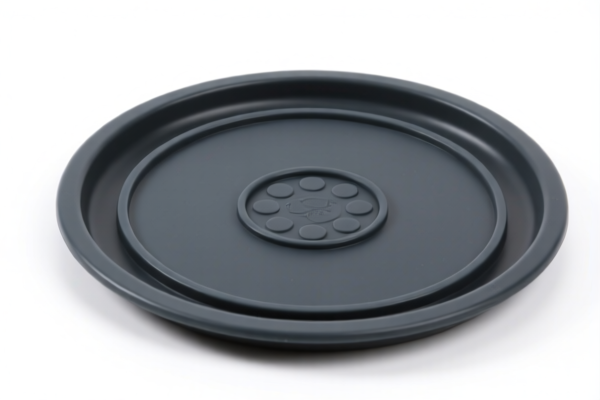
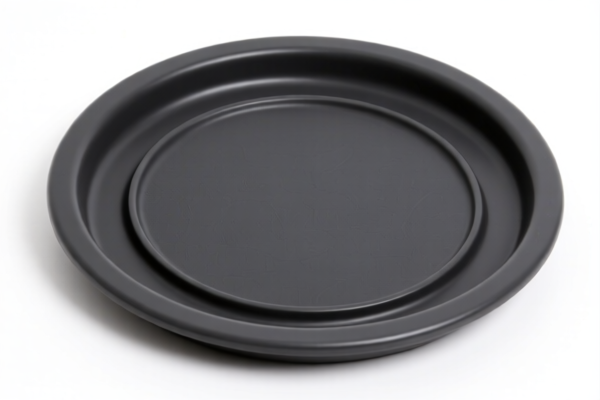
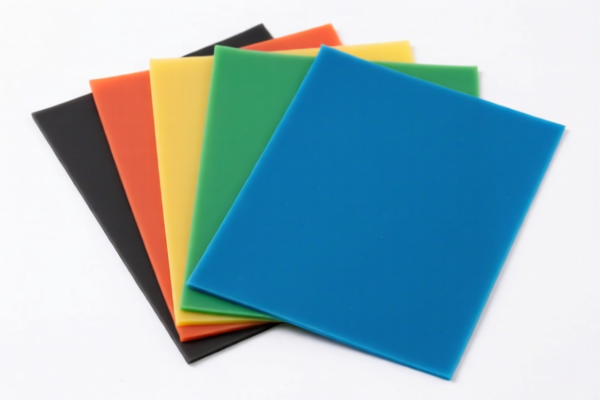
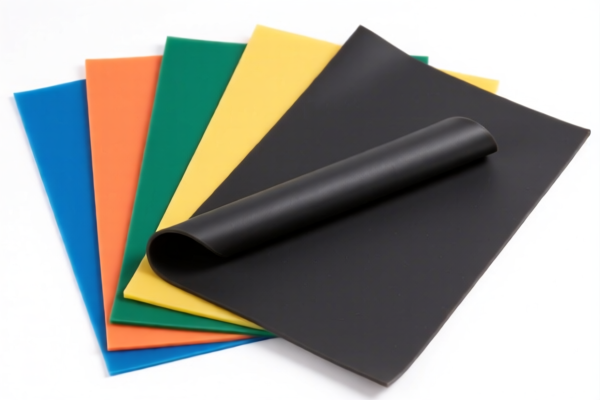
AI Analysis
🛠️ Non-Foamed / Non-Honeycomb Rubber Sheets
🌐 HS Code Reference & Customs Clearance Guide | 2026 Latest Tariff Breakdown | Pro-Level Import Strategy
📌 One, Product Definition & Classification: Do You Really Know "Non-Foamed Rubber Sheets"?
Non-foamed or non-honeycomb rubber sheets are solid, dense rubber materials manufactured in flat forms — such as plates, sheets, or strips — without cellular structure (i.e., no air bubbles or foam). These are widely used in industrial applications, including:
- Sealing gaskets and washers
- Vibration dampening pads
- Conveyor belt linings
- Mechanical insulation layers
- Automotive and aerospace components
⚠️ Critical Distinction:
- If the rubber is solid, dense, and non-porous → Not foam/honeycomb → Apply 4008.29.40.00 or 4008.21.00.00
- If it contains air pockets or foam structure → Should be classified under 4008.29.10.00 or similar foam categories
📦 Two, HS Code Classification Details (2026 Official Tariff Matrix)
| HS Code | Product Description | Application Scenarios | Foam/Honeycomb? |
|---|---|---|---|
4008.29.40.00 |
Non-foamed / non-honeycomb rubber sheets, plates, or strips (general use) | Industrial seals, machine mounts, general-purpose rubber sheets | ❌ No |
4008.21.00.00 |
Non-foamed rubber sheets, plates, and strips (specific types, e.g., natural rubber-based) | Automotive gaskets, industrial pads, conveyor belts | ❌ No |
6813.89.00.50 |
Other rubber products not specified elsewhere (including non-specific rubber plates) | Custom or generic rubber components | ❌ No |
6813.81.00.50 |
Brake/clutch friction linings made of rubber (rubber-based plates) | Automotive brake pads, clutch facings, friction systems | ❌ No |
🔍 Key Insight:
- All four codes apply to non-foamed, solid rubber plates — but differ in material origin, use case, and duty treatment.
- Do NOT confuse with foam rubber (e.g., for insulation or cushioning) — those fall under 4008.29.10.00 and have lower tariffs.
💰 Three, 2026 Latest Tariff Breakdown (With Detailed Duty Clauses)
✅ Applicable Country: United States (US)
✅ Origin Country: China (CN)
✅ Effective Date: November 10, 2025 (inclusive of future imports)
🎯 1. 4008.29.40.00 — Non-Foamed Rubber Sheets (General)
| Item | Detail |
|---|---|
| Base Duty Rate | 2.9% (ad valorem) |
| USITC Section 301 Additional Duty | +25.0% (from U.S. Trade Act §301) |
| Section 122 (IEEPA) Additional Duty | +10.0% (International Emergency Economic Powers Act) |
| Total Effective Duty | 37.9% |
| Tax Calculation | CIF Value × 37.9% |
| De Minimis Threshold | ❌ Not applicable (denied under U.S. law) |
| Legal Basis Pathway | IEEPA:9903.01.25 → IEEPA:9903.01.24 → USITC:4008.29.40.00 → FOOTNOTE:9903.88.01 |
📌 Explanation:
- The 2.9% base tariff applies to standard rubber sheets under WTO rules.
- The 25% USITC tariff stems from the Section 301 Investigation on Chinese imports deemed unfair.
- The 10% IEEPA tariff is a national security-related penalty under the International Emergency Economic Powers Act, targeting goods from China.
- Total: 37.9% — one of the highest effective rates for rubber products in the U.S.
🎯 2. 4008.21.00.00 — Non-Foamed Rubber Sheets & Strips (Specific Types)
| Item | Detail |
|---|---|
| Base Duty Rate | 0.0% |
| USITC Section 301 Additional Duty | +25.0% |
| Section 122 (IEEPA) Additional Duty | +10.0% |
| Total Effective Duty | 35.0% |
| Tax Calculation | CIF Value × 35.0% |
| De Minimis Threshold | ❌ Not applicable |
| Legal Basis Pathway | IEEPA:9901.25 → IEEPA:9903.01.24 → USITC:4008.21.00.00 → FOOTNOTE:9903.88.01 |
📌 Note:
- Despite 0% base tariff, the 25% + 10% add-ons bring the total to 35.0% — still extremely high.
- This code is often used for natural rubber-based sheets or specific industrial grades.
- No duty relief even if the product is not “critical” — all covered under 301/IEEPA.
🎯 3. 6813.89.00.50 — Other Rubber Products (Non-Specific Plates)
| Item | Detail |
|---|---|
| Base Duty Rate | 0.0% |
| USITC Section 301 Additional Duty | +25.0% |
| Section 122 (IEEPA) Additional Duty | +10.0% |
| Total Effective Duty | 35.0% |
| Tax Calculation | CIF Value × 35.0% |
| De Minimis Threshold | ❌ Not applicable |
| Legal Basis Pathway | IEEPA:9901.25 → IEEPA:9903.01.24 → USITC:6813.89.00.50 → FOOTNOTE:9903.88.01 |
📌 Important:
- This code applies to rubber plates not covered elsewhere — e.g., custom-cut sheets, non-standard thickness, or multi-layered rubber plates.
- Even if the product is not a gasket or friction pad, it still attracts 35% if not classified under 4008.21 or 4008.29.
🎯 4. 6813.81.00.50 — Brake/Clutch Friction Linings (Rubber-Based Plates)
| Item | Detail |
|---|---|
| Base Duty Rate | 0.0% |
| USITC Section 301 Additional Duty | +25.0% |
| Section 122 (IEEPA) Additional Duty | +10.0% |
| Total Effective Duty | 35.0% |
| Tax Calculation | CIF Value × 35.0% |
| De Minimis Threshold | ❌ Not applicable |
| Legal Basis Pathway | IEEPA:9901.25 → IEEPA:9903.01.24 → USITC:6813.81.00.50 → FOOTNOTE:9903.88.01 |
📌 Critical Point:
- Even though brake pads are functional components, they are still treated as rubber plates under U.S. customs rules.
- No exemption for automotive parts — all subject to 35% under the same tariffs.
- Must declare the exact use (e.g., “brake friction lining, rubber-based”) to avoid misclassification.
🛠️ Four, Customs Clearance Best Practices (Pro Tips to Avoid Penalties)
✅ 1. Required Documentation (Must-Have Checklist)
| Document | Required? | Notes |
|---|---|---|
| ✅ Product Specification Sheet | ✔️ | Include material type (natural/synthetic rubber), thickness, hardness (Shore A), dimensions |
| ✅ Material Safety Data Sheet (MSDS) | ✔️ | Especially for synthetic rubber or chemical additives |
| ✅ Technical Drawings / Cut Sheets | ✔️ | Show shape, thickness, and surface finish |
| ✅ Product Photos (with label) | ✔️ | Clear view of markings, brand, and surface texture |
| ✅ Commercial Invoice | ✔️ | Must state: “Non-foamed rubber sheet, solid, dense, no honeycomb structure” |
| ✅ Certificate of Origin (CO) | ✔️ | If from China, no duty reduction; if from Vietnam/Mexico, may qualify for IEEPA exemption |
| ✅ Packing List | ✔️ | Specify total weight, quantity, and whether sheets are stacked or individually wrapped |
✅ 2.申报技巧 (Declaration Tips – Key Phrases)
🔥 "Solid rubber plate, non-foamed, non-honeycomb, dense structure, no air pockets, used for industrial sealing and vibration damping"
| Scenario | Correct HS Code | Wrong Approach |
|---|---|---|
| Solid rubber sheet, 5mm thick, 1m x 1m, natural rubber | 4008.29.40.00 or 4008.21.00.00 |
Misdeclare as “foam rubber” → 0% tariff → Audit risk & penalties |
| Custom-cut rubber plate for machinery | 6813.89.00.50 |
Declare as “gasket” → incorrect → reclassification & extra tax |
| Brake pad made of rubber composite | 6813.81.00.50 |
Report as “metal brake pad” → misclassification → duty underpayment |
✅ 3. Special Cases & Solutions
| Situation | Recommended Action |
|---|---|
| Rubber sheets from Vietnam/Mexico | Apply for IEEPA exemption — if origin is non-China, 10% IEEPA tariff may be waived |
| Small shipments (<$800) | Still subject to 37.9% — de minimis not available for these codes |
| Samples for testing | Declare as “non-commercial” — but still pay full duty unless exempted |
| Recycled rubber sheets | Still subject to same tariffs — no green tariff break |
🌍 Five, Global Customs Comparison (2026 Update)
| Country/Region | Recommended HS Code | Tariff | Certification | Notes |
|---|---|---|---|---|
| 🇺🇸 United States | 4008.29.40.00 / 6813.81.00.50 |
35–37.9% | None (but must declare use) | No de minimis |
| 🇨🇳 China | 4008.29.40.00 |
5% | CCC | No additional tariffs |
| 🇪🇺 European Union | 4008.29.40.00 |
0% (if CE compliant) | CE | No 301/IEEPA tariffs |
| 🇦🇺 Australia | 4008.29.40.00 |
5% | RCM | No extra duties |
| 🇯🇵 Japan | 4008.29.40.00 |
0% | PSE | No附加税 |
📌 Conclusion:
- The U.S. is the only market imposing 35–37.9% on non-foamed rubber plates.
- China-origin goods face the highest effective tax — no relief available.
- Consider shifting production to Vietnam, Mexico, or Thailand to avoid IEEPA 10%.
📌 Six, Common Mistakes & How to Avoid Them (Real-World Risks)
❌ Mistake 1: Declaring solid rubber sheets as “foam rubber” to get 0% duty
👉 Result: Duty underpayment, penalties, seizure, rejection
❌ Mistake 2: Using “rubber gasket” instead of “rubber sheet” in invoice
👉 Result: Incorrect HS code, reclassification, extra tax + interest
❌ Mistake 3: Not providing thickness/structure details
👉 Result: Customs cannot verify “non-foamed” status → delayed clearance or request for sample
❌ Mistake 4: Assuming small shipments are exempt
👉 Result: $800 de minimis does NOT apply — still pay 35–37.9%
✅ Correct Approach:
“Non-foamed rubber sheet, 3mm thick, 1m x 1m, solid dense structure, natural rubber, for industrial vibration damping, not honeycomb, not foam, not porous”
🎯 Seven, Final Verdict: Precision Pays Off
🎯 Remember the Golden Rule:
🔹 “Solid ≠ Foam, Dense ≠ Porous, Rubber Plate ≠ Gasket”
🔹 “If it’s not foamed, it’s taxed at 35–37.9% in the U.S.”
🔹 “HS Code = Tax Rate = Risk Level”
📌 Pro Tip:
📞 Apply for an Advance Ruling (Pre-Approval) with U.S. Customs before shipping.
🚀 Get your HS code confirmed in writing — avoid disputes, delays, and penalties.
📣 Act Now:
📞 Contact a licensed customs broker + provide product photos + specs + invoice
🚀 Ensure your non-foamed rubber sheets clear customs smoothly — no surprises, no delays, no overpayment!
✨ Smart Classification = Smooth Clearance = Profit Protection!
💼 Every dollar saved on duty starts with the right HS code!
Customer Reviews
About HS Code Classification
The Harmonized System (HS) is an internationally standardized nomenclature developed by the World Customs Organization (WCO) to classify traded products. Over 200 countries use the HS system as the basis for customs tariffs, trade statistics, and import/export regulations.
Each HS code follows a hierarchical structure:
- Chapter (2 digits) — Broad category of goods (e.g., Chapter 84: Machinery and Mechanical Appliances)
- Heading (4 digits) — More specific grouping within the chapter
- Subheading (6 digits) — Internationally standardized breakdown, used by all WCO member countries
- National subdivisions (8-10 digits) — Country-specific extensions for further classification, such as US HTSUS 10-digit codes
Correct HS code classification is essential for smooth customs clearance, accurate duty payment, and compliance with trade regulations. Misclassification can lead to customs delays, overpayment of duties, or penalties.
When importing from CN to US, the applicable tariff rates may include:
- Most-Favored-Nation (MFN) rate — The standard duty rate applied to WTO members
- General rate — Applied to countries without trade agreements
- Trade remedy duties — Additional tariffs such as Section 301 (anti-dumping), Section 232 (national security), or countervailing duties
The information provided on this page is for reference purposes only. For official classification, please consult with your local customs authority or a licensed customs broker.