鞋带
CN → US| HS Code | Tariff Rate | Origin | Destination | Doc |
|---|---|---|---|---|
| 5609003000 | 39.5% | CN | US | Official Doc |
| 5609001000 | 37.9% | CN | US | Official Doc |
| 6307905020 | 17.5% | CN | US | Official Doc |
| 8308100000 | 0.0% | CN | US | Official Doc |
| 8308906000 | 13.9% | CN | US | Official Doc |
| 6307905010 | 17.5% | CN | US | Official Doc |
Product Images


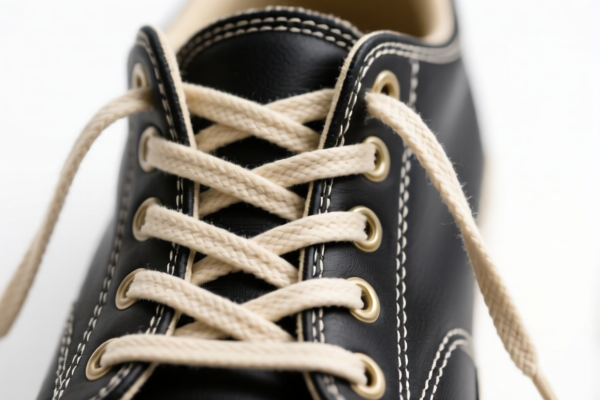

AI Analysis
👟 Shoelaces & Hardware (Textile Laces & Metal Fittings)
🌐 HS Code Reference & Customs Clearance Guide | 2026 Latest Tariff Analysis | Professional Clearance Strategy
📌 I. Product Definition & Classification: Are You Categorizing "Laces" Correctly?
In the international textile and accessories market, "Shoelaces" and "Shoe Hardware" are often grouped together but are strictly separated by material and structure under customs regulations. Misclassification here can lead to significant tariff differences, as seen in the data below.
1. Shoelaces (Textile/Natural Fiber Based): - Defined as cords, ropes, or strips used for tying shoes. - Key determinant: Material composition (Man-made fibers vs. Cotton). - Critical Distinction: If it's a woven/cotton lace, it falls under Chapter 56. If it's a specific type of corded lace, it may shift slightly, but generally remains in textile categories.
2. Shoe Buckles/Eyes (Metal/Accessory Based): - Defined as metal fittings, eyelets, or clasps attached to shoes/laces. - Key determinant: Material (Base Metal) and Function (Fastening). - Critical Distinction: Pure metal hardware vs. Fabric-covered hardware.
⚠️ Key Classification Point:
- Laces are classified under Chapter 56 (Articles of yarn, string, cord, rope, etc.).
- Metal Buckles/Eyes are classified under Chapter 83 (Articles of base metal; clasps, frames with clasps...).
- Non-metal Accessories (like plastic tags or fabric loops) often fall under Chapter 63 (Other made-up textile articles).
📦 II. HS Code Classification Matrix (2026 Latest Tariff Authority)
| HS Code | Product Description | Material/Structure | Applicable Scenario |
|---|---|---|---|
5609.00.30.00 |
Shoelaces, classified as cords/strings | Man-made Fibers (Polyester, Nylon, etc.) | Most common synthetic shoelaces, drawstrings. |
5609.00.10.00 |
Shoelaces, classified as fiber articles | Cotton/Natural Fibers | Cotton shoelaces, organic fiber laces. |
6307.90.50.20 |
Shoelace accessories (Non-metal) | Textile/Fabric | Fabric-covered aglets, fabric loops, non-metal tags. |
6307.90.50.10 |
Shoelace accessories (General) | Textile/General | Other miscellaneous textile accessories for shoes. |
8308.10.00.00 |
Shoelace Eyelets/Holes (Metal) | Base Metal | Metal eyelets, holes for laces, snap fasteners. |
8308.90.60.00 |
Shoelace Buckles/Clasps (Metal) | Base Metal | Metal buckles, D-rings, hooks, decorative metal fittings. |
🔍 Important Note:
-5609.00is the primary category for the laces themselves.
-8308.10is specific for eyelets/holes (small metal rings).
-8308.90is for buckles/clasps (larger metal fittings).
-6307.90is a "catch-all" for textile accessories that don't fit the lace definition but are made-up textile articles.
💰 III. 2026 Latest Tariff Rate Breakdown (Including Add-ons)
✅ Applicable Country: United States (US)
✅ Origin: China (CN)
✅ Effective Date: November 10, 2025 (and subsequent imports)
🎯 1. Shoelaces (Textile) — High Tariff Burden
A. Synthetic Laces: 5609.00.30.00
| Item | Details |
|---|---|
| Base Rate | 4.5% |
| Section 301 Additional Duty | +25.0% |
| IEEPA Additional Duty | +10.0% (122 Clause) |
| Total Effective Rate | 39.5% |
| Calculation | CIF Value × 39.5% |
| De Minimis Exemption | ❌ NOT Eligible (Due to Section 301 & IEEPA) |
| Legal Basis | Section 301 → IEEPA:9903.01.24 → USITC:5609.00.30.00 |
📌 Explanation:
- Synthetic shoelaces are subject to the full burden of trade tariffs.
- The 39.5% total rate makes this a high-cost item for importers.
- No de minimis exemption applies, meaning even small shipments are taxed.
B. Cotton Laces: 5609.00.10.00
| Item | Details |
|---|---|
| Base Rate | 2.9% |
| Section 301 Additional Duty | +25.0% |
| IEEPA Additional Duty | +10.0% (122 Clause) |
| Total Effective Rate | 37.9% |
| Calculation | CIF Value × 37.9% |
| De Minimis Exemption | ❌ NOT Eligible |
| Legal Basis | Section 301 → IEEPA:9903.01.24 → USITC:5609.00.10.00 |
📌 Note:
- Cotton laces are slightly cheaper than synthetic (37.9% vs 39.5%) due to a lower base rate.
- However, the difference is minimal compared to the massive 35%+ add-on tariffs.
🎯 2. Metal Hardware (Eyelets & Buckles) — Mixed Rates
A. Eyelets/Holes: 8308.10.00.00
| Item | Details |
|---|---|
| Base Rate (Specific) | 1.1¢/kg + 2.9% |
| Section 301 Additional Duty | +25.0% |
| IEEPA Additional Duty | +10.0% (122 Clause) |
| Total Effective Rate | 1.1¢/kg + 2.9% + 35.0% |
| Calculation | Weight-based (1.1¢/kg) + Ad Valorem (37.9%) |
| De Minimis Exemption | ❌ NOT Eligible |
| Legal Basis | Section 301 → IEEPA:9903.01.24 → USITC:8308.10.00.00 |
📌 Explanation:
- This is a compound duty (specific + ad valorem).
- For light items like eyelets, the weight-based portion (1.1¢/kg) is negligible, but the ad valorem portion (37.9%) is significant.
B. Buckles/Clasps: 8308.90.60.00
| Item | Details |
|---|---|
| Base Rate | 3.9% |
| Section 301 Additional Duty | +25.0% |
| IEEPA Additional Duty | +10.0% (122 Clause) |
| Total Effective Rate | 38.9% |
| Calculation | CIF Value × 38.9% |
| De Minimis Exemption | ❌ NOT Eligible |
| Legal Basis | Section 301 → IEEPA:9903.01.24 → USITC:8308.90.60.00 |
📌 Note:
- Metal buckles are taxed similarly to laces (~38.9%).
- Do not misclassify as "Jewelry" or "General Hardware" to avoid penalties.
🎯 3. Non-Metal Textile Accessories (Fabric Hooks/Tags) — Lower Burden
A. Fabric Accessories: 6307.90.50.20 / 6307.90.50.10
| Item | Details |
|---|---|
| Base Rate | 0.0% |
| Section 301 Additional Duty | +7.5% |
| IEEPA Additional Duty | +10.0% (122 Clause) |
| Total Effective Rate | 17.5% |
| Calculation | CIF Value × 17.5% |
| De Minimis Exemption | ❌ NOT Eligible (Still subject to IEEPA/301) |
| Legal Basis | Section 301 → IEEPA:9903.01.24 → USITC:6307.90.50.xx |
📌 Explanation:
- Significant Cost Saving Opportunity!
- If the accessory is fabric-covered (not solid metal), it may qualify for Chapter 63 with a much lower tariff (17.5% vs 38.9%).
- Crucial: Ensure the product is not primarily metal. If it has a metal core, it may still be classified under Chapter 83.
🛠️ IV. Customs Clearance Practical Advice (Battle-Tested)
✅ 1. Document Preparation Checklist
| Document | Required? | Purpose |
|---|---|---|
| ✅ Product Specification Sheet | ✔️ | Must specify Material Composition (e.g., 100% Polyester, 100% Cotton, 100% Brass). |
| ✅ Material Breakdown | ✔️ | For 6307.90 vs 8308.90 distinction, prove if hardware is metal or fabric. |
| ✅ Commercial Invoice | ✔️ | Must clearly describe item as "Shoelace" or "Metal Buckle," not generic "Accessory." |
| ✅ Origin Certificate | ✔️ | To confirm China origin for tariff calculation. |
| ✅ Photos (Close-up) | ✔️ | Show texture (woven vs. smooth) and material (metal shine vs. fabric weave). |
✅ 2. Classification Strategy (The "Golden Rules")
🔥 "Material is King: Fabric = 17.5%, Metal/Lace = ~38-39%"
| Scenario | Correct HS Code | Tariff Rate | Why? |
|---|---|---|---|
| Standard Polyester Shoelace | 5609.00.30.00 |
39.5% | Synthetic fiber article. |
| Standard Cotton Shoelace | 5609.00.10.00 |
37.9% | Natural fiber article. |
| Metal Eyelets (Small Holes) | 8308.10.00.00 |
37.9% + Weight | Base metal article. |
| Metal Buckles (D-Rings) | 8308.90.60.00 |
38.9% | Base metal article. |
| Fabric-Covered Aglets/Tags | 6307.90.50.20 |
17.5% | Optimal! Textile article, not metal. |
| Plastic Aglets | Check Chapter 39/40 | Varies | If plastic, may be cheaper, but ensure correct subheading. |
⚠️ Warning:
- Do NOT misclassify metal buckles as textile accessories. If the primary value is metal, Chapter 83 applies.
- However, if the metal is only a tiny component (e.g., a small metal tip on a fabric lace), consult a customs broker to see if6307.90is defensible.
✅ 3. Special Cases & Pitfalls
| Scenario | Recommendation |
|---|---|
| OEM Shoelaces with Brand Logo | Ensure the logo is embroidered (textile) not metal-plated (metal) to potentially qualify for lower textile rates if applicable. |
| Shoelaces + Buckles Sold as a Set | Composite Good Rule: If sold together, classify by the essential character. Usually, if the buckle is integral, it may follow the lace or vice versa. Best to declare separately if possible. |
| "No Metal" Claim | If claiming 6307.90 (17.5%), you MUST prove no metal is present. If Customs finds a metal aglet, they will reclassify to 8308 or 5609 and penalize. |
| De Minimis (Under $800) | ❌ NO EXEMPTION. All these HS codes are subject to Section 301 and IEEPA. Do not attempt to use de minimis for China-origin goods. |
🌍 V. Global Market Comparison (2026)
| Country/Region | Recommended HS Code | Tariff (China Origin) | Notes |
|---|---|---|---|
| 🇺🇸 USA | 5609.00.30.00 / 8308.90.60.00 |
38.9% - 39.5% | High tariffs. Consider 6307.90 for fabric accessories. |
| 🇨🇳 China | 5609.00.30.00 |
8-12% (Import) | Domestic production is low-cost. |
| 🇪🇺 EU | 5609.00.30.00 |
6.5% | No Section 301 or IEEPA. |
| 🇬🇧 UK | 5609.00.30.00 |
6.5% | Post-Brexit tariffs apply. |
| 🇯🇵 Japan | 5609.00.30.00 |
7.7% | MFN rate applies. |
📌 Conclusion:
- USA is the only major market imposing these massive additional duties.
- Cost Optimization: If you are exporting to the US, try to structure your product to fall under6307.90(fabric accessories) if possible, saving ~21% in tariffs compared to metal or synthetic laces.
📌 VI. Common Mistakes & How to Avoid Them
❌ Mistake 1: Declaring metal buckles as "Textile Accessories"
👉 Result: Customs reclassifies to 8308.90.60.00, charges 38.9%, plus penalties.
👉 Fix: Declare accurately as "Base Metal Buckles."
❌ Mistake 2: Assuming "Shoelaces" are all the same
👉 Result: Using 5609.00.30.00 for cotton laces (39.5%) instead of 5609.00.10.00 (37.9%).
👉 Fix: Verify material composition. Even 2% difference matters on large volumes.
❌ Mistake 3: Trying to use De Minimis ($800) for small shipments
👉 Result: Goods held at border, taxes assessed, shipment delayed.
👉 Fix: Plan for full tariff payment for China-origin goods.
🎯 VII. Final Recommendations
- Material Audit: Conduct a thorough audit of your product's material composition. Can any metal parts be replaced with fabric or plastic to qualify for
6307.90(17.5%)? - Precise Description: Use clear, specific descriptions in your invoice:
- "100% Polyester Shoelaces, 4mm width"
- "Brass Alloy Shoe Buckle, Size 10mm"
- "Nylon-Covered Metal Eyelets"
- Pre-Ruling: For large volumes, consider applying for a Customs Ruling to confirm your HS code classification before shipping.
- Cost Modeling: Factor in the 38-39% total tariff for laces and metal hardware when pricing your US market products.
📣 Take Action Now:
📞 Contact a Licensed Customs Broker to review your product specs.
🚀 Optimize Your Supply Chain: Consider sourcing non-metal accessories from regions with lower tariffs if exporting to the US.
💼 Precision Saves Money: A correct HS code classification can save you 20%+ in landed costs!
✨ Customs Compliance: The Key to Profitable Global Trade!
💼 Don't let tariffs eat your margin. Classify right, pay less.
Customer Reviews
About HS Code Classification
The Harmonized System (HS) is an internationally standardized nomenclature developed by the World Customs Organization (WCO) to classify traded products. Over 200 countries use the HS system as the basis for customs tariffs, trade statistics, and import/export regulations.
Each HS code follows a hierarchical structure:
- Chapter (2 digits) — Broad category of goods (e.g., Chapter 84: Machinery and Mechanical Appliances)
- Heading (4 digits) — More specific grouping within the chapter
- Subheading (6 digits) — Internationally standardized breakdown, used by all WCO member countries
- National subdivisions (8-10 digits) — Country-specific extensions for further classification, such as US HTSUS 10-digit codes
Correct HS code classification is essential for smooth customs clearance, accurate duty payment, and compliance with trade regulations. Misclassification can lead to customs delays, overpayment of duties, or penalties.
When importing from CN to US, the applicable tariff rates may include:
- Most-Favored-Nation (MFN) rate — The standard duty rate applied to WTO members
- General rate — Applied to countries without trade agreements
- Trade remedy duties — Additional tariffs such as Section 301 (anti-dumping), Section 232 (national security), or countervailing duties
The information provided on this page is for reference purposes only. For official classification, please consult with your local customs authority or a licensed customs broker.