鞋类部件鞋面及其零件
CN → US| HS Code | Tariff Rate | Origin | Destination | Doc |
|---|---|---|---|---|
| 6406109040 | 22.0% | CN | US | Official Doc |
| 6406106000 | 17.5% | CN | US | Official Doc |
| 4203406000 | 35.0% | CN | US | Official Doc |
Product Images
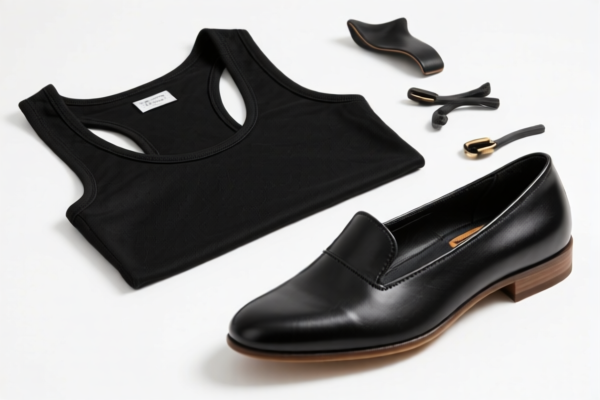
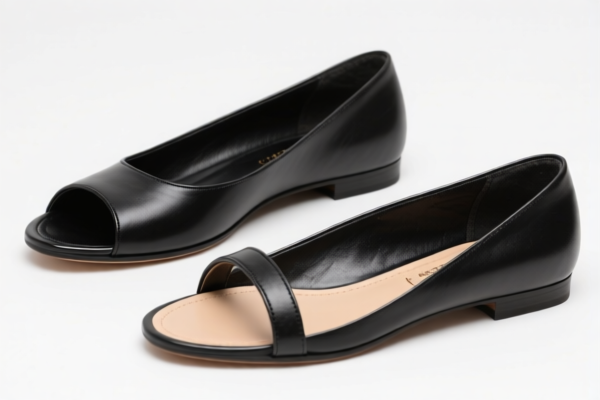


AI Analysis
👞 Shoe Upper & Parts (Shoe Parts: Uppers and Their Parts)
🌐 HS Code Reference & Customs Clearance Guide | 2026 Latest Tariff Analysis | Professional Clearance Strategy
📌 I. Product Definition & Classification: What Exactly Are "Shoe Uppers"?
Shoe Uppers (鞋面及其零件) refer to the components of footwear that cover the top and sides of the foot, excluding the sole unit (outer sole, insole, heel, etc.). In international trade, this category is highly sensitive to material composition (leather vs. textile/synthetic) and manufacturing stage (finished upper vs. raw cut pieces).
Key Distinctions: * Finished Shoe Upper: A pre-assembled upper structure (e.g., vamp, quarter, tongue sewn together but not attached to a sole). * Raw Parts/Cut Pieces: Individual leather or textile pieces cut to shape, ready for assembly. * Material Impact: The HS Code differs drastically between leather (Chapter 42) and textile/synthetic materials (Chapter 64).
⚠️ Critical Classification Point:
- If the upper is made of leather or synthetic leather → Likely Chapter 42 (Articles of Leather).
- If the upper is made of textiles, rubber, or plastics → Likely Chapter 64 (Footwear Parts).
- Do not confuse with finished footwear (Chapter 64, heading 64.01-64.05). This category is specifically for parts (Heading 64.06) or leather articles (Chapter 42).
📦 II. HS Code Classification Details (Based on Provided Data)
Based on the provided data, there are three primary classification options depending on material and configuration:
| HS Code | Summary Description | Material/Condition | Total Tax Rate |
|---|---|---|---|
6406.10.90.40 |
Shoe Upper and Parts, Default Material Match | Non-leather (Textile/Synthetic/Rubber/Plastic) | 22.0% |
6406.10.60.00 |
Shoe Upper and Parts, Consistent Use, No Material Conflict | Non-leather (Textile/Synthetic/Rubber/Plastic) | 17.5% |
4203.40.60.00 |
Shoe Upper and Parts, Inferred Leather/Synthetic Leather | Leather or Synthetic Leather | 35.0% |
🔍 Key Insight:
-6406.10covers shoe uppers made of textiles, rubber, or plastic.
-4203.40covers gloves, footwear, and other articles of leather (or composition leather).
- The tax burden varies significantly: Leather uppers face a 35% total tax, while textile/synthetic uppers face 17.5%–22%.
💰 III. 2026 Latest Tariff Rate Breakdown (Including Surcharges)
✅ Applicable Country: United States (US)
✅ Origin: China (CN)
✅ Effective Time: Post-November 10, 2025 (Subsequent Imports)
🎯 1. 6406.10.90.40 – Shoe Uppers/Parts (Default Material, Non-Leather)
| Item | Details |
|---|---|
| Base Tariff | 4.5% (Ad valorem) |
| Section 301 Surcharge | +7.5% |
| Section 122 Tariff | +10% |
| Total Effective Tax Rate | 22.0% |
| Tax Calculation | CIF Value × 22% |
| De Minimis Exemption | ❌ Not Applicable (High risk of audit) |
| Legal Basis | USITC 6406.10.90.40 + Section 301 + Section 122 |
📌 Explanation:
- Base Tariff (4.5%): Standard MFN rate for shoe parts.
- Section 301 (7.5%): Additional tariff on Chinese goods under the 301 Trade Act.
- Section 122 (10%): Specific safeguard tariff on certain imported goods.
- Total 22% is manageable but significant for low-margin goods.
🎯 2. 6406.10.60.00 – Shoe Uppers/Parts (Consistent Use, Non-Leather)
| Item | Details |
|---|---|
| Base Tariff | 0.0% (Ad valorem) |
| Section 301 Surcharge | +7.5% |
| Section 122 Tariff | +10% |
| Total Effective Tax Rate | 17.5% |
| Tax Calculation | CIF Value × 17.5% |
| De Minimis Exemption | ❌ Not Applicable |
| Legal Basis | USITC 6406.10.60.00 + Section 301 + Section 122 |
📌 Explanation:
- Base Tariff (0%): Certain specific shoe parts may qualify for zero base duty if they meet "consistent use" criteria or specific sub-heading exemptions.
- Surcharges Apply: Despite 0% base, the 17.5% total still applies due to Section 301 and 122.
- Savings: This code saves 4.5% compared to6406.10.90.40.
🎯 3. 4203.40.60.00 – Shoe Uppers/Parts (Leather/Synthetic Leather)
| Item | Details |
|---|---|
| Base Tariff | 0.0% (Ad valorem) |
| Section 301 Surcharge | +25.0% |
| Section 122 Tariff | +10% |
| Total Effective Tax Rate | 35.0% |
| Tax Calculation | CIF Value × 35.0% |
| De Minimis Exemption | ❌ Not Applicable |
| Legal Basis | USITC 4203.40.60.00 + Section 301 + Section 122 |
📌 Explanation:
- High Surcharge Risk: Leather goods from China are subject to a higher 25% Section 301 surcharge (vs. 7.5% for textiles/plastics).
- Total 35% is significantly higher than non-leather alternatives.
- Classification Alert: Misclassifying leather uppers as textile (6406.10) to avoid the 25% surcharge is a major customs violation risk.
🛠️ IV. Customs Clearance Practical Advice (Real-World Pitfall Avoidance)
✅ 1. Documentation Checklist (Mandatory)
| Document | Required? | Description |
|---|---|---|
| ✅ Product Specification Sheet | ✔️ | Must clearly state material composition (e.g., "100% Cowhide Leather" vs. "Polyester Mesh") |
| ✅ Material Declaration | ✔️ | Detailed breakdown of all layers (lining, reinforcement, outer) |
| ✅ Product Photos | ✔️ | Clear images of the upper, seams, and any logos |
| ✅ Commercial Invoice | ✔️ | Item description must match HS Code (e.g., "Leather Shoe Upper" vs. "Textile Shoe Upper") |
| ✅ Packing List | ✔️ | Ensure no finished shoes are mixed with parts |
✅ 2. Classification Strategy (Key Rules)
🔥 “Material Dictates Code, Leather Costs More, Textile Saves Less!”
| Scenario | Correct HS Code | Tax Rate | Wrong Action | Consequence |
|---|---|---|---|---|
| Textile/Synthetic Upper | 6406.10.60.00 |
17.5% | Misclassify as Leather (4203.40) |
Pay 35% instead of 17.5% → Overpayment |
| Textile/Synthetic Upper | 6406.10.90.40 |
22.0% | Use 6406.10.60.00 without justification |
Customs may reject and reassess to 22% |
| Leather Upper | 4203.40.60.00 |
35.0% | Misclassify as Textile (6406.10) |
Audit Risk, Penalties, Back Taxes |
| Finished Shoe | NOT APPLICABLE | N/A | Declare as Part | Misdeclaration → Goods detained |
📌 Critical Warning:
- Synthetic Leather (PU/PVC): Often classified under Chapter 64 if it mimics leather but is not genuine. However, if it is "composition leather" (layered), it may fall under Chapter 42. Confirm material structure.
- "No Material Conflict": This phrase in6406.10.60.00suggests a specific sub-category where the use is consistent and no conflicting materials (like leather patches) are present. Ensure your product fits this narrow definition.
✅ 3. Special Case Handling
| Scenario | Handling Advice |
|---|---|
| Mixed Material Upper (e.g., Leather toe cap + Textile side) | Chapter 42 Rule of Essential Character: If leather is the essential material, classify under 4203.40.60.00 (35%). Do not try to split declaration. |
| OEM Custom Uppers | Provide design specs and material test reports to prove non-leather status if claiming 17.5%. |
| Returned/Uncertain Materials | If unsure, request a Binding Ruling from US CBP before shipment. |
| Small Samples (De Minimis) | Even for small quantities, shoe parts are excluded from Section 321 de minimis exemption if they trigger Section 301/122. Pay taxes on all entries. |
🌍 V. Global Market Comparison (2026 Latest)
| Market | Recommended HS Code | Tax Rate (China Origin) | Certification/Notes |
|---|---|---|---|
| 🇺🇸 USA | 6406.10.60.00 / 4203.40.60.00 |
17.5% (Textile) / 35% (Leather) | Section 301 & 122 apply strictly. |
| 🇨🇳 China | 6406.10 / 4203.40 |
0% - 8% | Import duty varies; VAT 13%. |
| 🇪🇺 EU | 6406.10 / 4203.40 |
4% - 7% | No Section 301 equivalent; standard MFN. |
| 🇬🇧 UK | 6406.10 / 4203.40 |
4% - 7% | Post-Brexit tariff schedule applies. |
| 🇯🇵 Japan | 6406.10 / 4203.40 |
3% - 5% | Free Trade Agreement (JTEPA) may offer 0% if rules of origin met. |
📌 Conclusion:
- USA is the most expensive market for shoe parts due to layered tariffs (Section 301 + 122).
- Leather uppers face a punitive 35% rate in the US. Consider sourcing leather parts from non-China origins (e.g., Vietnam, Italy) if possible to avoid Section 301.
📌 VI. Common Mistakes & Pitfalls (Lessons Learned)
❌ Mistake 1: Declaring leather uppers as textile (6406.10) to save 17.5%.
👉 Consequence: US CBP inspection reveals leather → Back taxes + 25% penalty + potential fraud charges.
❌ Mistake 2: Using 6406.10.90.40 (22%) when 6406.10.60.00 (17.5%) is applicable.
👉 Consequence: Overpaying 4.5% on every shipment. Ensure your product meets the "consistent use" criteria for 17.5%.
❌ Mistake 3: Ignoring Section 122 (10%).
👉 Consequence: Even if base tariff is 0%, the 10% surcharge is unavoidable for Chinese-origin goods in this category.
❌ Mistake 4: Confusing Shoe Parts with Finished Footwear.
👉 Consequence: Finished shoes have different tariffs (e.g., 8.5% - 20% depending on type). Misclassification leads to delays and re-classification fees.
✅ Correct Practice:
"Shoe Upper, Textile, No Leather Components, Model ABC, 100% Polyester, For Sneaker Assembly"
🎯 VII. Conclusion: Professional Classification Saves Money!
🎯 Key Takeaway:
🔹 "Check Material First!" – Leather = 35%, Textile = 17.5-22%.
🔹 "Section 301 & 122 are Non-Negotiable" – Always factor in 7.5% or 25% surcharge + 10%.
🔹 "Precision in Declaration" – Use exact material descriptions to avoid audits.
📌 Pro Tip:
If you are exporting leather shoe uppers to the US, consider:
1. Supply Chain Diversification: Source leather from Vietnam or Italy (avoid 25% Section 301).
2. Pre-Ruling: Apply for a Binding Ruling with US CBP to confirm classification.
3. Cost-Benefit Analysis: 35% tax may erode margins; evaluate if price adjustments are needed.
📣 Immediate Action:
📞 Contact your customs broker with material test reports.
📦 Verify if your product qualifies for6406.10.60.00(17.5%) instead of6406.10.90.40(22%).
🚀 Clear customs smoothly, avoid penalties, maximize profit!
✨ Professional Clearance Starts with Accurate Classification!
💼 Every percentage point of tax saved is pure profit!
Customer Reviews
About HS Code Classification
The Harmonized System (HS) is an internationally standardized nomenclature developed by the World Customs Organization (WCO) to classify traded products. Over 200 countries use the HS system as the basis for customs tariffs, trade statistics, and import/export regulations.
Each HS code follows a hierarchical structure:
- Chapter (2 digits) — Broad category of goods (e.g., Chapter 84: Machinery and Mechanical Appliances)
- Heading (4 digits) — More specific grouping within the chapter
- Subheading (6 digits) — Internationally standardized breakdown, used by all WCO member countries
- National subdivisions (8-10 digits) — Country-specific extensions for further classification, such as US HTSUS 10-digit codes
Correct HS code classification is essential for smooth customs clearance, accurate duty payment, and compliance with trade regulations. Misclassification can lead to customs delays, overpayment of duties, or penalties.
When importing from CN to US, the applicable tariff rates may include:
- Most-Favored-Nation (MFN) rate — The standard duty rate applied to WTO members
- General rate — Applied to countries without trade agreements
- Trade remedy duties — Additional tariffs such as Section 301 (anti-dumping), Section 232 (national security), or countervailing duties
The information provided on this page is for reference purposes only. For official classification, please consult with your local customs authority or a licensed customs broker.