鞋类零件(hs 6406901510)
CN → US| HS Code | Tariff Rate | Origin | Destination | Doc |
|---|---|---|---|---|
| 6401929060 | 55.0% | CN | US | Official Doc |
| 6406901510 | 32.4% | CN | US | Official Doc |
| 6401999000 | 47.5% | CN | US | Official Doc |
| 6406901560 | 32.4% | CN | US | Official Doc |
| 6402914050 | 16.0% | CN | US | Official Doc |
Product Images
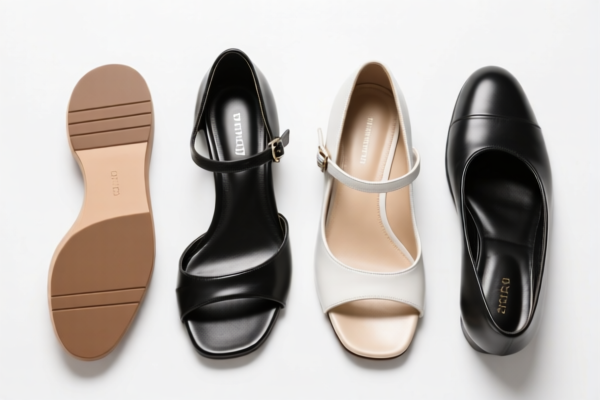
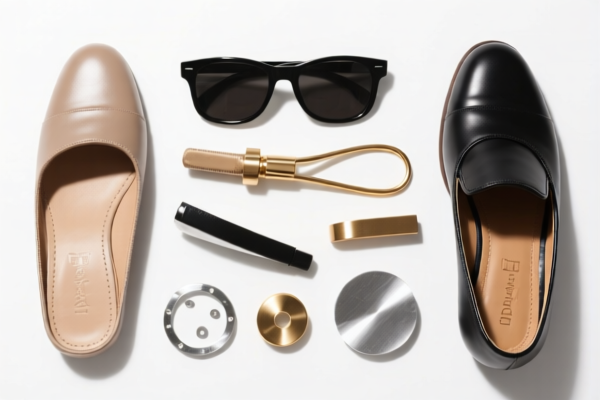
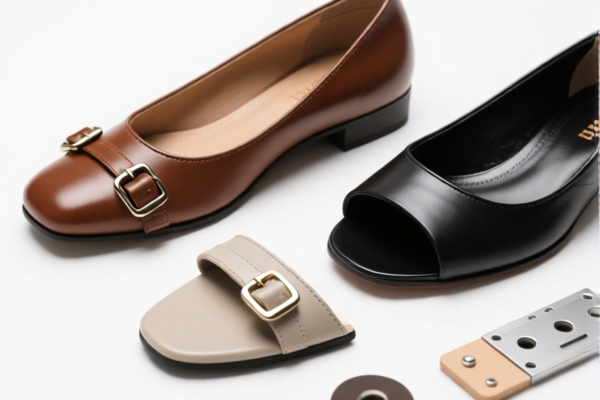
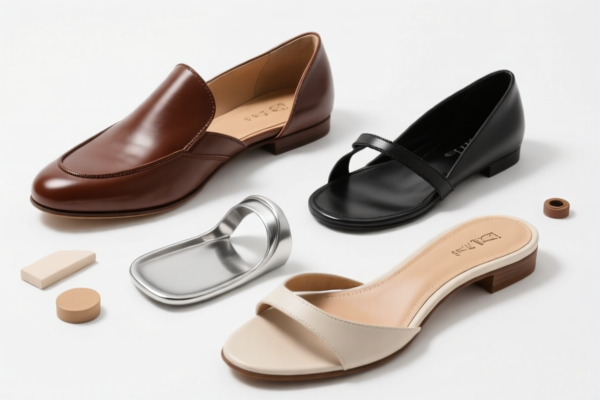
AI Analysis
👟 Shoe Parts (HS Code: 6406.90.15.10)
🌐 HS Code Reference & Customs Clearance Guide | 2026 Latest Tariff Analysis | Professional Clearance Strategy
📌 I. Product Definition & Classification: Do You Really Understand "Shoe Parts"?
Shoe parts are the essential components that make up the footwear structure, including uppers, soles, heels, midsoles, insoles, and other accessories. In international trade, they are strictly separated from "complete shoes."
Key Distinction:
- Shoe Parts (6406 Series): Separate components (e.g., sole blanks, upper materials, heel tops) not yet assembled into a wearable shoe.
- Complete Shoes (6401-6405 Series): Finished footwear ready for use.
⚠️ Critical Rule:
- If the item is a loose sole, upper, or component →归入 6406
- If the item is a complete pair of shoes (even if waterproof or sport-specific) →归入 6401, 6402, 6403, 6404, or 6405
📦 II. HS Code Classification Details (Based on Provided Data)
The user input specifically targets HS Code 6406.90.15.10. Below is the detailed breakdown based on the provided data set.
| HS Code | Summary/Description | Key Reasoning |
|---|---|---|
6406.90.15.10 |
Shoe Parts categorized under "Other Shoe Parts" | Based on the "other fallback category" rule. It fits the general definition of shoe components not specifically listed elsewhere in the 6406 sub-headings. |
6406.90.15.60 |
Shoe parts with identical utility to shoe accessories | Based on part-category matching principles. Often grouped with 6406.90.15.10 but may differ in specific material or end-use nuances. |
6401.92.90.60 |
Parts classified as accessories for other waterproof shoes | Based on the "default tendency to match components" principle. Note: This classifies the item as a part of a waterproof shoe, potentially leading to higher duties. |
6401.99.90.00 |
Shoe parts conforming to the waterproof shoe category | Based on the "default tendency to match components" principle. Note: Higher base tariff (37.5%) compared to general shoe parts. |
6404.20.60.80 |
Classified as "Other Shoes" | Based on inference where material is unspecified and no conflict exists. Note: This misclassification as a "finished shoe" leads to the highest duty rate. |
🔍 Focus on
6406.90.15.10:
This code represents the "Other" category within shoe parts. It is the most common fallback for components that do not fit into specific sub-categories like rubber/plastic soles (6406.10) or leather uppers (6406.20).
💰 III. 2026 Latest Tariff Rate Details for 6406.90.15.10
✅ Applicable Country: United States (US)
✅ Origin: China (CN)
✅ Total Tax Rate: 32.4%
✅ Effective Time: 2025/2026 (Current Trade Regulations)
🎯 Tariff Breakdown for 6406.90.15.10
| Item | Rate/Amount | Source/Note |
|---|---|---|
| Base Tariff (MFN) | 14.9% | Standard USITC duty rate for "Other footwear parts." |
| Section 301 / Additional Tariff | +7.5% | Applied to specific Chinese-origin goods under current trade measures. |
| Section 122 Tariff | +10.0% | Specific additional duty applicable to certain footwear/parts. |
| Total Effective Rate | 32.4% | Sum of Base + Additional Tariffs. |
| Calculation Basis | CIF Value | Calculated on Cost, Insurance, and Freight value. |
📌 Explanation:
- The 14.9% base rate is relatively low compared to finished shoes.
- However, the 17.5% in additional tariffs (7.5% + 10%) significantly increase the landed cost.
- Total 32.4% is competitive compared to "Other Shoes" (55.0%) but still substantial.
📊 Comparison with Other Potential Classifications (From Data)
| HS Code | Total Tax | Why is 6406.90.15.10 Better/Worse? |
|---|---|---|
6406.90.15.10 |
32.4% | ✅ Best Option: Lower total tax. Recognized as a generic part. |
6406.90.15.60 |
32.4% | ➖ Equal: Same rate, but specific material/use may differ. |
6401.99.90.00 |
47.5% | ❌ Worse: Higher base tariff (37.5%) because it's linked to waterproof shoes. |
6401.92.90.60 |
55.0% | ❌ Worst: High base tariff (37.5%) + all surcharges. Risky if not truly a waterproof shoe part. |
6404.20.60.80 |
55.0% | ❌ Worst: Misclassified as "Finished Shoe" (Textile/Rubber sole shoes). Highest penalty. |
💡 Key Insight:
Classifying as6406.90.15.10saves you ~15-22% in total duties compared to misclassifying as a finished shoe or a specific waterproof shoe component.
🛠️ IV. Customs Clearance Practical Advice (Avoid Pitfalls)
✅ 1. Documentation Checklist (Must-Haves)
| Document | Required? | Purpose |
|---|---|---|
| Commercial Invoice | ✅ | Must clearly state "Shoe Parts" or "Footwear Components", NOT "Shoes". |
| Packing List | ✅ | Show that items are loose components, not assembled pairs. |
| Product Photos | ✅ | Clear images of the part (e.g., a single sole, a raw upper) to prove it's not a finished shoe. |
| Material Specification | ✅ | List materials (e.g., TPU, Leather, EVA) to justify HS 6406 classification. |
| Bill of Lading | ✅ | Ensure description matches invoice ("Shoe Parts"). |
✅ 2. Declaration Tips (Golden Rules)
🔥 Rule: "Parts are not Shoes, Loose is not Assembled!"
| Scenario | Correct Declaration | Wrong Declaration | Risk |
|---|---|---|---|
| Loose Soles | 6406.90.15.10 - "Sole Parts" |
"Shoes" or "Footwear" | 55% Duty + Penalty |
| Raw Uppers | 6406.90.15.10 - "Upper Parts" |
"Waterproof Shoes" | 47.5% Duty |
| Mixed Batch | Separate Parts from Finished Goods | Mix parts with finished shoes | High scrutiny, delays |
| Accessories | 6406.90.15.60 or 15.10 |
"Accessories" (vague) | Potential re-classification |
✅ 3. Special Considerations
| Situation | Advice |
|---|---|
| Mixed Containers | Clearly separate "Shoe Parts" from "Finished Shoes" in different boxes/labels. Mixed declarations can lead to total container audits. |
| Waterproof Components | Do NOT use 6401 codes unless you can prove the part is exclusively for waterproof shoes and cannot be used elsewhere. General parts (6406) are safer and cheaper. |
| Section 301 Exclusions | Check if any exclusions apply for shoe parts (rare, but worth verifying with a customs broker). |
| De Minimis | ❌ Not Applicable. Shipments over $800 may face higher scrutiny; shipments under $800 are still subject to duties if not de minimis eligible (US rules have tightened). |
🌍 V. Global Market Comparison (2026)
| Market | HS Code for Parts | Estimated Duty | Notes |
|---|---|---|---|
| 🇺🇸 USA | 6406.90.15.10 |
32.4% | Includes 301 & 122 tariffs. |
| 🇨🇳 China | 6406.90.15.10 |
Low (~5-10%) | Import duties for raw materials/parts are low. |
| 🇪🇺 EU | 6406.90.90 |
Varies (0-12%) | No Section 301 equivalent, but anti-dumping may apply. |
| 🇲🇽 Mexico | 6406.90.15 |
Low | USMCA benefits may apply if originating in North America. |
📌 Conclusion:
The US market is the most expensive for Chinese-made shoe parts due to additional tariffs. Always aim for the6406classification to minimize costs.
📌 VI. Common Errors & Pitfalls (Lessons Learned)
❌ Error 1: Declaring "Shoe Parts" but providing photos of assembled shoes.
👉 Consequence: Customs reclassifies as 6404 or 6401 → 55% Duty + Seizure Risk.
❌ Error 2: Using "Waterproof" in the description for general parts.
👉 Consequence: Triggers 6401 classification → 47.5% Duty.
❌ Error 3: Not separating parts from finished goods in the container.
👉 Consequence: Entire shipment flagged → Delays & Demurrage Costs.
✅ Correct Practice:
"Shoe Parts, Sole Units, TPU Material, Unassembled, Not Attached to Uppers, HS 6406.90.15.10"
🎯 VII. Conclusion: Precision Saves Money!
🎯 Key Takeaway:
🔹 "Parts are Parts, Not Shoes. Use
6406to Save ~22%."
🔹 "Avoid 'Waterproof' keywords unless necessary to keep duties at 32.4%, not 55%."
📌 Pro Tip:
If you are importing large volumes, consider applying for a Customs Ruling or Pre-Arrival Review to confirm 6406.90.15.10 eligibility. This provides legal certainty and prevents future audits.
📣 Immediate Action:
📞 Consult a Licensed Customs Broker to verify your specific product images against
6406criteria.
📄 Update Your Invoice to clearly state "Shoe Parts" and avoid "Finished Footwear."
🚀 Optimize Your Landed Cost by choosing the correct HS Code!
✨ Professional Clearance Starts with Accurate Classification!
💼 Every percentage point of duty matters to your profit margin!
Customer Reviews
About HS Code Classification
The Harmonized System (HS) is an internationally standardized nomenclature developed by the World Customs Organization (WCO) to classify traded products. Over 200 countries use the HS system as the basis for customs tariffs, trade statistics, and import/export regulations.
Each HS code follows a hierarchical structure:
- Chapter (2 digits) — Broad category of goods (e.g., Chapter 84: Machinery and Mechanical Appliances)
- Heading (4 digits) — More specific grouping within the chapter
- Subheading (6 digits) — Internationally standardized breakdown, used by all WCO member countries
- National subdivisions (8-10 digits) — Country-specific extensions for further classification, such as US HTSUS 10-digit codes
Correct HS code classification is essential for smooth customs clearance, accurate duty payment, and compliance with trade regulations. Misclassification can lead to customs delays, overpayment of duties, or penalties.
When importing from CN to US, the applicable tariff rates may include:
- Most-Favored-Nation (MFN) rate — The standard duty rate applied to WTO members
- General rate — Applied to countries without trade agreements
- Trade remedy duties — Additional tariffs such as Section 301 (anti-dumping), Section 232 (national security), or countervailing duties
The information provided on this page is for reference purposes only. For official classification, please consult with your local customs authority or a licensed customs broker.