领结发带
CN → US| HS Code | Tariff Rate | Origin | Destination | Doc |
|---|---|---|---|---|
| 6217101010 | 19.8% | CN | US | Official Doc |
| 6117802000 | 18.7% | CN | US | Official Doc |
| 6117808500 | 32.1% | CN | US | Official Doc |
| 9615114000 | 15.3% | CN | US | Official Doc |
| 9615196000 | 21.0% | CN | US | Official Doc |
| 6217108500 | 24.6% | CN | US | Official Doc |
Product Images


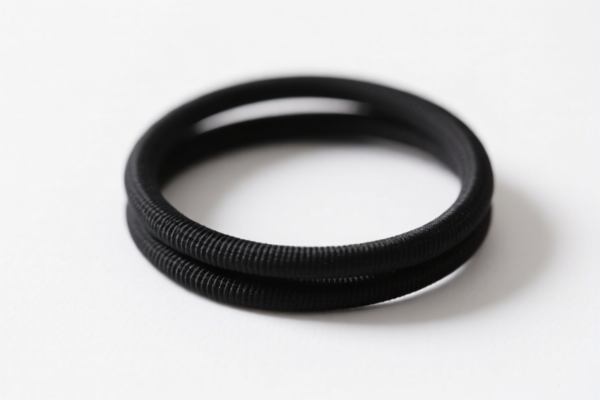

AI Analysis
🎀 领结发带 (Bow Hair Bands / Headbands)
🌐 HS Code Reference & Customs Clearance Guide | 2026 Latest Tax Regime Breakdown | Professional Strategy
📌 I. Product Definition & Classification: Do You Really Know "Bow Hair Bands"?
Bow Hair Bands are essential hair accessories designed to secure, style, or adorn the hair. In international trade, their classification depends entirely on material composition and manufacturing method. Misclassification is the #1 cause of customs delays or heavy penalties for this product category.
They generally fall into two main branches: 1. Textile/Knitted Accessories: Made of fabric, yarn, or knitted material (e.g., velvet, cotton, polyester, elastic bands). 2. Plastic/Rigid Hair Ornaments: Made of hard plastic, rubber, or resin (e.g., clip-on bows, rigid headbands).
⚠️ Key Differentiator:
- If made of knitted fabric or woven textile → Goes to Chapter 61 (Knitted) or Chapter 62 (Woven). - If made of plastic/rubber or textile with rigid plastic parts → Goes to Chapter 96 (Miscellaneous). - Crucial: Do not classify "plastic bows" under "textile accessories" just because they are attached to a hair band. The material of the primary decorative element often dictates the code.
📦 II. HS Code Classification Matrix (2026 Latest Regime)
Based on the provided data, here is the authoritative breakdown for Bow Hair Bands:
| HS Code | Product Description | Material Composition | Tax Detail (Total) | Applicable Scenario |
|---|---|---|---|---|
| 6217.10.10.10 | Hair bands, ponytail holders, similar articles | Woven Textile (May contain Silk) | 19.8% | Woven fabric bands, silk-accented bands, "bow" shapes made of cloth. |
| 6117.80.20.00 | Clothing Accessories (Other) | Textile / Knitted | 18.7% | Knitted fabric headbands, elastic bands, "bow" ties made of jersey/knit. |
| 6117.80.85.00 | Headbands, hair clips & similar | Knitted or Crocheted | 32.1% | High Tax! Knitted hair accessories not specified elsewhere. Often catches "fuzzy" or heavy knit bows. |
| 9615.11.40.00 | Hair Ornaments | Plastic or Hard Rubber | 15.3% | Lowest Tax! Plastic bows, rigid rubber bands, no artificial gems. |
| 9615.19.60.00 | Combs, Hair Clips & Similar | Textile or Plastic | 21.0% | Mixed material bows, textile-based clips with plastic backing. |
🔍 Critical Insight:
- 6117.80.85.00 carries the highest tax (32.1%) due to the "other knitted" category often applied if the item isn't strictly a "clothing accessory" but a hair ornament.
- 9615.11.40.00 is the "Sweet Spot" for plastic bows (15.3%) because it has 0% Additional Tariff (Section 301 is waived here).
- 6217.10.10.10 is for woven items with potential silk content.
💰 III. 2026 Tariff Rate Breakdown (Detailed Policy Analysis)
✅ Applicable Country: USA (US)
✅ Origin: China (CN)
✅ Effective Date: 2025/2026 (Post-November 10th Policy)
✅ Total Tariff Structure: Base Tariff + Section 301 (Add-on) + Section 122 (Additional)
🎯 1. 6217.10.10.10 (Woven/Silk Hair Bands)
- Base Tariff: 2.3%
- Section 301 Add-on: 7.5%
- Section 122 Add-on: 10.0%
- 🔴 Total Effective Tax: 19.8%
- 💡 Strategy: This category includes "Satin" or "Silk" bows. The 10% Section 122 is a significant "China-specific" add-on.
🎯 2. 6117.80.20.00 (Knitted Clothing Accessories)
- Base Tariff: 1.2%
- Section 301 Add-on: 7.5%
- Section 122 Add-on: 10.0%
- 🔴 Total Effective Tax: 18.7%
- 💡 Strategy: Lower base rate than woven, but still hits the 17.5% combined add-on (7.5% + 10%). Common for "scrunchies" or knitted bows.
🎯 3. 6117.80.85.00 (Other Knitted Hair Ornaments)
- Base Tariff: 14.6% (High Base!)
- Section 301 Add-on: 7.5%
- Section 122 Add-on: 10.0%
- 🔴 Total Effective Tax: 32.1%
- ⚠️ WARNING: This is the most dangerous code for knitted bows. If your product is a heavy knit headband with a bow but not strictly "clothing accessory," it gets flagged here. Avoid if possible by proving it's a different type.
🎯 4. 9615.11.40.00 (Plastic/Rubber Hair Ornaments) ⭐ BEST OPTION
- Base Tariff: 5.3%
- Section 301 Add-on: 0.0% (Exempt/Not Applicable)
- Section 122 Add-on: 10.0%
- 🟢 Total Effective Tax: 15.3%
- 💡 Strategy: Plastic bows are cheaper to import! The Section 301 add-on (7.5%) is waived for this specific subheading. This makes it the most cost-effective route for mass-produced plastic accessories.
🎯 5. 9615.19.60.00 (Mixed Material/Other)
- Base Tariff: 11.0%
- Section 301 Add-on: 0.0%
- Section 122 Add-on: 10.0%
- 🟡 Total Effective Tax: 21.0%
- 💡 Strategy: Use this for "Textile bows with plastic clips." While it saves the 7.5% Section 301, the higher base rate (11.0%) keeps the total higher than pure plastic.
🛠️ IV. Customs Clearance Practical Advice (Actionable Checklist)
✅ 1. Material Verification (The "Golden Rule")
Before shipping, you must know the primary material of the bow itself, not just the band.
* Plastic Bow? → Aim for 9615.11.40.00 (15.3% Total).
* Fabric/Silk Bow? → 6217.10.10.10 or 6117.80.20.00.
* Knitted/Fuzzy Bow? → Be careful! Avoid 6117.80.85.00 (32.1%) if possible. Try to prove it falls under 6117.80.20.00 (18.7%) as a "clothing accessory."
✅ 2. Documentation Requirements
| Document | Requirement | Why? |
|---|---|---|
| Product Specification Sheet | Must explicitly state "Material: 100% Plastic" or "Knitted Polyester". | To justify HS Code selection against the 0% add-on rules. |
| Component Breakdown | Separate the bow, the band, and any clips. | Customs may reject mixed materials if the main component isn't clear. |
| Photos (Close-up) | Show texture (smooth plastic vs. woven fabric). | Prevents "Material Ambiguity" delays at US ports. |
| Declaration of Origin | Must state "Made in China". | Required to apply the specific Section 122 (10%) and 301 rules correctly. |
✅ 3. Declaration "Trap" Avoidance
🔥 The "Mixed Material" Trap:
If you ship a plastic bow attached to a knitted band, do NOT declare it as9615.11.40.00(Plastic) if the knitted band is the dominant value. * Risk: If the knitted part is >50% of value, it might be reclassified to6117.80.85.00(32.1%). * Fix: If the bow is the main feature, declare9615.19.60.00(21.0%) or9615.11.40.00(15.3%) with strong evidence.
✅ 4. Tax Calculation Formula
Total Duty = (CIF Value × Base Rate) + (CIF Value × 7.5%) + (CIF Value × 10%)
* Note: For 9615.11.40.00 and 9615.19.60.00, the 7.5% (Section 301) is 0%, so you only pay Base + 10%.
📌 V. Common Mistakes & Solutions
❌ Mistake 1: Declaring a plastic bow as a knitted accessory (6117.80.20.00) to avoid "122" rules.
* Result: Customs rejects the claim, reclassifies to 9615.11.40.00, and you face penalties for misdeclaration.
* Solution: Be honest. Plastic bows get 15.3%, which is still lower than many knitted options (19.8% - 32.1%).
❌ Mistake 2: Calling a heavy knitted headband a "Clothing Accessory" (6117.80.20.00) without proof.
* Result: Customs may see it as "Other Knitted" (6117.80.85.00) → 32.1% Tax.
* Solution: Ensure the item is clearly a "hair tie" or "headband" used as an accessory to clothing, not just a generic knitted item.
❌ Mistake 3: Ignoring the "Silk Content" in 6217.10.10.10.
* Result: If the item has silk, it must be declared. If you omit it and it's found later, you face fines.
* Solution: If <10% silk, declare as "Synthetic with silk blend" to stay in the 19.8% bucket without triggering higher silk-specific codes.
🎯 VI. Pro Tips for Cost Reduction
- Design Shift: If your design allows, switch from heavy knitted bows to plastic/molded bows.
- Saving: Up to 16.8% difference (32.1% vs 15.3%).
- Bundle Strategy: If shipping with other items, separate "Plastic Hair Ornaments" from "Textile Clothing" in the invoice to apply different tax rates correctly.
- Pre-Check: Use the "Material Dominance" Test. If the plastic bow is the visual focus, push for
9615.11.40.00.
📌 Final Verdict:
🟢 Lowest Tax (15.3%):
9615.11.40.00(Plastic/Rubber) → Go for this if possible! 🟡 Medium Tax (18.7% - 19.8%): Textile/Woven (6117.80.20.00,6217.10.10.10) 🔴 Highest Tax (32.1%):6117.80.85.00(Other Knitted) → Avoid unless necessary.
📣 Action Required:
📞 Contact your customs broker immediately to confirm the material breakdown of your Bow Hair Bands. 🚀 Re-categorize your inventory to maximize the 15.3% or 18.7% tier. 💡 Remember: In 2026, the 10% Section 122 is universal for China, but the 7.5% Section 301 is the game-changer for Plastic vs. Textile.
✨ Smart Classification = Lower Costs = Higher Margins!
💼 Your Bow, Your Profit, Your Strategy!
Customer Reviews
About HS Code Classification
The Harmonized System (HS) is an internationally standardized nomenclature developed by the World Customs Organization (WCO) to classify traded products. Over 200 countries use the HS system as the basis for customs tariffs, trade statistics, and import/export regulations.
Each HS code follows a hierarchical structure:
- Chapter (2 digits) — Broad category of goods (e.g., Chapter 84: Machinery and Mechanical Appliances)
- Heading (4 digits) — More specific grouping within the chapter
- Subheading (6 digits) — Internationally standardized breakdown, used by all WCO member countries
- National subdivisions (8-10 digits) — Country-specific extensions for further classification, such as US HTSUS 10-digit codes
Correct HS code classification is essential for smooth customs clearance, accurate duty payment, and compliance with trade regulations. Misclassification can lead to customs delays, overpayment of duties, or penalties.
When importing from CN to US, the applicable tariff rates may include:
- Most-Favored-Nation (MFN) rate — The standard duty rate applied to WTO members
- General rate — Applied to countries without trade agreements
- Trade remedy duties — Additional tariffs such as Section 301 (anti-dumping), Section 232 (national security), or countervailing duties
The information provided on this page is for reference purposes only. For official classification, please consult with your local customs authority or a licensed customs broker.