风动板
CN → US| HS Code | Tariff Rate | Origin | Destination | Doc |
|---|---|---|---|---|
| 8467195090 | 0.0% | CN | US | Official Doc |
| 8467920090 | 17.5% | CN | US | Official Doc |
| 8479899595 | 37.5% | CN | US | Official Doc |
| 8479896500 | 20.3% | CN | US | Official Doc |
| 8431499084 | 85.0% | CN | US | Official Doc |
| 8431499036 | 85.0% | CN | US | Official Doc |
Product Images
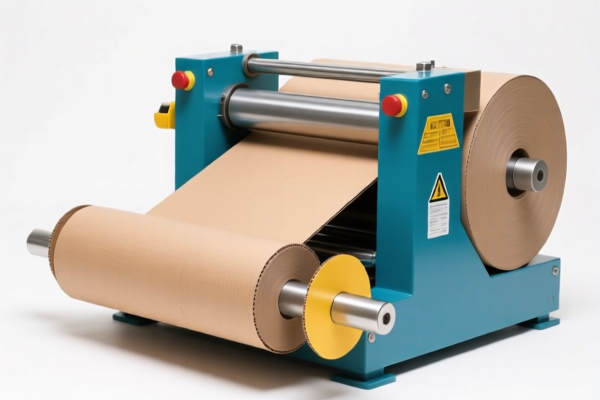
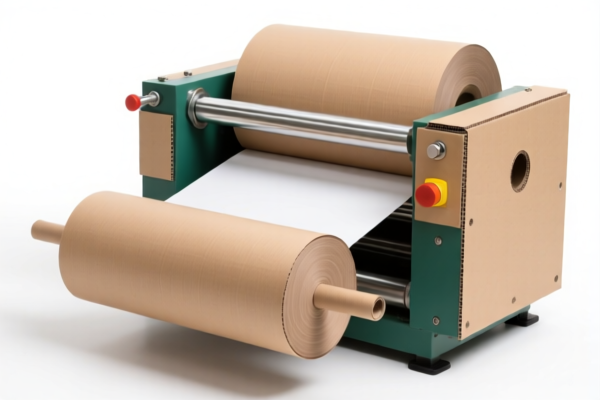
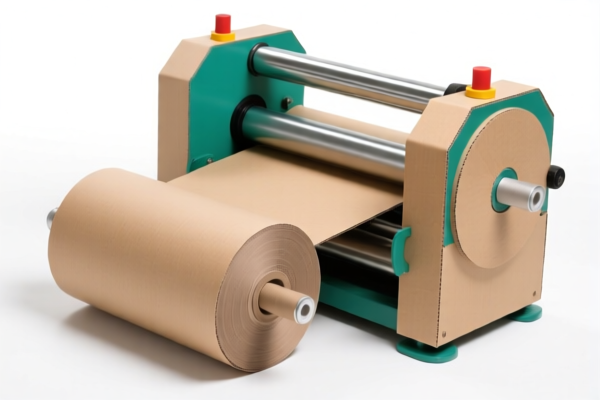
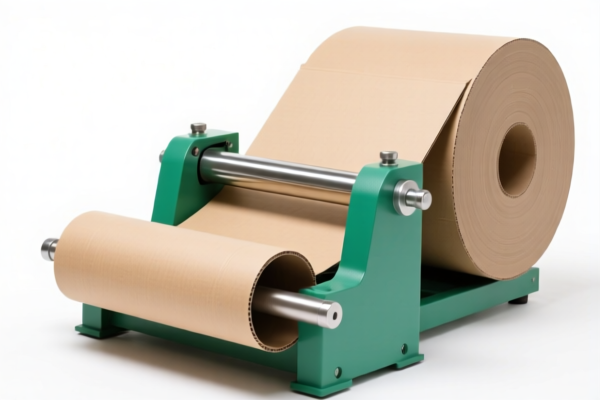
AI Analysis
⚡ Pneumatic Plate / Air-Driven Plate (Fengdong Ban)
🌐 HS Code Reference & Customs Clearance Guide | 2026 Latest Tariff Analysis | Professional Clearance Strategy
📌 1. Product Definition & Classification: What Exactly is a "Pneumatic Plate"?
The term "Pneumatic Plate" (风动板) refers to a mechanical component or structure driven by compressed air. In international trade, this generic term is ambiguous and requires precise interpretation based on its function, material, and integration status. The classification hinges on whether it is a specific accessory for power tools or a general mechanical part.
⚠️ Key Distinction Points:
- If it is a specific accessory for pneumatic tools (e.g., a replacement part for an air impact wrench or drill), it falls under Power Tool Accessories.
- If it is a general mechanical component (e.g., a plate for an industrial machine, press, or actuator) without being a dedicated tool part, it falls under General Machinery Parts.
📦 2. HS Code Classification Details (2026 Latest Tariff Authority Comparison)
Based on the provided data, there are three potential HS Codes depending on the specific nature of the "Pneumatic Plate."
| HS Code | Product Description | Application Scenario | Key Classification Logic |
|---|---|---|---|
8467.92.00.90 |
Other Parts of Pneumatic Tools | Specific accessories for air tools (e.g., blades, chisels, specific plate attachments for pneumatic devices) | "Pneumatic" + "Part/Accessory": Matches the logic of pneumatic tool components. No material conflict. |
8467.19.50.90 |
Other Parts of Other Tools With Self-Contained Electric or Non-Electric Motor | Tools powered by compressed air (pneumatic) that are not strictly "hand-held power tools" or fall under broader categories | "Pneumatic" (Air-driven) + "Other Parts": Matches the core power source requirement. "Plate" is treated as a generic part. |
8479.89.95.99 |
Other Machines and Mechanical Appliances (Not Elsewhere Specified) | General mechanical plates, structural components, or non-specific machinery parts that do not fit tool-specific categories | "General Mechanical Part": Uses the "Other/Catch-all" category. Assumed to be a mechanical component unless proven otherwise. |
🔍 Critical Warning:
-8467.92.00.90and8467.19.50.90are favored if the item is explicitly a part of a pneumatic tool.
-8479.89.95.99is used if the item is a general mechanical plate (e.g., for a press, conveyor, or industrial machine) and not a tool accessory.
- Misclassification Risk: Declaring a simple mechanical plate as a pneumatic tool part (8467...) when it is actually a general machine part (8479...) can lead to significant tariff differences (see below).
💰 3. 2026 Latest Tariff Rate Breakdown (Including Surtaxes & Policy Add-ons)
✅ Applicable Country: United States (US)
✅ Origin: China (CN)
✅ Effective Time: 2025/2026 (Based on current trade data)
🎯 1. 8467.92.00.90 —— Parts of Pneumatic Tools (Other)
| Item | Content |
|---|---|
| Base Tariff | 0.0% |
| USITC Surtax (Section 301) | +7.5% |
| IEEPA Add-on Tariff (122 Clause) | +10% |
| Total Tariff Rate | 17.5% |
| Tax Calculation | CIF Value × 17.5% |
| De Minimis Eligibility | ❌ Not Applicable (Usually subject to formal entry) |
| Legal Basis Path | IEEPA:122 → USITC:8467.92.00.90 |
📌 Explanation:
- This is the most favorable rate among the options.
- "Pneumatic" (风动) clearly identifies the power source.
- "Plate" (板) is interpreted as a part/component.
- Total 17.5% is relatively low compared to other mechanical parts.
🎯 2. 8467.19.50.90 —— Other Parts of Pneumatic Tools (Other)
| Item | Content |
|---|---|
| Base Tariff | 0.0% |
| USITC Surtax (Section 301) | +25.0% |
| IEEPA Add-on Tariff (122 Clause) | +10% |
| Total Tariff Rate | 35.0% |
| Tax Calculation | CIF Value × 35.0% |
| De Minimis Eligibility | ❌ Not Applicable |
| Legal Basis Path | IEEPA:122 → USITC:8467.19.50.90 |
📌 Explanation:
- Although also classified under Chapter 84 (Nuclear Reactors, Boilers, Machinery & Mechanical Appliances; Parts), the subheading 8467.19 often carries higher surtaxes (25%) due to its specific categorization within power tools or similar machinery.
- Total 35.0% is significantly higher than8467.92.00.90.
- Caution: Do not assume all "pneumatic parts" fall under the same 7.5% surtax bracket. The specific subheading matters immensely.
🎯 3. 8479.89.95.99 —— Other Machines and Mechanical Appliances (Other)
| Item | Content |
|---|---|
| Base Tariff | 2.5% |
| USITC Surtax (Section 301) | +25.0% |
| IEEPA Add-on Tariff (122 Clause) | +10% |
| Steel/Aluminum/Copper Surtax | +50% (IF Material is Steel, Aluminum, or Copper) |
| Total Tariff Rate | 87.5% (Base + Surtax) Up to 137.5% (If Metal + 50% Surtax) |
| Tax Calculation | CIF Value × (87.5% or 137.5%) |
| De Minimis Eligibility | ❌ Not Applicable |
| Legal Basis Path | IEEPA:122 → USITC:8479.89.95.99 → Steel/Al/Cu Surcharge |
📌 Explanation:
- This is the MOST EXPENSIVE option.
- If the "Pneumatic Plate" is made of Steel, Aluminum, or Copper, an additional 50% tariff applies on top of the base and 301 tariffs.
- Total could reach 137.5%!
- "Plate" is often interpreted as a general mechanical part if it doesn't fit tool-specific definitions, leading to this high-cost category.
🛠️ 4. Customs Clearance Practical Advice (Pitfall Avoidance Guide)
✅ 1. Documentation Checklist (Non-Negotiable)
| Document | Required? | Description |
|---|---|---|
| ✅ Product Specification Sheet | ✔️ | Must clearly state: "Pneumatic/Air-driven," "Part of [Tool Name]," or "Mechanical Component." |
| ✅ Technical Diagram/Structure | ✔️ | Show how the "Plate" connects to the pneumatic system. Is it a tool accessory or a general machine part? |
| ✅ Material Declaration | ✔️ | Critical! State exact material (e.g., Plastic, Steel, Aluminum). If metal, anticipate the +50% surtax for 8479... |
| ✅ Commercial Invoice | ✔️ | Describe as "Pneumatic Tool Part" or "Mechanical Plate" accurately. Avoid vague terms like "Air Part." |
| ✅ Product Photos | ✔️ | Clear images of the item, labeling, and any markings (e.g., "For Air Drill Model X"). |
✅ 2. Declaration Strategy (Key Mantras)
🔥 “Identify Power Source, Specify Function, Declare Material Accurately!”
| Scenario | Correct Declaration | Incorrect Declaration | Consequence |
|---|---|---|---|
| Part of a Pneumatic Drill/Wrench | 8467.92.00.90 |
"Pneumatic Plate" | Avoids 35%+ and 87.5%+ tariffs. Saves up to 70%! |
| General Machine Component | 8479.89.95.99 |
"Pneumatic Tool Part" | Risk of audit. If metal, tax hits 137.5%. |
| Metal Plate for Industrial Press | 8479.89.95.99 (with material note) |
"Tool Accessory" | High tax, but correct classification. |
✅ 3. Special Case Handling
| Situation | Recommendation |
|---|---|
| Is it Plastic or Rubber? | If non-metal, 8479.89.95.99 avoids the +50% metal surtax. Total = 87.5%. Still high, but better than 137.5%. |
| Is it a Standard Accessory? | If it’s a replaceable part for a branded pneumatic tool (e.g., Chicago Pneumatic, Ingersoll Rand), strongly argue for 8467.92.00.90 (17.5%). |
| Ambiguous "Plate"? | Provide a function statement: "This plate is used to [specific function] in pneumatic device [Model]." |
🌍 5. Global Market Clearance Comparison (2026 Latest)
| Country/Region | Recommended HS Code | Tariff (China Origin) | Certification | Notes |
|---|---|---|---|---|
| 🇺🇸 USA | 8467.92.00.90 |
17.5% | N/A | Best Option if tool part. Avoid 8479 (87.5%+). |
| 🇺🇸 USA | 8479.89.95.99 |
87.5% - 137.5% | N/A | Avoid unless no other option. Metal surtax is devastating. |
| 🇨🇳 China | 8467.92.00 |
~5-10% | CCC (if applicable) | Lower base rates, but export restrictions may apply. |
| 🇪🇺 EU | 8467.92 |
~4.5% | CE + RoHS | Generally lower tariffs. Focus on CE compliance. |
| 🇬🇧 UK | 8467.92 |
~4.5% | UKCA | Post-Brexit rules apply. CE may still be accepted. |
📌 Conclusion:
- The US is the most critical market for tariff optimization.
- Classifying as a Pneumatic Tool Part (8467.92.00.90) is the golden strategy, saving up to 120% in tariffs compared to general machinery parts.
- Material matters: If you must use8479, ensure it’s not steel/aluminum/copper to avoid the +50% surtax.
📌 6. Common Mistakes & Pitfalls (Lessons Learned)
❌ Mistake 1: Declaring "Pneumatic Plate" as 8479.89.95.99 when it’s a tool part.
👉 Consequence: Tax jumps from 17.5% to 87.5% (or 137.5% if metal). Huge financial loss!
❌ Mistake 2: Ignoring material composition for 8479.
👉 Consequence: If steel/aluminum/copper, +50% surtax applies. Total 137.5%.
❌ Mistake 3: Using vague descriptions like "Air Part."
👉 Consequence: Customs officer may classify it as "General Machinery" (8479) by default, leading to high tariffs and delays.
❌ Mistake 4: Assuming all pneumatic parts are 7.5%.
👉 Consequence: 8467.19.50.90 has a 25% surtax. Always check the specific subheading.
✅ Correct Approach:
"Replacement Plate for Pneumatic Impact Wrench, Model XYZ, Made of [Material], Compatible with [Brand]"
🎯 7. Conclusion: Precise Classification Saves Millions!
🎯 Remember the Mantra:
🔹 "Pneumatic Part? Aim for 8467.92 (17.5%)!"
🔹 "Avoid 8479 (87.5%+)! Unless it’s truly general machinery!"
🔹 "Check Material! Steel/Al/Copper = +50% Penalty!"
📌 Pro Tip:
If your "Pneumatic Plate" is a standard, interchangeable part for a known pneumatic tool brand, provide the tool model number and manufacturer compatibility list. This evidence is powerful for supporting classification under 8467.92.00.90.
📣 Immediate Action Required:
📞 Consult a Customs Broker to review your product’s specific function.
🚀 Provide Detailed Specs: "Is it for a tool or a machine? What is the material?"
💼 Optimize Your Supply Chain: Correct classification can save up to 120% in tariffs. Don’t leave money on the table!
✨ Professional Clearance Starts with Accurate Classification!
💼 Every Percent Counts in International Trade!
Customer Reviews
About HS Code Classification
The Harmonized System (HS) is an internationally standardized nomenclature developed by the World Customs Organization (WCO) to classify traded products. Over 200 countries use the HS system as the basis for customs tariffs, trade statistics, and import/export regulations.
Each HS code follows a hierarchical structure:
- Chapter (2 digits) — Broad category of goods (e.g., Chapter 84: Machinery and Mechanical Appliances)
- Heading (4 digits) — More specific grouping within the chapter
- Subheading (6 digits) — Internationally standardized breakdown, used by all WCO member countries
- National subdivisions (8-10 digits) — Country-specific extensions for further classification, such as US HTSUS 10-digit codes
Correct HS code classification is essential for smooth customs clearance, accurate duty payment, and compliance with trade regulations. Misclassification can lead to customs delays, overpayment of duties, or penalties.
When importing from CN to US, the applicable tariff rates may include:
- Most-Favored-Nation (MFN) rate — The standard duty rate applied to WTO members
- General rate — Applied to countries without trade agreements
- Trade remedy duties — Additional tariffs such as Section 301 (anti-dumping), Section 232 (national security), or countervailing duties
The information provided on this page is for reference purposes only. For official classification, please consult with your local customs authority or a licensed customs broker.