飞机零部件
CN → US| HS Code | Tariff Rate | Origin | Destination | Doc |
|---|---|---|---|---|
| 9401104000 | 17.5% | CN | US | Official Doc |
| 9401108000 | 17.5% | CN | US | Official Doc |
| 8802200160 | 35.0% | CN | US | Official Doc |
| 8802300160 | 35.0% | CN | US | Official Doc |
Product Images
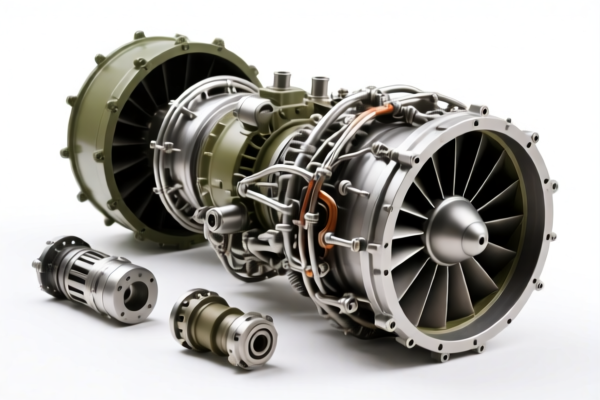
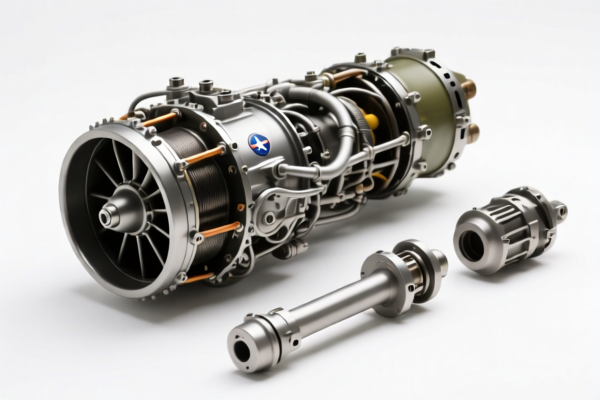
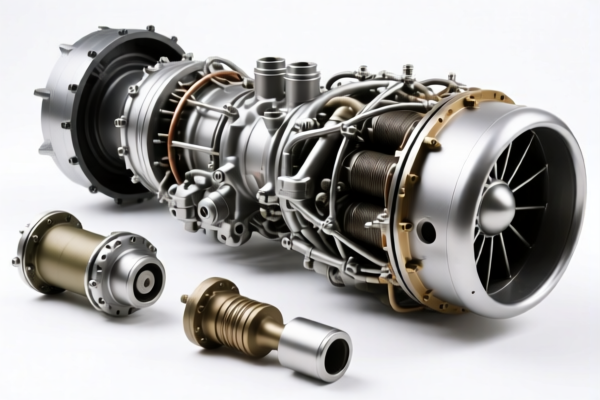
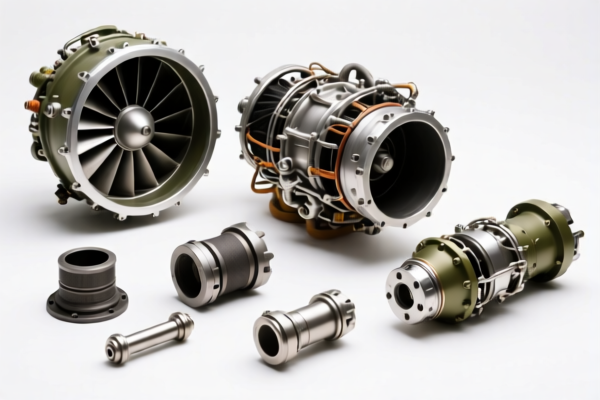
AI Analysis
✈️ Aircraft Parts (Aviation Components)
🌐 HS Code Reference & Customs Clearance Guide | 2026 Latest Tariff Analysis | Professional Clearance Strategy
📌 Part 1: Product Definition & Classification: What Exactly Are "Aircraft Parts"?
Aircraft parts encompass a wide range of specialized components used in the assembly, maintenance, and operation of aircraft. In international trade, these parts are not treated as a single category but are strictly divided based on their function, specific aircraft system, and material composition.
The data provided highlights two distinct categories based on their HS Code classification:
-
Seats & Cabin Components (Chapter 94):
- Items like aircraft seats fall under HS Code
9401.10.x0. These are classified as "parts of aircraft seats," not direct airframe components. - Key Characteristic: They are furniture-like assemblies within the cabin.
- Items like aircraft seats fall under HS Code
-
Airframe & Structural Components (Chapter 88):
- Items like general aviation components fall under HS Codes
8802.20.01.60and8802.30.01.60. - Key Characteristic: These are often "catch-all" or residual categories for parts that don't fit into specific sub-headings like engines (8801) or rotors (8803). They are subject to different tariff rules than seats.
- Items like general aviation components fall under HS Codes
⚠️ Critical Distinction: * If the item is a seat, it goes to 9401. * If the item is a structural/functional part (e.g., fuselage panel, wing component, landing gear part) not specifically listed elsewhere, it likely falls under the 8802 residual categories. * Misclassification Risk: Classifying a structural part as a "seat part" or vice versa leads to massive tax discrepancies (17.5% vs. 35.0%).
📦 Part 2: HS Code Classification Details (2026 Latest Tariff Reference)
Based on the provided data, here are the two main HS Code pathways for aircraft parts:
| HS Code | Product Description | Application Scenario | Tax Rate |
|---|---|---|---|
9401.10.40.00 |
Aircraft Seats / Seat Components | Cabin seating, passenger seats, flight crew seats. Classified as "parts of aircraft seats." | 17.5% |
9401.10.80.00 |
Other Aircraft Seat Parts | Specialized seating components, non-standard seat frames, or accessories for seats. | 17.5% |
8802.20.01.60 |
Aircraft Parts (Residual/Catch-all) | General airframe parts, structural components, or parts not specifically listed in 8801-8806. Fits the "residual category" rule. | 35.0% |
8802.30.01.60 |
Aircraft Parts (Residual/Catch-all) | Similar to above, often for heavier or different class aircraft parts defaulting to residual classification. | 35.0% |
🔍 Important Note: * Seats (
9401.10) are treated as furniture/cabin items with a lower tariff burden. * General Airframe Parts (8802.x0) are treated as industrial aviation components with a significantly higher tariff burden. * Do not assume all "aircraft parts" are equal. A wing bracket is not the same as a seat cushion.
💰 Part 3: 2026 Latest Tariff Rate Breakdown (Including Additional Duties)
✅ Applicable Market: United States (US) ✅ Origin: China (CN) ✅ Effective Date: Includes subsequent imports post-2025/2026 policy adjustments
🎯 1. 9401.10.40.00 & 9401.10.80.00 —— Aircraft Seats & Components
| Item | Detail |
|---|---|
| Base Duty Rate | 0.0% (Ad Valorem) |
| Section 301 Additional Duty | +7.5% |
| Section 122 Duty | +10.0% |
| Total Effective Rate | 17.5% |
| Tax Calculation | CIF Value × 17.5% |
| De Minimis Exemption | ❌ Not Eligible (For values exceeding $800, but these items are often scrutinized; confirm current threshold rules for aviation parts) |
| Legal Basis Path | Section 301: 7.5% → Section 122: 10% → USITC: 9401.10.xx |
📌 Explanation: * Aircraft seats benefit from a lower additional tariff profile. * Total Tax: 17.5%. This is the most favorable rate for "aircraft parts" if they can be correctly classified as seats.
🎯 2. 8802.20.01.60 & 8802.30.01.60 —— General Aircraft Parts (Residual Category)
| Item | Detail |
|---|---|
| Base Duty Rate | 0.0% (Ad Valorem) |
| Section 301 Additional Duty | +25.0% |
| Section 122 Duty | +10.0% |
| Total Effective Rate | 35.0% |
| Tax Calculation | CIF Value × 35.0% |
| De Minimis Exemption | ❌ Not Eligible |
| Legal Basis Path | Section 301: 25.0% → Section 122: 10% → USITC: 8802.xx.xx |
📌 Explanation: * General airframe parts, unless specifically listed elsewhere, default to this "residual" category. * Total Tax: 35.0%. This is double the rate of aircraft seats. * High Risk: Many suppliers mistakenly classify structural parts as "accessories" to avoid the 25% Section 301 duty, leading to severe customs penalties.
🛠️ Part 4: Practical Customs Clearance Advice (Pitfall Avoidance Guide)
✅ 1. Preparation Checklist (Essential Documents)
| Document | Mandatory? | Description |
|---|---|---|
| ✅ Product Specification Sheet | ✔️ | Must clearly state if the item is a Seat (with fabric, frame, mechanism) or a Structural Part (metal, composite, no upholstery). |
| ✅ Engineering Drawings | ✔️ | Crucial for 8802 parts to prove they are not "seats" or other sub-categories. |
| ✅ Photos (Internal & External) | ✔️ | Show assembly, mounting points, and any branding/labels. |
| ✅ Commercial Invoice | ✔️ | Must describe the item precisely. Avoid vague terms like "Plane Part." Use "Aircraft Seat Assembly" or "Fuselage Panel Component." |
| ✅ Packing List | ✔️ | Confirm if parts are shipped with seats (mixed shipment) or separately. |
| ✅ Certification (if applicable) | ✔️ | FAA/EASA approval documents, though not always required for customs, they prove the item's true nature. |
✅ 2. Classification Strategy (Key Mantra)
🔥 "Seats are Furniture (9401), Parts are Industrial (8802). Don't Mix Them!"
| Scenario | Correct HS Code | Incorrect Approach | Consequence |
|---|---|---|---|
| Passenger Seat (with cushion, frame, rails) | 9401.10.40.00 |
Classify as 8802.30.01.60 |
Overpaying Tax (Paying 35% instead of 17.5%) |
| Seat Frame Only (no cushion/fabric) | 9401.10.40.00 (often) |
Classify as 8802 |
Potential audit risk; usually still seat part |
| Wing Spar / Fuselage Panel | 8802.20.01.60 or 8802.30.01.60 |
Classify as 9401 |
Customs Penalty + Back Taxes (Smuggling of tariff difference) |
| Cable Wiring Harness | 8544 or 8538 (Not in provided data) |
Classify as 8802 |
Sub-optimal, but less risky than seat/error mix-up |
⚠️ Crucial Tip: * If you are shipping Seats, emphasize "Upholstery," "Cushion," "Adjustable Mechanism" in the description. * If you are shipping Structural Parts, emphasize "Aluminum Alloy," "Composite Material," "Mounting Points," "No Upholstery."
✅ 3. Special Handling Cases
| Situation | Recommendation |
|---|---|
| Mixed Container (Seats + Wing Parts) | Split Declaration! Do not lump them together. Declare seats under 9401 and parts under 8802. Mixing them can cause the entire shipment to be audited. |
| OEM Custom Parts | Provide original equipment manufacturer (OEM) drawings to prove the part's specific function and classification. |
| Used vs. New | Used aircraft parts may require additional certification (FAA Form 8130-3) for re-entry, even if duties are the same. |
🌍 Part 5: Global Market Comparison (2026 Context)
| Region | Recommended HS Code | Approx. Tax Rate (China Origin) | Notes |
|---|---|---|---|
| 🇺🇸 USA | 9401.10 (Seats) 8802.30 (Parts) |
17.5% (Seats) 35.0% (Parts) |
High Section 301 + Section 122 duties. Strict classification enforcement. |
| 🇨🇳 China | 9401.10 8802.30 |
Varies by MFN rate | Lower base tariffs, but check for domestic VAT refunds. |
| 🇪🇺 EU | 9401.10 8803.90 (Often EU uses 8803 for parts) |
Varies | EU classification for aircraft parts is often 8803.90 (Parts of aircraft), which may have different duty rates than the US residual 8802 codes. |
| 🇬🇧 UK | 9401.10 8803.90 |
Varies | Post-Brexit tariffs apply. Align with UK Global Tariff. |
📌 Conclusion: * The US market imposes the heaviest burden on aviation parts due to Section 301 (7.5% or 25%) and Section 122 (10%). * Seats are significantly cheaper to import than general airframe parts. * Accurate classification is the #1 cost-saving lever.
📌 Part 6: Common Errors & Pitfalls (Lessons Learned)
❌ Error 1: Classifying a structural fuselage panel as a "Seat Part" to save on the 25% Section 301 duty. 👉 Consequence: Customs will audit, find the part has no upholstery, and apply the 35% rate + penalties.
❌ Error 2: Labeling all items as "Aircraft Accessory" to avoid detailed scrutiny. 👉 Consequence: Ambiguous descriptions lead to delays, re-classification by customs, and potential liquidation of the duty at the highest possible rate.
❌ Error 3: Assuming all aircraft parts fall under 8802.
👉 Consequence: Missing the lower 17.5% rate for seats (9401) means overpaying by 17.5% on high-value cabin equipment.
✅ Correct Approach:
"Be Specific! Describe the item's physical form (seat vs. metal plate) and function, not just its end-use in an airplane."
🎯 Part 7: Conclusion: Professional Classification Saves Millions!
🎯 Remember the Mantra:
🔹 "Seats are 17.5%, Structure is 35.0%. Don't mix, don't guess, don't fuss!" 🔹 "HS Code
9401for Seats,8802for the Rest. Precision in description is your best defense."
📌 Pro Tip:
- For high-value shipments, consider applying for an Advance Ruling (ISF/Binding Ruling) with US Customs and Border Protection (CBP) if the classification is ambiguous.
- Always consult with a licensed customs broker to review the Engineering Drawings before shipment.
📣 Immediate Action:
📞 Verify your product catalog against
9401.10and8802.30today. 🚀 Optimize your supply chain by correctly classifying seats vs. structures to minimize tax liabilities.
✨ Professional Clearance Starts with Accurate Classification! 💼 Your Bottom Line Depends on It!
Customer Reviews
About HS Code Classification
The Harmonized System (HS) is an internationally standardized nomenclature developed by the World Customs Organization (WCO) to classify traded products. Over 200 countries use the HS system as the basis for customs tariffs, trade statistics, and import/export regulations.
Each HS code follows a hierarchical structure:
- Chapter (2 digits) — Broad category of goods (e.g., Chapter 84: Machinery and Mechanical Appliances)
- Heading (4 digits) — More specific grouping within the chapter
- Subheading (6 digits) — Internationally standardized breakdown, used by all WCO member countries
- National subdivisions (8-10 digits) — Country-specific extensions for further classification, such as US HTSUS 10-digit codes
Correct HS code classification is essential for smooth customs clearance, accurate duty payment, and compliance with trade regulations. Misclassification can lead to customs delays, overpayment of duties, or penalties.
When importing from CN to US, the applicable tariff rates may include:
- Most-Favored-Nation (MFN) rate — The standard duty rate applied to WTO members
- General rate — Applied to countries without trade agreements
- Trade remedy duties — Additional tariffs such as Section 301 (anti-dumping), Section 232 (national security), or countervailing duties
The information provided on this page is for reference purposes only. For official classification, please consult with your local customs authority or a licensed customs broker.