飞盘
CN → US| HS Code | Tariff Rate | Origin | Destination | Doc |
|---|---|---|---|---|
| 4016996050 | 37.5% | CN | US | Official Doc |
| 9503000090 | 10.0% | CN | US | Official Doc |
| 3926903500 | 16.5% | CN | US | Official Doc |
| 3926903300 | 16.5% | CN | US | Official Doc |
| 4016992000 | 14.3% | CN | US | Official Doc |
Product Images
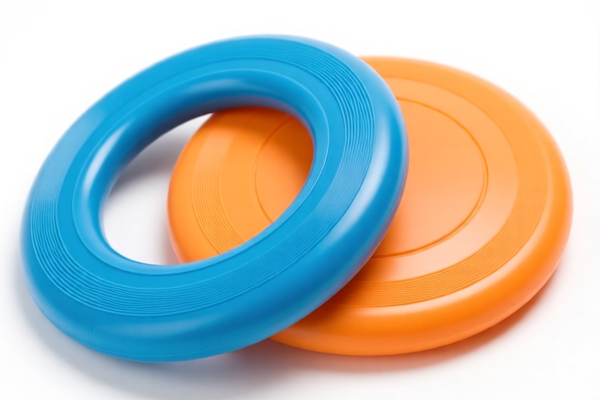
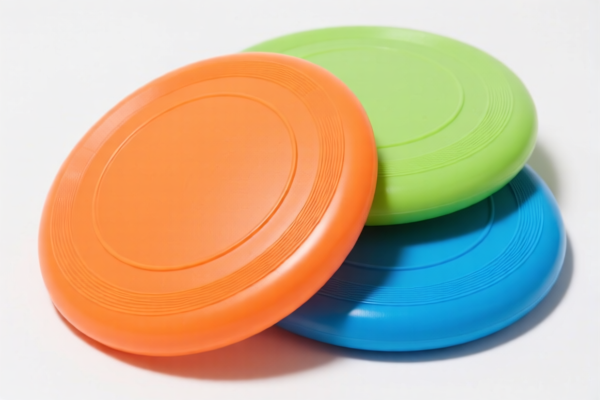
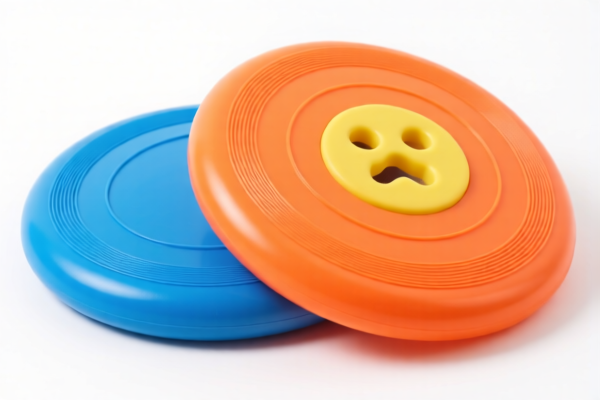
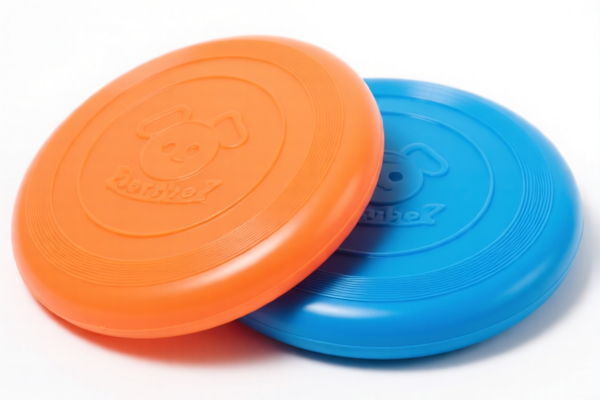
AI Analysis
🥏 Flying Discs (Pet Toys/Recreational Gear)
🌐 HS Code Reference & Customs Clearance Guide | 2026 Latest Tariff Analysis | Professional Clearance Strategy
📌 1. Product Definition & Classification: What Exactly is a "Flying Disc"?
A "Flying Disc" is a concave plastic or rubber disc thrown for recreation or sport. In international trade, its classification hinges on two critical factors: Material and Specific Use.
Key Distinction: * Toy/Recreational Use (Pet or Human): If the disc is designed as a toy (e.g., for dogs) or general recreation, it falls under Chapter 95 (Toys, Games, and Sports Equipment) or Chapter 40 (Rubber Articles) depending on material and specific subheading logic. * Material-Based Classification: If not clearly defined as a toy in specific subheadings, it may fall under Chapter 39 (Plastics) or Chapter 40 (Rubber) based on its primary material composition.
⚠️ Critical Note:
- If the disc is explicitly marketed as a pet toy, customs may prioritize Chapter 95 or Chapter 40 if the material is rubber.
- If it is a general plastic recreational item, Chapter 39 is a strong candidate.
- Misclassification Risk: Declaring a rubber pet toy as "plastic" or vice versa can lead to significant tariff discrepancies (e.g., 10% vs. 37.5%).
📦 2. HS Code Classification Details (2026 Latest Tariff Authority Comparison)
Based on common sense inference and trade logic, here are the five most probable HS Codes for "Flying Discs," categorized by material and use:
| HS Code | Product Description | Material Inference | Use Case |
|---|---|---|---|
4016.99.60.50 |
Other vulcanized rubber articles (General purpose) | Vulcanized Rubber/Silicone | Generic rubber discs, heavy-duty pet toys |
9503.00.00.90 |
Other toys (Including skateboards, etc.) | Plastic/Rubber | Pet frisbees, recreational toys |
3926.90.35.00 |
Other plastic articles | Plastic | General plastic recreational discs |
3926.90.33.00 |
Other plastic articles | Plastic | General plastic recreational discs (alternative subheading) |
4016.99.20.00 |
Other vulcanized rubber articles (Pet toys) | Vulcanized Rubber | Specifically designed pet toys made of rubber |
🔍 Key Insight:
- Chapter 95 (9503.00.00.90) is often preferred for toy-like items, even if made of rubber, if the primary intent is play.
- Chapter 40 (4016.99.xxxx) applies if the item is purely rubber and not explicitly classified under toys in Chapter 95.
- Chapter 39 (3926.90.xxxx) applies if the item is primarily plastic.
💰 3. 2026 Latest Tariff Rate Breakdown (Including Surcharges & Policy Add-ons)
✅ Applicable Country: United States (US)
✅ Origin: China (CN)
✅ Effective Time: From November 10, 2025 (including subsequent imports)
🎯 1. 4016.99.60.50 —— Other Vulcanized Rubber Articles
| Item | Content |
|---|---|
| Base Tariff | 2.5% |
| USITC Surcharge (Section 301) | +25.0% |
| IEEPA Surcharge | +10.0% |
| Total Tariff | 37.5% |
| Tax Calculation | CIF Value × 37.5% |
| De Minimis Eligibility | ❌ Not Eligible (High tariff threshold) |
| Legal Basis Path | IEEPA:9903.01.25 → USITC:4016.99.60.50 → FOOTNOTE:9903.88.01 |
📌 Explanation:
- This classification assumes the disc is made of vulcanized rubber and is not primarily categorized as a toy.
- The 37.5% rate is the highest among the options, driven by the 25% Section 301 surcharge and 10% IEEPA surcharge.
- Risk: High cost. Only choose this if the material is definitively rubber and no toy classification applies.
🎯 2. 9503.00.00.90 —— Other Toys
| Item | Content |
|---|---|
| Base Tariff | 0.0% |
| USITC Surcharge (Section 301) | 0.0% |
| IEEPA Surcharge | +10.0% |
| Total Tariff | 10.0% |
| Tax Calculation | CIF Value × 10.0% |
| De Minimis Eligibility | ❌ Not Eligible (Due to IEEPA surcharge on Chinese goods) |
| Legal Basis Path | IEEPA:9903.01.25 → USITC:9503.00.00.90 |
📌 Explanation:
- This is the most favorable tariff for pet frisbees or recreational discs classified as toys.
- 0% base + 0% Section 301 + 10% IEEPA = 10%.
- Advantage: Significantly cheaper than rubber or plastic classifications.
- Condition: Must be clearly marketed and used as a toy (e.g., pet toy).
🎯 3. 3926.90.35.00 —— Other Plastic Articles
| Item | Content |
|---|---|
| Base Tariff | 6.5% |
| USITC Surcharge (Section 301) | 0.0% |
| IEEPA Surcharge | +10.0% |
| Total Tariff | 16.5% |
| Tax Calculation | CIF Value × 16.5% |
| De Minimis Eligibility | ❌ Not Eligible (IEEPA surcharge applies) |
| Legal Basis Path | IEEPA:9903.01.25 → USITC:3926.90.35.00 |
📌 Explanation:
- Applicable if the disc is made of plastic and not classified as a toy.
- 16.5% total tariff.
- Note: No Section 301 surcharge for this specific subheading, but IEEPA surcharge still applies.
🎯 4. 3926.90.33.00 —— Other Plastic Articles
| Item | Content |
|---|---|
| Base Tariff | 6.5% |
| USITC Surcharge (Section 301) | 0.0% |
| IEEPA Surcharge | +10.0% |
| Total Tariff | 16.5% |
| Tax Calculation | CIF Value × 16.5% |
| De Minimis Eligibility | ❌ Not Eligible (IEEPA surcharge applies) |
| Legal Basis Path | IEEPA:9903.01.25 → USITC:3926.90.33.00 |
📌 Explanation:
- Similar to3926.90.35.00, this is a plastic classification.
- 16.5% total tariff.
- Choose between33and35based on specific plastic article sub-rules (e.g., household vs. industrial), but tax rate is identical.
🎯 5. 4016.99.20.00 —— Other Vulcanized Rubber Articles (Pet Toys)
| Item | Content |
|---|---|
| Base Tariff | 4.3% |
| USITC Surcharge (Section 301) | 0.0% |
| IEEPA Surcharge | +10.0% |
| Total Tariff | 14.3% |
| Tax Calculation | CIF Value × 14.3% |
| De Minimis Eligibility | ❌ Not Eligible (IEEPA surcharge applies) |
| Legal Basis Path | IEEPA:9903.01.25 → USITC:4016.99.20.00 |
📌 Explanation:
- This is a hybrid classification: Rubber material, but specific to pet toys.
- 14.3% total tariff.
- Advantage: Lower than general rubber (4016.99.60.50) because it may avoid the 25% Section 301 surcharge in this specific subheading (depending on USITC footnote interpretation).
- Condition: Must be explicitly a pet toy made of rubber.
🛠️ 4. Customs Clearance Practical Advice (Expert Pitfall Avoidance)
✅ 1. Documentation Checklist (Essential)
| Document | Required? | Description |
|---|---|---|
| ✅ Product Specification Sheet | ✔️ | Material composition (Rubber vs. Plastic), dimensions, weight |
| ✅ Product Photos | ✔️ | Clear images showing the disc, branding, and any pet-related imagery |
| ✅ Commercial Invoice | ✔️ | Must specify "Pet Toy" or "Recreational Flying Disc" |
| ✅ Usage Statement | ✔️ | Declare intended use (e.g., "For dog play" or "General recreation") |
| ✅ Material Declaration | ✔️ | Explicitly state "Vulcanized Rubber" or "Plastic" to avoid ambiguity |
✅ 2. Declaration Strategy (Key Tips)
🔥 “Material Determines Code, Use Determines Rate!”
| Scenario | Recommended HS Code | Total Tariff | Why? |
|---|---|---|---|
| Pet Toy Made of Rubber | 9503.00.00.90 (If considered toy) or 4016.99.20.00 (If rubber-specific) |
10.0% or 14.3% | Toy classification is cheapest. Rubber-specific pet toy is second cheapest. |
| Pet Toy Made of Plastic | 9503.00.00.90 |
10.0% | Best rate if clearly a toy. |
| General Rubber Disc (Non-Toy) | 4016.99.60.50 |
37.5% | Highest rate. Avoid unless no other classification fits. |
| General Plastic Disc (Non-Toy) | 3926.90.35.00 |
16.5% | Mid-range rate. |
⚠️ Critical Warning:
- Do NOT declare a rubber pet toy as4016.99.60.50if9503.00.00.90or4016.99.20.00is applicable. The tariff difference is 23.2%–27.5%!
- Do NOT claim a plastic disc is a toy if it’s not clearly marketed as such, as customs may reclassify it under Chapter 39 (3926.90.xxxx) with a 16.5% rate.
✅ 3. Special Situations
| Situation | Handling Advice |
|---|---|
| Mixed Materials (Rubber + Plastic) | Declare based on primary material or essential character. If rubber is dominant, consider Chapter 40. If plastic, Chapter 39. |
| Custom Design/Logo | Ensure the invoice clearly states "Custom Pet Toy" to support Chapter 95 classification. |
| Bulk Import for Resale | Provide retail packaging images to support "Toy" classification. |
| Single Sample | Still subject to same tariffs. No de minimis exemption for IEEPA surcharge. |
🌍 5. Global Market Comparison (2026 Latest)
| Country/Region | Recommended HS Code | Tariff (China Origin) | Certifications | Notes |
|---|---|---|---|---|
| 🇺🇸 United States | 9503.00.00.90 |
10.0% | ASTM F963, CPSIA | Lowest Tariff if classified as toy. |
| 🇺🇸 United States | 4016.99.60.50 |
37.5% | None | Highest Tariff. Avoid if possible. |
| 🇨🇳 China | 9503.00.00.90 |
9.0% | CCC (if applicable) | No US surcharges. |
| 🇪🇺 EU | 9503.00.00.90 |
0% | CE, EN71 | No US-style surcharges. |
| 🇬🇧 UK | 9503.00.00.90 |
0% | UKCA, EN71 | No US-style surcharges. |
📌 Conclusion:
- The US market is the most challenging due to IEEPA surcharges.
- Toy classification (9503.00.00.90) is the best strategy for pet frisbees, reducing the rate to 10% from 37.5%.
- European and Asian markets have no such surcharges, making tariffs much lower.
📌 6. Common Mistakes & Pitfalls (Lessons Learned)
❌ Mistake 1: Declaring a rubber pet toy as 4016.99.60.50 (37.5%) instead of 9503.00.00.90 (10%)
👉 Consequence: Overpaying 27.5% in tariffs.
❌ Mistake 2: Claiming a plastic disc is a "toy" without evidence
👉 Consequence: Customs reclassifies as 3926.90.xxxx (16.5%), leading to underpayment penalties if not corrected.
❌ Mistake 3: Ignoring IEEPA surcharge
👉 Consequence: All imports from China to the US are subject to +10% IEEPA surcharge, regardless of base tariff.
❌ Mistake 4: Using vague descriptions like "Flying Disc"
👉 Consequence: Customs ambiguity leads to delay, reclassification, and potential detention.
✅ Correct Approach:
"Pet Toy, Flying Disc, Rubber/Plastic, For Dogs, Model XYZ, ASTM F963 Compliant"
🎯 7. Conclusion: Professional Declaration for Cost Savings
🎯 Remember the Golden Rule:
🔹 "Toy First, Rubber Second, Plastic Third!"
🔹 "Chapter 95 is King (10%), Chapter 40 is Queen (14.3%), Chapter 39 is Prince (16.5%), General Rubber is Peasant (37.5%)."
🔹 "IEEPA surcharge is universal (10%), but Section 301 (25%) is avoidable with correct classification!"
📌 Pro Tip:
- If your flying discs are intended for pets, explicitly state "Pet Toy" on the invoice and product packaging.
- Consider pre-ruling with US Customs to confirm HS Code 9503.00.00.90 for your specific product design.
- Supply Chain Strategy: If possible, source from Vietnam or Mexico to potentially avoid IEEPA surcharges (verify current trade policies).
📣 Immediate Action:
📞 Consult with a licensed customs broker.
📄 Provide detailed product specs (material, use, target audience).
🚀 Apply for a Pre-Ruling to lock in the 10% tariff rate and avoid costly delays.
✨ Precision in Classification = Profit in Margin!
💼 Don’t let a 27.5% tariff difference eat your profits!
Customer Reviews
About HS Code Classification
The Harmonized System (HS) is an internationally standardized nomenclature developed by the World Customs Organization (WCO) to classify traded products. Over 200 countries use the HS system as the basis for customs tariffs, trade statistics, and import/export regulations.
Each HS code follows a hierarchical structure:
- Chapter (2 digits) — Broad category of goods (e.g., Chapter 84: Machinery and Mechanical Appliances)
- Heading (4 digits) — More specific grouping within the chapter
- Subheading (6 digits) — Internationally standardized breakdown, used by all WCO member countries
- National subdivisions (8-10 digits) — Country-specific extensions for further classification, such as US HTSUS 10-digit codes
Correct HS code classification is essential for smooth customs clearance, accurate duty payment, and compliance with trade regulations. Misclassification can lead to customs delays, overpayment of duties, or penalties.
When importing from CN to US, the applicable tariff rates may include:
- Most-Favored-Nation (MFN) rate — The standard duty rate applied to WTO members
- General rate — Applied to countries without trade agreements
- Trade remedy duties — Additional tariffs such as Section 301 (anti-dumping), Section 232 (national security), or countervailing duties
The information provided on this page is for reference purposes only. For official classification, please consult with your local customs authority or a licensed customs broker.