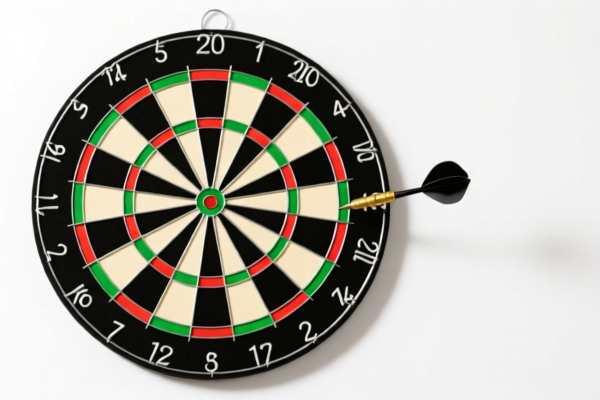
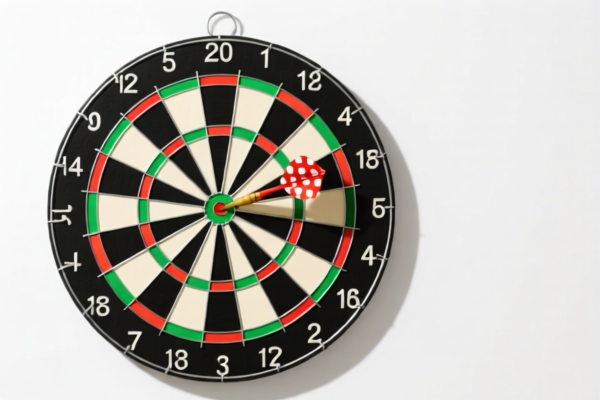
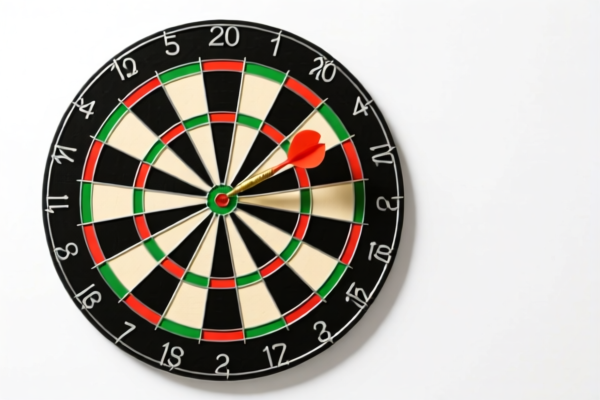
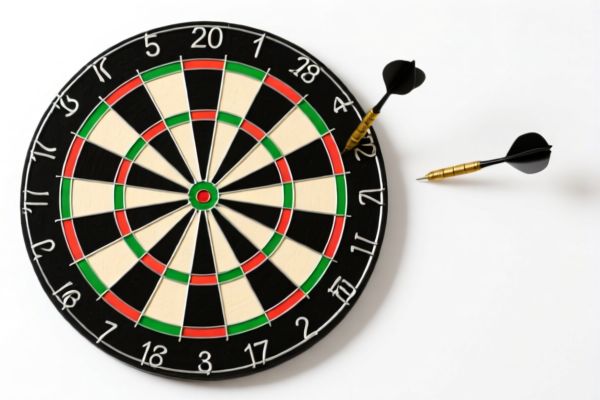
飞镖靶保护墙板
CN → US| HS Code | Tariff Rate | Origin | Destination | Doc |
|---|---|---|---|---|
| 3926305000 | 22.8% | CN | US | Official Doc |
| 3926909989 | 22.8% | CN | US | Official Doc |
| 4418999150 | 38.2% | CN | US | Official Doc |
| 4418919150 | 38.2% | CN | US | Official Doc |
Product Images
AI Analysis
🎯 Darts Board Backstop/Wall Protectors
🌐 HS Code Reference & Customs Clearance Guide | 2026 Latest Tariff Analysis | Professional通关 Strategy for Wooden/Cork Products
📌 I. Product Definition & Classification: What Exactly is a "Darts Board Backstop"?
A Darts Board Backstop (also known as a Wall Protector, Backboard, or Dart Surround) is a protective panel installed behind or around a dartboard to catch stray darts, protect walls from damage, and absorb impact noise. In international trade, these products are primarily categorized under Chapter 44 (Wood and Wood Articles) due to their core material composition (wood, bamboo, or wood-composite panels).
⚠️ Key Distinction Point:
- If the product is made primarily of wood, bamboo, or wood-based composites (like plywood or MDF) and serves as a structural backing or protective panel → It falls under Chapter 44.
- If it is made primarily of plastic (e.g., ABS plastic surround) → It would fall under Chapter 39.
- Note: The provided data focuses on Wooden/Bamboo/Cork-backed wooden variants. Plastic variants are also included in the dataset for comparison.
📦 II. HS Code Classification Details (2026 Latest Tariff Mapping)
Based on the provided data, here are the specific HS Codes and their corresponding tax rates for Darts Board Backstops/Wall Protectors:
| HS Code | Product Description | Material Composition | Application Scenario |
|---|---|---|---|
4421.99.98.80 |
Other wooden or bamboo products, not specifically mentioned elsewhere | Wood/Bamboo | General wooden dartboard surrounds, decorative backboards |
3926.90.99.89 |
Other plastic articles, not specified elsewhere | Plastic | Plastic dartboard surrounds, foam-covered plastic boards |
4418.99.91.50 |
Prefabricated building panels, wooden or composite board | Wood/Composite | Large-scale wooden backstops, integrated wooden wall panels for darts |
4418.91.91.50 |
Other prefabricated structural wooden components, wooden or bamboo | Wood/Bamboo | Structural wooden frames/backings for dartboards |
4421.91.98.80 |
Other wooden products: Bamboo products/Other, Wooden dart backstop wall boards | Wood/Bamboo | Specifically designed wooden wall boards for dart games |
🔍 Key Insight:
- The majority of high-quality dart backstops are wooden or bamboo-based (4421.xxxx.xxxxor4418.xxxx.xxxx).
- Plastic variants (3926.xxxx.xxxx) are less common for professional use but exist for budget options.
- Crucially, all wood-based dart backstops are subject to high additional tariffs when exported to the US.
💰 III. 2026 Latest Tariff Rate Breakdown (Including Surcharges & Policy Add-ons)
✅ Applicable Country: United States (US)
✅ Country of Origin: China (CN)
✅ Effective Date: November 10, 2025 (and subsequent imports)
🎯 1. Wooden/Bamboo Dart Backstops (4421.99.98.80, 4421.91.98.80)
Tax Rate: 38.3%
| Item | Content |
|---|---|
| Basic Tariff | 3.3% |
| Section 301 Surcharge | +25.0% |
| Section 122 Surcharge | +10.0% |
| Total Tariff | 38.3% |
| Calculation Method | CIF Value × 38.3% |
| De Minimis Exemption | ❌ Not Eligible (deny_de_minimis) |
| Legal Basis | 301:4421.99.98.80 → 301:4421.91.98.80 → 122:China |
📌 Explanation:
- The 25% Section 301 tariff is applied to almost all Chinese-made wood products.
- The 10% Section 122 tariff adds an extra layer for specific strategic goods, including certain wood items.
- Total effective duty is 38.3%, which is extremely high for low-margin goods.
🎯 2. Prefabricated Wooden Panels for Darts (4418.99.91.50, 4418.91.91.50)
Tax Rate: 38.2%
| Item | Content |
|---|---|
| Basic Tariff | 3.2% |
| Section 301 Surcharge | +25.0% |
| Section 122 Surcharge | +10.0% |
| Total Tariff | 38.2% |
| Calculation Method | CIF Value × 38.2% |
| De Minimis Exemption | ❌ Not Eligible |
| Legal Basis | 301:4418.99.91.50 → 301:4418.91.91.50 → 122:China |
📌 Note:
- These codes apply if the product is classified as a "prefabricated building panel" or "structural component" rather than a general household item.
- Tax rate is nearly identical to general wooden products (38.2%).
🎯 3. Plastic Dart Backstops (3926.90.99.89)
Tax Rate: 22.8%
| Item | Content |
|---|---|
| Basic Tariff | 5.3% |
| Section 301 Surcharge | +7.5% |
| Section 122 Surcharge | +10.0% |
| Total Tariff | 22.8% |
| Calculation Method | CIF Value × 22.8% |
| De Minimis Exemption | ❌ Not Eligible |
| Legal Basis | 301:3926.90.99.89 → 122:China |
📌 Key Advantage:
- Plastic variants have a significantly lower tariff (22.8%) compared to wooden ones (38.2%-38.3%).
- This is due to a lower Section 301 surcharge rate (7.5% vs. 25%).
- However, plastic backstops are generally perceived as lower quality in the darts community.
🛠️ IV. Customs Clearance Practical Advice (Real-World Pitfall Avoidance)
✅ 1. Documentation Checklist (Essential Items)
| Document | Required? | Description |
|---|---|---|
| ✅ Product Specification Sheet | ✔️ | Include dimensions, material (wood/plastic), density, and treatment (e.g., moisture-resistant). |
| ✅ Material Composition Statement | ✔️ | Explicitly state % of wood, bamboo, plastic, or composite. |
| ✅ Product Photos (Clear) | ✔️ | Show the backstop, mounting mechanism, and any labels. |
| ✅ Commercial Invoice | ✔️ | Must clearly describe the item as "Darts Board Backstop/Wall Protector." |
| ✅ Packing List | ✔️ | Detail weight, volume, and packaging type. |
| ✅ Certificate of Origin (CO) | ✔️ | Mandatory for claiming any potential preferential rates (though limited for China-US). |
✅ 2. Declaration Tips (Critical Keywords)
🔥 "Material Matters, Name Matters, Tariff Hammers Hard!"
| Scenario | Correct Declaration | Wrong Practice |
|---|---|---|
| Wooden Backstop | 4421.99.98.80 - Wooden Dart Wall Protector |
Misdeclare as "Plastic" → Customs Audit → Penalties |
| Plastic Backstop | 3926.90.99.89 - Plastic Dart Surround |
Misdeclare as "Wood" → Higher Tax (38.3% vs 22.8%) |
| Prefabricated Panel | 4418.99.91.50 - Prefabricated Wooden Panel |
Generic "Wooden Board" → Classification Dispute |
| Bamboo Backstop | 4421.91.98.80 - Bamboo Dart Board Protector |
Ignore "Bamboo" → Incorrect HS Code |
📌 Pro Tip:
- Do NOT simply declare as "Wooden Board" or "Wall Panel." Use specific terms like "Darts Board Backstop," "Dart Surround," or "Target Backboard."
- If the product is made of bamboo, explicitly state "Bamboo" in the description, as bamboo falls under specific subheadings in Chapter 44.
✅ 3. Special Circumstances & Mitigation Strategies
| Situation | Recommendation |
|---|---|
| High Tariff Impact (38.3%) | Consider sourcing or assembling in Vietnam, Malaysia, or Thailand to avoid Section 301/122 surcharges. |
| Plastic Alternative | If quality allows, switch to plastic or composite materials (3926.90.99.89) to reduce tariffs to 22.8%. |
| Pre-cut Kits | If sold as "flat-pack" components, ensure documentation reflects the finished product nature, not raw materials. |
| OEM Custom Designs | Provide design drawings to prove the product is a specialized sports accessory, not a general building material. |
🌍 V. Global Market Comparison (2026)
| Country/Region | Recommended HS Code | Tariff (China Origin) | Certification | Notes |
|---|---|---|---|---|
| 🇺🇸 USA | 4421.99.98.80 (Wood)3926.90.99.89 (Plastic) |
38.3% (Wood) 22.8% (Plastic) |
FCC (if electronic), CARB (wood) | Highest tariff burden; plan accordingly. |
| 🇨🇳 China | 4421.99.98.80 |
0% (Export duty free) | FSC (if forest wood) | Exporting from China is common, but import cost is high for US buyers. |
| 🇪🇺 EU | 4421.99.99 |
0% (Most FTA) | CE, FSC | Low tariffs if FTA applied; strict wood sourcing rules. |
| 🇬🇧 UK | 4421.99.99 |
0% (Post-Brexit FTA) | UKCA | Similar to EU. |
| 🇯🇵 Japan | 4421.99.90 |
5.0% | FSC | Moderate tariff, no surcharges. |
📌 Conclusion:
- The US market is the most challenging due to Section 301 and 122 tariffs.
- Wooden backstops are heavily penalized (38.3%).
- Plastic variants are cheaper to import (22.8%) but may face quality perception issues.
- Consider supply chain diversification to non-China origins for US-bound wooden products.
📌 VI. Common Errors & Pitfalls (Lessons Learned)
❌ Mistake 1: Declaring wooden backstops as "General Wooden Board" without specifying "Darts"
👉 Consequence: Customs may reclassify under different subheadings with higher scrutiny or incorrect tariff rates.
❌ Mistake 2: Ignoring the "Bamboo" component in mixed-material products
👉 Consequence: Incorrect HS Code selection (4421.99 vs 4421.91) leading to potential audits.
❌ Mistake 3: Assuming "De Minimis" (Section 321) applies to wooden products
👉 Consequence: NO wooden products from China under Section 301/122 are eligible for de minimis exemption. Full duty applies.
❌ Mistake 4: Under-declaring value to reduce tariffs
👉 Consequence: Severe penalties, seizure of goods, and blacklisting of importer.
✅ Best Practice:
"Darts Board Backstop, Wooden, 100% Pine Wood, Pre-cut, Model DART-PRO, FSC Certified"
🎯 VII. Conclusion: Smart Classification, Cost Control, Efficient Clearance
🎯 Remember the Mantra:
🔹 "Wood is Expensive (38.3%), Plastic is Cheaper (22.8%), Bamboo Needs Detail (4421.91)."
🔹 "No De Minimis for China Wood, Plan Ahead or Pay the Price!"
📌 Tip:
If your product is wooden, consider restructuring the supply chain (e.g., final assembly in Vietnam) to mitigate US tariffs.
For plastic, ensure quality meets standards to justify the lower tariff.
📣 Immediate Action:
📞 Consult with a licensed customs broker for Pre-Ruling (Advance Ruling) to confirm the exact HS Code.
🚀 Optimize your product mix (wood vs. plastic) based on target market tariffs.
✨ Professional Clearance Starts with Precise Classification!
💼 Every Percentage Point Saved is Pure Profit!
Customer Reviews
About HS Code Classification
The Harmonized System (HS) is an internationally standardized nomenclature developed by the World Customs Organization (WCO) to classify traded products. Over 200 countries use the HS system as the basis for customs tariffs, trade statistics, and import/export regulations.
Each HS code follows a hierarchical structure:
- Chapter (2 digits) — Broad category of goods (e.g., Chapter 84: Machinery and Mechanical Appliances)
- Heading (4 digits) — More specific grouping within the chapter
- Subheading (6 digits) — Internationally standardized breakdown, used by all WCO member countries
- National subdivisions (8-10 digits) — Country-specific extensions for further classification, such as US HTSUS 10-digit codes
Correct HS code classification is essential for smooth customs clearance, accurate duty payment, and compliance with trade regulations. Misclassification can lead to customs delays, overpayment of duties, or penalties.
When importing from CN to US, the applicable tariff rates may include:
- Most-Favored-Nation (MFN) rate — The standard duty rate applied to WTO members
- General rate — Applied to countries without trade agreements
- Trade remedy duties — Additional tariffs such as Section 301 (anti-dumping), Section 232 (national security), or countervailing duties
The information provided on this page is for reference purposes only. For official classification, please consult with your local customs authority or a licensed customs broker.