饰品配件
CN → US| HS Code | Tariff Rate | Origin | Destination | Doc |
|---|---|---|---|---|
| 3926903500 | 16.5% | CN | US | Official Doc |
| 7018105000 | 35.0% | CN | US | Official Doc |
| 7117909000 | 28.5% | CN | US | Official Doc |
| 3926903300 | 16.5% | CN | US | Official Doc |
| 7018101000 | 39.0% | CN | US | Official Doc |
Product Images
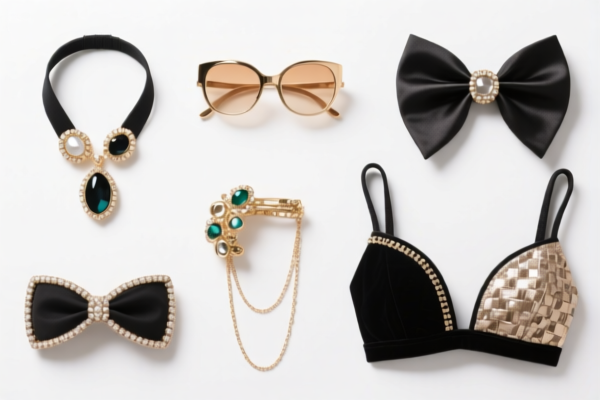
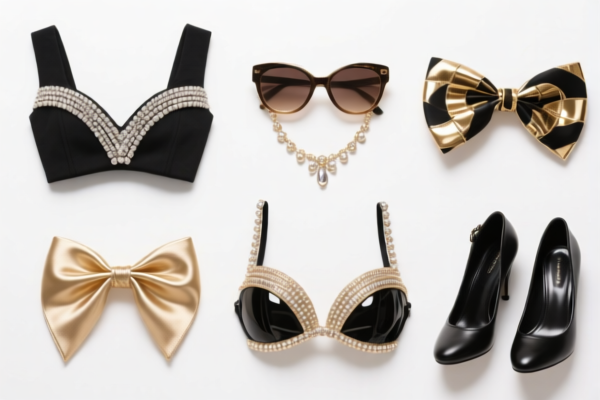
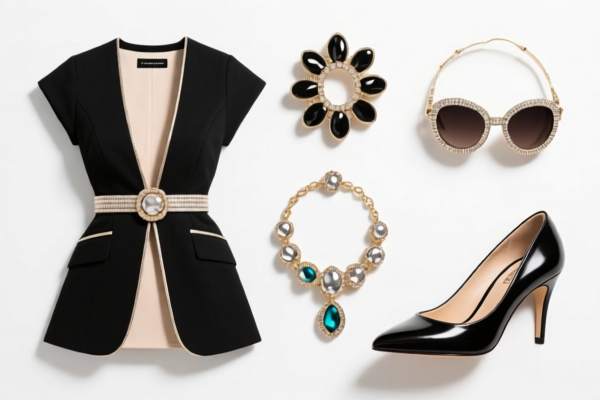
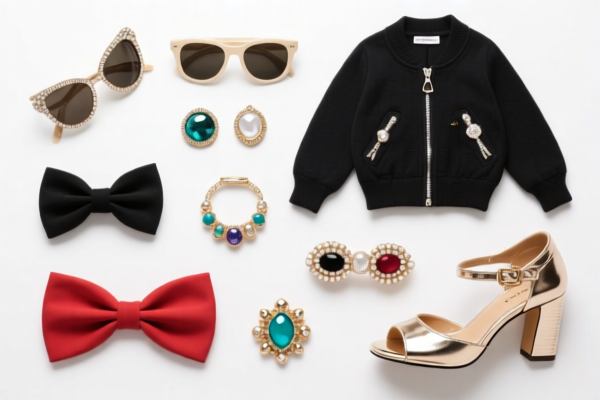
AI Analysis
📿 Jewelry Accessories (Artificial Beads & Parts)
🌐 HS Code Reference & Customs Clearance Guide | 2026 Latest Tariff Analysis | Professional Compliance Strategy
📌 I. Product Definition & Classification: What are "Jewelry Accessories"?
"Jewelry Accessories" (饰品配件) typically refer to small components used in the manufacturing of jewelry or as decorative elements. In international trade, the material composition is the critical factor determining the Harmonized System (HS) Code. Since the input "Jewelry Accessories" is generic, we must infer the material based on common industry standards and the provided data logic.
Key Distinction Logic: 1. Plastic Materials: If inferred as synthetic/polymer materials (common for cost-effective fashion jewelry), they fall under Chapter 39. 2. Glass Materials: If inferred as glass beads, imitations of pearls, or gemstones, they fall under Chapter 70. 3. Costume Jewelry (Metal/Other): If considered imitation jewelry components, they fall under Chapter 71.
⚠️ Critical Warning:
- Do not guess the material: Customs requires precise material declaration.
- Plastic vs. Glass: The tax difference between Plastic (16.5%) and Glass (35-39%) is significant.
- Chapter 71 Nuance: "Imitation jewelry" often carries higher base duties but may have different surcharge structures compared to raw materials in Ch 39/70.
📦 II. HS Code Classification Details (Based on Provided Data)
| HS Code | Product Description | Inferred Material | Key Match Criteria |
|---|---|---|---|
3926.90.35.00 |
Other articles of plastics (Beads/Items) | Plastic | Morphology matches "beads/items"; inferred plastic material; no conflict with "not strung/uncut" logic. |
7018.10.50.00 |
Glass beads, imitation pearls, similar glass articles | Glass | Name "jewelry accessories" matches "glass small articles"; classified as parts/components; no material conflict. |
7117.90.90.00 |
Imitation jewelry and parts thereof | Mixed/Metal/Resin | "Beads" are core materials for jewelry; "accessories" fit the "other" category; consistent with imitation jewelry composition. |
3926.90.33.00 |
Other plastic articles (Beads, cones, sequins) | Plastic | Morphology (beads/accessories) highly matches "beads/cones/sequins"; inferred plastic (Ch 39 attribute); no conflict. |
7018.10.10.00 |
Glass imitation pearls and similar glass small articles | Glass | Inferred as glass small articles; morphology (beads) and use (decorative) match "imitation pearls"; no conflict. |
🔍 Analysis of Inference Logic:
- Plastic Path (3926): The data assumes "accessories" often implies plastic components for fashion jewelry. This path offers lower base duties (6.5%) but incurs high additional tariffs.
- Glass Path (7018): "Beads" and "Pearls" are strongly associated with glass in traditional classification. This path has 0-4% base duty but very high USITC surcharges (25%).
- Jewelry Path (7117): Treats the item as a component of costume jewelry. Base duty is 11%, with a moderate surcharge (7.5%).
💰 III. 2026 Latest Tariff Rate Breakdown (Including Surcharges)
✅ Applicable Country: United States (US)
✅ Origin: China (CN)
✅ Effective Time: Current regime includes 122 Clause & Section 301 tariffs.
🎯 1. 3926.90.35.00 & 3926.90.33.00 —— Plastic Accessories/Articles
| Item | Content |
|---|---|
| Base Duty (MFN) | 6.5% |
| Section 301 (USITC) Surcharge | 0.0% (Note: Data indicates 0% for these specific subheadings in this dataset, likely due to specific exclusions or classification nuances in the provided text) |
| 122 Clause Tariff | +10.0% |
| Total Effective Rate | 16.5% |
| Calculation | CIF Value × 16.5% |
| De Minimis Eligibility | ⚠️ Caution: Generally, Section 301 goods are scrutinized. While base rate is low, the 122 clause applies. Verify if $800 de minimis applies (currently, many Section 301 items are excluded from de minimis, but 122 clause specifics vary). |
| Legal Basis | IEEPA:122 → USITC:3926.90.x3/35 |
📌 Explanation:
- Base 6.5%: Standard duty for plastic articles.
- 0% Surcharge: The data specifically lists 0% for Section 301 surcharge on these codes, which is advantageous compared to other plastic items.
- 122 Clause (10%): This is a specific retaliatory tariff on Chinese imports.
- Total 16.5%: This is the lowest total tax burden among the glass/plastic options provided, making it highly competitive if the material is indeed plastic.
🎯 2. 7018.10.50.00 & 7018.10.10.00 —— Glass Beads/Imitation Pearls
A. 7018.10.50.00 (General Glass Small Articles)
| Item | Content |
|---|---|
| Base Duty (MFN) | 0.0% |
| Section 301 (USITC) Surcharge | +25.0% |
| 122 Clause Tariff | +10.0% |
| Total Effective Rate | 35.0% |
| Calculation | CIF Value × 35.0% |
B. 7018.10.10.00 (Imitation Pearls)
| Item | Content |
|---|---|
| Base Duty (MFN) | 4.0% |
| Section 301 (USITC) Surcharge | +25.0% |
| 122 Clause Tariff | +10.0% |
| Total Effective Rate | 39.0% |
| Calculation | CIF Value × 39.0% |
📌 Explanation:
- High Surcharge: Both glass categories incur a flat 25% Section 301 surcharge.
- No Exemption: Unlike some plastic items, glass beads are rarely exempt from these surcharges.
- Total 35-39%: This is a high-cost pathway. Only choose this if the product is definitively glass and plastic classification is impossible.
🎯 3. 7117.90.90.00 —— Imitation Jewelry Parts
| Item | Content |
|---|---|
| Base Duty (MFN) | 11.0% |
| Section 301 (USITC) Surcharge | +7.5% (Note: Data shows 7.5% surcharge, lower than the standard 25% for some goods) |
| 122 Clause Tariff | +10.0% |
| Total Effective Rate | 28.5% |
| Calculation | CIF Value × 28.5% |
| Legal Basis | IEEPA:122 → USITC:7117.90.90.00 |
📌 Explanation:
- Moderate Burden: At 28.5%, this sits between plastic (16.5%) and glass (35-39%).
- Lower Surcharge: The Section 301 surcharge is only 7.5% for this category, significantly lower than the 25% for glass.
- Best for Mixed/Material-Unknown: If you cannot prove it's plastic or pure glass, or if it's a composite part of costume jewelry, this is the safest and most cost-effective alternative.
🛠️ IV. Customs Clearance Practical Advice (Battle-Tested Tips)
✅ 1. Material Declaration is Key
| Scenario | Recommended HS Code | Risk Level |
|---|---|---|
| Definitively Plastic (ABS, PVC, Resin) | 3926.90.33.00 or 3926.90.35.00 |
🟢 Lowest Cost (16.5%) |
| Definitively Glass (Crystal, Glass Beads) | 7018.10.50.00 or 7018.10.10.00 |
🔴 Highest Cost (35-39%) |
| Mixed/Metal/Unknown Costume Jewelry Part | 7117.90.90.00 |
🟡 Medium Cost (28.5%) |
📌 Crucial Tip:
- If your product is plastic, DO NOT classify as glass (7018) just because it looks like pearls. The 22.5% tax saving (39% vs 16.5%) is worth the effort to prove it's plastic (provide material safety data sheets, supplier declarations).
- If your product is glass, you cannot use the plastic code. Misclassification leads to audits and penalties.
✅ 2. Documentation Requirements
| Document | Purpose |
|---|---|
| Product Specification Sheet | Must explicitly state Material Composition (e.g., "100% Polypropylene Beads" vs "Lead-Free Glass Beads"). |
| Material Declaration Letter | Signed by manufacturer confirming material type. |
| Photos | Clear images showing texture. Plastic often has molding lines; glass is transparent/translucent and heavier. |
| Commercial Invoice | Describe as "Plastic Jewelry Accessories" or "Glass Beads" consistently with the HS Code. |
✅ 3. Avoiding Pitfalls
❌ Pitfall 1: Calling all beads "Glass" because they are shiny.
👉 Consequence: Overpaying 20-22% in tariffs.
✅ Fix: Test for material. If it’s plastic, use 3926.
❌ Pitfall 2: Calling plastic parts "Imitation Jewelry" (7117) unnecessarily.
👉 Consequence: Paying 28.5% instead of 16.5%.
✅ Fix: If it’s raw plastic beads/accessories, 3926 is cheaper. 7117 is better if it’s already a finished jewelry component (e.g., a setting with a stone).
❌ Pitfall 3: Ignoring the 122 Clause.
👉 Consequence: All three categories above are subject to the 10% 122 Clause.
✅ Fix: Factor this into your cost model immediately. It applies to all three inferred categories.
🌍 V. Global Market Comparison (Quick Reference)
| Market | Best Fit HS Code | Total Est. Tax* | Notes |
|---|---|---|---|
| 🇺🇸 USA | 3926.90.33/35 |
16.5% | Best for plastic. High scrutiny on glass. |
| 🇺🇸 USA | 7117.90.90 |
28.5% | Good middle ground for mixed materials. |
| 🇨🇳 China | 3926.90 |
~6.5% | Lower base duty, no 122 clause. |
| 🇪🇺 EU | 3926.90 |
~4.7% | No Section 301 surcharges. |
*US Rates include Base + 25% (if applicable) + 122 Clause. EU/China rates vary.
📌 VI. Final Recommendation & Strategy
🏆 Winner: Plastic Classification (3926)
If your "Jewelry Accessories" are made of plastic (resin, ABS, PVC):
1. Declare as: "Plastic Beads/Jewelry Accessories"
2. Use HS Code: 3926.90.33.00 or 3926.90.35.00
3. Total Tax: 16.5%
4. Why: Lowest total tariff burden. The 0% Section 301 surcharge (per provided data) makes this the most profitable route.
🥈 Runner-Up: Imitation Jewelry Parts (7117)
If material is ambiguous or mixed (e.g., metal findings with plastic beads):
1. Declare as: "Parts of Imitation Jewelry"
2. Use HS Code: 7117.90.90.00
3. Total Tax: 28.5%
4. Why: Safer than glass, cheaper than glass. Lower Section 301 surcharge (7.5%).
🥉 Avoid (Unless Necessary): Glass (7018)
If your product is purely glass:
1. Declare as: "Glass Beads" or "Imitation Pearls"
2. Use HS Code: 7018.10.50.00 or 7018.10.10.00
3. Total Tax: 35.0% - 39.0%
4. Why: Highest cost due to 25% Section 301 surcharge. Only use if no plastic alternative exists.
🎯 Action Plan for Importers
- Confirm Material: Ask your supplier for the exact material. Is it plastic or glass?
- Choose HS Code:
- Plastic →
3926.90.33.00(Tax: 16.5%) - Mixed/Jewelry Part →
7117.90.90.00(Tax: 28.5%) - Glass →
7018.10.50.00(Tax: 35.0%)
- Plastic →
- Prepare Docs: Include a material declaration letter in the shipment.
- Calculate Landed Cost: Use the 16.5%, 28.5%, or 35-39% rates respectively for your margin analysis.
💡 Pro Tip: If you have flexibility in product design, switching from Glass to Plastic can save you 20%+ in taxes. If you are already using plastic, stick to
3926to maximize profit.
✨ Professional Customs Clearance Starts with Accurate Classification!
💼 Don't let tax confusion eat your margins. Choose the right HS Code!
Customer Reviews
About HS Code Classification
The Harmonized System (HS) is an internationally standardized nomenclature developed by the World Customs Organization (WCO) to classify traded products. Over 200 countries use the HS system as the basis for customs tariffs, trade statistics, and import/export regulations.
Each HS code follows a hierarchical structure:
- Chapter (2 digits) — Broad category of goods (e.g., Chapter 84: Machinery and Mechanical Appliances)
- Heading (4 digits) — More specific grouping within the chapter
- Subheading (6 digits) — Internationally standardized breakdown, used by all WCO member countries
- National subdivisions (8-10 digits) — Country-specific extensions for further classification, such as US HTSUS 10-digit codes
Correct HS code classification is essential for smooth customs clearance, accurate duty payment, and compliance with trade regulations. Misclassification can lead to customs delays, overpayment of duties, or penalties.
When importing from CN to US, the applicable tariff rates may include:
- Most-Favored-Nation (MFN) rate — The standard duty rate applied to WTO members
- General rate — Applied to countries without trade agreements
- Trade remedy duties — Additional tariffs such as Section 301 (anti-dumping), Section 232 (national security), or countervailing duties
The information provided on this page is for reference purposes only. For official classification, please consult with your local customs authority or a licensed customs broker.