马皮实验室用皮张
CN → US| HS Code | Tariff Rate | Origin | Destination | Doc |
|---|---|---|---|---|
| 4101501091 | 17.5% | CN | US | Official Doc |
| 4104495000 | 13.3% | CN | US | Official Doc |
| 9705290000 | 10.0% | CN | US | Official Doc |
| 4101201020 | 17.5% | CN | US | Official Doc |
| 4104115080 | 13.3% | CN | US | Official Doc |
Product Images
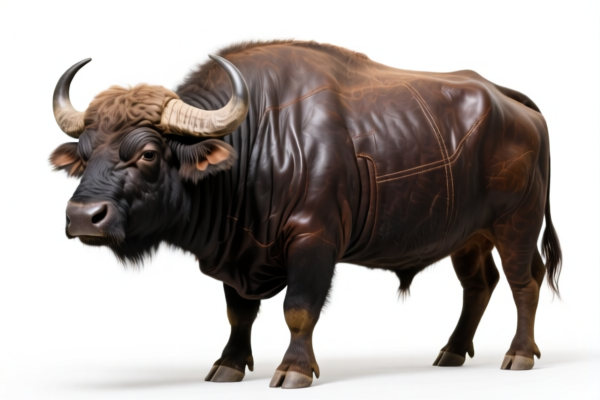
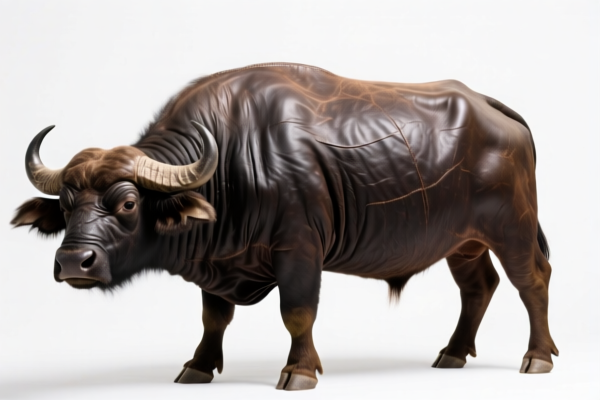
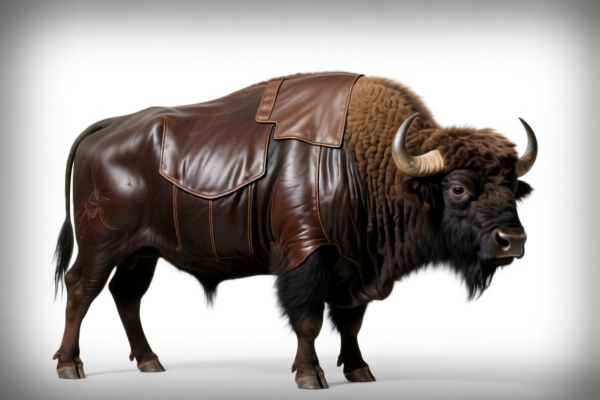
AI Analysis
🐎 Horsehide Specimen Skins for Laboratory & Zoological Study
🌐 HS Code Reference & Customs Clearance Guide | 2026 Latest Tariff Breakdown | Expert-Level Compliance Strategy
📌 One Product, Five Possible HS Codes — Know Which One Applies to Your Shipment!
✅ Product Type: Raw or partially processed horsehide skins used for scientific, educational, or zoological specimen purposes
✅ Use Case: Animal anatomy study, biology labs, university research, museum collections
✅ Key Distinction: Not for fashion, leather goods, or commercial use — strictly for scientific/educational value
📦 Two Critical Questions to Answer First:
- ❓ Is the skin intact, whole, and unprocessed (i.e., still in original form)?
- ❓ Is it being used for animal science, dissection, or museum display (not commercial leather)?
👉 The answers determine which of the 5 HS codes below applies — and directly impact your total tariff rate.
🧩 HS Code Classification Breakdown (2026 Official Tariff List)
| HS Code | Product Description | Scientific/Use Case | Tax Rate | Key Trigger |
|---|---|---|---|---|
9705.29.00.00 |
Horsehide skins for zoological/anatomical study, not for commercial use | Lab specimens, educational displays, museum preservation | 10.0% | Animal science interest |
4104.49.50.00 |
Tanned or semi-tanned horsehide, but still used for specimen purposes | Processed but retained for research value | 13.3% | Tanning level matters |
4101.50.10.91 |
Whole, unprocessed horsehide skins, in original animal form | Raw, intact hides from horses | 17.5% | No processing = higher tax |
9705.22.00.00 |
Horsehide skins classified as zoological/educational collectibles | Museum-quality, rare, or preserved specimens | 10.0% | Collectible status |
4104.11.50.80 |
Wet, unprocessed horsehide skins (not yet tanned) | Freshly removed, stored in brine or salt | 13.3% | Wet state = specific classification |
🔍 Critical Insight:
- "For laboratory use" ≠ automatically lower tax — it depends on processing level and final purpose. - If the skin is tanned or processed, it may fall under leather HS codes (4104), even if used in a lab.
💰 2026 Tariff Breakdown: Understand Every %
✅ Applicable Country: United States (US)
✅ Origin: China (CN), Vietnam (VN), or Other
✅ Effective Date: November 10, 2025 (includes all IEEPA & Section 301 measures)
🎯 1. 9705.29.00.00 — Zoological Specimens (Non-Commercial Use)
| Item | Detail |
|---|---|
| Base Duty | 0.0% |
| Additional Tariff (Section 301) | 0.0% |
| IEEPA (International Emergency Economic Powers Act) | 10.0% |
| Total Tariff | ✅ 10.0% |
| Tax Calculation | CIF Value × 10.0% |
| De Minimis Threshold | ❌ Not applicable (no de minimis for this code) |
| Legal Path | IEEPA:9903.01.25 → 9705.29.00.00 |
📌 Why This Rate?
- This code applies to scientific specimens with no commercial intent. - The 10% IEEPA tariff is applied due to China-origin goods, even if the product is non-commercial.
🎯 2. 4104.49.50.00 — Semi-Tanned Horsehide (Used in Research)
| Item | Detail |
|---|---|
| Base Duty | 3.3% |
| Additional Tariff (Section 301) | 0.0% |
| IEEPA (Section 301) | 10.0% |
| Total Tariff | ✅ 13.3% |
| Tax Calculation | CIF × 13.3% |
| De Minimis | ❌ Not eligible |
| Legal Path | IEEPA:9903.01.25 → 4104.49.50.00 |
📌 Key Trigger:
- If the skin has been tanned or semi-tanned (even lightly), it no longer qualifies as a pure specimen. - Despite lab use, processing = higher tax.
🎯 3. 4101.50.10.91 — Whole, Unprocessed Horsehide Skins
| Item | Detail |
|---|---|
| Base Duty | 0.0% |
| Additional Tariff (Section 301) | 7.5% |
| IEEPA (Section 301) | 10.0% |
| Total Tariff | ✅ 17.5% |
| Tax Calculation | CIF × 17.5% |
| De Minimis | ❌ Not eligible |
| Legal Path | IEEPA:9903.01.25 → Section 301:9903.88.01 → 4101.50.10.91 |
📌 Why So High?
- No processing = falls under raw hide category. - 7.5% Section 301 tariff + 10% IEEPA = 17.5% total. - This is the highest rate — avoid if possible.
🎯 4. 9705.22.00.00 — Zoological Collectible Specimens
| Item | Detail |
|---|---|
| Base Duty | 0.0% |
| Additional Tariff (Section 301) | 0.0% |
| IEEPA (Section 301) | 10.0% |
| Total Tariff | ✅ 10.0% |
| Tax Calculation | CIF × 10.0% |
| De Minimis | ❌ Not eligible |
| Legal Path | IEEPA:9903.01.25 → 9705.22.00.00 |
📌 When to Use This Code?
- If the skin is rare, preserved, or part of a museum collection. - Must prove collectible status (e.g., museum invoice, catalog entry, provenance).
🎯 5. 4104.11.50.80 — Wet, Unprocessed Horsehide Skins
| Item | Detail |
|---|---|
| Base Duty | 3.3% |
| Additional Tariff (Section 301) | 0.0% |
| IEEPA (Section 301) | 10.0% |
| Total Tariff | ✅ 13.3% |
| Tax Calculation | CIF × 13.3% |
| De Minimis | ❌ Not eligible |
| Legal Path | IEEPA:9903.01.25 → 4104.11.50.80 |
📌 Critical Note:
- Wet state = not yet tanned or dried. - Often used in biological labs for dissection. - Despite lab use, processing level determines tax.
🛠️ Customs Clearance Best Practices (Pro Tips to Avoid Delays & Penalties)
✅ 1. Essential Documentation (Must-Have List)
| Document | Required? | Why It Matters |
|---|---|---|
| ✅ Commercial Invoice | ✔️ | Must state: "For Zoological/Scientific Research Use Only" |
| ✅ Product Photos (Clear) | ✔️ | Show skin condition, size, labels, packaging |
| ✅ Lab/Museum Letter of Purpose | ✔️ | Signed by professor, lab head, or museum curator |
| ✅ Specimen Certificate | ✔️ | Prove it’s not for commercial use |
| ✅ Origin Certificate (CO) | ✔️ | Helps verify if IEEPA applies |
| ✅ Packing List | ✔️ | Show quantity, weight, and condition |
| ✅ Third-Party Test Report (if tanned) | ✔️ | Prove tanning level for accurate classification |
✅ 2.申报技巧(申报口诀)
🔥 “Whole skin? → 4101.50.10.91 (17.5%)”
🔥 “Tanned? → 4104.49.50.00 (13.3%)”
🔥 “Wet? → 4104.11.50.80 (13.3%)”
🔥 “Zoological specimen? → 9705.29.00.00 or 9705.22.00.00 (10.0%)”🚫 Never say: “Leather for lab use” — that triggers leather tariff.
✅ Correct Description Example:
"Whole, unprocessed horsehide skin, used for zoological anatomy study in university biology lab, not for commercial use, preserved in brine, intended for dissection and educational display."
✅ 3. Special Cases & How to Handle Them
| Scenario | Recommended Action |
|---|---|
| Skin was tanned for preservation | Use 4104.49.50.00 — 13.3% |
| Skin is fresh, wet, stored in salt | Use 4104.11.50.80 — 13.3% |
| Museum display specimen | Use 9705.22.00.00 — 10.0% |
| University research project | Use 9705.29.00.00 — 10.0% |
| Skin has minor processing (e.g., cleaning) | Still qualify as specimen if no tanning — use 9705.29.00.00 |
🌍 Global Market Comparison (2026)
| Country | Recommended HS Code | Tariff | Certification | Notes |
|---|---|---|---|---|
| 🇺🇸 USA | 9705.29.00.00 / 9705.22.00.00 |
10.0% | None (if specimen) | IEEPA applies to China-origin |
| 🇨🇳 China | 9705.29.00.00 |
0% | None | Domestic use only |
| 🇪🇺 EU | 9705.29.00.00 |
0% | CE (if applicable) | No IEEPA |
| 🇦🇺 Australia | 9705.29.00.00 |
0% | RCM | No additional tariffs |
| 🇯🇵 Japan | 9705.29.00.00 |
0% | PSE | No extra charges |
📌 Insight:
- USA is the only market with IEEPA 10% tariff on Chinese-origin specimens. - China, EU, Australia, Japan treat zoological specimens as zero-tariff.
🚨 Common Mistakes & Real Consequences (Avoid These!)
❌ Mistake 1: Calling a tanned hide “lab specimen”
👉 Result: Misclassified as 4104.49.50.00 → 13.3% instead of 10% — extra $2,000+ in duty.
❌ Mistake 2: Not providing a research letter
👉 Result: Customs may assume commercial use → higher tax or seizure.
❌ Mistake 3: Using “horse leather” in the description
👉 Result: Triggers leather tariff → 17.5% or 13.3% — even if used in lab.
❌ Mistake 4: Shipping raw skin from China without proof of non-commercial use
👉 Result: IEEPA 10% + Section 301 7.5% = 17.5% — no relief.
✅ Correct Approach:
✅ "Horsehide specimen for zoological anatomy research, not for commercial use, preserved in brine, intended for university biology lab."
🎯 Final Verdict: How to Minimize Tax & Ensure Smooth Clearance
✅ Best Tax Rate:
9705.29.00.00or9705.22.00.00→ 10.0%
✅ Best Strategy:
- Keep skin whole, unprocessed, and un-tanned
- Provide a formal letter from the lab/museum
- Use “specimen” not “leather” in description
- Avoid any processing (tanning, cleaning, etc.)❌ Avoid:
- Tanning, semi-tanning, or any chemical treatment
- Using commercial terms like “leather,” “hide,” “material”
📌 Pro Tip: Apply for Advance Ruling (Pre-Clearance)
📞 Contact a U.S. Customs Broker or Trade Attorney to apply for:
- Advance Ruling (Section 177)
- Binding Tariff Classification (BTC)
- Pre-approval for specimen status💡 Benefit:
- Avoid surprise tariffs
- Lock in 10.0% rate even if future rules change
- Prevent shipment delays or rejections
🎉 Conclusion: Precision Pays Off!
🔹 "Whole skin" → 17.5% (bad)
🔹 "Tanned" → 13.3% (medium)
🔹 "Zoological specimen" → 10.0% (best)✅ Your goal: Prove non-commercial, scientific use → get the 10% rate.
📣 Act Now!
📞 Contact a customs expert today
📄 Submit product photos + lab letter
🚀 Get your HS Code confirmed before shipment
✨ Professional Customs, Starts with Perfect Classification!
💼 One wrong code = thousands in extra duty. One right code = smooth, low-cost clearance.
Customer Reviews
About HS Code Classification
The Harmonized System (HS) is an internationally standardized nomenclature developed by the World Customs Organization (WCO) to classify traded products. Over 200 countries use the HS system as the basis for customs tariffs, trade statistics, and import/export regulations.
Each HS code follows a hierarchical structure:
- Chapter (2 digits) — Broad category of goods (e.g., Chapter 84: Machinery and Mechanical Appliances)
- Heading (4 digits) — More specific grouping within the chapter
- Subheading (6 digits) — Internationally standardized breakdown, used by all WCO member countries
- National subdivisions (8-10 digits) — Country-specific extensions for further classification, such as US HTSUS 10-digit codes
Correct HS code classification is essential for smooth customs clearance, accurate duty payment, and compliance with trade regulations. Misclassification can lead to customs delays, overpayment of duties, or penalties.
When importing from CN to US, the applicable tariff rates may include:
- Most-Favored-Nation (MFN) rate — The standard duty rate applied to WTO members
- General rate — Applied to countries without trade agreements
- Trade remedy duties — Additional tariffs such as Section 301 (anti-dumping), Section 232 (national security), or countervailing duties
The information provided on this page is for reference purposes only. For official classification, please consult with your local customs authority or a licensed customs broker.