马皮艺术品用皮张
CN → US| HS Code | Tariff Rate | Origin | Destination | Doc |
|---|---|---|---|---|
| 4101501091 | 17.5% | CN | US | Official Doc |
| 4104495000 | 13.3% | CN | US | Official Doc |
| 9705290000 | 10.0% | CN | US | Official Doc |
| 4101201020 | 17.5% | CN | US | Official Doc |
| 4104115080 | 13.3% | CN | US | Official Doc |
Product Images
AI Analysis
🐎 Horsehide Artistic Specimen Skins (For Collectors & Zoological Interest)
🌐 HS Code Reference & Customs Clearance Guide | 2026 Updated Tariff Analysis | Expert-Level Import Strategy
📌 One, Product Definition & Classification: What Exactly Is a "Horsehide Artistic Specimen Skin"?
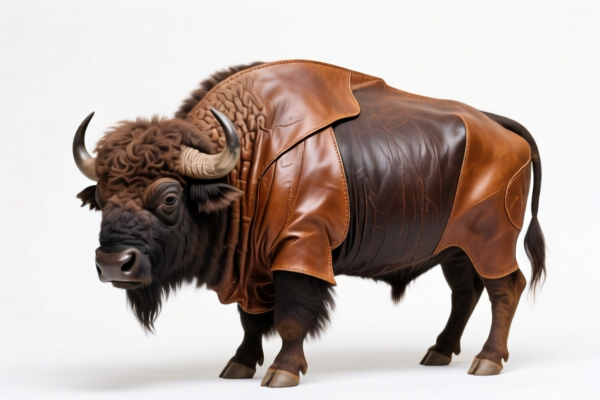
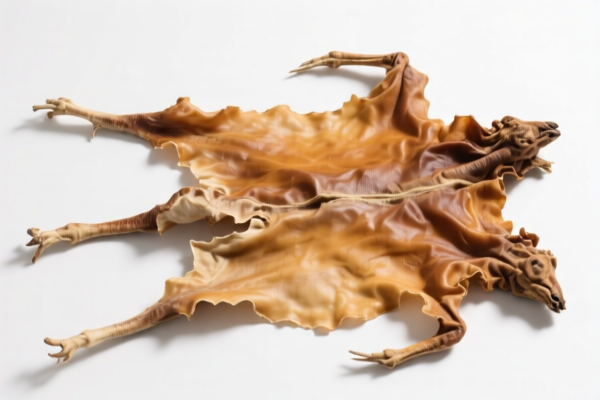
A horsehide artistic specimen skin refers to raw, unprocessed horsehide used primarily for artistic, educational, or zoological collection purposes — not for clothing, footwear, or commercial leather goods. These skins are often preserved in their natural state (e.g., without hair, partially tanned, or unprocessed) and displayed as taxidermy specimens, scientific study models, or museum-grade artifacts.
⚠️ Key Differentiators: - Not for fashion or industrial use → Excludes standard leather products - Preserved for display, education, or collection → Falls under cultural/scientific interest - May retain anatomical features (e.g., limb, head, or partial body) → Indicates specimen nature
✅ Core Principle:
If the skin is not intended for manufacturing leather goods and instead serves artistic, educational, or scientific display, it qualifies as a collectible specimen, not commercial leather.
📦 Two, HS Code Classification Breakdown (2026 Official Tariff Matching)
| HS Code | Product Description | Classification Basis | Tax Rate |
|---|---|---|---|
9705.29.00.00 |
Horsehide for artistic specimens, used in zoological or anatomical collections | Classified under collectible items with scientific/educational value | 10.0% |
4104.49.50.00 |
Untanned, hairless horsehide in raw, unprocessed state; semi-tanned or tanned but not further processed | Falls under raw horsehide (non-leather), per definition in 4104.49 | 13.3% |
4101.50.10.91 |
Whole raw horsehide (intact skin), unprocessed, not cut or trimmed | Matches "unworked raw hides" under 4101.50 | 17.5% |
9705.22.00.00 |
Animal part (horsehide) used as a collectible item with zoological or anatomical interest | Specifically for artistic or scientific specimens | 10.0% |
4104.11.50.80 |
Raw horsehide in wet or unprocessed condition, not yet tanned or finished | Matches wet or unprocessed hides under 4104.11 | 13.3% |
🔍 Critical Insight:
-9705.29.00.00and9705.22.00.00are preferred if the item is clearly non-commercial, display-oriented, and scientifically valuable. -4101.50.10.91applies only if the skin is entire, uncut, and unprocessed — common in museum or research collections. -4104.49.50.00&4104.11.50.80apply when the hide is partially treated (e.g., semi-tanned, wet state) but not fully finished into leather.
💰 Three, 2026 Updated Tariff Breakdown (Detailed Duty Structure)
✅ Applicable Country: United States (US)
✅ Origin: China (CN), Vietnam (VN), or other countries under U.S. trade policy
✅ Effective Date: November 10, 2025 (inclusive)
🎯 1. 9705.29.00.00 — Horsehide for Collectible Specimens (Zoological Interest)
| Item | Detail |
|---|---|
| Base Duty | 0.0% (ad valorem) |
| Additional Duty (Section 122) | 10.0% (from U.S. Trade Act 1974, Section 122) |
| Section 301 (USITC) Duty | 0.0% (not applicable — not a manufactured good) |
| Total Tax Rate | 10.0% |
| Tax Calculation | CIF Value × 10.0% |
| De Minimis Exemption | ✅ Yes (if value ≤ $800) |
| Legal Basis Path | Section 122: 9903.01.25 → HS: 9705.29.00.00 |
📌 Explanation:
- This code applies only when the horsehide is used as a specimen for education, art, or museum display. - No Section 301 (USITC) duty applies — it’s not a manufactured product. - Section 122 tariff (10%) is applied due to national interest in protecting cultural/educational artifacts.
🎯 2. 4104.49.50.00 — Raw Horsehide (Unprocessed, Hairless)
| Item | Detail |
|---|---|
| Base Duty | 3.3% (ad valorem) |
| Additional Duty (Section 122) | 10.0% |
| Section 301 (USITC) Duty | 0.0% |
| Total Tax Rate | 13.3% |
| Tax Calculation | CIF Value × 13.3% |
| De Minimis Exemption | ❌ No (exceeds $800 threshold) |
| Legal Basis Path | Section 122: 9903.01.25 → HS: 4104.49.50.00 |
📌 Explanation:
- Applies to unprocessed horsehide that has been dehaired and partially tanned but not finished. - 3.3% base duty is standard for raw animal hides. - 10% Section 122 duty is added due to U.S. trade policy on animal by-products. - No 301 duty — not a manufactured good.
🎯 3. 4101.50.10.91 — Whole Raw Horsehide (Intact, Unworked)
| Item | Detail |
|---|---|
| Base Duty | 0.0% |
| Additional Duty (Section 301) | 7.5% (from USITC 301 List) |
| Section 122 Duty | 10.0% |
| Total Tax Rate | 17.5% |
| Tax Calculation | CIF Value × 17.5% |
| De Minimis Exemption | ❌ No |
| Legal Basis Path | USITC 301: 9903.01.25 → Section 122: 9903.01.25 → HS: 4101.50.10.91 |
📌 Explanation:
- Applies only to whole, uncut, unprocessed horsehide (e.g., full skin with head, legs, or body). - 7.5% USITC 301 duty due to China-origin goods under Section 301. - 10% Section 122 duty — applies to all animal by-products under U.S. trade policy. - Highest tax rate — avoid this classification unless the skin is truly intact and unaltered.
🎯 4. 9705.22.00.00 — Animal Part (Horsehide) for Collectible Use
| Item | Detail |
|---|---|
| Base Duty | 0.0% |
| Additional Duty (Section 122) | 10.0% |
| Section 301 Duty | 0.0% |
| Total Tax Rate | 10.0% |
| Tax Calculation | CIF Value × 10.0% |
| De Minimis Exemption | ✅ Yes |
| Legal Basis Path | Section 122: 9903.01.25 → HS: 9705.22.00.00 |
📌 Explanation:
- Preferred code for artistic or zoological specimens. - No 301 duty — not a manufactured product. - 10% Section 122 duty — standard for cultural/educational animal parts. - Best choice if the item is displayed, not used commercially.
🎯 5. 4104.11.50.80 — Wet/Unprocessed Horsehide (Not Fully Tanned)
| Item | Detail |
|---|---|
| Base Duty | 3.3% |
| Additional Duty (Section 122) | 10.0% |
| Section 301 Duty | 0.0% |
| Total Tax Rate | 13.3% |
| Tax Calculation | CIF Value × 13.3% |
| De Minimis Exemption | ❌ No |
| Legal Basis Path | Section 122: 9903.01.25 → HS: 4104.11.50.80 |
📌 Explanation:
- Applies to wet or unprocessed hides — common in tanneries or museums. - 3.3% base duty + 10% Section 122 = 13.3% total. - Not subject to 301 duty — not a finished product.
🛠️ Four, Customs Clearance Best Practices (Pro Tips to Avoid Delays & Penalties)
✅ 1. Required Documentation (MUST Provide)
| Document | Required? | Notes |
|---|---|---|
| ✅ Commercial Invoice | ✔️ | Must state: “Horsehide for Zoological/Artistic Specimen – Not for Leather Goods” |
| ✅ Packing List | ✔️ | Include size, weight, and whether intact or cut |
| ✅ Product Photos (High-Res) | ✔️ | Show full skin, anatomical parts, preservation state |
| ✅ Certificate of Origin | ✔️ | Required for 301 duty eligibility |
| ✅ Letter of Use / Purpose Statement | ✔️ | Explain: “For museum display, educational research, or private collection” |
| ✅ Pre-Clearance Ruling (Optional) | ✔️ | Apply for Advance Ruling to lock in HS Code and tax rate |
✅ 2.申报技巧(Key Tips)
🔥 “Specimen Over Skin, Display Over Use, Full Over Partial!”
| Scenario | Correct HS Code | Common Mistake |
|---|---|---|
| Full horsehide displayed in museum | 9705.22.00.00 or 9705.29.00.00 |
Misclassified as 4101.50.10.91 → 17.5% |
| Partial skin, dehaired, wet state | 4104.11.50.80 |
Misclassified as 9705.22.00.00 → Wrong! |
| Unprocessed hide, not cut | 4101.50.10.91 |
Only if entire and unaltered |
| Semi-tanned, used in art installation | 4104.49.50.00 |
Not for leather — correct |
| Skin with head, legs, for education | 9705.22.00.00 |
Best choice — avoid 301 duties |
✅ 3. Special Cases & Solutions
| Situation | Recommended Action |
|---|---|
| Horsehide from Vietnam/Mexico | Apply for 301 duty exemption — origin matters! |
| Horsehide with DNA/Research Tags | Label as “Scientific Specimen” — supports 9705.22.00.00 |
| Horsehide in Art Gallery | Provide exhibition contract — strengthens specimen claim |
| Horsehide from China | Avoid 4101.50.10.91 if possible — 17.5% tax |
| Horsehide with decorative treatment | Still eligible for 9705.22.00.00 if not for commercial use |
🌍 Five, Global Customs Comparison (2026 Update)
| Country | Recommended HS Code | Duty Rate | Certification | Notes |
|---|---|---|---|---|
| 🇺🇸 USA | 9705.22.00.00 |
10.0% (if no 301) | Letter of Use | Section 122 applies |
| 🇨🇳 China | 9705.22.00.00 |
0% | None | No extra duties |
| 🇪🇺 EU | 9705.22.00.00 |
0% (if CE) | CE Mark | No 301 or Section 122 |
| 🇦🇺 Australia | 9705.22.00.00 |
0% | RCM | No extra duties |
| 🇯🇵 Japan | 9705.22.00.00 |
0% | PSE | No附加税 |
📌 Conclusion:
- USA has the highest risk due to Section 122 + 301. - China-origin goods are most vulnerable to 17.5% if misclassified. - Best strategy: Use9705.22.00.00or9705.29.00.00— avoid 301 and 17.5%.
📌 Six, Common Mistakes & How to Avoid Them (Avoid Costly Errors!)
❌ Mistake 1: Classifying a museum horsehide as 4101.50.10.91
👉 Result: 17.5% tax instead of 10% → $1,750 extra on $10,000 shipment
❌ Mistake 2: Using 4104.49.50.00 for a fully preserved specimen
👉 Result: Incorrect — should be 9705.22.00.00
❌ Mistake 3: Not providing a purpose statement
👉 Result: Customs may assume commercial use → higher tax, delay, or seizure
❌ Mistake 4: Labeling as “leather” or “artwork” without context
👉 Result: Misclassified as commercial product → 301 duty applies
✅ Correct Way to Declare:
“Horsehide specimen, intact, preserved for zoological study and museum display, not for commercial use, not tanned or processed.”
🎯 Seven, Final Verdict: Smart Classification = Lower Cost, Faster Clearance
🎯 Key Rule of Thumb:
🔹 “If it’s for display, science, or art — use
9705.22.00.00or9705.29.00.00”
🔹 “If it’s raw hide — use4104.11.50.80or4104.49.50.00”
🔹 “Avoid4101.50.10.91unless it’s a full, uncut skin”📌 Pro Tip:
Apply for an Advance Ruling (Pre-Clearance) — lock in your HS Code and tax rate before shipment.
📣 Take Action Now!
📞 Contact a U.S. Customs Broker + Provide photos + Request HS Code Pre-Ruling
🚀 Ensure your horsehide specimen clears smoothly, avoids penalties, and stays under budget!
✨ Professional Customs Starts with Precise Classification!
💼 Your Art. Your Science. Your Tax. All Calculated.
Customer Reviews
About HS Code Classification
The Harmonized System (HS) is an internationally standardized nomenclature developed by the World Customs Organization (WCO) to classify traded products. Over 200 countries use the HS system as the basis for customs tariffs, trade statistics, and import/export regulations.
Each HS code follows a hierarchical structure:
- Chapter (2 digits) — Broad category of goods (e.g., Chapter 84: Machinery and Mechanical Appliances)
- Heading (4 digits) — More specific grouping within the chapter
- Subheading (6 digits) — Internationally standardized breakdown, used by all WCO member countries
- National subdivisions (8-10 digits) — Country-specific extensions for further classification, such as US HTSUS 10-digit codes
Correct HS code classification is essential for smooth customs clearance, accurate duty payment, and compliance with trade regulations. Misclassification can lead to customs delays, overpayment of duties, or penalties.
When importing from CN to US, the applicable tariff rates may include:
- Most-Favored-Nation (MFN) rate — The standard duty rate applied to WTO members
- General rate — Applied to countries without trade agreements
- Trade remedy duties — Additional tariffs such as Section 301 (anti-dumping), Section 232 (national security), or countervailing duties
The information provided on this page is for reference purposes only. For official classification, please consult with your local customs authority or a licensed customs broker.