马皮配件
CN → US| HS Code | Tariff Rate | Origin | Destination | Doc |
|---|---|---|---|---|
| 4205001000 | 35.0% | CN | US | Official Doc |
| 4201006000 | 12.8% | CN | US | Official Doc |
| 4201003000 | 37.4% | CN | US | Official Doc |
| 4205004000 | 36.8% | CN | US | Official Doc |
| 9607200040 | 46.5% | CN | US | Official Doc |
Product Images
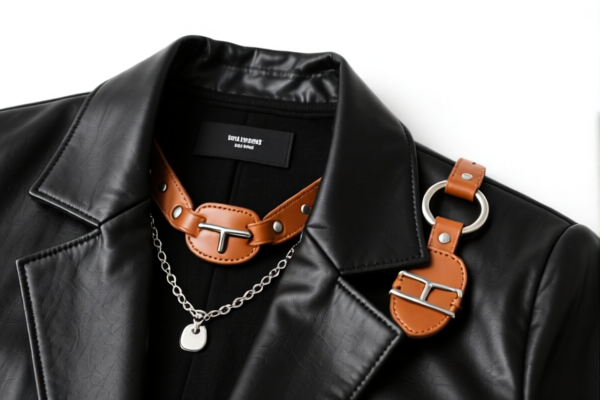


AI Analysis
🐎 Horse Leather Accessories (马皮配件)
🌐 HS Code Reference & Customs Clearance Guide | 2026 Latest Tariff Analysis | Professional Clearance Strategy
📌 I. Product Definition & Classification: Do You Really Understand "Horse Leather Accessories"?
Horse leather products are high-end, specialized items in the international trade of leather goods. The classification strictly depends on the specific use (sports vs. animal gear) and material composition. Misclassification is the most common cause of customs delays and excessive tariffs.
⚠️ Key Distinction Point:
- If it is for human sports equipment (e.g., saddle pads, protective gear for riders) → Often classified under Chapter 42 (Articles of Leather; Saddle Harness); Subheading 4205.
- If it is for animal equipment (e.g., saddles, bridles, bits for horses) → Often classified under Chapter 42; Subheading 4201.
- If it is a component/parts of clothing or animal gear → Check specific subheadings for parts (e.g., 4205 for leather articles not elsewhere specified, or 4205.40 for parts).
📦 II. HS Code Classification Details (2026 Latest Tariff Authority Comparison)
Based on the provided , here are the precise classifications for Horse Leather Accessories.
| HS Code | Product Description | Application Scenario | Key Characteristics |
|---|---|---|---|
4205.00.10.00 |
Horse Leather Sports Goods | Human Sports Use: Equipment made of leather for human sports (e.g., riding vests, protective leather gear). | Material: Leather. Use: Sports. |
4201.00.60.00 |
Horse Leather Animal Goods | Animal Use: Goods intended for animals, made of leather (e.g., general leather harnesses not specifically for riding). | Use: Animal goods. Material: Leather. |
4201.00.30.00 |
Horse Leather Animal Tack | Animal Use: Specific tack/harness for horses made of any material (often leather in practice). | Use: Animal tack. Material: Any (typically leather). |
4205.00.40.00 |
Parts of Leather Horse Tack | Parts/Components: Parts of horse tack, specifically made of leather. | Use: Parts of tack. Material: Leather. |
9607.20.00.40 |
Horse Pants Pocket Accessories | Clothing Parts: Accessories for riding pants (breeches/jodhpurs), specifically pocket components. | Use: Clothing accessory. Form: Part/Component. |
🔍 Important Reminder:
- 4201 covers articles for animals (saddles, bridles).
- 4205 covers other articles of leather (including parts of sports equipment or general leather goods).
- 9607 is an outlier here, specifically for clothing components (pockets), which is unusual for general "horse leather accessories" but critical if the item is purely a garment part.
💰 III. 2026 Latest Tariff Rate Breakdown (Including Additional Taxes & Policy Surcharges)
✅ Applicable Country: United States (US)
✅ Origin: China (CN)
✅ Effective Time: From November 10, 2025 (and subsequent imports)
🎯 1. 4205.00.10.00 —— Horse Leather Sports Goods (Human Use)
| Item | Content |
|---|---|
| Base Tariff | 0.0% (ad valorem) |
| USITC Additional Tax | +25.0% (Section 301 Tariff) |
| 122 Clause Tariff | +10.0% (Specific regulatory surcharge) |
| Total Tariff Rate | 35.0% |
| Tax Calculation | CIF Value × 35% |
| De Minimis Exemption | ❌ Not Applicable (High duty rates usually deny de minimis benefits) |
| Legal Basis Path | Base: 0% → 301: 25% → Clause 122: 10% → Total: 35% |
📌 Explanation:
- 0% Base: Leather sports goods often have a low base duty.
- 25% Section 301: Standard trade war tariff on leather goods from China.
- 10% Clause 122: Additional regulatory surcharge.
- Total 35%: A significant cost factor. Accurate declaration as "Sports Goods" vs. "Animal Tack" is crucial as rates may vary slightly.
🎯 2. 4201.00.60.00 —— Horse Leather Animal Goods
| Item | Content |
|---|---|
| Base Tariff | 2.8% (ad valorem) |
| USITC Additional Tax | 0.0% (Exempt or not applicable under this specific subheading) |
| 122 Clause Tariff | +10.0% |
| Total Tariff Rate | 12.8% |
| Tax Calculation | CIF Value × 12.8% |
| De Minimis Exemption | ❌ Not Applicable |
| Legal Basis Path | Base: 2.8% → 122: 10% → Total: 12.8% |
📌 Note:
- This is the lowest tariff option among the leather horse items in the data.
- Classification as "Animal Goods" (general) rather than "Sports" or "Tack" yields significant savings.
- However, customs may scrutinize the "intended use" to ensure it is genuinely for animal consumption/use and not a human fashion item disguised as animal gear.
🎯 3. 4201.00.30.00 —— Horse Leather Animal Tack
| Item | Content |
|---|---|
| Base Tariff | 2.4% (ad valorem) |
| USITC Additional Tax | +25.0% (Section 301 Tariff) |
| 122 Clause Tariff | +10.0% |
| Total Tariff Rate | 37.4% |
| Tax Calculation | CIF Value × 37.4% |
| De Minimis Exemption | ❌ Not Applicable |
| Legal Basis Path | Base: 2.4% → 301: 25% → 122: 10% → Total: 37.4% |
📌 Caution:
- Highest Base Duty + Full Surcharges.
- "Animal Tack" is heavily scrutinized. If it is a standard saddle or bridle, this is the likely code.
- Compare with4201.00.60.00(12.8%). If the item is not strictly "tack" (like a saddle/bridle) but general animal gear,4201.00.60.00is vastly superior.
🎯 4. 4205.00.40.00 —— Parts of Leather Horse Tack
| Item | Content |
|---|---|
| Base Tariff | 1.8% (ad valorem) |
| USITC Additional Tax | +25.0% (Section 301 Tariff) |
| 122 Clause Tariff | +10.0% |
| Total Tariff Rate | 36.8% |
| Tax Calculation | CIF Value × 36.8% |
| De Minimis Exemption | ❌ Not Applicable |
| Legal Basis Path | Base: 1.8% → 301: 25% → 122: 10% → Total: 36.8% |
📌 Note:
- Even as "Parts," the Section 301 and Clause 122 surcharges apply.
- Ensure the "part" is clearly identifiable as a component of horse tack, not a general leather part.
🎯 5. 9607.20.00.40 —— Horse Pants Pocket Accessories
| Item | Content |
|---|---|
| Base Tariff | 11.5% (ad valorem) |
| USITC Additional Tax | +25.0% (Section 301 Tariff) |
| 122 Clause Tariff | +10.0% |
| Total Tariff Rate | 46.5% |
| Tax Calculation | CIF Value × 46.5% |
| De Minimis Exemption | ❌ Not Applicable |
| Legal Basis Path | Base: 11.5% → 301: 25% → 122: 10% → Total: 46.5% |
📌 Warning:
- Highest Total Tariff.
- This classification is for clothing components (pockets). If you are exporting riding pants or accessories that are parts of clothing, this is the code.
- Avoid this if the item can be classified under 4201 or 4205, as the 46.5% rate is extremely high.
🛠️ IV. Customs Clearance Practical Advice (Real-World Pitfall Guide)
✅ 1. Documentation Checklist (All Must-Provide)
| Document | Required | Notes |
|---|---|---|
| ✅ Product Description | ✔️ | Must clearly state "Horse Leather," "Intended Use (Sports/Animal/Clothing)," and "Material." |
| ✅ Technical Drawing/Photos | ✔️ | To prove the item is not a finished saddle (if claiming parts) or general leather goods. |
| ✅ Material Composition Certificate | ✔️ | Confirm 100% Horse Leather or blend. |
| ✅ Commercial Invoice | ✔️ | Accurate HS Code and Value. |
| ✅ Packing List | ✔️ | Detailed itemization. |
| ✅ Declaration of Use | ✔️ | Explicitly state if it is for "Animal Tack," "Human Sports," or "Clothing Parts." |
✅ 2. Declaration Strategy (Key Mantras)
🔥 “Determine Use First, Then Select Code! Sports vs. Tack vs. Parts!”
| Scenario | Correct HS Code | Risk of Misclassification |
|---|---|---|
| Riding Breeches Pockets | 9607.20.00.40 |
High tariff (46.5%). Justify as clothing part. |
| General Leather Animal Gear | 4201.00.60.00 |
Best Rate (12.8%). Ensure it's not a standard saddle. |
| Horse Saddle/Bridle (Tack) | 4201.00.30.00 |
High tariff (37.4%). Mandatory for true tack. |
| Leather Sports Gear (Human) | 4205.00.10.00 |
Medium tariff (35.0%). Ensure it's for human use. |
| Parts of Tack (Leather) | 4205.00.40.00 |
High tariff (36.8%). Must be clearly a component. |
⚠️ Critical Tip:
- If you have a leather strap that could be a "part of tack" (4205.00.40.00) or "general animal goods" (4201.00.60.00), the latter saves you 24% in tariffs. However, you must prove it is not a functional part of a saddle/bridle.
- Do not classify clothing parts (pockets) as leather goods (4205/4201) to avoid lower rates; customs will check the material of the garment first.
✅ 3. Special Circumstances Handling
| Situation | Handling Advice |
|---|---|
| Mixed Materials | If the leather is only a component (e.g., leather + fabric), the classification may shift. Document material % carefully. |
| OEM Riding Gear | Provide OEM contracts showing "Human Sports Use" to claim 4205.00.10.00 (35%) instead of higher rates if applicable. |
| Used/Refurbished Tack | Additional documentation may be required for hygiene and origin verification. |
| Small Samples | Even under de minimis, high tariff codes may be flagged for audit. Declare accurately. |
🌍 V. Global Market Clearance Comparison (2026 Latest)
| Country/Region | Recommended HS Code | Tariff (China Origin) | Certification Requirements | Notes |
|---|---|---|---|---|
| 🇺🇸 USA | 4201.00.60.00 |
12.8% | N/A | Best rate for general animal goods. |
| 🇺🇸 USA | 4201.00.30.00 |
37.4% | N/A | Standard for Saddles/Bridles. |
| 🇪🇺 EU | 4201.00 / 4205 |
Variable (0-4%) | CE (if applicable) | No Section 301/Clause 122. Lower base duties. |
| 🇬🇧 UK | 4201.00 / 4205 |
Variable | UKCA | Post-Brexit rules apply. |
| 🇨🇳 China | 4201.00 / 4205 |
10-15% | N/A | Export to China has different duties. |
📌 Conclusion:
- The US market is highly sensitive to HS Code precision due to additional tariffs (301 + Clause 122).
- EU/UK typically do not have these additional punitive tariffs, making classification less critical for cost, but still important for compliance.
📌 VI. Common Mistakes & Pitfall Guide (Lessons Learned)
❌ Mistake 1: Classifying a Saddle as "Leather Goods" (4205) to avoid higher tack duties.
👉 Consequence: Customs audit, reclassification to 4201.00.30.00, back taxes + penalties.
❌ Mistake 2: Classifying Riding Pants Pockets as "Leather Parts" (4205).
👉 Consequence: May be reclassified to 9607 (Clothing Parts) or ignored, causing clearance delays.
❌ Mistake 3: Ignoring Clause 122 (10%) in cost calculations.
👉 Consequence: Profit margin erosion. The 10% surcharge applies to most leather goods from China.
❌ Mistake 4: Failing to distinguish between Human Sports and Animal Tack.
👉 Consequence: Wrong HS Code leads to 24-34% tariff difference.
✅ Correct Approach:
"Horse Leather Saddle, For Equestrian Use, Material: 100% Horse Leather, HS Code: 4201.00.30.00, Duty: 37.4% (including 301 & 122)."
🎯 VII. Conclusion: Precision in Classification, Savings in Tariffs!
🎯 Remember the Mantra:
🔹 "Use Determines Code, Code Determines Cost!"
🔹 "12.8% vs 37.4%: A 24% Difference!"
🔹 "Don't Miss Clause 122 (10%) in Your Calculations!"
📌 Pro Tip:
- For general leather animal gear (not specific tack), always aim for 4201.00.60.00 (12.8%) if compliant.
- For saddles/bridles, accept 4201.00.30.00 (37.4%) but ensure accurate description.
- Pre-classification Ruling: Consider applying for an Advance Ruling with US Customs (CBP) to lock in the HS Code and avoid disputes.
📣 Immediate Action:
📞 Consult a licensed customs broker.
📝 Provide detailed product photos and use descriptions.
🚀 Optimize your supply chain to leverage the 12.8% rate where possible!
✨ Professional Clearance, Starting with Accurate Classification!
💼 Every Percent Saved is Profit Gained!
Customer Reviews
About HS Code Classification
The Harmonized System (HS) is an internationally standardized nomenclature developed by the World Customs Organization (WCO) to classify traded products. Over 200 countries use the HS system as the basis for customs tariffs, trade statistics, and import/export regulations.
Each HS code follows a hierarchical structure:
- Chapter (2 digits) — Broad category of goods (e.g., Chapter 84: Machinery and Mechanical Appliances)
- Heading (4 digits) — More specific grouping within the chapter
- Subheading (6 digits) — Internationally standardized breakdown, used by all WCO member countries
- National subdivisions (8-10 digits) — Country-specific extensions for further classification, such as US HTSUS 10-digit codes
Correct HS code classification is essential for smooth customs clearance, accurate duty payment, and compliance with trade regulations. Misclassification can lead to customs delays, overpayment of duties, or penalties.
When importing from CN to US, the applicable tariff rates may include:
- Most-Favored-Nation (MFN) rate — The standard duty rate applied to WTO members
- General rate — Applied to countries without trade agreements
- Trade remedy duties — Additional tariffs such as Section 301 (anti-dumping), Section 232 (national security), or countervailing duties
The information provided on this page is for reference purposes only. For official classification, please consult with your local customs authority or a licensed customs broker.