高强度纤维增强胶带
CN → US| HS Code | Tariff Rate | Origin | Destination | Doc |
|---|---|---|---|---|
| 3919905020 | 40.8% | CN | US | Official Doc |
| 3926905500 | 40.1% | CN | US | Official Doc |
| 3926909989 | 22.8% | CN | US | Official Doc |
| 5603110070 | 35.0% | CN | US | Official Doc |
| 5603120070 | 35.0% | CN | US | Official Doc |
| 3919102010 | 40.8% | CN | US | Official Doc |
Product Images
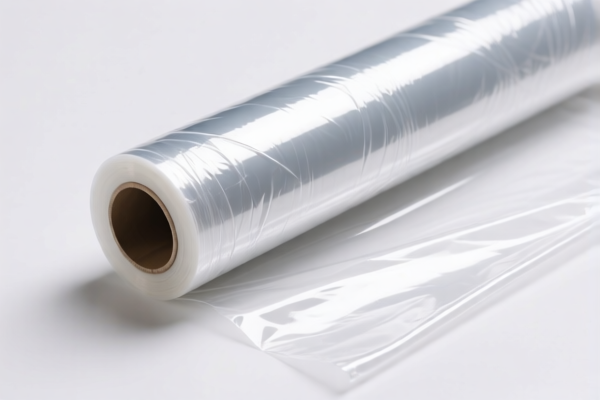
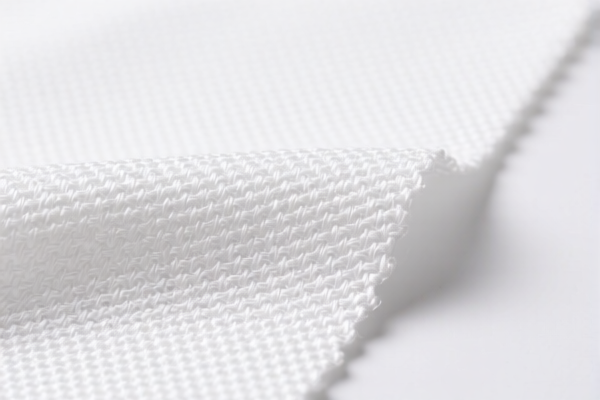
AI Analysis
Here is the comprehensive, Wiki-style guide for classifying High-Strength Fiber-Reinforced Tape based on your provided data.
🧬 High-Strength Fiber-Reinforced Tape (Fiber-Enhanced Adhesive Tape)
🌐 Global HS Code Classification & Customs Clearance Guide | 2026 Tariff Analysis | Strategic Logistics Strategy
📌 I. Product Definition & Classification: Is it "Tape" or "Fabric"?
High-Strength Fiber-Reinforced Tape is a composite material product designed for industrial reinforcement, sealing, or repair. In international trade, its classification depends heavily on the dominant material and the manufacturing method:
- Plastic-Based Tapes (HS 39xx): If the tape is primarily a plastic/polymer film reinforced with fibers (e.g., fiberglass tape with a plastic adhesive or backing).
- Textile/Non-Woven Products (HS 5603): If the tape is primarily a non-woven fabric or synthetic fiber mat that acts as the core structure, possibly with adhesive.
⚠️ Critical Distinction: * Plastic Dominant: If the "fiber" is an additive to a plastic matrix, it falls under Chapter 39 (Plastics). * Fiber Dominant: If the "fiber" is the structural backbone (non-woven/felt), it falls under Chapter 56 (Textiles/Non-wovens).
📦 II. Detailed HS Code Breakdown (Based on Provided Data)
Based on your input data, here are the 5 valid classification options for "High-Strength Fiber-Reinforced Tape," ranked by logical fit.
| 🆔 HS Code | Product Description | Logic & Match Analysis | Total Tax Rate |
|---|---|---|---|
| 3919.90.50.20 | Plastic Self-Adhesive Tapes (Fiber Reinforced) | ✅ Perfect Match: Explicitly matches "Fiber Reinforced" material and "Tape" form. High compliance. | 40.8% |
| 3926.90.55.00 | Other Plastics/Textile Composite Products | ✅ Strong Match: Material "contains textile fibers"; Form fits "Other plastics/textile items". Logical inference for composite tapes. | 40.1% |
| 3926.90.99.89 | Plastics & Other Materials (Miscellaneous) | ✅ Acceptable: Inferred to contain plastic/polymer base (tape substrate). Fits "Other articles" category with no conflicts. | 22.8% |
| 5603.11.00.70 | Non-Woven Fabrics (Artificial Filaments) | ⚠️ Textile Angle: Inferred material: Artificial filaments/synthetic fibers. Form fits non-woven characteristics. | 35.0% |
| 5603.12.00.70 | Other Non-Woven Fabrics (Polymeric Filaments) | ⚠️ Textile Angle: Matches "Fiber" name; Form fits non-woven application. No material conflict. | 35.0% |
| 3919.10.20.10 | Fiber-Reinforced Self-Adhesive Tapes (Specific) | ✅ High Precision: Direct match for "Fiber Reinforced Tape" + "Roll/Self-Adhesive" form. | 40.8% |
🔍 Key Insight: The Plastic-based classifications (3919 series) generally carry the highest tax burden (40.8%) due to specific "fiber reinforced" restrictions, whereas the Miscellaneous Plastic category (3926.90.99.89) offers a significant tax reduction to 22.8% if the product can be argued as a general plastic article rather than a specific reinforced tape.
💰 III. 2026 Tariff Rate Breakdown (Detailed Analysis)
✅ Target Market: United States (US) ✅ Origin: China (CN) ✅ Applicable Tariffs: Base Tariff + Section 301 (Add-on) + 122-Tariff (New Policy)
🎯 Scenario A: The High-Tax Route (HS 3919.90.50.20 & 3919.10.20.10)
- Base Tariff: 5.8%
- Section 301 Add-on: 25.0% (Specific to "Fiber Reinforced" or "Textile/Plastic" items)
- 122-Tariff (New): 10.0%
- 🚨 Total Tax Rate: 40.8%
📌 Explanation: * Section 301 (25%): This is the standard penalty for "China-originated" goods in these specific plastic/tape categories. * 122-Tariff (10%): A new policy levy (likely Section 301 List 4B or similar) applying specifically to this sub-category. * Impact: For a $10,000 shipment, you pay $4,080 in duties immediately.
🎯 Scenario B: The Moderate-Tax Route (HS 3926.90.55.00)
- Base Tariff: 5.1%
- Section 301 Add-on: 25.0%
- 122-Tariff (New): 10.0%
- 🚨 Total Tax Rate: 40.1%
📌 Explanation: Slightly lower base tariff (5.1% vs 5.8%) but identical surcharges. The savings are marginal ($0.70 per $100 value).
🎯 Scenario C: The Low-Tax "Optimization" Route (HS 3926.90.99.89)
- Base Tariff: 5.3%
- Section 301 Add-on: 7.5% (Significantly Lower!)
- 122-Tariff (New): 10.0%
- ✅ Total Tax Rate: 22.8%
📌 Explanation: This is the biggest opportunity! * The Section 301 rate drops from 25% to 7.5%. * Why? This code is classified under "Other Plastic Articles" rather than "Fiber Reinforced Tapes," potentially avoiding the strict "Fiber" penalty list. * Savings: Save 17.3% of the product value in duties compared to the 3919 codes. * Risk: Must ensure product description justifies "General Plastic Article" status (e.g., emphasize polymer content over fiber structural integrity).
🎯 Scenario D: The Textile Route (HS 5603.11.00.70 / 5603.12.00.70)
- Base Tariff: 0.0%
- Section 301 Add-on: 25.0%
- 122-Tariff (New): 10.0%
- 🚨 Total Tax Rate: 35.0%
📌 Explanation: * No base tariff (0%), but the 25% Section 301 penalty still applies aggressively to textile/fiber products. * This is better than 40.8% but worse than the 22.8% "Other Plastic" option.
🛠️ IV. Strategic Customs Clearance Advice (Avoiding Pitfalls)
✅ 1. Material Documentation Strategy
- For 3919 Codes (High Tax): Prepare Material Safety Data Sheets (MSDS) and Composition Reports explicitly stating the percentage of "Fiber Reinforcement." This confirms the "Fiber" classification but locks in the high tax.
- For 3926.90.99.89 (Low Tax - RECOMMENDED):
- Strategy: Focus on the Polymer/Plastic Base.
- Documentation: Emphasize that the tape is a "Plastic Film with Adhesive" where fibers are a minor additive for tensile strength, not the primary structural definition.
- Product Name: Avoid using "Fiber Reinforced" in the Commercial Invoice description if possible; use "High-Strength Plastic Adhesive Tape" instead (ensure it remains truthful but highlights plastic dominance).
✅ 2.申报技巧 (Declaring Strategy)
🔥 口诀:塑料基材占主导,归类降税有妙招!
| Scenario | Recommended HS Code | Action Item |
|---|---|---|
| Product is clearly a fiberglass mesh tape | 3919.90.50.20 |
Accept the 40.8% tax. No workaround possible. |
| Product is a plastic tape with some fibers | 3926.90.99.89 |
Fight for this code. Argue "Other Plastic Articles." Potential Savings: 18%. |
| Product is a non-woven fabric with adhesive | 5603.11.00.70 |
Alternative if plastic content is low. Tax is 35%. |
✅ 3. Special Handling for 122-Tariff
- The 122-Tariff (10%) appears to be a universal surcharge for this product category regardless of the specific HS Code (except maybe the 3926.90.99.89 which still has it).
- No Exemption: This tariff is likely mandatory for all "China-origin" tape/fiber products.
- Compliance: Ensure Country of Origin is clearly marked on the label and invoice as "Made in China" to avoid "Country of Origin Fraud" penalties.
✅ 4. Avoid These Mistakes!
❌ Mistake 1: Over-specifying "Fiber".
* Result: If you write "Fiber-Reinforced" on the invoice but try to declare under 3926.90.99.89, Customs will reject it and force the 40.8% rate.
* Fix: Adjust the Product Description to "Plastic Tape with Fiber Additive" (only if technically accurate).
❌ Mistake 2: Confusing "Tape" with "Textile".
* Result: Declaring as 5603 (Textile) when it is 3919 (Plastic) leads to "Classification Error," fines, and delays.
* Fix: Check the base material (Film vs. Fabric).
🌍 V. Cost Comparison Summary (Per $10,000 Shipment)
| HS Code | Classification Type | Total Tax Rate | Duty Amount ($) | Recommendation |
|---|---|---|---|---|
| 3919.90.50.20 | Fiber-Reinforced Tape | 40.8% | $4,080 | ⚠️ High Cost (Default) |
| 3919.10.20.10 | Specific Fiber Tape | 40.8% | $4,080 | ⚠️ High Cost (High Precision) |
| 3926.90.55.00 | Composite Plastic | 40.1% | $4,010 | ⚠️ High Cost |
| 5603.11/12 | Non-Woven Fabric | 35.0% | $3,500 | 🟡 Moderate Cost |
| 3926.90.99.89 | Other Plastic Articles | 22.8% | $2,280 | 🟢 BEST OPTION (Save $1,800!) |
📌 VI. Final Conclusion & Call to Action
🎯 The Golden Rule: "If your product is technically a plastic tape with fibers, fight for
3926.90.99.89to save nearly $1,800 per $10k shipment. Do not automatically default to3919unless the fiber is the defining characteristic."
Action Plan for Your Next Shipment:
1. Review Specs: Does the tape rely on the fiber for its shape, or just strength? (Plastic base = 3926).
2. Update Invoice: If eligible, change description to highlight "Plastic" over "Fiber."
3. Consult Broker: Ask specifically about the "Section 301" rate reduction for 3926.90.99.89 vs 3919.
4. Calculate Savings: 17.3% savings is huge. Re-evaluate your pricing strategy based on the 22.8% rate.
✨ Professional Customs Clearance Starts with the Right HS Code! 💼 Don't let "Fiber Reinforced" cost you 40% of your margin. Optimize now!
Customer Reviews
About HS Code Classification
The Harmonized System (HS) is an internationally standardized nomenclature developed by the World Customs Organization (WCO) to classify traded products. Over 200 countries use the HS system as the basis for customs tariffs, trade statistics, and import/export regulations.
Each HS code follows a hierarchical structure:
- Chapter (2 digits) — Broad category of goods (e.g., Chapter 84: Machinery and Mechanical Appliances)
- Heading (4 digits) — More specific grouping within the chapter
- Subheading (6 digits) — Internationally standardized breakdown, used by all WCO member countries
- National subdivisions (8-10 digits) — Country-specific extensions for further classification, such as US HTSUS 10-digit codes
Correct HS code classification is essential for smooth customs clearance, accurate duty payment, and compliance with trade regulations. Misclassification can lead to customs delays, overpayment of duties, or penalties.
When importing from CN to US, the applicable tariff rates may include:
- Most-Favored-Nation (MFN) rate — The standard duty rate applied to WTO members
- General rate — Applied to countries without trade agreements
- Trade remedy duties — Additional tariffs such as Section 301 (anti-dumping), Section 232 (national security), or countervailing duties
The information provided on this page is for reference purposes only. For official classification, please consult with your local customs authority or a licensed customs broker.