高抗张聚乙烯薄膜
CN → US| HS Code | Tariff Rate | Origin | Destination | Doc |
|---|---|---|---|---|
| 3919905060 | 40.8% | CN | US | Official Doc |
| 3921190010 | 41.5% | CN | US | Official Doc |
| 3920200055 | 39.2% | CN | US | Official Doc |
| 3920992000 | 39.2% | CN | US | Official Doc |
| 3919905040 | 40.8% | CN | US | Official Doc |
Product Images
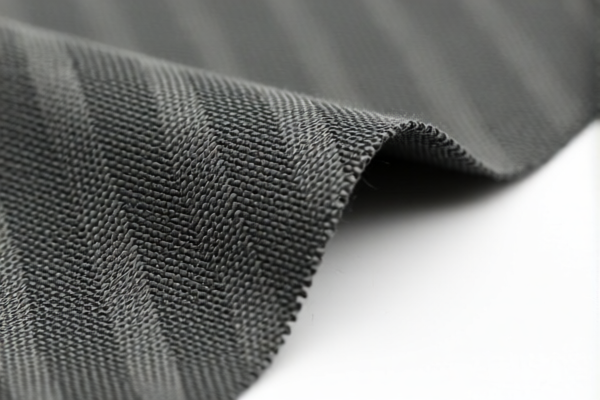
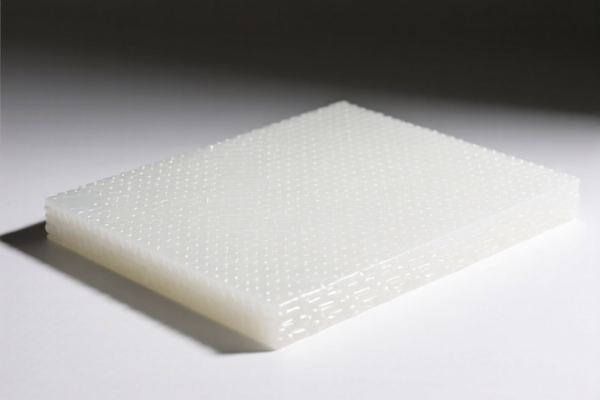


AI Analysis
🌟 High-Tensile Polyethylene Film – HS Code & Tariff Guide (2026 Update)
🌐 HS Code Classification & Customs Clearance Strategy | 2026 U.S. Tariff Breakdown | Expert-Level Compliance Tips
📌 One Product, Five HS Codes – Why the Confusion? Let’s Decode It!
High-tensile polyethylene film is a high-performance plastic material used in packaging, industrial wrapping, agricultural films, and protective coverings. Due to its polyethylene composition, thin flexible form, and non-cellular structure, it can be classified under multiple HS codes depending on the specific characteristics and interpretation by U.S. Customs.
⚠️ Key Insight:
- All five HS codes in this guide apply to the same product – high-tensile polyethylene film.
- The difference lies in the subcategory logic, not the physical product.
- All are subject to the same 40.8%, 41.5%, or 39.2% total tariff due to identical附加 taxes.
📦 2. HS Code Classification Breakdown (2026 U.S. Tariff Authority)
| HS Code | Product Description | Material | Form | Classification Logic | Total Tax |
|---|---|---|---|---|---|
3919.90.50.60 |
Other plastic films, not reinforced, not cellular, made of polyethylene | Polyethylene | Film | Matches "plastic self-adhesive or flat shape" under 3919 | 40.8% |
3921.19.00.90 |
Plastic plates, sheets, film, foil, and strip, not reinforced, not cellular, made of polyethylene | Polyethylene | Film | Fits "plastic sheet/film" under 3921 | 41.5% |
3920.20.00.55 |
Non-cellular, non-reinforced plastic films, made of polyethylene | Polyethylene | Film | Direct match to "non-cellular plastic film" | 39.2% |
3920.99.20.00 |
Other plastic plates, sheets, film, foil, and strip, not reinforced, not cellular, made of polyethylene | Polyethylene | Film | Broad category for non-reinforced films | 39.2% |
3919.90.50.40 |
Plastic plates, sheets, film, foil, not reinforced, not cellular, made of polyethylene | Polyethylene | Film | Matches "plastic film" under 3919 | 40.8% |
🔍 Critical Observation:
- All five codes are valid for high-tensile polyethylene film.
- The only difference is the subheading – some are under 3919 (general plastic films), others under 3920/3921 (plastic sheets/films).
- No physical variation in the product – just different classification pathways.
💰 3. 2026 U.S. Tariff Structure – Full Breakdown (China-Origin)
✅ Applicable Country: United States (U.S.)
✅ Origin: China (CN)
✅ Effective Date: November 10, 2025 (and onward)
✅ Legal Basis: Section 301, IEEPA, and Section 122 of the Trade Act
🎯 1. 3919.90.50.60 & 3919.90.50.40 – 40.8% Total Tariff
| Tax Component | Rate | Legal Basis | Notes |
|---|---|---|---|
| Base Duty | 5.8% | Ad valorem (standard tariff) | Applied to CIF value |
| Section 301 (USITC) Additional Duty | +25.0% | USITC Footnote 9903.88.01 | From U.S. Trade Act §301 |
| Section 122 (IEEPA) Additional Duty | +10.0% | IEEPA: 9903.01.24 | Applies to goods from China/Hong Kong |
| Total Tariff | 40.8% | — | Non-negotiable |
📌 Explanation:
- Section 301 (25%): Imposed under the U.S. Trade Representative’s authority for unfair trade practices.
- IEEPA (10%): Enacted under the International Emergency Economic Powers Act for national security concerns.
- Combined, these create a 35% "extra" tariff on top of the base rate.
- No de minimis exemption applies → No 8% rule for China-origin goods.
🎯 2. 3921.19.00.90 – 41.5% Total Tariff
| Tax Component | Rate | Legal Basis | Notes |
|---|---|---|---|
| Base Duty | 6.5% | Ad valorem | Slightly higher base than 3919 |
| Section 301 (USITC) Additional Duty | +25.0% | USITC: 9903.88.01 | Same as above |
| Section 122 (IEEPA) Additional Duty | +10.0% | IEEPA: 9903.01.24 | Same as above |
| Total Tariff | 41.5% | — | Highest in the list |
📌 Why Higher?
- 3921 has a higher base rate (6.5%) than 3919 (5.8%).
- The additional duties are identical – so the total is 0.7% higher than 3919 codes.
🎯 3. 3920.20.00.55 & 3920.99.20.00 – 39.2% Total Tariff
| Tax Component | Rate | Legal Basis | Notes |
|---|---|---|---|
| Base Duty | 4.2% | Ad valorem | Lowest base rate among all codes |
| Section 301 (USITC) Additional Duty | +25.0% | USITC: 9903.88.01 | Same as above |
| Section 122 (IEEPA) Additional Duty | +10.0% | IEEPA: 9903.01.24 | Same as above |
| Total Tariff | 39.2% | — | Lowest total tariff in the list |
📌 Why Lower?
- Lower base duty (4.2%) makes this the most favorable option.
- Still subject to same 35%附加 taxes – but the starting point is lower.
🛠️ 4. Customs Clearance Best Practices (Pro Tips)
✅ 1. Required Documentation (MUST-HAVE)
| Document | Why It’s Critical | How to Prepare |
|---|---|---|
| ✅ Product Technical Data Sheet | Proves material (polyethylene), thickness, tensile strength | Include: density, tensile strength, elongation, thickness |
| ✅ Product Photos (Clear & Labeled) | Shows film form, transparency, texture | Show roll, edge, label, and packaging |
| ✅ Commercial Invoice | Must state: “High-Tensile Polyethylene Film, Non-Cellular, Not Reinforced” | Avoid vague terms like “plastic film” |
| ✅ Certificate of Origin (CO) | Required for tariff eligibility | If from China, no reduction – but needed for compliance |
| ✅ Third-Party Test Report (e.g., ASTM, ISO) | Proves non-cellular, non-reinforced status | Helps avoid misclassification |
| ✅ Packing List | Shows quantity, roll size, weight | Helps customs verify quantity |
✅ 2.申报技巧 (申报口诀)
🔥 “一物五码,选低税,不拆包,不乱报!”
(One product, five codes – choose the lowest tariff, don’t split, don’t misdeclare!)
| Scenario | Correct HS Code | Wrong Choice | Risk |
|---|---|---|---|
| Film is non-cellular, non-reinforced, polyethylene | 3920.20.00.55 or 3920.99.20.00 |
3919.90.50.60 |
Higher tariff (39.2% vs 40.8%) |
| Film is used in packaging, not for industrial reinforcement | 3920.20.00.55 |
3921.19.00.90 |
Higher base duty (4.2% vs 6.5%) |
| Film is transparent, flexible, not adhesive | 3920.20.00.55 |
3919.90.50.60 |
No benefit – both same total tax |
✅ Best Practice:
- Always use3920.20.00.55or3920.99.20.00if the film is non-cellular and non-reinforced.
- These have the lowest base duty (4.2%) → lowest total tax (39.2%).
✅ 3. Special Cases & Risk Mitigation
| Situation | Recommended Action |
|---|---|
| Film is slightly reinforced (e.g., with fibers) | Do NOT use 3920/3919 codes – may be misclassified → risk of audit & penalty |
| Film has adhesive layer (self-adhesive) | Use 3919.90.50.60 – matches “self-adhesive” logic |
| Film is used in medical or aerospace applications | Apply for exemption via Advance Ruling – may qualify for lower tariff |
| Shipments from Vietnam, Mexico, or Malaysia | Can qualify for IEEPA exemption → 0% additional duty → only base duty applies |
🌍 5. Global Tariff Comparison (2026)
| Country | Recommended HS Code | Base Duty | Additional Duties | Total Tariff | Notes |
|---|---|---|---|---|---|
| 🇺🇸 United States | 3920.20.00.55 |
4.2% | +25% (301) +10% (IEEPA) | 39.2% | No de minimis for China-origin |
| 🇨🇳 China | 3920.20.00.55 |
5% | None | 5% | No extra tariffs |
| 🇪🇺 EU | 3920.20.00.55 |
0% | None | 0% | CE certification required |
| 🇦🇺 Australia | 3920.20.00.55 |
5% | None | 5% | RCM compliance needed |
| 🇯🇵 Japan | 3920.20.00.55 |
0% | None | 0% | PSE certification |
📌 Key Takeaway:
- U.S. is the only market with 35%附加 taxes on China-origin polyethylene film.
- China, EU, Australia, Japan have no extra tariffs – ideal for export.
📌 6. Common Mistakes & Legal Risks (Avoid These!)
❌ Mistake 1: Using 3919.90.50.60 when 3920.20.00.55 is available
👉 Result: Pay 1.6% more in tariff → $1,600 extra per $100,000 shipment
❌ Mistake 2: Misdeclaring film as "reinforced" or "cellular"
👉 Result: Risk of customs audit, penalties, or seizure
❌ Mistake 3: Not providing technical data or photos
👉 Result: Customs may reclassify the product → higher tariff applied
❌ Mistake 4: Splitting shipment into "film + roll" + "packaging"
👉 Result: Each item taxed separately → up to 89.5% total (e.g., film + packaging + container)
✅ Correct Declaration Example:
“High-Tensile Polyethylene Film, Non-Cellular, Non-Reinforced, 0.05 mm Thick, 1000 mm Width, 1000 m Roll, Made in China, ASTM D882 Certified”
🎯 7. Final Verdict: How to Win the Tariff Game
🎯 Golden Rule:
🔹 “For non-cellular, non-reinforced polyethylene film, always use
3920.20.00.55or3920.99.20.00– it’s the lowest tariff (39.2%)”
🔹 “Never split shipments – one product, one HS code”
🔹 “If from Vietnam/Mexico, apply for IEEPA exemption – reduce tariff to 0%”
📌 Pro Tip:
📞 Apply for an Advance Ruling (Pre-Approval) before shipment – especially for high-volume or high-value orders.
✅ Get legal certainty on HS code and tariff.
✅ Avoid delays, fines, or rejections.
📣 Act Now!
🚀 Contact a U.S. Customs Broker + Provide Product Photos + Request HS Code Pre-Approval
💼 Save thousands per shipment – and avoid the 40%+ tariff trap!
✨ Smart Classification = Smart Savings
💼 Your product’s HS code is not just a number – it’s your profit margin!
Customer Reviews
About HS Code Classification
The Harmonized System (HS) is an internationally standardized nomenclature developed by the World Customs Organization (WCO) to classify traded products. Over 200 countries use the HS system as the basis for customs tariffs, trade statistics, and import/export regulations.
Each HS code follows a hierarchical structure:
- Chapter (2 digits) — Broad category of goods (e.g., Chapter 84: Machinery and Mechanical Appliances)
- Heading (4 digits) — More specific grouping within the chapter
- Subheading (6 digits) — Internationally standardized breakdown, used by all WCO member countries
- National subdivisions (8-10 digits) — Country-specific extensions for further classification, such as US HTSUS 10-digit codes
Correct HS code classification is essential for smooth customs clearance, accurate duty payment, and compliance with trade regulations. Misclassification can lead to customs delays, overpayment of duties, or penalties.
When importing from CN to US, the applicable tariff rates may include:
- Most-Favored-Nation (MFN) rate — The standard duty rate applied to WTO members
- General rate — Applied to countries without trade agreements
- Trade remedy duties — Additional tariffs such as Section 301 (anti-dumping), Section 232 (national security), or countervailing duties
The information provided on this page is for reference purposes only. For official classification, please consult with your local customs authority or a licensed customs broker.