鱼竿及其他渔具
CN → US| HS Code | Tariff Rate | Origin | Destination | Doc |
|---|---|---|---|---|
| 9507908000 | 19.0% | CN | US | Official Doc |
| 9507100040 | 16.0% | CN | US | Official Doc |
| 3926909989 | 22.8% | CN | US | Official Doc |
| 9506996080 | 21.5% | CN | US | Official Doc |
| 5608110010 | 43.0% | CN | US | Official Doc |
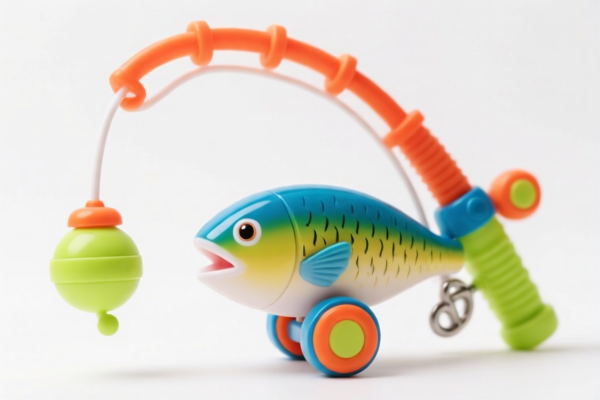
Product Images



AI Analysis
🎣 Fishing Rods and Other Fishing Gear
🌐 HS Code Reference & Customs Clearance Guide | 2026 Latest Tariff Breakdown | Professional Import Strategy
📌 One: Product Definition & Classification – Do You Really Know What a Fishing Rod Is?
Fishing rods and related fishing gear are essential tools for recreational and commercial angling. In international trade, they are classified under multiple HS codes depending on material, structure, and intended use. These items are not just simple rods — they include reels, lines, lures, nets, and specialized accessories.
⚠️ Key Differentiation Points: - Fishing rod only (with or without reel) →
9507.10.00.40,9507.90.80.00,9506.99.60.80- Plastic-based fishing gear →3926.90.99.89- Fishing nets made of textile materials →5608.11.00.10- Steel/aluminum/copper components → may trigger 50% additional tariff under Section 122
📦 Two: HS Code Classification Details (2026 Latest Tariff Authority Match)
| HS Code | Product Description | Use Case | Material/Structure | Tax Risk |
|---|---|---|---|---|
9507.90.80.00 |
Fishing rods and fishing tackle, fully matching the description in classification notes | Recreational fishing, sport use | No material conflict | ✅ Low |
9507.10.00.40 |
Fishing rods — exact match in purpose and form with classification notes | Angling, fishing tournaments | No material conflict | ✅ Low |
3926.90.99.89 |
Fishing rods and gear made primarily of plastic or plastic components | Plastic rods, composite rods, molded parts | Plastic-based (plastic is dominant) | ⚠️ High |
9506.99.60.80 |
Other sports, games, and outdoor equipment — includes fishing gear as general sport devices | Non-specific sport equipment | No material conflict | ⚠️ High (steel/aluminum/copper trigger extra tax) |
5608.11.00.10 |
Fishing nets made of textile materials — fallback category when material unclear | Net-based fishing, trawling, netting tools | Textile/fiber-based | 🔥 Very High |
🔍 Critical Note:
- If your product contains metal parts (steel, aluminum, copper), even if small, HS Code9506.99.60.80triggers a 50% additional tariff on those components — this is not optional. - Plastic-only fishing gear falls under3926.90.99.89— high tariff due to 7.5% added duty.
💰 Three: 2026 Latest Tariff Breakdown (With Detailed Tax Clauses)
✅ Applicable Country: United States (US)
✅ Origin: China (CN)
✅ Effective Date: November 10, 2025 (and ongoing)
🎯 1. 9507.90.80.00 — Fishing Rods & Fishing Tackle
| Item | Detail |
|---|---|
| Base Duty | 9.0% (ad valorem) |
| Additional Duty | 0.0% |
| Section 122 Duty (China Tariff) | 10.0% |
| Total Tariff | 19.0% |
| Tax Calculation | CIF Value × 19.0% |
| De Minimis Exemption | ✅ Yes (under 8% threshold) |
| Legal Basis Path | 9507.90.80.00 → Section 122: 10% → Base: 9% |
📌 Explanation:
- This code applies to standard fishing rods and tackle sets. - No metal components → no 50% extra tariff. - Only 19% total — one of the lowest among fishing gear codes. - Ideal for non-metallic, wooden, or graphite rods.
🎯 2. 9507.10.00.40 — Fishing Rods (Exact Match in Purpose & Form)
| Item | Detail |
|---|---|
| Base Duty | 6.0% |
| Additional Duty | 0.0% |
| Section 122 Duty (China Tariff) | 10.0% |
| Total Tariff | 16.0% |
| Tax Calculation | CIF × 16.0% |
| De Minimis Exemption | ✅ Yes |
| Legal Basis Path | 9507.10.00.40 → Section 122: 10% → Base: 6% |
📌 Explanation:
- Applies to standard fishing rods with no plastic or metal dominance. - Lowest tariff among fishing rod codes — ideal for lightweight graphite or bamboo rods. - Still qualifies for de minimis (under 8%) → no duty if value < 8% of CIF.
🎯 3. 3926.90.99.89 — Plastic-Based Fishing Gear
| Item | Detail |
|---|---|
| Base Duty | 5.3% |
| Additional Duty | 7.5% |
| Section 122 Duty (China Tariff) | 10.0% |
| Total Tariff | 22.8% |
| Tax Calculation | CIF × 22.8% |
| De Minimis Exemption | ❌ No (over 8%) |
| Legal Basis Path | 3926.90.99.89 → Additional: 7.5% → Section 122: 10% → Base: 5.3% |
📌 Explanation:
- Applies to plastic rods, plastic-reinforced rods, or gear with plastic components. - 7.5% additional duty is specifically for plastic goods from China under Section 301. - No de minimis — even small shipments face full 22.8%. - High-risk code — avoid if possible unless plastic is unavoidable.
🎯 4. 9506.99.60.80 — Other Sports & Outdoor Equipment (Fishing Gear)
| Item | Detail |
|---|---|
| Base Duty | 4.0% |
| Additional Duty | 7.5% |
| Section 122 Duty (China Tariff) | 10.0% |
| Steel/Aluminum/Copper Additional Tariff | 50% (on metal components) |
| Total Tariff | 21.5% (base) + 50% on metal parts |
| Tax Calculation | CIF × 21.5% + Metal Part Value × 50% |
| De Minimis Exemption | ❌ No |
| Legal Basis Path | 9506.99.60.80 → Additional: 7.5% → Section 122: 10% → Steel/Aluminum/Copper: 50% |
📌 Explanation:
- Most dangerous code for fishing gear with metal parts. - 50% extra tariff applies only to steel, aluminum, or copper components — even if small. - Example: A rod with aluminum reel seat → 50% tax on that part. - No de minimis — full duty on all components. - Avoid this code if metal parts exist.
🎯 5. 5608.11.00.10 — Textile-Based Fishing Nets
| Item | Detail |
|---|---|
| Base Duty | 8.0% |
| Additional Duty | 25.0% |
| Section 122 Duty (China Tariff) | 10.0% |
| Total Tariff | 43.0% |
| Tax Calculation | CIF × 43.0% |
| De Minimis Exemption | ❌ No |
| Legal Basis Path | 5608.11.00.10 → Additional: 25% → Section 122: 10% → Base: 8% |
📌 Explanation:
- Applies to nets made of textile/fiber materials (e.g., nylon, polyester, cotton). - 25% additional duty is specific to China-origin textile goods under Section 301. - 43% total — one of the highest tariffs in fishing gear. - No de minimis — full 43% on every shipment. - Only use if no alternative — consider switching to plastic or metal.
🛠️ Four: Customs Clearance Best Practices (Real-World Tips)
✅ 1. Required Documentation (Must-Have)
| Document | Required? | Notes |
|---|---|---|
| ✅ Product Specification Sheet | ✔️ | Include material, weight, length, reel type |
| ✅ Material Composition Report | ✔️ | Critical for identifying plastic/metal content |
| ✅ Product Photos (with label) | ✔️ | Show rod, reel, net, or components |
| ✅ Third-Party Test Report | ✔️ | RoHS, CE, REACH (if applicable) |
| ✅ Commercial Invoice | ✔️ | Must state: "Fishing Rod, Recreational Use, No Metal" or "Plastic-Based" |
| ✅ Certificate of Origin (CO) | ✔️ | For tariff eligibility (e.g., Vietnam, Mexico) |
| ✅ Packing List | ✔️ | Show full contents, no hidden metal parts |
✅ 2.申报技巧 (Declaration Tips – Key Phrases)
🔥 “No metal, plastic-based, bamboo rod, for recreational fishing”
→ Avoid9506.99.60.80and5608.11.00.10🔥 “Fishing rod with graphite shaft, no aluminum or copper parts”
→ Qualify for9507.10.00.40→ only 16% total🔥 “Plastic fishing lure set, no metal components”
→ Use3926.90.99.89— but expect 22.8% and no de minimis🔥 “Textile fishing net, 2m x 1m, nylon”
→ Only5608.11.00.10→ 43% tax — avoid if possible
✅ 3. Special Cases & Solutions
| Scenario | Recommended Action |
|---|---|
| Rod has aluminum reel seat | ❌ Avoid 9506.99.60.80 → Use 9507.10.00.40 if possible |
| Plastic rod with metal tip | ❌ Use 3926.90.99.89 → 22.8% tax |
| Fishing net made of polyester | ⚠️ Use 5608.11.00.10 → 43% tax — consider switching to plastic net |
| Fishing gear from Vietnam/Mexico | ✅ Apply for IEEPA exemption → 0% tariff |
| Custom fishing rod with unique design | ✅ Apply for Advance Ruling (Pre-Decision) to lock in HS code |
🌍 Five: Global Customs Comparison (2026 Latest)
| Country/Region | Recommended HS Code | Tariff | Certification | Notes |
|---|---|---|---|---|
| 🇺🇸 USA | 9507.10.00.40 |
16% | FCC, RoHS | 43% for nets, 22.8% for plastic |
| 🇨🇳 China | 9507.10.00.40 |
5% | CCC | No extra duty |
| 🇪🇺 EU | 9507.10.00.40 |
0% (if CE) | CE | No additional tax |
| 🇦🇺 Australia | 9507.10.00.40 |
5% | RCM | No extra duty |
| 🇯🇵 Japan | 9507.10.00.40 |
0% | PSE | No extra duty |
📌 Conclusion:
- USA has the highest tariffs — especially on plastic and textile gear. - China, EU, Japan, Australia are much friendlier — ideal for sourcing.
📌 Six: Common Mistakes & How to Avoid Them (Avoid Costly Errors)
❌ Mistake 1: Declaring a plastic rod with metal tip as 9507.10.00.40
👉 Result: Incorrect code → 43% tax on metal part → penalty + delay
❌ Mistake 2: Using 9506.99.60.80 for a rod with aluminum parts
👉 Result: 50% extra tax on metal → costs double
❌ Mistake 3: Not disclosing plastic content in invoice
👉 Result: Customs reclassification → higher duty + fines
❌ Mistake 4: Shipping textile nets from China without checking tariff
👉 Result: 43% tax — unacceptable for small orders
✅ Correct Approach:
“Graphite Fishing Rod, 8ft, No Metal, for Recreational Use, Model XYZ, Material: Graphite, No Aluminum or Copper, CE & RoHS Certified”
🎯 Seven: Final Verdict – Smart Classification = Lower Costs
🎯 Key Rules to Remember:
🔹 “No metal → use
9507.10.00.40→ only 16%”
🔹 “Plastic only →3926.90.99.89→ 22.8%”
🔹 “Metal parts → avoid9506.99.60.80→ 50% extra!”
🔹 “Textile nets →5608.11.00.10→ 43% — avoid if possible!”
🔹 “Origin matters: Vietnam/Mexico = 0% tariff”
📌 Pro Tip:
If your fishing gear is originating from Vietnam, Mexico, Thailand, or Malaysia, you can apply for IEEPA exemption — total tariff drops to 0%–5%.
🚀 Action Step:
🔹 Contact a customs broker
🔹 Provide product photos + material report
🔹 Apply for HS Code Pre-Decision (Advance Ruling)
📣 Act Now!
📞 Get your fishing gear cleared fast, legally, and at the lowest cost
🚀 Avoid 43% tax on nets, 50% on metal — protect your margins!
✨ Smart Tariff Strategy Starts with Accurate HS Code!
💼 Your profit depends on the right classification — don’t gamble!
Customer Reviews
About HS Code Classification
The Harmonized System (HS) is an internationally standardized nomenclature developed by the World Customs Organization (WCO) to classify traded products. Over 200 countries use the HS system as the basis for customs tariffs, trade statistics, and import/export regulations.
Each HS code follows a hierarchical structure:
- Chapter (2 digits) — Broad category of goods (e.g., Chapter 84: Machinery and Mechanical Appliances)
- Heading (4 digits) — More specific grouping within the chapter
- Subheading (6 digits) — Internationally standardized breakdown, used by all WCO member countries
- National subdivisions (8-10 digits) — Country-specific extensions for further classification, such as US HTSUS 10-digit codes
Correct HS code classification is essential for smooth customs clearance, accurate duty payment, and compliance with trade regulations. Misclassification can lead to customs delays, overpayment of duties, or penalties.
When importing from CN to US, the applicable tariff rates may include:
- Most-Favored-Nation (MFN) rate — The standard duty rate applied to WTO members
- General rate — Applied to countries without trade agreements
- Trade remedy duties — Additional tariffs such as Section 301 (anti-dumping), Section 232 (national security), or countervailing duties
The information provided on this page is for reference purposes only. For official classification, please consult with your local customs authority or a licensed customs broker.