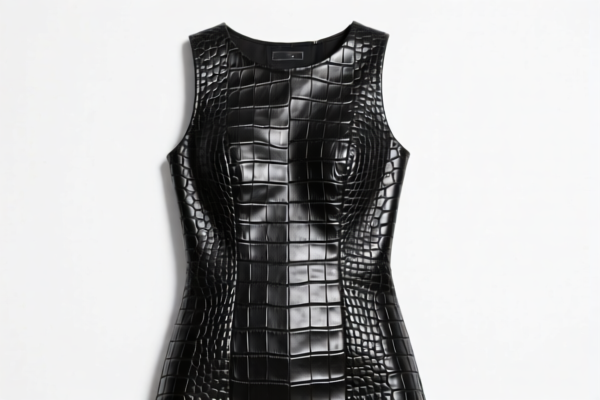
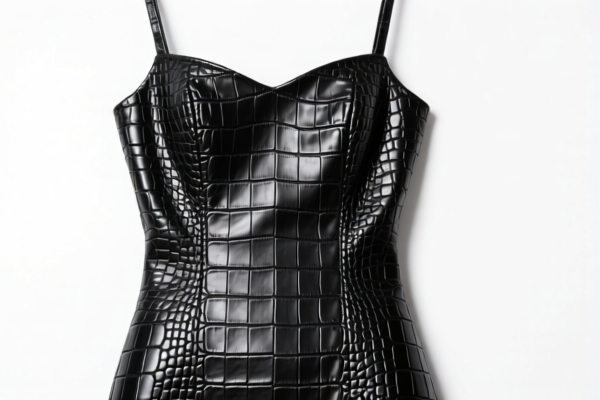
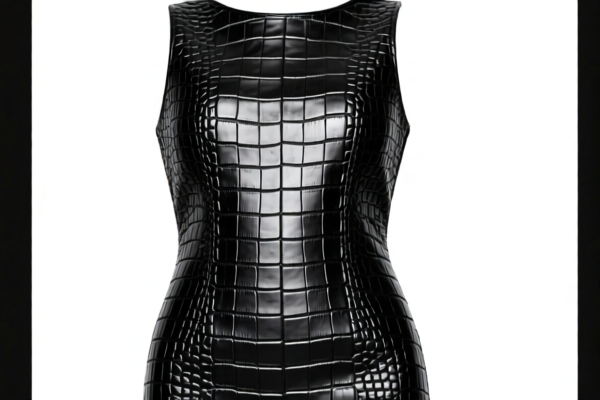
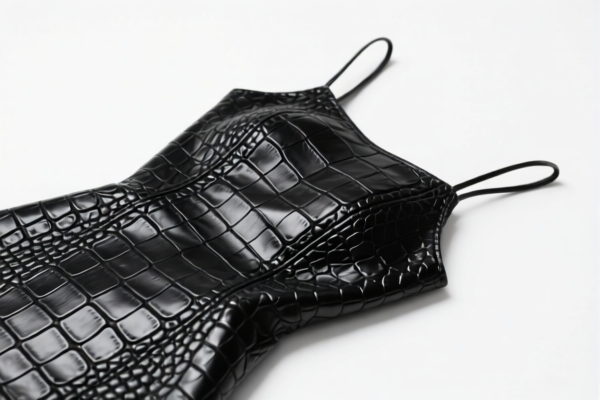
鳄鱼皮连衣裙
CN → US| HS Code | Tariff Rate | Origin | Destination | Doc |
|---|---|---|---|---|
| 4203102000 | 39.7% | CN | US | Official Doc |
| 4203104060 | 41.0% | CN | US | Official Doc |
| 4203300000 | 37.7% | CN | US | Official Doc |
| 4205006000 | 39.9% | CN | US | Official Doc |
| 4205008000 | 35.0% | CN | US | Official Doc |
Product Images
AI Analysis
👗 Crocodile Skin Dress (Crocodile Skin Apparel)
🌐 HS Code Reference & Customs Clearance Guide | 2026 Latest Tariff Analysis | Professional Level Entry Strategy
📌 I. Product Definition and Classification: Do You Really Understand "Crocodile Skin Dresses"?
A crocodile skin dress is a high-end luxury apparel item made from leather derived from crocodiles (alligator family). In international trade, it falls under Chapter 42: Articles of Leather; Saddlery and Harness. However, classification depends heavily on the specific legal definition of "garment" vs. "other leather articles" in certain jurisdictions, leading to distinct HS Code options.
Key Distinction:
- Garment Classification (4203.10): Generally, coats, jackets, and vests made of leather are classified here. Some jurisdictions or specific interpretations extend this to dresses if they are considered "outerwear" or similar in structure.
- Other Leather Articles (4203.30/4205.00): If the customs authority does not classify a dress as a "garment" (which often implies outerwear structure) or if it falls under residual categories for leather accessories/items not elsewhere specified, other codes may apply.
⚠️ Critical Note:
- 4203.10: Typically for coats/jackets/vests. Some interpretations include dresses if they are structured as outer garments.
- 4203.30: Often for gloves, mittens, etc., but can be a residual for "other garments" depending on local interpretation.
- 4205.00: For "other articles of leather," often used for non-garment items like bags, belts, or items not fitting the specific "garment" subheadings.
📦 II. HS Code Classification Details (2026 Latest Tariff Authority Comparison)
| HS Code | Product Description | Applicability Scenario | Taxation Logic |
|---|---|---|---|
4203.10.20.00 |
Crocodile Skin Dress (Reptile Leather Garment) | Classified as reptile leather apparel, fitting the "garment" category under 4203.10. | Base + 25% + 122 Clause |
4203.10.40.60 |
Crocodile Skin Dress (Crocodile Skin, Coat/Jacket Style) | Material is crocodile skin; form is considered coat/jacket-like dress. | Base + 25% + 122 Clause |
4203.30.00.00 |
Crocodile Skin Dress (Other Leather Articles) | Classified under residual "other" leather articles, not strictly as outerwear garments. | Base + 25% + 122 Clause |
4205.00.60.00 |
Crocodile Skin Dress (Other Leather Articles) | General residual category for leather items not elsewhere specified. | Base + 25% + 122 Clause |
4205.00.80.00 |
Crocodile Skin Dress (Other Leather Articles) | Another residual subheading for other leather articles, often with lower base duty. | Base + 25% + 122 Clause |
🔍 Key Reminder:
- The classification between 4203 (Garments) and 4205 (Other Articles) is contentious.
- 4203.10 typically commands higher base duties but is the standard for "garments."
- 4205.00 may have lower base duties (even 0% for some subheadings) but is often used when the item is not clearly a "garment" under strict definitions.
💰 III. 2026 Latest Tariff Rate Detailed Explanation (Including Additional Taxes)
✅ Applicable Country: United States (US)
✅ Origin: China (CN)
✅ Effective Time: Post-2025 tariffs (Including subsequent imports)
🎯 1. 4203.10.20.00 —— Crocodile Skin Dress (Reptile Leather Garment)
| Item | Content |
|---|---|
| Base Duty Rate | 4.7% |
| Section 301 Additional Duty | +25.0% |
| Section 122 Clause Duty | +10.0% |
| Total Tax Rate | 39.7% |
| Tax Calculation | CIF Value × 39.7% |
| De Minimis Exemption | ❌ Not Eligible (High-risk category) |
| Legal Basis Path | USITC:4203.10.20.00 → Section 301 → Section 122 |
📌 Explanation:
- Base Duty (4.7%): Standard tariff for reptile leather garments.
- Section 301 (25%): Additional tariff on Chinese goods under US Trade Act Section 301.
- Section 122 (10%): Specific additional clause tariff for certain leather/apparel items.
- Total: 39.7%. This is a high-cost classification.
🎯 2. 4203.10.40.60 —— Crocodile Skin Dress (Coat/Jacket Style)
| Item | Content |
|---|---|
| Base Duty Rate | 6.0% |
| Section 301 Additional Duty | +25.0% |
| Section 122 Clause Duty | +10.0% |
| Total Tax Rate | 41.0% |
| Tax Calculation | CIF Value × 41.0% |
| De Minimis Exemption | ❌ Not Eligible |
| Legal Basis Path | USITC:4203.10.40.60 → Section 301 → Section 122 |
📌 Note:
- Slightly higher base duty (6.0%) due to specific subheading for crocodile skin "coat/jacket" forms.
- Total rate 41.0% is the highest among the options.
- Use only if customs strictly defines the dress as a "coat/jacket" equivalent.
🎯 3. 4203.30.00.00 —— Crocodile Skin Dress (Other Leather Articles)
| Item | Content |
|---|---|
| Base Duty Rate | 2.7% |
| Section 301 Additional Duty | +25.0% |
| Section 122 Clause Duty | +10.0% |
| Total Tax Rate | 37.7% |
| Tax Calculation | CIF Value × 37.7% |
| De Minimis Exemption | ❌ Not Eligible |
| Legal Basis Path | USITC:4203.30.00.00 → Section 301 → Section 122 |
📌 Note:
- Lower base duty (2.7%) as it falls under a different "other" category.
- Total rate 37.7% is the lowest in the 4203.30 group.
🎯 4. 4205.00.60.00 —— Crocodile Skin Dress (Other Leather Articles)
| Item | Content |
|---|---|
| Base Duty Rate | 4.9% |
| Section 301 Additional Duty | +25.0% |
| Section 122 Clause Duty | +10.0% |
| Total Tax Rate | 39.9% |
| Tax Calculation | CIF Value × 39.9% |
| De Minimis Exemption | ❌ Not Eligible |
| Legal Basis Path | USITC:4205.00.60.00 → Section 301 → Section 122 |
📌 Note:
- Standard base duty for general leather articles.
- Total rate 39.9%.
🎯 5. 4205.00.80.00 —— Crocodile Skin Dress (Other Leather Articles)
| Item | Content |
|---|---|
| Base Duty Rate | 0.0% |
| Section 301 Additional Duty | +25.0% |
| Section 122 Clause Duty | +10.0% |
| Total Tax Rate | 35.0% |
| Tax Calculation | CIF Value × 35.0% |
| De Minimis Exemption | ❌ Not Eligible |
| Legal Basis Path | USITC:4205.00.80.00 → Section 301 → Section 122 |
📌 Note:
- Lowest Total Rate: 35.0% due to 0% base duty.
- However, this classification is high-risk if customs argues the item is a "garment" (4203). Misclassification can lead to penalties.
- Use only if the item can be legitimately argued as "other leather articles" (e.g., if it's a skirt-only or non-structured piece).
🛠️ IV. Customs Clearance Practical Advice (Battle-Tested Pitfall Avoidance Guide)
✅ 1. Document Checklist (Indispensable)
| Document | Mandatory | Description |
|---|---|---|
| ✅ Product Specification Sheet | ✔️ | Material: 100% Crocodile Skin. Form: Dress. |
| ✅ High-Resolution Photos | ✔️ | Clear images of the dress, including labels, lining, and structure. |
| ✅ Commercial Invoice | ✔️ | Must clearly state "Crocodile Skin Dress" and HS Code. |
| ✅ Packing List | ✔️ | Detailed packing info. |
| ✅ CITES Permit | ✔️ | CRITICAL: Crocodile skin is a CITES-listed species. Export/Import permits are mandatory. |
| ✅ Proof of Origin | ✔️ | Certificate of Origin to confirm Chinese origin (for tariff calculation). |
✅ 2. Declaration Strategy (Key Mantra)
🔥 "Material Truth, CITES Clear, HS Precise, Tax Lower!"
| Scenario | Correct Declaration | Wrong Practice |
|---|---|---|
| Structured Dress (Coat-like) | 4203.10.40.60 |
Misdeclare as 4205.00 → Risk of penalty |
| Simple Dress (Non-structured) | 4205.00.80.00 |
Misdeclare as 4203.10 → Higher tax (39.7% vs 35.0%) |
| CITES Listed | Declare CITES Permit Number | Ignore CITES → Seizure & Fines! |
| Mixed Materials | Declare main material | Declare only "Leather" → Ambiguity |
✅ 3. Special Situations
| Situation | Handling Advice |
|---|---|
| CITES Compliance | Ensure CITES Export Permit (from country of origin) and CITES Import Permit (if required) are attached. Failure = Automatic Refusal/Confiscation. |
| OEM/Private Label | Provide design specs to prove it's a "dress" not a "bag" or "accessory." |
| High Value | Consider Bonded Warehouses or FTZ to defer duties until sale. |
| Dispute on Classification | If customs challenges 4205.00 (0% base), be prepared to justify why it's not a "garment" under 4203.10. |
🌍 V. Global Market Comparison (2026 Latest)
| Country/Region | Recommended HS Code | Duty Rate (Approx.) | Certification | Remarks |
|---|---|---|---|---|
| 🇺🇸 USA | 4203.10 or 4205.00 |
35.0% - 41.0% | CITES + FFL (if applicable) | High additional taxes (Section 301 + 122). |
| 🇨🇳 China | 4203.10 or 4205.00 |
5% - 10% | CITES | No Section 301/122 taxes. |
| 🇪🇺 EU | 4203.10 |
4.7% - 12% | CITES + REACH | No Section 301. Base duty varies by subheading. |
| 🇬🇧 UK | 4203.10 |
4.7% - 12% | CITES | Post-Brexit rules apply. |
| 🇦🇺 Australia | 4203.10 |
5% | CITES | No Section 301. |
📌 Conclusion:
- USA is the most expensive market due to Section 301 (25%) and Section 122 (10%) add-ons.
- China/EU/AU do not have these punitive additional tariffs, making them more cost-effective for clearance.
- CITES compliance is universal and critical for all markets.
📌 VI. Common Mistakes & Pitfall Avoidance Guide (Blood-Learnings)
❌ Mistake 1: Ignoring CITES Permits
👉 Consequence: Goods seized and destroyed. Crocodile skin is strictly regulated.
✅ Fix: Always include CITES permit numbers in declaration.
❌ Mistake 2: Misclassifying as "Garment" when it should be "Other" (or vice versa)
👉 Consequence: Underpayment leads to audits/fines; Overpayment leads to loss of profit.
✅ Fix: Consult a customs broker to determine if the dress is "structured" (4203) or "unstructured" (4205).
❌ Mistake 3: Vague Description ("Leather Dress")
👉 Consequence: Customs delays for inspection, possible reclassification.
✅ Fix: Use precise language: "Crocodile Skin Dress, 100% Leather, No Lining, CITES Controlled."
❌ Mistake 4: Not Accounting for Section 122
👉 Consequence: Unexpected 10% hit on top of 25%.
✅ Fix: Factor 35-41% total tax into pricing for US market.
🎯 VII. Conclusion: Precise Classification, Smooth Clearance, Maximize Profit!
🎯 Remember the Mantra:
🔹 "CITES First, Structure Second, HS Precise, Tax Minimized!"
🔹 "4203 for Outerwear, 4205 for Others, 35% is the Best Case, 41% is the Worst!"
📌 Pro Tip:
- For US imports, consider Section 122 exemptions if applicable (rare for leather).
- Pre-clearance ruling is highly recommended to confirm if your specific dress design falls under 4203 or 4205.
- If you are importing to the US, the 35.0% (via 4205.00.80.00) is the most cost-effective, but only if the item qualifies as "other leather articles" and not a "garment."
📣 Immediate Action:
📞 Contact a licensed customs broker + Provide CITES permits + Get a Binding Ruling (if high value)
🚀 Ensure your crocodile skin dresses clear customs smoothly, avoid CITES pitfalls, and maximize your profit margins!
✨ Professional Customs Clearance Starts with Precise Classification!
💼 Every percentage point of tax matters in luxury goods!
Customer Reviews
About HS Code Classification
The Harmonized System (HS) is an internationally standardized nomenclature developed by the World Customs Organization (WCO) to classify traded products. Over 200 countries use the HS system as the basis for customs tariffs, trade statistics, and import/export regulations.
Each HS code follows a hierarchical structure:
- Chapter (2 digits) — Broad category of goods (e.g., Chapter 84: Machinery and Mechanical Appliances)
- Heading (4 digits) — More specific grouping within the chapter
- Subheading (6 digits) — Internationally standardized breakdown, used by all WCO member countries
- National subdivisions (8-10 digits) — Country-specific extensions for further classification, such as US HTSUS 10-digit codes
Correct HS code classification is essential for smooth customs clearance, accurate duty payment, and compliance with trade regulations. Misclassification can lead to customs delays, overpayment of duties, or penalties.
When importing from CN to US, the applicable tariff rates may include:
- Most-Favored-Nation (MFN) rate — The standard duty rate applied to WTO members
- General rate — Applied to countries without trade agreements
- Trade remedy duties — Additional tariffs such as Section 301 (anti-dumping), Section 232 (national security), or countervailing duties
The information provided on this page is for reference purposes only. For official classification, please consult with your local customs authority or a licensed customs broker.