黄麻或其他纺织纤维制的绳、索、缆
CN → US| HS Code | Tariff Rate | Origin | Destination | Doc |
|---|---|---|---|---|
| 5607901500 | 35.0% | CN | US | Official Doc |
| 5607909000 | 41.3% | CN | US | Official Doc |
Product Images
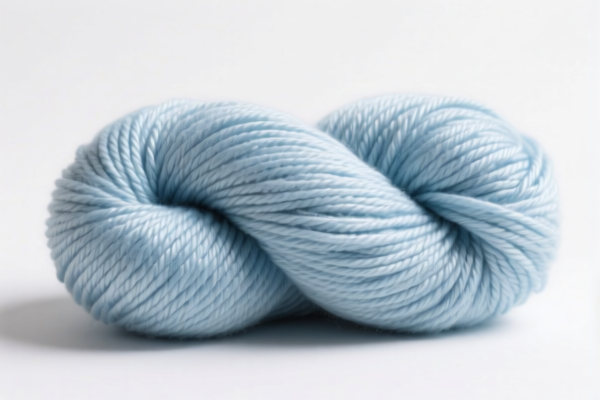
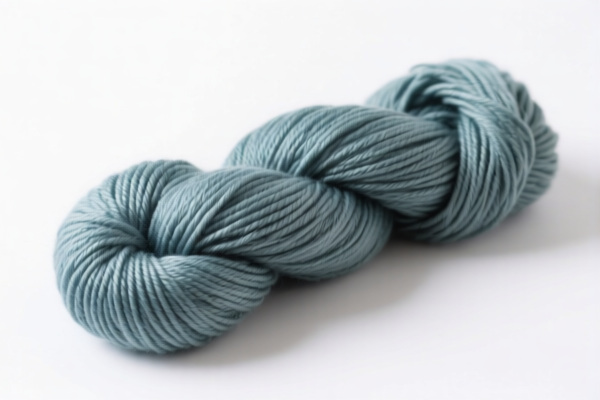
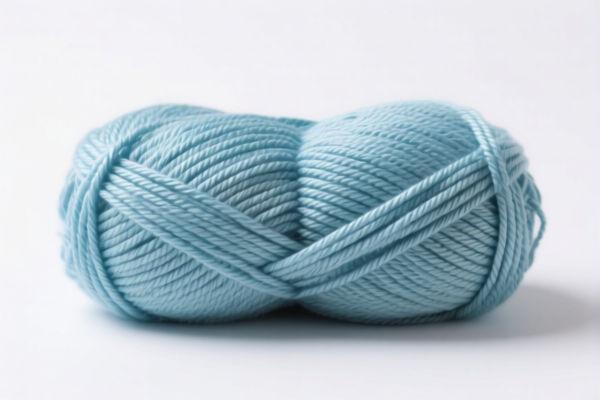
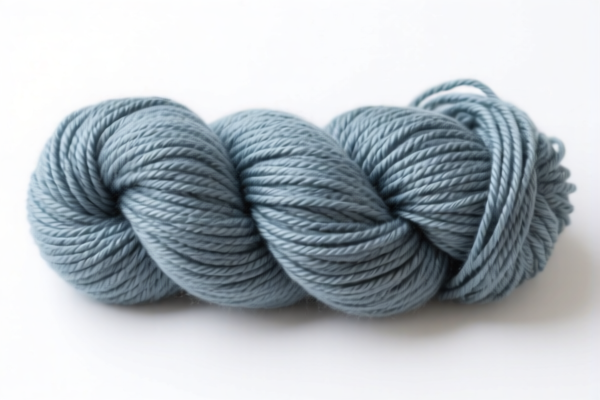
AI Analysis
🧶 Hemp & Textile Fibers: Ropes, Cords, and Tensile Products
🌐 HS Code Reference & Customs Clearance Guide | 2026 Latest Tariff Analysis | Professional Clearance Strategy
📌 I. Product Definition & Classification: What Exactly Are "Hemp Ropes"?
Hemp, sisal, coir, and other vegetable textile fibers are widely used in industrial, agricultural, maritime, and consumer applications. In international trade, these products are strictly classified based on material composition, physical form, and processing state.
Vegetable Textile Fibers (e.g., Hemp, Jute, Sisal, Coir):
Natural fibers extracted from plants, used for making ropes, cables, and twines.
⚠️ Key Distinction:
- If the rope is impregnated, coated, or covered with rubber or plastics → It falls under Chapter 39 or 40 (not 56).
- If it is purely textile fiber (even if twisted or braided) → It falls under Chapter 56.
- The specific HS code depends on whether it meets the precise explanatory notes for sub-headings 5607.90.15 or 5607.90.90.
📦 II. HS Code Classification Details (2026 Latest Tariff Authority Comparison)
Based on the provided data, there are two primary HS codes for hemp/textile fiber ropes, differing mainly in their base tariff rate due to specific classification interpretations.
| HS Code | Product Description | Applicable Scenario | Base Tariff |
|---|---|---|---|
5607.90.15.00 |
Ropes, cordage, cables, and twines of hemp or other textile fibers, fully compliant with classification explanatory requirements | Pure textile fiber ropes that strictly meet the specific material and form definitions | 0.0% |
5607.90.90.00 |
Ropes, cords, and cables of hemp or other textile fibers, not specified elsewhere (e.g., not impregnated with rubber/plastic) | General category for hemp/textile ropes that do not fit the specific sub-heading 15 | 6.3% |
🔍 Critical Note:
- Both codes exclude ropes impregnated with rubber or plastics.
- The difference between 5607.90.15.00 and 5607.90.90.00 lies in the Base Tariff: 0% vs. 6.3%.
- All other surcharges (25% + 10%) apply equally to both codes.
💰 III. 2026 Latest Tariff Rate Breakdown (Including Surcharges & Policy Add-ons)
✅ Applicable Country: United States (US)
✅ Country of Origin: China (CN)
✅ Effective Date: 2025/11/10 onwards (including subsequent imports)
🎯 1. 5607.90.15.00 —— Hemp/Textile Fiber Ropes (Specific Compliance)
| Item | Content |
|---|---|
| Base Tariff Rate | 0.0% (Ad valorem) |
| USITC Surcharge (Section 301) | +25.0% |
| IEEPA Surcharge (Section 122) | +10.0% |
| Total Effective Tariff Rate | 35.0% |
| Tax Calculation | CIF Value × 35% |
| De Minimis Exemption Eligible? | ❌ No (deny_de_minimis) |
| Legal Basis Path | IEEPA:9903.01.25 → USITC:5607.90.15.00 → FOOTNOTE:301/122 |
📌 Explanation:
- "USITC Surcharge 25%": Additional tariff under Section 301 of the Trade Act;
- "IEEPA Surcharge 10%": Additional tariff under the International Emergency Economic Powers Act (Section 122 clause);
- Total 35%: Considered high tariff. Even with a 0% base rate, the surcharges significantly increase costs.
🎯 2. 5607.90.90.00 —— Hemp/Textile Fiber Ropes (General Category)
| Item | Content |
|---|---|
| Base Tariff Rate | 6.3% (Ad valorem) |
| USITC Surcharge (Section 301) | +25.0% |
| IEEPA Surcharge (Section 122) | +10.0% |
| Total Effective Tariff Rate | 41.3% |
| Tax Calculation | CIF Value × 41.3% |
| De Minimis Exemption Eligible? | ❌ No (deny_de_minimis) |
| Legal Basis Path | IEEPA:9903.01.25 → USITC:5607.90.90.00 → FOOTNOTE:301/122 |
📌 Note:
- This is the "catch-all" category for hemp/textile ropes that do not meet the specific criteria for 5607.90.15.00.
- The 6.3% base tariff pushes the total rate higher than the 15.00 variant.
- Both categories are subject to the same 35% surcharge on top of the base rate.
🛠️ IV. Customs Clearance Practical Advice (Avoiding Pitfalls)
✅ 1. Documentation Checklist (Essential)
| Document | Required | Explanation |
|---|---|---|
| ✅ Product Specification Sheet | ✔️ | Must clearly state: Fiber type (hemp, sisal, jute, etc.), diameter, length, weight, tensile strength. |
| ✅ Material Composition Certificate | ✔️ | Proof that the rope is NOT impregnated with rubber or plastics (critical for Chapter 56 vs. 39/40). |
| ✅ Product Photos (Clear) | ✔️ | Show texture, labeling, and overall structure to prove it's a textile product. |
| ✅ Commercial Invoice | ✔️ | Clearly describe as "Rope/Cordage of Hemp/Textile Fibers". Avoid vague terms like "String". |
| ✅ Packing List | ✔️ | Detail net/gross weight and quantity. |
| ✅ Origin Certificate (CO) | ✔️ | If not from China, may avoid surcharges (but Hemp ropes are rarely from USMCA/other FTA partners exempt from these specific surcharges). |
✅ 2. Declaration Strategy (Key Tips)
🔥 "Pure Fiber, No Rubber, Specific HS, Lower Base!"
| Scenario | Correct Declaration | Wrong Practice |
|---|---|---|
| Rope made of pure hemp/jute/sisal | 5607.90.15.00 OR 5607.90.90.00 |
Misdeclare as "Plastic Rope" → Chapter 39 (Different Rates) |
| Rope impregnated with rubber/plastic | NOT Chapter 56 | Declare under 5607 → Customs Rejection/Reclassification |
| General Hemp Rope | 5607.90.90.00 (Safest if unsure) |
Misdeclare as 5607.90.15.00 without proof → Penalty for Misclassification |
| Twine/Cordage vs. Large Cable | Same Chapter 56, but verify sub-heading | Confusing "twine" with "cable" may lead to query |
📌 Important:
- To qualify for 5607.90.15.00 (0% base), you must ensure the product fully complies with the specific explanatory notes. If in doubt, use 5607.90.90.00 (6.3% base).
- The 35% vs. 41.3% difference is significant for high-volume shipments.
✅ 3. Special Considerations
| Scenario | Handling Advice |
|---|---|
| Mixed Fiber Ropes | If blended with synthetic fibers, check if it still qualifies as "Textile Fiber". Synthetic blends may fall under Chapter 54/55. |
| Impregnated Ropes | If coated with latex, rubber, or plastic, it cannot be declared under 5607. It will likely fall under 3917 or 4009. |
| Used Ropes | Import of used ropes may face strict sanitary/phytosanitary checks. Declare as "New" if applicable, or provide proper documentation for "Used Goods". |
| OEM/White Label | Provide buyer’s design specs. Labeling must match the declared HS code description. |
🌍 V. Global Market Comparison (2026 Update)
| Country/Region | Recommended HS Code | Tariff (CN Origin) | Certification | Notes |
|---|---|---|---|---|
| 🇺🇸 USA | 5607.90.15.00 or 5607.90.90.00 |
35% or 41.3% | None specific for ropes | High surcharges apply |
| 🇨🇳 China | 5607.90.15.00 or 5607.90.90.00 |
6.3% or 0% | None | Low import duty |
| 🇪🇺 EU | 5607.90.90 |
4% - 6% | CE (if for machinery) | No Section 301/122 surcharges |
| 🇦🇺 Australia | 5607.90.90 |
5% | None | Free Trade Agreement may apply |
| 🇯🇵 Japan | 5607.90.90 |
0% - 6% | None | JETRO guidelines apply |
📌 Conclusion:
- USA has the highest tariff burden due to Section 301 (25%) and IEEPA (10%) surcharges.
- China and EU have significantly lower tariffs, making them more attractive for hemp rope exports.
- US Market Strategy: If exporting to the US, ensure the rope is NOT impregnated to avoid Chapter 39/40 complications, and carefully choose between 15.00 and 90.00 based on material specificity.
📌 VI. Common Errors & Pitfalls (Lessons Learned)
❌ Error 1: Declaring a Rubber-Coated Rope as Hemp Rope
👉 Consequence: Reclassified to Chapter 39/40, penalties for misdeclaration.
❌ Error 2: Using vague description "Hemp Rope" without fiber specification
👉 Consequence: Customs may query for material details, causing customs hold/delay.
❌ Error 3: Assuming all ropes get 0% base rate
👉 Consequence: Misclassifying as 5607.90.15.00 when it should be 5607.90.90.00 → Underpayment of 6.3% base tax + fines.
❌ Error 4: Ignoring IEEPA 10% Surcharge
👉 Consequence: Unexpected 10% additional cost on top of the 25% Section 301 tariff.
✅ Correct Practice:
"Pure Hemp Rope, Braided, Diameter 10mm, Length 100m, No Rubber/Plastic Impregnation, Model XYZ"
🎯 VII. Conclusion: Professional Declaration, Cost Optimization!
🎯 Remember the Golden Rule:
🔹 "Check Fiber: If Pure Textile → Chapter 56."
🔹 "Check Coating: If Rubber/Plastic → Chapter 39/40."
🔹 "Check Specificity: If Compliant → 15.00 (0% Base). If Not → 90.00 (6.3% Base)."
🔹 "Add Surcharges: 25% (301) + 10% (122) = +35% to Base Rate."
📌 Pro Tip:
- For US imports, the total effective tariff is 35% or 41.3%. Plan your pricing accordingly.
- If your rope is exported to Vietnam/Mexico first, verify if transshipment rules allow for IEEPA exemption (complex, requires legal review).
- Apply for an Advance Ruling from US Customs (CBP) if the product’s material composition is borderline.
📣 Immediate Action:
📞 Contact your freight forwarder + Provide Material Composition Certificate + Apply for CBP Advance Ruling
🚀 Ensure your hemp ropes clear customs smoothly, avoid penalties, and maximize profit!
✨ Professional Customs Clearance Starts with Accurate Classification!
💼 Every Percentage Point of Tariff Matters!
Customer Reviews
About HS Code Classification
The Harmonized System (HS) is an internationally standardized nomenclature developed by the World Customs Organization (WCO) to classify traded products. Over 200 countries use the HS system as the basis for customs tariffs, trade statistics, and import/export regulations.
Each HS code follows a hierarchical structure:
- Chapter (2 digits) — Broad category of goods (e.g., Chapter 84: Machinery and Mechanical Appliances)
- Heading (4 digits) — More specific grouping within the chapter
- Subheading (6 digits) — Internationally standardized breakdown, used by all WCO member countries
- National subdivisions (8-10 digits) — Country-specific extensions for further classification, such as US HTSUS 10-digit codes
Correct HS code classification is essential for smooth customs clearance, accurate duty payment, and compliance with trade regulations. Misclassification can lead to customs delays, overpayment of duties, or penalties.
When importing from CN to US, the applicable tariff rates may include:
- Most-Favored-Nation (MFN) rate — The standard duty rate applied to WTO members
- General rate — Applied to countries without trade agreements
- Trade remedy duties — Additional tariffs such as Section 301 (anti-dumping), Section 232 (national security), or countervailing duties
The information provided on this page is for reference purposes only. For official classification, please consult with your local customs authority or a licensed customs broker.