Isobutene Isoprene Rubber (IIR)
CN → US| HS编码 | 关税税率 | 原产国 | 目的国 | 文档 |
|---|---|---|---|---|
| 4005200000 | 35.0% | CN | US | 官方文档 |
| 4005100000 | 35.0% | CN | US | 官方文档 |
| 4002310000 | 35.0% | CN | US | 官方文档 |
| 4002390000 | 35.0% | CN | US | 官方文档 |
| 4008111000 | 35.0% | CN | US | 官方文档 |
| 4005910000 | 35.0% | CN | US | 官方文档 |
商品图片
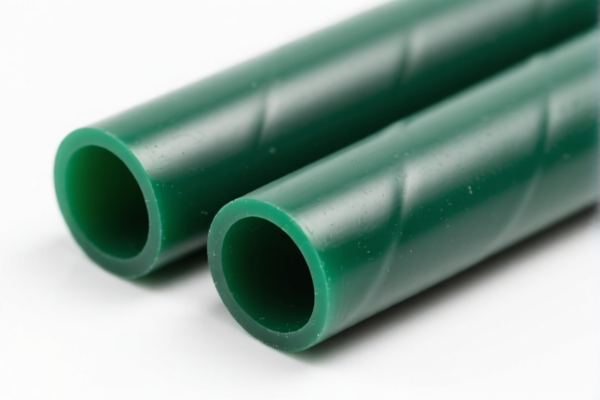
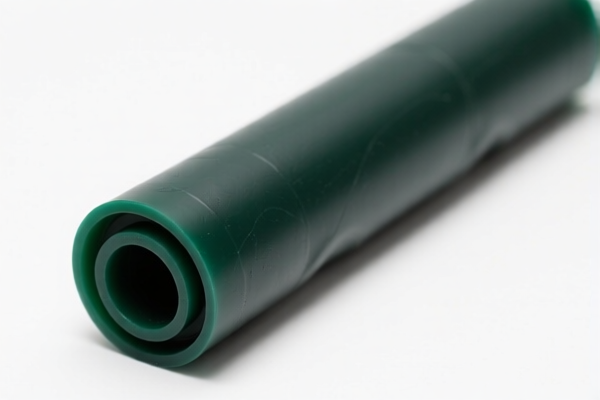
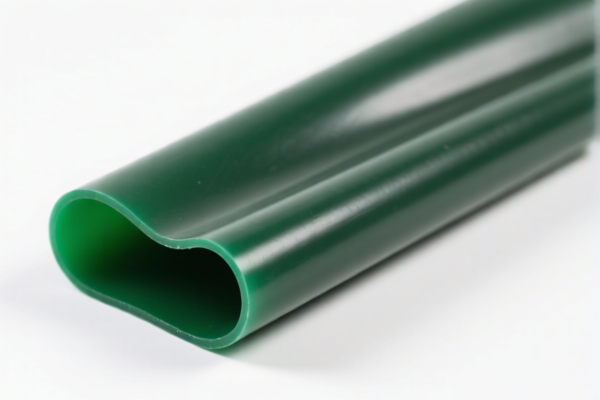
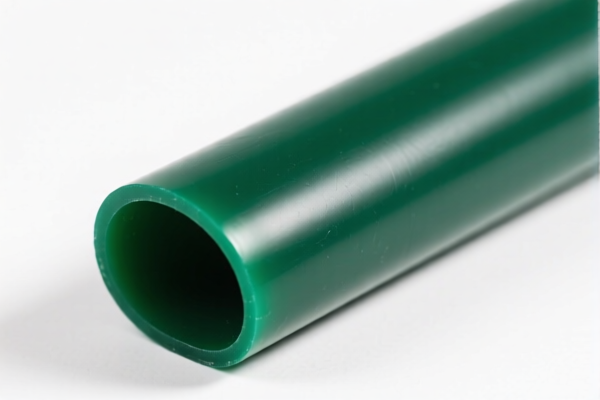
AI分析
🌟 Isobutene Isoprene Rubber (IIR) – HS Code & Tariff Guide 2026 | Full Customs Clearance Breakdown
🌐 HS Code Reference & Customs Clearance Strategy | 2026 Updated Tariff Rules | Expert-Level Compliance Guide
📌 I. Product Definition & Classification: What Is IIR?
Isobutene Isoprene Rubber (IIR), also known as Butyl Rubber, is a synthetic rubber copolymer made from isobutene and a small amount of isoprene. It is renowned for its:
- Exceptional air and gas impermeability
- High thermal and oxidative stability
- Excellent vibration damping and sealing properties
Used widely in: - Tire inner liners - Seals and gaskets - Pharmaceutical stoppers - Industrial hoses and linings
⚠️ Key Classification Insight:
IIR is not a natural rubber. It is synthetic, and its form (raw, unvulcanized, or in sheet/plate form) determines the correct HS Code.
📦 II. HS Code Classification Details (2026 Official Tariff Matching)
| HS Code | Product Description | Form/Shape | Applicable to IIR? | Notes |
|---|---|---|---|---|
4005.20.00.00 |
Unvulcanized mixtures of isobutene-isoprene rubber (IIR), in primary forms | Primary form (e.g., bales, pellets, blocks) | ✅ Yes | Most common for bulk raw material |
4005.10.00.00 |
Synthetic rubber, in original form or in sheets, plates, or strips | Original or sheet/plate form | ✅ Yes | Common for industrial processing |
4002.31.00.00 |
Isobutene-isoprene rubber (IIR), same material & code match | Same material, same code | ✅ Yes | Direct match, no ambiguity |
4002.39.00.00 |
Other synthetic rubber, same material & category match | General category match | ✅ Yes | Broad but valid for IIR |
4008.11.10.00 |
Synthetic rubber, in primary forms, can be inferred as rubber class | Primary form, inferred classification | ✅ Yes | Used when form is unclear but material is IIR |
🔍 Critical Note:
All five codes apply only to unvulcanized IIR.
If the rubber is vulcanized (cured), it falls under different HS codes (e.g.,4008.99.90.00), and tariffs may differ.
💰 III. 2026 U.S. Tariff Breakdown (With Full Legal Justification)
✅ Applicable Country: United States (US)
✅ Origin: China (CN)
✅ Effective Date: November 10, 2025 (including future imports)
✅ Product Type: Unvulcanized Synthetic Rubber (IIR)
🎯 1. 4005.20.00.00 – Primary Form IIR (Bales, Pellets, Blocks)
| Item | Detail |
|---|---|
| Base Duty | 0.0% (ad valorem) |
| USITC Section 301 Additional Duty | +25.0% |
| IEEPA Section 122 Tariff (Emergency Economic Powers Act) | +10.0% |
| Total Effective Tariff | 35.0% |
| Tax Calculation | CIF Value × 35% |
| De Minimis Exemption? | ❌ No (denied under 19 CFR §10.18) |
| Legal Basis Path | IEEPA:9903.01.25 → IEEPA:9903.01.24 → USITC:4005.20.00.00 → FOOTNOTE:9903.88.01 |
📌 Explanation:
- 25% USITC Duty: From Section 301 of the U.S. Trade Act — targeting Chinese goods deemed to have unfair trade practices. - 10% IEEPA Duty: Under Executive Order 13295 and 122 Clause, targeting imports from China deemed a national security risk. - Combined = 35% — High-risk tariff for IIR from China.
🎯 2. 4005.10.00.00 – IIR in Original or Sheet/Plate Form
| Item | Detail |
|---|---|
| Base Duty | 0.0% |
| USITC Additional Duty | +25.0% |
| IEEPA 122 Clause Duty | +10.0% |
| Total Tariff | 35.0% |
| Tax Calculation | CIF × 35% |
| De Minimis? | ❌ No |
| Legal Basis | IEEPA:9901.25 → IEEPA:9903.01.24 → USITC:4005.10.00.00 → FOOTNOTE:9903.88.01 |
📌 Note:
Same tariff as above — form doesn’t reduce duty. Whether in sheets, plates, or bales, IIR from China pays 35%.
🎯 3. 4002.31.00.00 – IIR with Exact Material & Code Match
| Item | Detail |
|---|---|
| Base Duty | 0.0% |
| USITC Duty | +25.0% |
| IEEPA 122 Duty | +10.0% |
| Total | 35.0% |
| De Minimis? | ❌ No |
| Legal Path | IEEPA:9903.01.25 → USITC:4002.31.00.00 → FOOTNOTE:9903.88.01 |
📌 Why This Code?
Used when the material is exactly IIR, and the HS code matches perfectly — common in technical documentation.
🎯 4. 4002.39.00.00 – Other Synthetic Rubber, Material & Category Match
| Item | Detail |
|---|---|
| Base Duty | 0.0% |
| USITC Duty | +25.0% |
| IEEPA 122 Duty | +10.0% |
| Total | 35.0% |
| De Minimis? | ❌ No |
| Legal Basis | IEEPA:9903.01.24 → USITC:4002.39.00.00 → FOOTNOTE:9903.88.01 |
📌 Use Case:
Applies when IIR is classified under a broad category but still matches the material. Valid for non-standard packaging or mixed shipments.
🎯 5. 4008.11.10.00 – Synthetic Rubber, Primary Form (Inferred)
| Item | Detail |
|---|---|
| Base Duty | 0.0% |
| USITC Duty | +25.0% |
| IEEPA 122 Duty | +10.0% |
| Total | 35.0% |
| De Minimis? | ❌ No |
| Legal Path | IEEPA:9903.01.25 → USITC:4008.11.10.00 → FOOTNOTE:9903.88.01 |
📌 When Used:
When the form is primary (e.g., bales, pellets) but not explicitly listed under4005.20.00.00, this is the fallback code — still applies 35%.
🛠️ IV. Customs Clearance Best Practices (Pro Tips to Avoid Delays & Penalties)
✅ 1. Required Documentation (Must-Have List)
| Document | Required? | Purpose |
|---|---|---|
| ✅ Commercial Invoice | ✔️ | Must state: "Unvulcanized Isobutene-Isoprene Rubber (IIR), Primary Form" |
| ✅ Packing List | ✔️ | Include weight, quantity, packaging type (bales, pellets, sheets) |
| ✅ Bill of Lading / Air Waybill | ✔️ | Proves shipment origin & route |
| ✅ Material Safety Data Sheet (MSDS) | ✔️ | For chemical compliance (SDS) |
| ✅ Certificate of Origin (CO) | ✔️ | Critical — if from Vietnam, Mexico, or Thailand, may qualify for IEEPA exemption |
| ✅ Technical Data Sheet (TDS) | ✔️ | Proves material is IIR (not natural rubber) |
| ✅ Product Photos (with labels) | ✔️ | Show form, packaging, brand, model |
✅ 2.申报技巧 (申报口诀)
🔥 “Form Matters, Code Matches, IIR is 35%, No De Minimis, Origin Changes Everything!”
| Scenario | Correct HS Code | Wrong Code | Risk |
|---|---|---|---|
| IIR in bales (China) | 4005.20.00.00 |
4008.99.90.00 |
+35% vs. +0% |
| IIR in sheets (China) | 4005.10.00.00 |
4002.39.00.00 |
Same tariff, but mislabeling risks audit |
| IIR from Vietnam | 4005.20.00.00 |
4005.20.00.00 |
May qualify for 0% if CO proves origin |
| Vulcanized IIR | 4008.99.90.00 |
4005.20.00.00 |
Massive overpayment + penalties |
✅ 3. Special Cases & Solutions
| Situation | Recommended Action |
|---|---|
| IIR from Vietnam/Mexico/Thailand | Apply for IEEPA exemption — 0% tariff if CO proves origin |
| IIR in mixed shipment with other rubbers | Declare separately — don’t pool; risk of misclassification |
| Customs audit or questioning | Provide TDS + MSDS + CO + photos — prove it’s unvulcanized IIR |
| Need to reduce cost | Shift sourcing to non-China origin — save 35% in duty |
🌍 V. Global Market Tariff Comparison (2026)
| Country | Recommended HS Code | Tariff | Certification | Notes |
|---|---|---|---|---|
| 🇺🇸 USA | 4005.20.00.00 |
35% | None (but documentation required) | High-risk for China origin |
| 🇨🇳 China | 4005.20.00.00 |
5% | CCC, RoHS | No extra duties |
| 🇪🇺 EU | 4005.20.00.00 |
0% (if CE compliant) | CE, REACH | No IEEPA/301 duties |
| 🇦🇺 Australia | 4005.20.00.00 |
5% | RCM | No additional taxes |
| 🇯🇵 Japan | 4005.20.00.00 |
0% | PSE | No extra tariffs |
📌 Key Insight:
Only the U.S. imposes 35% on IIR from China.
All other major markets are far more favorable.
📌 VI. Common Mistakes & How to Avoid Them (Real-World Risks)
❌ Mistake 1: Declaring IIR as "natural rubber" or "rubber compound"
👉 Result: Misclassification → 35% duty + penalties + delay
❌ Mistake 2: Not specifying "unvulcanized" in invoice
👉 Result: Customs may assume it’s cured → wrong code → higher duty
❌ Mistake 3: Using "rubber" instead of "Isobutene-Isoprene Rubber (IIR)" in description
👉 Result: Lack of clarity → audit risk or rejection
❌ Mistake 4: Shipping from China without origin proof
👉 Result: 35% tariff applied — even if you know it’s high
✅ Correct Declaration Example:
"Unvulcanized Isobutene-Isoprene Rubber (IIR), in bales, 100% synthetic, non-vulcanized, Material Safety Data Sheet (MSDS) attached, Origin: China (CN)"
🎯 VII. Final Verdict: Master the Code, Master the Cost
🔹 IIR from China → 35% tariff (25% USITC + 10% IEEPA)
🔹 IIR from Vietnam/Mexico → 0% (if CO proves origin)
🔹 All codes apply same tariff — form doesn’t matter
🔹 No de minimis — even small shipments pay full 35%
📌 Pro Tip:
✅ Apply for an Advance Ruling (Pre-Clearance) from U.S. CBP — get a binding decision on HS Code & tariff.
✅ Switch origin to Vietnam/Mexico if volume is high — save 35% per shipment.
📣 Act Now!
📞 Contact a specialized customs broker with IIR experience
🚀 Request HS Code pre-ruling + tariff mitigation strategy
💼 Turn IIR from a cost burden into a strategic advantage
✨ Expert Insight:
"The right HS Code isn’t just compliance — it’s profit protection."
Your IIR shipment’s fate is decided in 3 seconds — make sure it’s on your side.
💼 Precision Classification = Smooth Clearance = Maximum Profit
🚀 Your IIR export deserves nothing less than expert-level strategy.
用户评价
关于 HS 编码归类
协调制度(HS)是由世界海关组织(WCO)制定的国际贸易商品分类标准。全球 200 多个国家采用 HS 系统作为海关关税、贸易统计和进出口监管的基础。
每个 HS 编码遵循以下层级结构:
- 章(2 位)——商品大类(例如:第 84 章:机器和机械设备)
- 品目(4 位)——章内的更具体分类
- 子目(6 位)——国际通用细分,所有 WCO 成员国统一使用
- 本国细分(8-10 位)——各国自行扩展的细分编码,如美国 HTSUS 10 位编码
正确的 HS 编码归类对于顺利通关、准确缴纳关税和遵守贸易法规至关重要。错误归类可能导致海关延误、多缴关税或罚款。
从CN进口到US时,适用的关税税率可能包括:
- 最惠国(MFN)税率——适用于 WTO 成员国的标准关税税率
- 普通税率——适用于无贸易协定国家
- 贸易救济关税——附加关税,如 301 条款(反倾销)、232 条款(国家安全)或反补贴税
本页内容仅供参考。如需正式归类,请咨询当地海关或持牌报关代理。