Isobutene Isoprene Rubber (IIR)
CN → US| HS Code | Tariff Rate | Origin | Destination | Doc |
|---|---|---|---|---|
| 4005200000 | 35.0% | CN | US | Official Doc |
| 4005100000 | 35.0% | CN | US | Official Doc |
| 4002310000 | 35.0% | CN | US | Official Doc |
| 4002390000 | 35.0% | CN | US | Official Doc |
| 4008111000 | 35.0% | CN | US | Official Doc |
| 4005910000 | 35.0% | CN | US | Official Doc |
Product Images
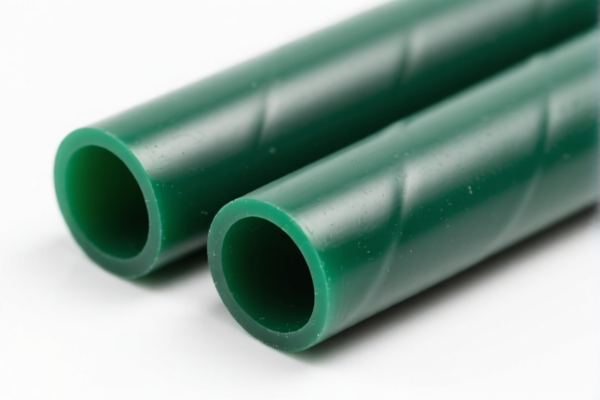
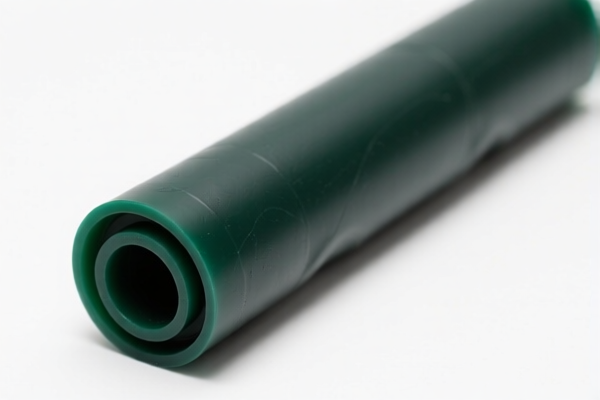
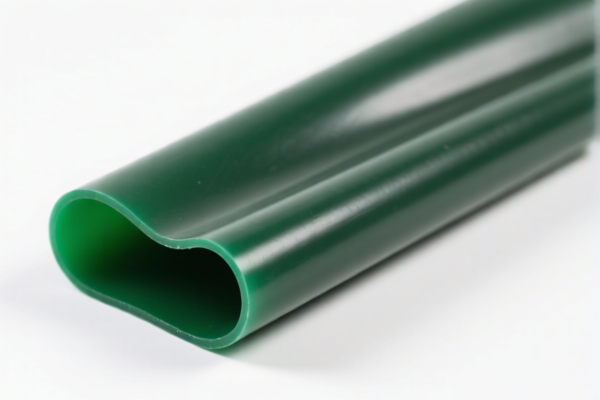
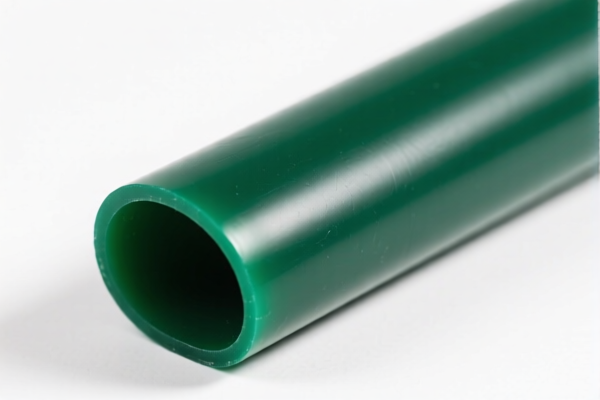
AI Analysis
🌟 Isobutene Isoprene Rubber (IIR) – HS Code & Tariff Guide 2026 | Full Customs Clearance Breakdown
🌐 HS Code Reference & Customs Clearance Strategy | 2026 Updated Tariff Rules | Expert-Level Compliance Guide
📌 I. Product Definition & Classification: What Is IIR?
Isobutene Isoprene Rubber (IIR), also known as Butyl Rubber, is a synthetic rubber copolymer made from isobutene and a small amount of isoprene. It is renowned for its:
- Exceptional air and gas impermeability
- High thermal and oxidative stability
- Excellent vibration damping and sealing properties
Used widely in: - Tire inner liners - Seals and gaskets - Pharmaceutical stoppers - Industrial hoses and linings
⚠️ Key Classification Insight:
IIR is not a natural rubber. It is synthetic, and its form (raw, unvulcanized, or in sheet/plate form) determines the correct HS Code.
📦 II. HS Code Classification Details (2026 Official Tariff Matching)
| HS Code | Product Description | Form/Shape | Applicable to IIR? | Notes |
|---|---|---|---|---|
4005.20.00.00 |
Unvulcanized mixtures of isobutene-isoprene rubber (IIR), in primary forms | Primary form (e.g., bales, pellets, blocks) | ✅ Yes | Most common for bulk raw material |
4005.10.00.00 |
Synthetic rubber, in original form or in sheets, plates, or strips | Original or sheet/plate form | ✅ Yes | Common for industrial processing |
4002.31.00.00 |
Isobutene-isoprene rubber (IIR), same material & code match | Same material, same code | ✅ Yes | Direct match, no ambiguity |
4002.39.00.00 |
Other synthetic rubber, same material & category match | General category match | ✅ Yes | Broad but valid for IIR |
4008.11.10.00 |
Synthetic rubber, in primary forms, can be inferred as rubber class | Primary form, inferred classification | ✅ Yes | Used when form is unclear but material is IIR |
🔍 Critical Note:
All five codes apply only to unvulcanized IIR.
If the rubber is vulcanized (cured), it falls under different HS codes (e.g.,4008.99.90.00), and tariffs may differ.
💰 III. 2026 U.S. Tariff Breakdown (With Full Legal Justification)
✅ Applicable Country: United States (US)
✅ Origin: China (CN)
✅ Effective Date: November 10, 2025 (including future imports)
✅ Product Type: Unvulcanized Synthetic Rubber (IIR)
🎯 1. 4005.20.00.00 – Primary Form IIR (Bales, Pellets, Blocks)
| Item | Detail |
|---|---|
| Base Duty | 0.0% (ad valorem) |
| USITC Section 301 Additional Duty | +25.0% |
| IEEPA Section 122 Tariff (Emergency Economic Powers Act) | +10.0% |
| Total Effective Tariff | 35.0% |
| Tax Calculation | CIF Value × 35% |
| De Minimis Exemption? | ❌ No (denied under 19 CFR §10.18) |
| Legal Basis Path | IEEPA:9903.01.25 → IEEPA:9903.01.24 → USITC:4005.20.00.00 → FOOTNOTE:9903.88.01 |
📌 Explanation:
- 25% USITC Duty: From Section 301 of the U.S. Trade Act — targeting Chinese goods deemed to have unfair trade practices. - 10% IEEPA Duty: Under Executive Order 13295 and 122 Clause, targeting imports from China deemed a national security risk. - Combined = 35% — High-risk tariff for IIR from China.
🎯 2. 4005.10.00.00 – IIR in Original or Sheet/Plate Form
| Item | Detail |
|---|---|
| Base Duty | 0.0% |
| USITC Additional Duty | +25.0% |
| IEEPA 122 Clause Duty | +10.0% |
| Total Tariff | 35.0% |
| Tax Calculation | CIF × 35% |
| De Minimis? | ❌ No |
| Legal Basis | IEEPA:9901.25 → IEEPA:9903.01.24 → USITC:4005.10.00.00 → FOOTNOTE:9903.88.01 |
📌 Note:
Same tariff as above — form doesn’t reduce duty. Whether in sheets, plates, or bales, IIR from China pays 35%.
🎯 3. 4002.31.00.00 – IIR with Exact Material & Code Match
| Item | Detail |
|---|---|
| Base Duty | 0.0% |
| USITC Duty | +25.0% |
| IEEPA 122 Duty | +10.0% |
| Total | 35.0% |
| De Minimis? | ❌ No |
| Legal Path | IEEPA:9903.01.25 → USITC:4002.31.00.00 → FOOTNOTE:9903.88.01 |
📌 Why This Code?
Used when the material is exactly IIR, and the HS code matches perfectly — common in technical documentation.
🎯 4. 4002.39.00.00 – Other Synthetic Rubber, Material & Category Match
| Item | Detail |
|---|---|
| Base Duty | 0.0% |
| USITC Duty | +25.0% |
| IEEPA 122 Duty | +10.0% |
| Total | 35.0% |
| De Minimis? | ❌ No |
| Legal Basis | IEEPA:9903.01.24 → USITC:4002.39.00.00 → FOOTNOTE:9903.88.01 |
📌 Use Case:
Applies when IIR is classified under a broad category but still matches the material. Valid for non-standard packaging or mixed shipments.
🎯 5. 4008.11.10.00 – Synthetic Rubber, Primary Form (Inferred)
| Item | Detail |
|---|---|
| Base Duty | 0.0% |
| USITC Duty | +25.0% |
| IEEPA 122 Duty | +10.0% |
| Total | 35.0% |
| De Minimis? | ❌ No |
| Legal Path | IEEPA:9903.01.25 → USITC:4008.11.10.00 → FOOTNOTE:9903.88.01 |
📌 When Used:
When the form is primary (e.g., bales, pellets) but not explicitly listed under4005.20.00.00, this is the fallback code — still applies 35%.
🛠️ IV. Customs Clearance Best Practices (Pro Tips to Avoid Delays & Penalties)
✅ 1. Required Documentation (Must-Have List)
| Document | Required? | Purpose |
|---|---|---|
| ✅ Commercial Invoice | ✔️ | Must state: "Unvulcanized Isobutene-Isoprene Rubber (IIR), Primary Form" |
| ✅ Packing List | ✔️ | Include weight, quantity, packaging type (bales, pellets, sheets) |
| ✅ Bill of Lading / Air Waybill | ✔️ | Proves shipment origin & route |
| ✅ Material Safety Data Sheet (MSDS) | ✔️ | For chemical compliance (SDS) |
| ✅ Certificate of Origin (CO) | ✔️ | Critical — if from Vietnam, Mexico, or Thailand, may qualify for IEEPA exemption |
| ✅ Technical Data Sheet (TDS) | ✔️ | Proves material is IIR (not natural rubber) |
| ✅ Product Photos (with labels) | ✔️ | Show form, packaging, brand, model |
✅ 2.申报技巧 (申报口诀)
🔥 “Form Matters, Code Matches, IIR is 35%, No De Minimis, Origin Changes Everything!”
| Scenario | Correct HS Code | Wrong Code | Risk |
|---|---|---|---|
| IIR in bales (China) | 4005.20.00.00 |
4008.99.90.00 |
+35% vs. +0% |
| IIR in sheets (China) | 4005.10.00.00 |
4002.39.00.00 |
Same tariff, but mislabeling risks audit |
| IIR from Vietnam | 4005.20.00.00 |
4005.20.00.00 |
May qualify for 0% if CO proves origin |
| Vulcanized IIR | 4008.99.90.00 |
4005.20.00.00 |
Massive overpayment + penalties |
✅ 3. Special Cases & Solutions
| Situation | Recommended Action |
|---|---|
| IIR from Vietnam/Mexico/Thailand | Apply for IEEPA exemption — 0% tariff if CO proves origin |
| IIR in mixed shipment with other rubbers | Declare separately — don’t pool; risk of misclassification |
| Customs audit or questioning | Provide TDS + MSDS + CO + photos — prove it’s unvulcanized IIR |
| Need to reduce cost | Shift sourcing to non-China origin — save 35% in duty |
🌍 V. Global Market Tariff Comparison (2026)
| Country | Recommended HS Code | Tariff | Certification | Notes |
|---|---|---|---|---|
| 🇺🇸 USA | 4005.20.00.00 |
35% | None (but documentation required) | High-risk for China origin |
| 🇨🇳 China | 4005.20.00.00 |
5% | CCC, RoHS | No extra duties |
| 🇪🇺 EU | 4005.20.00.00 |
0% (if CE compliant) | CE, REACH | No IEEPA/301 duties |
| 🇦🇺 Australia | 4005.20.00.00 |
5% | RCM | No additional taxes |
| 🇯🇵 Japan | 4005.20.00.00 |
0% | PSE | No extra tariffs |
📌 Key Insight:
Only the U.S. imposes 35% on IIR from China.
All other major markets are far more favorable.
📌 VI. Common Mistakes & How to Avoid Them (Real-World Risks)
❌ Mistake 1: Declaring IIR as "natural rubber" or "rubber compound"
👉 Result: Misclassification → 35% duty + penalties + delay
❌ Mistake 2: Not specifying "unvulcanized" in invoice
👉 Result: Customs may assume it’s cured → wrong code → higher duty
❌ Mistake 3: Using "rubber" instead of "Isobutene-Isoprene Rubber (IIR)" in description
👉 Result: Lack of clarity → audit risk or rejection
❌ Mistake 4: Shipping from China without origin proof
👉 Result: 35% tariff applied — even if you know it’s high
✅ Correct Declaration Example:
"Unvulcanized Isobutene-Isoprene Rubber (IIR), in bales, 100% synthetic, non-vulcanized, Material Safety Data Sheet (MSDS) attached, Origin: China (CN)"
🎯 VII. Final Verdict: Master the Code, Master the Cost
🔹 IIR from China → 35% tariff (25% USITC + 10% IEEPA)
🔹 IIR from Vietnam/Mexico → 0% (if CO proves origin)
🔹 All codes apply same tariff — form doesn’t matter
🔹 No de minimis — even small shipments pay full 35%
📌 Pro Tip:
✅ Apply for an Advance Ruling (Pre-Clearance) from U.S. CBP — get a binding decision on HS Code & tariff.
✅ Switch origin to Vietnam/Mexico if volume is high — save 35% per shipment.
📣 Act Now!
📞 Contact a specialized customs broker with IIR experience
🚀 Request HS Code pre-ruling + tariff mitigation strategy
💼 Turn IIR from a cost burden into a strategic advantage
✨ Expert Insight:
"The right HS Code isn’t just compliance — it’s profit protection."
Your IIR shipment’s fate is decided in 3 seconds — make sure it’s on your side.
💼 Precision Classification = Smooth Clearance = Maximum Profit
🚀 Your IIR export deserves nothing less than expert-level strategy.
Customer Reviews
About HS Code Classification
The Harmonized System (HS) is an internationally standardized nomenclature developed by the World Customs Organization (WCO) to classify traded products. Over 200 countries use the HS system as the basis for customs tariffs, trade statistics, and import/export regulations.
Each HS code follows a hierarchical structure:
- Chapter (2 digits) — Broad category of goods (e.g., Chapter 84: Machinery and Mechanical Appliances)
- Heading (4 digits) — More specific grouping within the chapter
- Subheading (6 digits) — Internationally standardized breakdown, used by all WCO member countries
- National subdivisions (8-10 digits) — Country-specific extensions for further classification, such as US HTSUS 10-digit codes
Correct HS code classification is essential for smooth customs clearance, accurate duty payment, and compliance with trade regulations. Misclassification can lead to customs delays, overpayment of duties, or penalties.
When importing from CN to US, the applicable tariff rates may include:
- Most-Favored-Nation (MFN) rate — The standard duty rate applied to WTO members
- General rate — Applied to countries without trade agreements
- Trade remedy duties — Additional tariffs such as Section 301 (anti-dumping), Section 232 (national security), or countervailing duties
The information provided on this page is for reference purposes only. For official classification, please consult with your local customs authority or a licensed customs broker.