Plastic Wall Decor Panel (Textile)
CN → US| HS编码 | 关税税率 | 原产国 | 目的国 | 文档 |
|---|---|---|---|---|
| 5903102090 | 35.0% | CN | US | 官方文档 |
| 5903102010 | 35.0% | CN | US | 官方文档 |
| 3921131100 | 39.2% | CN | US | 官方文档 |
| 3921121100 | 39.2% | CN | US | 官方文档 |
商品图片
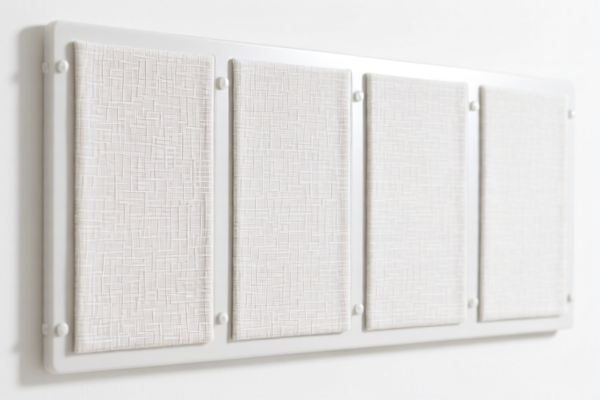
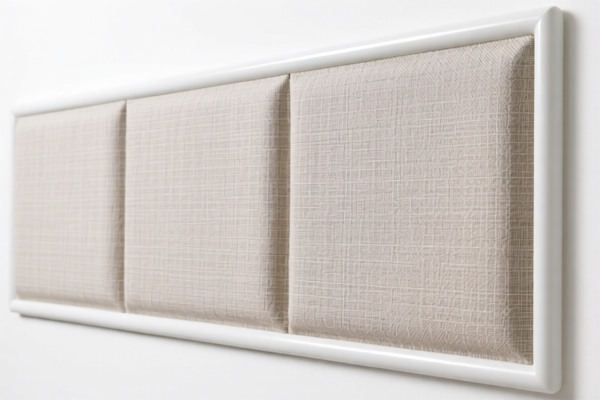
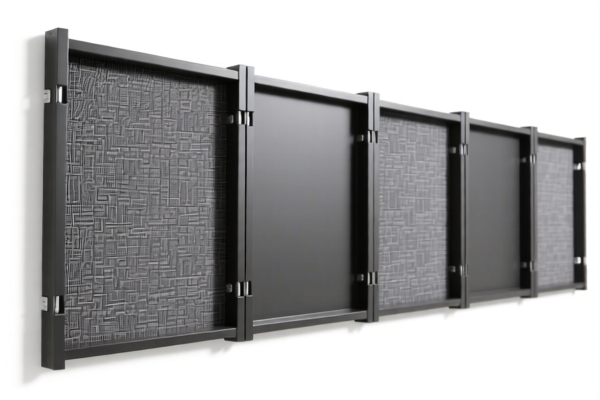
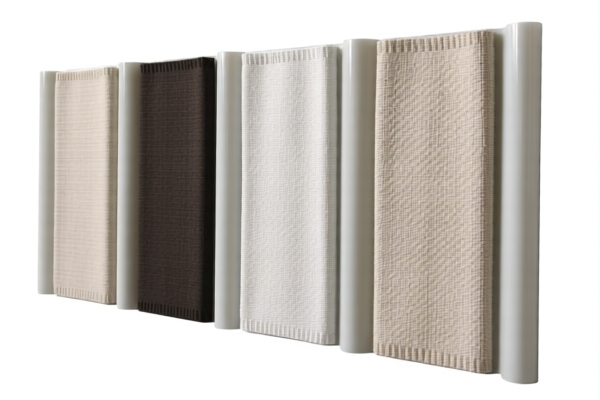
AI分析
🧱 Plastic Wall Decor Panel (Textile)
🌐 HS Code Reference & Customs Clearance Guide | 2026 Latest Tariff Analysis | Professional Clearance Strategy
📌 1. Product Definition & Classification: Is it Textile or Plastic?
This product is a composite material used for wall decoration. The core conflict in classification lies in its dual nature: * Physical Form: Textile/Fabric (Textile) * Surface/Impregnation Material: Plastic (Plastic)
In international trade, when a textile is impregnated, coated, or covered with plastic, it often shifts from Chapter 59 (Textiles) to Chapter 39 (Plastics), depending on the weight percentage and structural integrity.
⚠️ Critical Distinction Point:
- If the plastic coating is merely a thin layer and the textile base retains its essential character → Classified under Chapter 59 (Impregnated Textiles).
- If the plastic content exceeds 70% by weight or forms the main structural board/sheet with textile composite → Classified under Chapter 39 (Plastics).
- Note: Based on the provided data, two distinct classification paths are available, leading to different tax liabilities.
📦 2. HS Code Classification Details (2026 Latest Tariff Authority Comparison)
| HS Code | Product Description | Applicable Scenario | Tax Rate (Total) | Key Differentiator |
|---|---|---|---|---|
5903.10.20.90 |
Textile fabrics impregnated, coated, or covered with PVC, other than those of heading 59.02 | Wall decor panels where the textile fabric is the primary recognized form, impregnated with plastic (PVC/Other). | 35.0% | Classified as Textile; Plastic is secondary. |
5903.10.20.10 |
Textile fabrics impregnated, coated, or covered with PVC | Specific PVC-impregnated textile variants. | 35.0% | Specific PVC match; High certainty if PVC is confirmed. |
3921.13.11.00 |
Plastics plates, sheets, film, foil and strip, of polymers of ethylene | Composite plastic materials where plastic weight > 70%, often with textile backing. | 39.2% | Classified as Plastic Board/Sheet; High plastic content. |
3921.12.11.00 |
Plastics plates, sheets, film, foil and strip, of polymers of vinyl chloride (PVC) | PVC-based composite boards/sheets with textile layer. | 39.2% | Classified as PVC Plastic; Structural board form. |
🔍 Key Insight:
- The choice between Chapter 59 (35%) and Chapter 39 (39.2%) depends heavily on how customs interprets the "essential character" of the panel.
- If the panel is rigid like a board,3921is often more accurate.
- If it is flexible like a heavy-duty fabric,5903is more accurate.
- Tax Difference:3921codes incur a 4.2% higher total tax due to the 4.2% base duty on plastics vs. 0% on textiles.
💰 3. 2026 Latest Tariff Rate Breakdown (Including Additional Taxes & Policy Add-ons)
✅ Applicable Country: United States (US)
✅ Country of Origin: China (CN)
✅ Effective Date: November 10, 2025 onwards (including subsequent imports)
🎯 1. 5903.10.20.90 & 5903.10.20.10 —— Impregnated Textile Panels
| Item | Detail |
|---|---|
| Base Duty Rate | 0% (ad valorem) |
| Section 301 Duty (USITC) | +25% (From USITC Footnote 9903.88.01 / Trade Act 301) |
| IEEPA Surcharge | +10% (Targeting Chinese/HK products, effective Nov 10, 2025) |
| Total Tax Rate | 35.0% |
| Tax Calculation | CIF Value × 35% |
| De Minimis Eligibility | ❌ Not Eligible (deny_de_minimis) |
| Legal Basis Path | IEEPA:9903.01.25 → USITC:5903.10.20.90 → FOOTNOTE:9903.88.01 |
📌 Explanation:
- Textiles generally have 0% base duty.
- However, Section 301 tariffs (+25%) and IEEPA surcharges (+10%) apply equally to these textile imports from China.
- Total 35% is significantly lower than the plastic alternative.
🎯 2. 3921.13.11.00 & 3921.12.11.00 —— Composite Plastic/Board Panels
| Item | Detail |
|---|---|
| Base Duty Rate | 4.2% (ad valorem) |
| Section 301 Duty (USITC) | +25% (From USITC Footnote 9903.88.01 / Trade Act 301) |
| IEEPA Surcharge | +10% (Targeting Chinese/HK products, effective Nov 10, 2025) |
| Total Tax Rate | 39.2% |
| Tax Calculation | CIF Value × 39.2% |
| De Minimis Eligibility | ❌ Not Eligible (deny_de_minimis) |
| Legal Basis Path | IEEPA:9901.25 → IEEPA:9903.01.24 → USITC:3921.12.11.00 → FOOTNOTE:9903.88.01 |
📌 Explanation:
- Plastics/Plates have a 4.2% base duty.
- Add the same 35% in additional tariffs (25% + 10%).
- Total 39.2% is higher. This classification is risky if the product is actually more textile-dominated.
🛠️ 4. Customs Clearance Practical Advice (Real-World Pitfall Guide)
✅ 1. Required Documentation Checklist (Non-Negotiable)
| Document | Mandatory? | Description |
|---|---|---|
| ✅ Product Specification Sheet | ✔️ | Must detail: Base material (Textile vs. Plastic%), Plastic type (PVC, PE, etc.), Thickness, Weight. |
| ✅ Photos (Front/Back/Cross-section) | ✔️ | Crucial for Customs to see if it's a "Board" (Plastic) or "Fabric" (Textile). |
| ✅ Commercial Invoice | ✔️ | Must accurately describe as "Plastic Impregnated Textile Panel" OR "Composite Plastic Wall Panel". |
| ✅ Packing List | ✔️ | Standard customs requirement. |
| ✅ Origin Certificate (CO) | ✔️ | To confirm CN origin and trigger correct additional duties. |
| ✅ Material Composition Statement | ✔️ | Explicitly state % of Textile vs. Plastic. This determines Chapter 59 vs. 39. |
✅ 2. Declaration Strategy (Key Mnemonic)
🔥 “Look at the Structure: Board = Plastic (39.2%), Fabric = Textile (35.0%)!”
| Scenario | Recommended HS Code | Why? | Risk |
|---|---|---|---|
| Rigid Panel (Hard to bend, looks like a plastic board with texture) | 3921.12.11.00 or 3921.13.11.00 |
High plastic content, structural integrity. | Higher tax (39.2%), but accurate for boards. |
| Flexible Panel (Bendable, heavy fabric feel, plastic coating) | 5903.10.20.90 or 5903.10.20.10 |
Textile is the essential character. | Lower tax (35.0%), but requires proof of textile base. |
| Ambiguous | Pre-Ruling Requested | Do not guess. | Misclassification leads to penalties + back taxes. |
📌 Pro Tip:
- If the product is PVC-coated fabric,5903.10.20.10is the most precise fit.
- If the product is a PVC foam board with fabric backing,3921.12.11.00is better.
- Do NOT split shipment to avoid "fragmented declaration" penalties.
✅ 3. Special Case Handling
| Case | Handling Advice |
|---|---|
| OEM Custom Panels | Provide design files + material specs to Customs to prove "Textile Character". |
| "Soundproofing" Panels | If labeled as "Acoustic Material," Customs may lean towards 3921 (Plastic Foam/Board). Be prepared with acoustic test reports. |
| Mixed Containers | Ensure all units are identical. Mixed HS Codes in one shipment require separate line items. |
🌍 5. Global Market Comparison (2026 Latest)
| Country/Region | Recommended HS Code | Total Duty (CN Origin) | Key Requirement | Note |
|---|---|---|---|---|
| 🇺🇸 USA | 5903.10.20.90 (Preferred) |
35.0% | FCC/No (if non-electronic), CBP Pre-ruling | Cheapest Option if textile-based. |
| 🇺🇸 USA | 3921.12.11.00 (Alternative) |
39.2% | CBP Pre-ruling | Higher tax due to plastic base. |
| 🇨🇳 China (Import) | 5903.10.20.90 |
~10-15% | CCC (if applicable) | Different duty structure. |
| 🇪🇺 EU | 5903.10 or 3921 |
6.5% (Varies) | CE (if relevant) | No Section 301 equivalent. |
| 🇬🇧 UK | 5903.10 |
6.5% | UKCA | Post-Brexit rules apply. |
📌 Conclusion:
- For the US Market, minimizing duty is critical.
- If the product is genuinely a textile fabric with plastic coating, fight for5903(35%).
- If it is a plastic board, accept3921(39.2%).
- Avoid misclassification: Claiming textile for a plastic board can result in audits and penalties.
📌 6. Common Errors & Pitfalls (Lessons Learned)
❌ Error 1: Calling it "Plastic Panel" when it's 80% Fabric
👉 Consequence: If audited, Customs may reclassify to 3921 (39.2%) and fine you for under-declaring the textile content? Actually, if it's textile, you saved money, but if it's plastic, you under-declared. Wait: If it's plastic but declared as textile, you underpaid taxes (35% vs 39.2%). Customs will demand the difference + interest.
❌ Error 2: Calling it "Textile" when it's a Rigid PVC Board
👉 Consequence: Customs rejects 5903 because rigid boards fall under Chapter 39. Result: Reclassification to 3921 (39.2%) + Delayed Clearance.
❌ Error 3: Ignoring IEEPA 10% Surcharge
👉 Consequence: Even with 0% base duty, the 10% IEEPA + 25% Section 301 applies. Total 35% or 39.2%. Many importers forget the 10%.
✅ Correct Declaration Example:
"Plastic-impregnated Textile Wall Decor Panel, PVC-coated, Flexible, Model XYZ, Made in China"
(Use5903.10.20.90if flexible)"PVC Composite Wall Panel, Rigid Board with Textile Surface, Model ABC, Made in China"
(Use3921.12.11.00if rigid)
🎯 7. Conclusion: Strategic Classification for Cost Savings
🎯 Key Takeaway:
🔹 "Flexible = Textile (35%) | Rigid = Plastic (39.2%)"
🔹 "Total Tax = Base Duty + 25% (Sec 301) + 10% (IEEPA)"
📌 Pro Tip:
- If your product is on the boundary, request a CBP Advance Ruling before shipping.
- The $4.20 per $100 savings (35% vs 39.2%) can be significant for large shipments.
- Ensure your material composition certificate supports the chosen HS Code.
📣 Immediate Action:
📞 Contact Customs Broker: Provide product photos and material specs.
📄 Apply for Pre-Ruling: Especially if the product is ambiguous.
🚀 Clarify "Essential Character": Is it a board or a fabric? This is the key to your tax rate.
✨ Professional clearance starts with precise classification!
💼 Save every cent, avoid every penalty!
用户评价
关于 HS 编码归类
协调制度(HS)是由世界海关组织(WCO)制定的国际贸易商品分类标准。全球 200 多个国家采用 HS 系统作为海关关税、贸易统计和进出口监管的基础。
每个 HS 编码遵循以下层级结构:
- 章(2 位)——商品大类(例如:第 84 章:机器和机械设备)
- 品目(4 位)——章内的更具体分类
- 子目(6 位)——国际通用细分,所有 WCO 成员国统一使用
- 本国细分(8-10 位)——各国自行扩展的细分编码,如美国 HTSUS 10 位编码
正确的 HS 编码归类对于顺利通关、准确缴纳关税和遵守贸易法规至关重要。错误归类可能导致海关延误、多缴关税或罚款。
从CN进口到US时,适用的关税税率可能包括:
- 最惠国(MFN)税率——适用于 WTO 成员国的标准关税税率
- 普通税率——适用于无贸易协定国家
- 贸易救济关税——附加关税,如 301 条款(反倾销)、232 条款(国家安全)或反补贴税
本页内容仅供参考。如需正式归类,请咨询当地海关或持牌报关代理。