Rosin Salt (for Rubber)
CN → US| HS编码 | 关税税率 | 原产国 | 目的国 | 文档 |
|---|---|---|---|---|
| 3404905150 | 35.0% | CN | US | 官方文档 |
| 3404905110 | 35.0% | CN | US | 官方文档 |
| 3824999397 | 40.0% | CN | US | 官方文档 |
| 3824997550 | 38.7% | CN | US | 官方文档 |
商品图片

AI分析
🧪 Rosin Salt (For Rubber Industry)
🌐 HS Code Reference & Customs Clearance Guide | 2026 Latest Tariff Analysis | Professional Clearance Strategy
📌 I. Product Definition & Classification: Do You Truly Understand "Rosin Salt"?
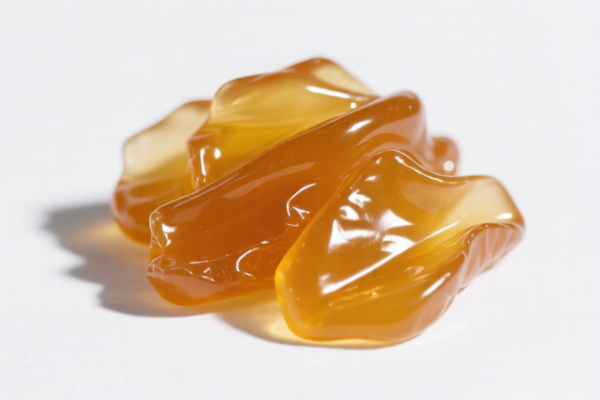
Rosin Salt, chemically known as Rosinate (often Sodiun Rosinate or Potassium Rosinate), is a water-soluble derivative of Rosin (abietic acid). In the rubber industry, it serves as a compatibilizer, tackifier, and wetting agent, enhancing the interaction between fillers and rubber polymers.
In international trade, its classification hinges on whether it is viewed as a "Modified Wax" or a "Chemical Mixture/Preparation". This distinction drastically affects the total tax burden due to varying base duties and Section 301/IEEPA surcharges.
⚠️ Key Distinction Point:
- If classified under Chapter 34 (Waxes): It is treated as a "Prepared Wax" with a 0% Base Duty, but still subject to heavy surcharges.
- If classified under Chapter 38 (Miscellaneous Chemical Products): It is treated as a "Chemical Preparation" with a 3%-5% Base Duty, leading to a higher total tax burden.
📦 II. HS Code Classification Details (2026 Latest Tariff Authority对照)
Based on the provided data, there are 4 distinct HS Codes applied to Rosin Salt for Rubber, falling into two main categories: Waxes (3404) and Chemical Mixtures (3824).
| HS Code | Product Description | Application/Reasoning | Base Duty | Total Tax Rate |
|---|---|---|---|---|
3404.90.51.50 |
Prepared Wax | Rosin salt is a chemically modified substance that fits the material attribute of "Artificial Waxes & Prepared Waxes" in Chapter 34. | 0.0% | 35.0% |
3404.90.51.10 |
Artificial/Prepared Wax | Classified as a resin/wax category, falling under the scope of Chapter 34 for artificial waxes. | 0.0% | 35.0% |
3824.99.93.97 |
Chemical Mixture | Treated as a chemical industrial preparation/mixture under Chapter 38.99. | 5.0% | 40.0% |
3824.99.75.50 |
Cyclic Acid Salts | Specifically identified by its chemical property as an insoluble salt of cycloaliphatic acids, used for industrial rubber applications. | 3.7% | 38.7% |
🔍 Critical Analysis:
- The 3404 codes are more favorable because they have a 0% Base Duty.
- The 3824 codes incur Base Duties (3.7% - 5.0%), which are also subject to the surcharges, resulting in a higher effective tax rate.
- Note:3404.90.51.50appears twice in the data, confirming it as a primary/common classification route for this product.
💰 III. 2026 Latest Tariff Rate Breakdown (Including Surcharges)
✅ Applicable Country: United States (US)
✅ Origin: China (CN)
✅ Effective Time: From November 10, 2025 (and subsequent imports)
🎯 1. 3404.90.51.50 & 3404.90.51.10 —— Prepared Waxes (Lowest Tax Option)
| Item | Details |
|---|---|
| Base Duty (MFN) | 0.0% (Ad Valorem) |
| Section 301 Surcharge | +25.0% |
| IEEPA Surcharge (Section 122) | +10.0% |
| Total Effective Tax Rate | 35.0% |
| Tax Calculation | CIF Value × 35% |
| De Minimis Exemption? | ❌ NO (Denied) |
| Legal Basis Path | USITC:3404.90.51.50 → FOOTNOTE:301.01 → IEEPA:9903.01.25 |
📌 Explanation:
- Although the base duty is 0%, the 35% total rate is still significant.
- The 25% Section 301 tariff is standard for many Chinese chemical/wax imports.
- The 10% IEEPA (122 Section) is a specific additional levy on Chinese goods.
🎯 2. 3824.99.93.97 —— Chemical Mixtures (Highest Tax Option)
| Item | Details |
|---|---|
| Base Duty (MFN) | 5.0% |
| Section 301 Surcharge | +25.0% |
| IEEPA Surcharge (Section 122) | +10.0% |
| Total Effective Tax Rate | 40.0% |
| Tax Calculation | CIF Value × 40% |
| De Minimis Exemption? | ❌ NO (Denied) |
| Legal Basis Path | USITC:3824.99.93.97 → FOOTNOTE:301.01 → IEEPA:9903.01.25 |
📌 Explanation:
- The 5% base duty is applied before surcharges, increasing the tax base.
- Total tax is 5% higher than the wax classification. This makes proper classification as a "Wax" crucial for cost savings.
🎯 3. 3824.99.75.50 —— Cycloaliphatic Acid Salts (Mid-Range Tax)
| Item | Details |
|---|---|
| Base Duty (MFN) | 3.7% |
| Section 301 Surcharge | +25.0% |
| IEEPA Surcharge (Section 122) | +10.0% |
| Total Effective Tax Rate | 38.7% |
| Tax Calculation | CIF Value × 38.7% |
| De Minimis Exemption? | ❌ NO (Denied) |
📌 Explanation:
- This classification recognizes the specific chemical nature (insoluble salts of cycloaliphatic acids).
- It is a compromise classification if customs authorities reject the "Wax" argument but accept the specific chemical description.
🛠️ IV. Customs Clearance Practical Advice (Avoiding Pitfalls)
✅ 1. Documentation Checklist (Must-Provide)
| Document | Required? | Notes |
|---|---|---|
| ✅ Product Specification Sheet | ✔️ | Must state: "Rosin Salt / Sodium Rosinate", Form (Powder/Liquid), Purity, Application: Rubber. |
| ✅ Chemical Structure Diagram | ✔️ | Proves the molecular structure to support "Wax" vs. "Chemical Mixture" argument. |
| ✅ Commercial Invoice | ✔️ | Must clearly describe the goods. DO NOT use vague terms like "Rubber Additive." Use "Rosin Salt (Sodium Rosinate) for Rubber Industry." |
| ✅ Certificate of Origin | ✔️ | Essential to determine if US Tariffs apply (if origin is not China, tariffs may be 0%). |
| ✅ Safety Data Sheet (SDS) | ✔️ | Required for customs hazard review. |
✅ 2. Classification Strategy (Key Maneuvers)
🔥 “Wax is King: Save 5% with Correct Chapter 34 Filing!”
| Scenario | Recommended HS Code | Reason |
|---|---|---|
| Pure Rosin Salt (Sodium/Potassium) | 3404.90.51.50 |
Best tax rate (35%). Argue it is a "Prepared Wax" as Rosin is a natural wax derivative. |
| Complex Mixture with Other Resins | 3824.99.93.97 |
If mixed with non-wax chemicals, it may be deemed a "Chemical Mixture." |
| Specific Cycloaliphatic Derivative | 3824.99.75.50 |
Use only if the chemical structure specifically matches cycloaliphatic acid salts. |
⚠️ Warning:
- Do NOT split shipments to avoid de minimis rules; the tax rate is high, and de minimis is excluded for China-origin goods under Section 301/IEEPA.
- Avoid classifying under3824if the product is pure Rosin Salt, as the 5% base duty adds unnecessary cost.
✅ 3. Special Handling Cases
| Case | Advice |
|---|---|
| Is the product a Powder or Liquid? | Both can be classified as "Prepared Waxes" (3404). Ensure the SDS reflects the physical state. |
| Is it blended with other additives? | If >50% is Rosin Salt, you may still argue for 3404. If it’s a complex blend, 3824 is safer. |
| Non-China Origin? | If sourced from Vietnam/Malaysia/Thailand, Base Duty may be 0-5%, and Surcharge may be 0% (verify HTSUS). This saves 35-40% tax. |
🌍 V. Global Market Comparison (2026 Update)
| Country/Region | Recommended HS Code | Tariff Rate (China Origin) | Notes |
|---|---|---|---|
| 🇺🇸 USA | 3404.90.51.50 |
35.0% | High tariffs due to Section 301 + IEEPA. |
| 🇨🇳 China | 3824.99.93.00 |
5.0% | Import duty only, no 301 surcharge. |
| 🇪🇺 EU | 3824.99.97 |
0% (General) | Standard MFN rate often 0%. No "301" equivalent. |
| 🇦🇺 Australia | 3404.90.00 |
5% | Lower base rate, no massive surcharges. |
📌 Conclusion:
- USA is the most expensive market for Rosin Salt due to political trade measures.
- EU and Australia are more favorable, with rates under 10%.
- Supply Chain Strategy: If exporting to the US, consider warehousing in Vietnam or Malaysia to change origin status, potentially reducing tariffs by ~35%.
📌 VI. Common Mistakes & Pitfalls (Lessons Learned)
❌ Mistake 1: Classifying as "Rubber Chemicals" under Chapter 40.
👉 Consequence: Incorrect Chapter! Rosin Salt is a chemical/wax, not a rubber itself. Risk of rejection.
❌ Mistake 2: Using 3824 codes for pure Rosin Salt.
👉 Consequence: Paying 38.7% - 40% tax instead of 35%. A 3.7% - 5% unnecessary cost increase.
❌ Mistake 3: Ignoring IEEPA 10% Surcharge.
👉 Consequence: Underestimating landed cost by 10%. Budget must include Base + 25% + 10%.
❌ Mistake 4: Claiming De Minimis Exemption.
👉 Consequence: Denied. All shipments under $800 from China are taxed for Section 301/IEEPA goods. No savings here.
✅ Correct Approach:
"Rosin Salt (Sodium Rosinate), Powder, 99% Purity, For Rubber Industry, HS 3404.90.51.50"
🎯 VII. Conclusion: Professional Classification, Cost Optimization!
🎯 Remember the Rule of Thumb:
🔹 "Rosin Salt is a Wax (3404), Not Just a Chemical (3824)."
🔹 "Base Duty 0% saves you 5% Tax!"
🔹 "35% Total Tax is the US Reality – Plan for It!"
📌 Pro Tip:
If your Rosin Salt is sourced from Southeast Asia (Vietnam, Malaysia, Thailand), verify if it qualifies for No Surcharge status.
Recommendation: Apply for a Binding Ruling from US Customs if the shipment value is high, to lock in the 3404.90.51.50 classification and avoid disputes.
📣 Immediate Action:
📞 Consult a Licensed Customs Broker
📄 Provide SDS + Chemical Analysis
🚀 Optimize Your Landed Cost by $0.05/kg – That’s 5% Profit!
✨ Precise Classification is the Key to Customs Success!
💼 Every Percentage Point Matters in Global Trade!
用户评价
关于 HS 编码归类
协调制度(HS)是由世界海关组织(WCO)制定的国际贸易商品分类标准。全球 200 多个国家采用 HS 系统作为海关关税、贸易统计和进出口监管的基础。
每个 HS 编码遵循以下层级结构:
- 章(2 位)——商品大类(例如:第 84 章:机器和机械设备)
- 品目(4 位)——章内的更具体分类
- 子目(6 位)——国际通用细分,所有 WCO 成员国统一使用
- 本国细分(8-10 位)——各国自行扩展的细分编码,如美国 HTSUS 10 位编码
正确的 HS 编码归类对于顺利通关、准确缴纳关税和遵守贸易法规至关重要。错误归类可能导致海关延误、多缴关税或罚款。
从CN进口到US时,适用的关税税率可能包括:
- 最惠国(MFN)税率——适用于 WTO 成员国的标准关税税率
- 普通税率——适用于无贸易协定国家
- 贸易救济关税——附加关税,如 301 条款(反倾销)、232 条款(国家安全)或反补贴税
本页内容仅供参考。如需正式归类,请咨询当地海关或持牌报关代理。