Rosin Salt (for Rubber)
CN → US| HS Code | Tariff Rate | Origin | Destination | Doc |
|---|---|---|---|---|
| 3404905150 | 35.0% | CN | US | Official Doc |
| 3404905110 | 35.0% | CN | US | Official Doc |
| 3824999397 | 40.0% | CN | US | Official Doc |
| 3824997550 | 38.7% | CN | US | Official Doc |
Product Images
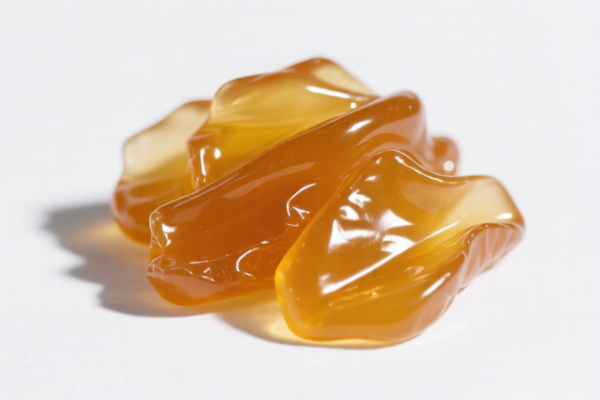

AI Analysis
🧪 Rosin Salt (For Rubber Industry)
🌐 HS Code Reference & Customs Clearance Guide | 2026 Latest Tariff Analysis | Professional Clearance Strategy
📌 I. Product Definition & Classification: Do You Truly Understand "Rosin Salt"?
Rosin Salt, chemically known as Rosinate (often Sodiun Rosinate or Potassium Rosinate), is a water-soluble derivative of Rosin (abietic acid). In the rubber industry, it serves as a compatibilizer, tackifier, and wetting agent, enhancing the interaction between fillers and rubber polymers.
In international trade, its classification hinges on whether it is viewed as a "Modified Wax" or a "Chemical Mixture/Preparation". This distinction drastically affects the total tax burden due to varying base duties and Section 301/IEEPA surcharges.
⚠️ Key Distinction Point:
- If classified under Chapter 34 (Waxes): It is treated as a "Prepared Wax" with a 0% Base Duty, but still subject to heavy surcharges.
- If classified under Chapter 38 (Miscellaneous Chemical Products): It is treated as a "Chemical Preparation" with a 3%-5% Base Duty, leading to a higher total tax burden.
📦 II. HS Code Classification Details (2026 Latest Tariff Authority对照)
Based on the provided data, there are 4 distinct HS Codes applied to Rosin Salt for Rubber, falling into two main categories: Waxes (3404) and Chemical Mixtures (3824).
| HS Code | Product Description | Application/Reasoning | Base Duty | Total Tax Rate |
|---|---|---|---|---|
3404.90.51.50 |
Prepared Wax | Rosin salt is a chemically modified substance that fits the material attribute of "Artificial Waxes & Prepared Waxes" in Chapter 34. | 0.0% | 35.0% |
3404.90.51.10 |
Artificial/Prepared Wax | Classified as a resin/wax category, falling under the scope of Chapter 34 for artificial waxes. | 0.0% | 35.0% |
3824.99.93.97 |
Chemical Mixture | Treated as a chemical industrial preparation/mixture under Chapter 38.99. | 5.0% | 40.0% |
3824.99.75.50 |
Cyclic Acid Salts | Specifically identified by its chemical property as an insoluble salt of cycloaliphatic acids, used for industrial rubber applications. | 3.7% | 38.7% |
🔍 Critical Analysis:
- The 3404 codes are more favorable because they have a 0% Base Duty.
- The 3824 codes incur Base Duties (3.7% - 5.0%), which are also subject to the surcharges, resulting in a higher effective tax rate.
- Note:3404.90.51.50appears twice in the data, confirming it as a primary/common classification route for this product.
💰 III. 2026 Latest Tariff Rate Breakdown (Including Surcharges)
✅ Applicable Country: United States (US)
✅ Origin: China (CN)
✅ Effective Time: From November 10, 2025 (and subsequent imports)
🎯 1. 3404.90.51.50 & 3404.90.51.10 —— Prepared Waxes (Lowest Tax Option)
| Item | Details |
|---|---|
| Base Duty (MFN) | 0.0% (Ad Valorem) |
| Section 301 Surcharge | +25.0% |
| IEEPA Surcharge (Section 122) | +10.0% |
| Total Effective Tax Rate | 35.0% |
| Tax Calculation | CIF Value × 35% |
| De Minimis Exemption? | ❌ NO (Denied) |
| Legal Basis Path | USITC:3404.90.51.50 → FOOTNOTE:301.01 → IEEPA:9903.01.25 |
📌 Explanation:
- Although the base duty is 0%, the 35% total rate is still significant.
- The 25% Section 301 tariff is standard for many Chinese chemical/wax imports.
- The 10% IEEPA (122 Section) is a specific additional levy on Chinese goods.
🎯 2. 3824.99.93.97 —— Chemical Mixtures (Highest Tax Option)
| Item | Details |
|---|---|
| Base Duty (MFN) | 5.0% |
| Section 301 Surcharge | +25.0% |
| IEEPA Surcharge (Section 122) | +10.0% |
| Total Effective Tax Rate | 40.0% |
| Tax Calculation | CIF Value × 40% |
| De Minimis Exemption? | ❌ NO (Denied) |
| Legal Basis Path | USITC:3824.99.93.97 → FOOTNOTE:301.01 → IEEPA:9903.01.25 |
📌 Explanation:
- The 5% base duty is applied before surcharges, increasing the tax base.
- Total tax is 5% higher than the wax classification. This makes proper classification as a "Wax" crucial for cost savings.
🎯 3. 3824.99.75.50 —— Cycloaliphatic Acid Salts (Mid-Range Tax)
| Item | Details |
|---|---|
| Base Duty (MFN) | 3.7% |
| Section 301 Surcharge | +25.0% |
| IEEPA Surcharge (Section 122) | +10.0% |
| Total Effective Tax Rate | 38.7% |
| Tax Calculation | CIF Value × 38.7% |
| De Minimis Exemption? | ❌ NO (Denied) |
📌 Explanation:
- This classification recognizes the specific chemical nature (insoluble salts of cycloaliphatic acids).
- It is a compromise classification if customs authorities reject the "Wax" argument but accept the specific chemical description.
🛠️ IV. Customs Clearance Practical Advice (Avoiding Pitfalls)
✅ 1. Documentation Checklist (Must-Provide)
| Document | Required? | Notes |
|---|---|---|
| ✅ Product Specification Sheet | ✔️ | Must state: "Rosin Salt / Sodium Rosinate", Form (Powder/Liquid), Purity, Application: Rubber. |
| ✅ Chemical Structure Diagram | ✔️ | Proves the molecular structure to support "Wax" vs. "Chemical Mixture" argument. |
| ✅ Commercial Invoice | ✔️ | Must clearly describe the goods. DO NOT use vague terms like "Rubber Additive." Use "Rosin Salt (Sodium Rosinate) for Rubber Industry." |
| ✅ Certificate of Origin | ✔️ | Essential to determine if US Tariffs apply (if origin is not China, tariffs may be 0%). |
| ✅ Safety Data Sheet (SDS) | ✔️ | Required for customs hazard review. |
✅ 2. Classification Strategy (Key Maneuvers)
🔥 “Wax is King: Save 5% with Correct Chapter 34 Filing!”
| Scenario | Recommended HS Code | Reason |
|---|---|---|
| Pure Rosin Salt (Sodium/Potassium) | 3404.90.51.50 |
Best tax rate (35%). Argue it is a "Prepared Wax" as Rosin is a natural wax derivative. |
| Complex Mixture with Other Resins | 3824.99.93.97 |
If mixed with non-wax chemicals, it may be deemed a "Chemical Mixture." |
| Specific Cycloaliphatic Derivative | 3824.99.75.50 |
Use only if the chemical structure specifically matches cycloaliphatic acid salts. |
⚠️ Warning:
- Do NOT split shipments to avoid de minimis rules; the tax rate is high, and de minimis is excluded for China-origin goods under Section 301/IEEPA.
- Avoid classifying under3824if the product is pure Rosin Salt, as the 5% base duty adds unnecessary cost.
✅ 3. Special Handling Cases
| Case | Advice |
|---|---|
| Is the product a Powder or Liquid? | Both can be classified as "Prepared Waxes" (3404). Ensure the SDS reflects the physical state. |
| Is it blended with other additives? | If >50% is Rosin Salt, you may still argue for 3404. If it’s a complex blend, 3824 is safer. |
| Non-China Origin? | If sourced from Vietnam/Malaysia/Thailand, Base Duty may be 0-5%, and Surcharge may be 0% (verify HTSUS). This saves 35-40% tax. |
🌍 V. Global Market Comparison (2026 Update)
| Country/Region | Recommended HS Code | Tariff Rate (China Origin) | Notes |
|---|---|---|---|
| 🇺🇸 USA | 3404.90.51.50 |
35.0% | High tariffs due to Section 301 + IEEPA. |
| 🇨🇳 China | 3824.99.93.00 |
5.0% | Import duty only, no 301 surcharge. |
| 🇪🇺 EU | 3824.99.97 |
0% (General) | Standard MFN rate often 0%. No "301" equivalent. |
| 🇦🇺 Australia | 3404.90.00 |
5% | Lower base rate, no massive surcharges. |
📌 Conclusion:
- USA is the most expensive market for Rosin Salt due to political trade measures.
- EU and Australia are more favorable, with rates under 10%.
- Supply Chain Strategy: If exporting to the US, consider warehousing in Vietnam or Malaysia to change origin status, potentially reducing tariffs by ~35%.
📌 VI. Common Mistakes & Pitfalls (Lessons Learned)
❌ Mistake 1: Classifying as "Rubber Chemicals" under Chapter 40.
👉 Consequence: Incorrect Chapter! Rosin Salt is a chemical/wax, not a rubber itself. Risk of rejection.
❌ Mistake 2: Using 3824 codes for pure Rosin Salt.
👉 Consequence: Paying 38.7% - 40% tax instead of 35%. A 3.7% - 5% unnecessary cost increase.
❌ Mistake 3: Ignoring IEEPA 10% Surcharge.
👉 Consequence: Underestimating landed cost by 10%. Budget must include Base + 25% + 10%.
❌ Mistake 4: Claiming De Minimis Exemption.
👉 Consequence: Denied. All shipments under $800 from China are taxed for Section 301/IEEPA goods. No savings here.
✅ Correct Approach:
"Rosin Salt (Sodium Rosinate), Powder, 99% Purity, For Rubber Industry, HS 3404.90.51.50"
🎯 VII. Conclusion: Professional Classification, Cost Optimization!
🎯 Remember the Rule of Thumb:
🔹 "Rosin Salt is a Wax (3404), Not Just a Chemical (3824)."
🔹 "Base Duty 0% saves you 5% Tax!"
🔹 "35% Total Tax is the US Reality – Plan for It!"
📌 Pro Tip:
If your Rosin Salt is sourced from Southeast Asia (Vietnam, Malaysia, Thailand), verify if it qualifies for No Surcharge status.
Recommendation: Apply for a Binding Ruling from US Customs if the shipment value is high, to lock in the 3404.90.51.50 classification and avoid disputes.
📣 Immediate Action:
📞 Consult a Licensed Customs Broker
📄 Provide SDS + Chemical Analysis
🚀 Optimize Your Landed Cost by $0.05/kg – That’s 5% Profit!
✨ Precise Classification is the Key to Customs Success!
💼 Every Percentage Point Matters in Global Trade!
Customer Reviews
About HS Code Classification
The Harmonized System (HS) is an internationally standardized nomenclature developed by the World Customs Organization (WCO) to classify traded products. Over 200 countries use the HS system as the basis for customs tariffs, trade statistics, and import/export regulations.
Each HS code follows a hierarchical structure:
- Chapter (2 digits) — Broad category of goods (e.g., Chapter 84: Machinery and Mechanical Appliances)
- Heading (4 digits) — More specific grouping within the chapter
- Subheading (6 digits) — Internationally standardized breakdown, used by all WCO member countries
- National subdivisions (8-10 digits) — Country-specific extensions for further classification, such as US HTSUS 10-digit codes
Correct HS code classification is essential for smooth customs clearance, accurate duty payment, and compliance with trade regulations. Misclassification can lead to customs delays, overpayment of duties, or penalties.
When importing from CN to US, the applicable tariff rates may include:
- Most-Favored-Nation (MFN) rate — The standard duty rate applied to WTO members
- General rate — Applied to countries without trade agreements
- Trade remedy duties — Additional tariffs such as Section 301 (anti-dumping), Section 232 (national security), or countervailing duties
The information provided on this page is for reference purposes only. For official classification, please consult with your local customs authority or a licensed customs broker.