rosin salt for rubber
CN → US| HS Code | Tariff Rate | Origin | Destination | Doc |
|---|---|---|---|---|
| 3809921000 | 41.5% | CN | US | Official Doc |
| 3809931000 | 41.5% | CN | US | Official Doc |
| 4002990000 | 35.0% | CN | US | Official Doc |
| 4002910000 | 35.0% | CN | US | Official Doc |
Product Images
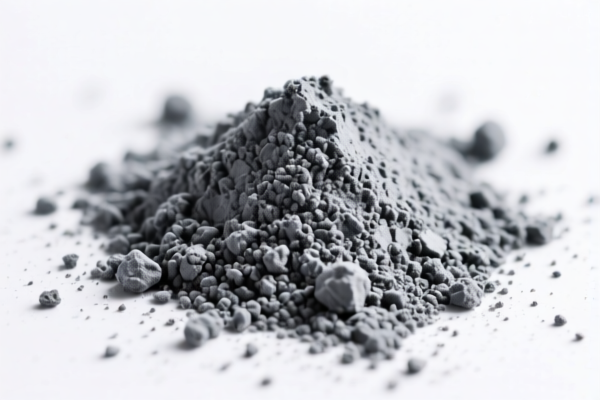


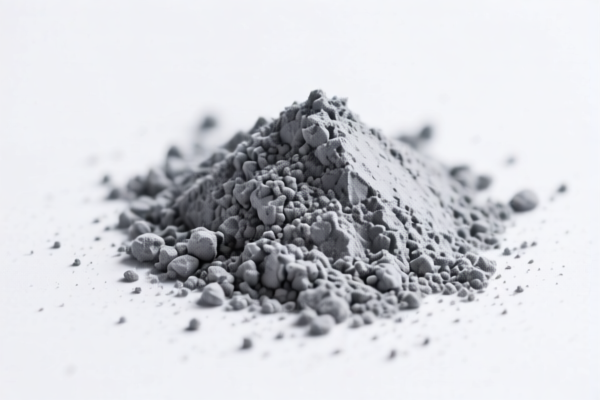
AI Analysis
🧪 Rosin Salt for Rubber (Resin Salts in Rubber Industry)
🌐 HS Code Classification & Customs Clearance Guide | 2026 Tariff Analysis | Strategic Compliance Strategy
📌 I. Product Definition & Classification: What is "Rosin Salt for Rubber"?
Rosin Salt (often Sodium Rosinate or Potassium Rosinate) is a chemical derivative of rosin (colophony), obtained by neutralizing rosin acids with an alkali. In the rubber industry, it serves as a crucial resin, tackifier, or plasticizer.
Internationally, it is classified based on its primary function and chemical composition:
- Chemical Agent/Preparation Category: If classified as a chemical preparation used for treatment, dye carriers, or finishing agents in industrial processes.
- Rubber Additive/Plasticizer Category: If classified as a specific additive or plasticizer for synthetic or natural rubber.
⚠️ Critical Distinction:
- If the product is emphasized as a "chemical preparation" for industrial finishing → Fall under Chapter 38.
- If the product is emphasized as a "rubber plasticizer/additive" with rubber-resin properties → Fall under Chapter 40.
📦 II. HS Code Classification Details (2026 Latest Tariff Authority Comparison)
| HS Code | Product Description | Application Scenario | Chemical Nature |
|---|---|---|---|
3809.92.10.00 |
Chemical preparations/pastes for finishing, dye carriers, etc. | Rosin salt used as an industrial finishing agent or dye carrier in rubber processing | ✅ Chemical Salt/Preparation |
3809.93.10.00 |
Other chemical preparations (resin salts) | Resin salt category, fits chemical preparation characteristics | ✅ Chemical Salt/Preparation |
4002.99.00.00 |
Other synthetic rubber and rubber compounds (plasticizers/additives) | Rosin salt extracted as rubber-related/resin, used as a shaping agent/additive | ✅ Rubber Plasticizer/Additive |
4002.91.00.00 |
Other synthetic rubber and rubber compounds (emulsions/derivatives) | Rosin salt as a chemical raw material/primary form, consistent with synthetic rubber derivatives | ✅ Chemical Raw Material/Rubber Derivative |
🔍 Key Reminder:
- Chapter 38 Codes focus on the "preparation/agent" aspect.
- Chapter 40 Codes focus on the "rubber material/additive" aspect.
- The final classification depends on the Customs Declaration Statement and Product Technical Data Sheet.
💰 III. 2026 Latest Tariff Rate Breakdown (Including Surcharges & Policy Additions)
✅ Applicable Country: United States (US)
✅ Country of Origin: China (CN)
✅ Effective Date: From November 10, 2025 (including subsequent imports)
🎯 1. 3809.92.10.00 & 3809.93.10.00 —— Chemical Preparations (Rosin Salt as Agent)
| Item | Content |
|---|---|
| Base Tariff | 6.5% (ad valorem) |
| Section 301 Surcharge | +25.0% |
| Section 122 Surcharge | +10.0% |
| Total Rate | 41.5% |
| Tax Calculation | CIF Value × 41.5% |
| De Minimis Exemption | ❌ Not Eligible (High tariff threshold) |
| Legal Basis Path | Section 301: 8517.62.00 (General Footnote) → Section 122 → USITC: 3809.92/93.10.00 |
📌 Explanation:
- "Base Tariff 6.5%": Standard MFN rate for chemical preparations.
- "Section 301 Surcharge 25%": Standard retaliatory tariff on Chinese goods.
- "Section 122 Surcharge 10%": Additional tariff based on specific trade remedy measures.
- Total 41.5%: High cost! Must be factored into pricing.
🎯 2. 4002.99.00.00 & 4002.91.00.00 —— Rubber Additives/Plasticizers (Rosin Salt as Rubber Material)
| Item | Content |
|---|---|
| Base Tariff | 0.0% |
| Section 301 Surcharge | +25.0% |
| Section 122 Surcharge | +10.0% |
| Total Rate | 35.0% |
| Tax Calculation | CIF Value × 35.0% |
| De Minimis Exemption | ❌ Not Eligible |
| Legal Basis Path | Section 301: 4002.91/99 → Section 122 → USITC: 4002.99/91.00.00 |
📌 Explanation:
- "Base Tariff 0.0%": Synthetic rubber and related compounds often enjoy 0% base duty.
- "Section 301 Surcharge 25%": Still applies to Chinese-origin rubber-related chemicals.
- "Section 122 Surcharge 10%": Still applies.
- Total 35.0%: 7% lower than Chapter 38 classification! This is a significant cost difference.
🛠️ IV. Customs Clearance Practical Advice (Practical Pitfall Avoidance Guide)
✅ 1. Required Documentation Checklist (Non-negotiable)
| Document | Mandatory | Explanation |
|---|---|---|
| ✅ Technical Data Sheet (TDS) | ✔️ | Must specify: "Rosin Salt," "Sodium/Potassium Rosinate," "Use in Rubber Plasticizing." |
| ✅ Product Formula/Composition | ✔️ | Shows % of rosin acid, alkali content. Crucial for Chapter 38 vs. 40 determination. |
| ✅ Product Photos (Label/Packaging) | ✔️ | Clear label showing "For Rubber Industry Use" or "Tackifier." |
| ✅ Certificate of Analysis (COA) | ✔️ | Confirms purity and chemical structure. |
| ✅ Commercial Invoice | ✔️ | Description must match HS Code logic (e.g., "Rubber Plasticizer" vs. "Chemical Agent"). |
| ✅ Certificate of Origin (CO) | ✔️ | Required for origin verification (China). |
| ✅ Packing List | ✔️ | Net/Gross weight, package count. |
✅ 2. Declaration Strategy (Key Mnemonic)
🔥 “Function Defines Chapter, Composition Confirms Truth!”
| Scenario | Correct Declaration | Wrong Practice |
|---|---|---|
| Emphasize "Rubber Plasticizer/Additive" | 4002.99.00.00 / 4002.91.00.00 (35%) |
Declare as "Chemical Agent" → 41.5% |
| Emphasize "Industrial Finishing Agent/Dye Carrier" | 3809.92.10.00 / 3809.93.10.00 (41.5%) |
Declare as "Rubber Material" → Risk of misclassification penalty |
| Mixed Use (Both Rubber & Chemical) | Pre-ruling Recommended | Random declaration → Audit risk |
| Raw Resin Salt (No rubber context) | Chapter 35/38 | Forced into Chapter 40 → Rejection |
✅ 3. Special Case Handling
| Situation | Handling Suggestion |
|---|---|
| OEM Custom Rosin Salt | Provide client's rubber compound formula to prove "Additive" function → Supports 4002 classification. |
| Rosin Salt in Emulsion Form | Clearly state "Emulsified Rosin Salt for Rubber" → Strong support for 4002.91.00.00. |
| Solid Crystalline Rosin Salt | May lean towards 3809 if used as a general chemical intermediate. Provide usage evidence for 4002. |
| Non-Chinese Origin (e.g., Malaysia, Thailand) | Apply for FTAA/USMCA/CEPA benefits if available. Verify if rubber additives qualify for zero tariff under specific trade agreements. |
🌍 V. Global Market Customs Comparison (2026 Latest)
| Country/Region | Recommended HS Code | Tariff (China Origin) | Certification Requirements | Notes |
|---|---|---|---|---|
| 🇺🇸 USA | 4002.99.00.00 |
35% | EPA TSCA, Section 301/122 | Best Rate if Classified as Rubber Additive |
| 🇨🇳 China | 3824.99.99 / 4002.99 |
6.5% - 10% | No special import license | Base rate lower, but US export dominates |
| 🇪🇺 EU | 3824.99.99 |
6.5% | REACH Registration | EU classifies rosin salts mostly as chemical preparations (Chapter 38). No US-style 25% surcharge, but REACH compliance is critical. |
| 🇬🇧 UK | 3824.99.99 |
6.5% | UK REACH | Similar to EU. |
| 🇯🇵 Japan | 3824.99.90 |
5.0% | JIS, KSEI | Lower base tariff, no major surcharges. |
📌 Conclusion:
- USA: Classification into Chapter 40 saves 6.5% in base tariff compared to Chapter 38. Total savings: 6.5%.
- EU/UK/Japan: Generally classify rosin salts as chemical preparations (Chapter 38), with lower base tariffs but strict chemical registration (REACH/KSEI).
- Strategy for US Market: Provide robust technical data proving "Rubber Plasticizer/Additive" function to support4002.99.00.00classification.
📌 VI. Common Errors & Pitfall Guide (Lessons from Blood and Tears)
❌ Error 1: Declaring as "Chemical Agent" (3809) when used primarily as a Rubber Plasticizer
👉 Consequence: Pay 41.5% instead of 35%. Overpayment of 6.5%!
❌ Error 2: Declaring as "Rubber Additive" (4002) without technical proof
👉 Consequence: Customs audit → Misclassification penalty + Interest + Possible detention.
❌ Error 3: Ignoring Section 122 & 301 applicability
👉 Consequence: Unexpected tax bill at customs → Cash flow crisis.
❌ Error 4: Vague product description ("Rosin Salt")
👉 Consequence: Customs unsure of classification → Delayed release + Inspection fees.
✅ Correct Practice:
"Sodium Rosinate, Rubber Plasticizer/Additive, for Synthetic Rubber Processing, Chemical Formula: C18H29NaO2, No Organic Solvents, For US Market Only"
🎯 VII. Conclusion: Professional Declaration, Save Costs, Ensure Compliance!
🎯 Remember the Mantra:
🔹 "Function First, Chapter Determines Rate!"
🔹 "4002 saves 6.5% base duty, but Proof is King!"
🔹 "3809 is safer but costlier; 4002 is cheaper but riskier!"
📌 Pro Tip:
- If you export to the USA, strongly consider applying for an Advance Ruling (Pre-classification) from US Customs and Border Protection (CBP) for 4002.99.00.00.
- Ensure your Technical Data Sheet explicitly states: "Used as a tackifier/plasticizer in rubber compounds."
- For EU/UK, ensure REACH Registration is completed before shipment.
📣 Immediate Action:
📞 Contact a professional customs broker + Provide Product TDS + Apply for Advance Ruling (US)
🚀 Optimize your supply chain, reduce tariff costs, and ensure smooth customs clearance!
✨ Professional Customs Clearance Starts with Accurate Classification!
💼 Every cent of your cost deserves precise calculation!
Customer Reviews
About HS Code Classification
The Harmonized System (HS) is an internationally standardized nomenclature developed by the World Customs Organization (WCO) to classify traded products. Over 200 countries use the HS system as the basis for customs tariffs, trade statistics, and import/export regulations.
Each HS code follows a hierarchical structure:
- Chapter (2 digits) — Broad category of goods (e.g., Chapter 84: Machinery and Mechanical Appliances)
- Heading (4 digits) — More specific grouping within the chapter
- Subheading (6 digits) — Internationally standardized breakdown, used by all WCO member countries
- National subdivisions (8-10 digits) — Country-specific extensions for further classification, such as US HTSUS 10-digit codes
Correct HS code classification is essential for smooth customs clearance, accurate duty payment, and compliance with trade regulations. Misclassification can lead to customs delays, overpayment of duties, or penalties.
When importing from CN to US, the applicable tariff rates may include:
- Most-Favored-Nation (MFN) rate — The standard duty rate applied to WTO members
- General rate — Applied to countries without trade agreements
- Trade remedy duties — Additional tariffs such as Section 301 (anti-dumping), Section 232 (national security), or countervailing duties
The information provided on this page is for reference purposes only. For official classification, please consult with your local customs authority or a licensed customs broker.