Rough Coniferous Timber (over 15 cm)
CN → US| HS编码 | 关税税率 | 原产国 | 目的国 | 文档 |
|---|---|---|---|---|
| 4403250164 | 35.0% | CN | US | 官方文档 |
| 4407190056 | 35.0% | CN | US | 官方文档 |
| 4401110000 | 35.0% | CN | US | 官方文档 |
| 4403210130 | 35.0% | CN | US | 官方文档 |
| 4407110052 | 35.0% | CN | US | 官方文档 |
商品图片
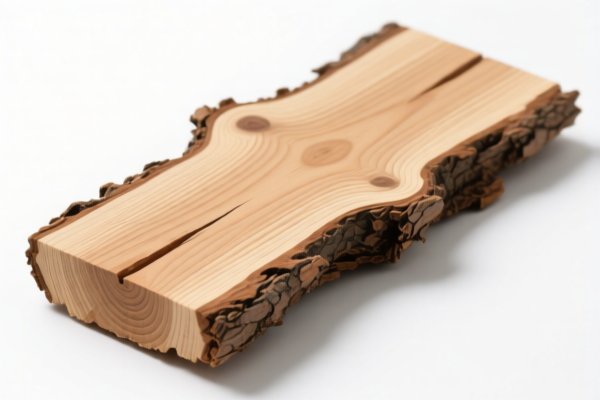
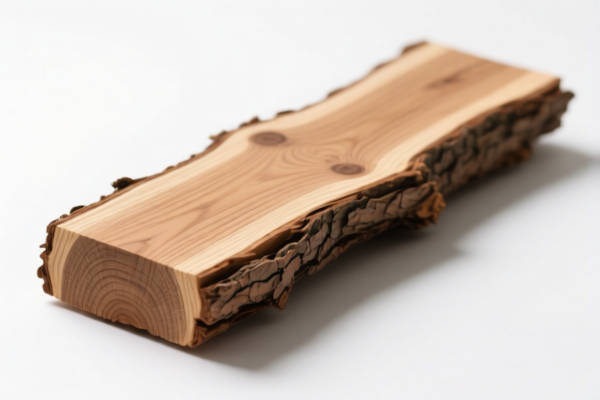
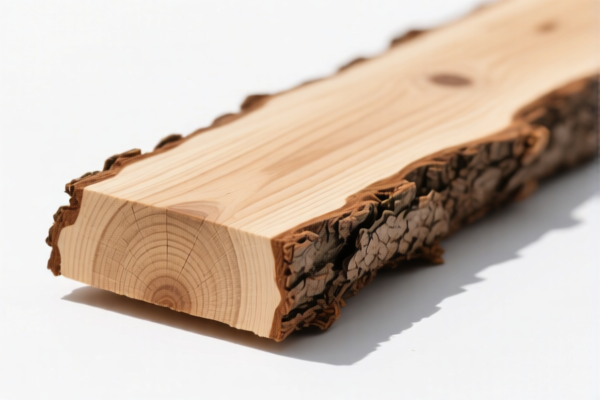
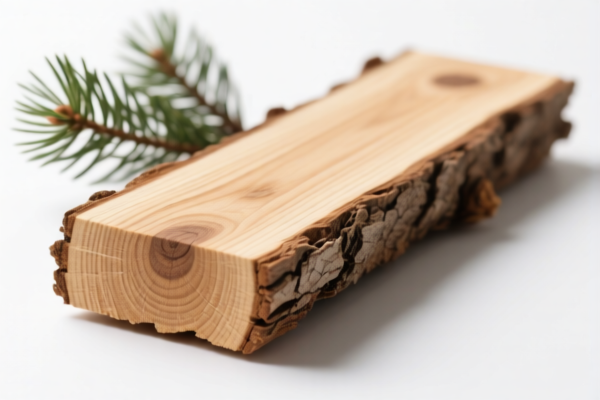
AI分析
🌲 Rough Coniferous Timber (Over 15 cm)
🌐 HS Code Reference & Customs Clearance Guide | 2026 Latest Tariff Full Analysis | Professional-Level Strategy
📌 I. Product Definition & Classification: Do You Really Understand "Rough Coniferous Timber"?
Rough coniferous timber, specifically referring to coniferous wood that is roughly squared, hewn, or simply sawn, with dimensions exceeding 15 cm, is a foundational material in the global wood products industry. In international trade, it is strictly categorized based on its processing level and dimensions.
Key Distinction Points:
- Dimensional Threshold: The critical cutoff for "roughly squared/hewn" vs. "sawn" often hinges on whether the cross-section exceeds specific measurements (typically 15 cm for classification purposes in this dataset).
- Processing Level: "Rough" implies minimal processing—no planing, no fine smoothing. It is distinct from plywood, veneer, or finished lumber.
- Species: "Coniferous" refers to softwoods (pine, spruce, fir, etc.), distinct from hardwoods.
⚠️ Critical Note for This Dataset:
All items in the provided<DATA>share the same total tax rate of 35.0% due to the specific combination of Base Tariff (0%), Additional Tariff (25%), and Section 122 Tariff (10%). This indicates a high-tariff environment, likely targeting specific Chinese-origin raw wood materials under current trade restrictions.
📦 II. HS Code Classification Details (2026 Latest Tariff Authority Cross-Reference)
The following HS Codes are extracted directly from the provided <DATA> for "Rough Coniferous Timber (over 15 cm)". Note that while the summaries vary slightly, they all pertain to roughly processed coniferous wood.
| HS Code | Summary Description | Key Features | Cross-Section/Size |
|---|---|---|---|
4403.25.01.64 |
Roughly squared/coniferous timber, size ≥15cm | Roughly squared/hewn | ≥ 15 cm |
4407.19.00.56 |
Roughly sawn coniferous timber, size ≥12.7cm | Roughly sawn | ≥ 12.7 cm |
4401.11.00.00 |
Roughly squared coniferous timber, for fuel | Fuel-grade, rough form | N/A (Fuel specific) |
4403.21.01.30 |
Roughly sawn/coniferous timber, cross-section ≥15cm | Roughly sawn/hewn | ≥ 15 cm |
4407.11.00.52 |
Roughly processed coniferous timber | General rough form | N/A (General) |
🔍 Important Clarification:
- 4403 vs. 4407: Generally, HS Code 4403 covers "Wood in the rough" (bark intact, roughly squared), while 4407 covers "Wood sawn or chipped lengthwise".
- 4401 is specifically for fuel wood, which is a critical distinction. If the timber is intended for burning,4401.11.00.00is the correct code, not for construction.
- All listed codes here carry the exact same tax structure, simplifying the cost analysis.
💰 III. 2026 Latest Tariff Rate Breakdown (Including Surtaxes & Policy Add-ons)
✅ Applicable Country: United States (US)
✅ Country of Origin: China (CN) (Implied by "Section 122" and "35%" structure)
✅ Effective Date: Current (2025-2026 period)
✅ Total Tax Rate: 35.0% for ALL listed HS Codes
🎯 Universal Tariff Structure for All Listed HS Codes
| Item | Content |
|---|---|
| Base Tariff | 0.0% (Standard MFN rate for rough wood) |
| Section 301 Surtax | +25.0% (USITC Additional Tariff on Chinese goods) |
| Section 122 Tariff | +10.0% (Specific additional tariff, likely related to trade remedy or specific executive orders) |
| Total Effective Rate | 35.0% |
| Tax Calculation | CIF Value × 35% |
| De Minimis Exemption | ❌ Not Applicable (Deny de minimis for Section 122/301 goods) |
| Legal Basis Path | USITC: 301 Footnote → Section 122 Statute → HS Code Specific |
📌 Explanation:
- The 25% Section 301 tariff is the standard additional duty on many Chinese wood products.
- The 10% Section 122 tariff adds an extra layer of cost, making this category exceptionally expensive to import.
- Total 35% means for every $10,000 worth of timber, you pay $3,500 in duties alone. This significantly impacts profit margins and requires careful supplier negotiation.
🛠️ IV. Customs Clearance Practical Advice (Real-World Pitfall Avoidance Guide)
✅ 1. Required Documentation Checklist (Non-Negotiable)
| Document | Must Provide | Explanation |
|---|---|---|
| ✅ Commercial Invoice | ✔️ | Must clearly state "Rough Coniferous Timber," HS Code, Country of Origin (China), and CIF Value. |
| ✅ Packing List | ✔️ | Detail dimensions, volume, and weight. Must match invoice. |
| ✅ Bill of Lading (B/L) | ✔️ | Original or Telex Release. Must match invoice description. |
| ✅ Phytosanitary Certificate | ✔️ | Critical for Wood. Issued by the exporting country's agricultural authority, certifying the wood is free from pests and diseases. |
| ✅ Wood Treatment Certificate | ✔️ | Proof of fumigation or heat treatment (ISPM 15 standard), if applicable. |
| ✅ Certificate of Origin (CO) | ✔️ | To confirm Chinese origin, which triggers the 35% tariff. |
| ✅ Freight Quote (Freight Invoice) | ✔️ | For customs valuation (CIF calculation). |
✅ 2. Declaration Tips (Key Mnemonic)
🔥 "Rough means raw, Section 122 hits hard, no de minimis, price is marked!"
| Scenario | Correct Declaration | Wrong Practice |
|---|---|---|
| Timber for Construction | 4403.25.01.64 or 4403.21.01.30 |
Mislabeling as "finished lumber" → Higher scrutiny |
| Timber for Fuel | 4401.11.00.00 |
Declaring as construction wood → Potential fraud penalty |
| Roughly Sawn (≥15cm) | 4407.11.00.52 (if not roughly squared) |
Using 4403 code for sawn wood → Classification error |
| Small Pieces (<12.7cm) | Check other codes | Declaring as 4407.19.00.56 (which requires ≥12.7cm) → Rejection |
✅ 3. Special Cases Handling
| Case | Handling Advice |
|---|---|
| Mixed Shipments | If the container has both rough timber and finished products, separate declarations are required. Mixing them can lead to the entire shipment being assessed at the highest tariff rate. |
| Dimension Disputes | Ensure all measurements are accurate. If a piece is 14.9 cm, it cannot be declared under codes requiring ≥15 cm (like 4403.25.01.64). This leads to re-classification and fines. |
| Pest Inspection | CBP (Customs and Border Protection) may require a physical inspection for phytosanitary compliance. Plan for potential delays at the port of entry. |
| Supplier Negotiation | Given the 35% tariff, negotiate DDP (Delivered Duty Paid) pricing with suppliers if possible, or clearly factor the 35% into your landed cost calculation. |
🌍 V. Global Market Comparison (2026 Latest)
| Country/Region | Recommended HS Code | Tariff Rate | Certification Required | Notes |
|---|---|---|---|---|
| 🇺🇸 USA | 4403.25.01.64 etc. |
35% | Phytosanitary + ISPM 15 | High tariff due to Section 301 & 122. |
| 🇨🇳 China | 4403.25.01.64 etc. |
Varies (Low/Zero) | Phytosanitary | Import duty may be lower, but export taxes from China apply. |
| 🇪🇺 EU | 4403.25.00 etc. |
0% - 3% | FLEGT License (if applicable) | No Section 122 equivalent. Lower barrier. |
| 🇨🇦 Canada | 4403.25.00 etc. |
0% | Phytosanitary | No significant surtax on Chinese wood. |
📌 Conclusion:
- The US market is the most expensive due to the 35% combined tariff.
- For non-US markets, the cost barrier is significantly lower.
- Consider sourcing from non-Chinese origins (e.g., Russia, Scandinavia) if targeting the US, to avoid the Section 301/122 surtax.
📌 VI. Common Errors & Pitfalls (Lessons Learned)
❌ Error 1: Declaring fuel wood (4401) as construction timber (4403).
👉 Consequence: Misdeclaration, potential fraud investigation, fines.
❌ Error 2: Ignoring the 12.7 cm vs. 15 cm dimensional threshold.
👉 Consequence: If your wood is 14 cm, you cannot use 4403.25.01.64 (≥15cm) or 4407.19.00.56 (≥12.7cm is okay, but check specific code limits). Misclassification leads to duty underpayment penalties.
❌ Error 3: Assuming De Minimis applies.
👉 Consequence: Section 122 and Section 301 tariffs do not benefit from the $800 de minimis exemption. Even small shipments are subject to the 35% tariff.
❌ Error 4: Incomplete Phytosanitary Certificate.
👉 Consequence: Shipment held at port for fumigation or destruction. Delay costs + demurrage fees.
✅ Correct Practice:
"Rough Coniferous Timber, Pine, Roughly Squared, Cross-section ≥15cm, Origin: China, HS Code: 4403.25.01.64, Phytosanitary Cert: Attached"
🎯 VII. Conclusion: Professional Declaration, Save Time, Reduce Costs!
🎯 Remember the Mnemonic:
🔹 "Rough wood is raw, Section 122 hits hard, 35% is the mark, de minimis doesn't work!"
🔹 "HS Code defines the cost, 15 cm is the line, declare accurately or pay the fine!"
📌 Pro Tip:
If your timber is originating from countries other than China, you may avoid the 25% Section 301 tariff, reducing the total to 10% (Section 122 only). Verify the country of origin carefully!
📣 Immediate Action:
📞 Contact a licensed customs broker. Provide product photos, dimensional specs, and origin proof.
🚀 Let your timber clear smoothly, efficiently, and profitably!
✨ Professional Clearance Starts with Accurate Classification!
💼 Your every cent of cost deserves precise calculation!
用户评价
关于 HS 编码归类
协调制度(HS)是由世界海关组织(WCO)制定的国际贸易商品分类标准。全球 200 多个国家采用 HS 系统作为海关关税、贸易统计和进出口监管的基础。
每个 HS 编码遵循以下层级结构:
- 章(2 位)——商品大类(例如:第 84 章:机器和机械设备)
- 品目(4 位)——章内的更具体分类
- 子目(6 位)——国际通用细分,所有 WCO 成员国统一使用
- 本国细分(8-10 位)——各国自行扩展的细分编码,如美国 HTSUS 10 位编码
正确的 HS 编码归类对于顺利通关、准确缴纳关税和遵守贸易法规至关重要。错误归类可能导致海关延误、多缴关税或罚款。
从CN进口到US时,适用的关税税率可能包括:
- 最惠国(MFN)税率——适用于 WTO 成员国的标准关税税率
- 普通税率——适用于无贸易协定国家
- 贸易救济关税——附加关税,如 301 条款(反倾销)、232 条款(国家安全)或反补贴税
本页内容仅供参考。如需正式归类,请咨询当地海关或持牌报关代理。