Rough Coniferous Timber (over 15 cm)
CN → US| HS Code | Tariff Rate | Origin | Destination | Doc |
|---|---|---|---|---|
| 4403250164 | 35.0% | CN | US | Official Doc |
| 4407190056 | 35.0% | CN | US | Official Doc |
| 4401110000 | 35.0% | CN | US | Official Doc |
| 4403210130 | 35.0% | CN | US | Official Doc |
| 4407110052 | 35.0% | CN | US | Official Doc |
Product Images
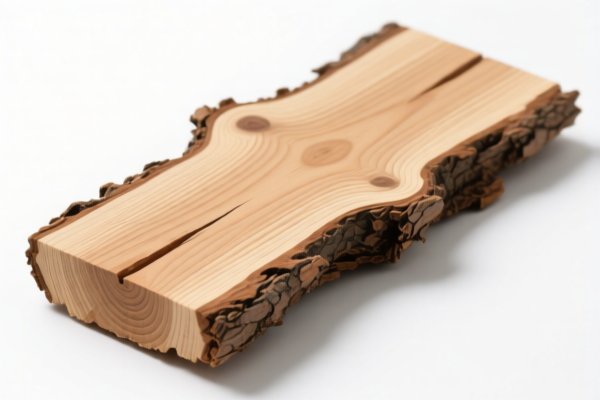
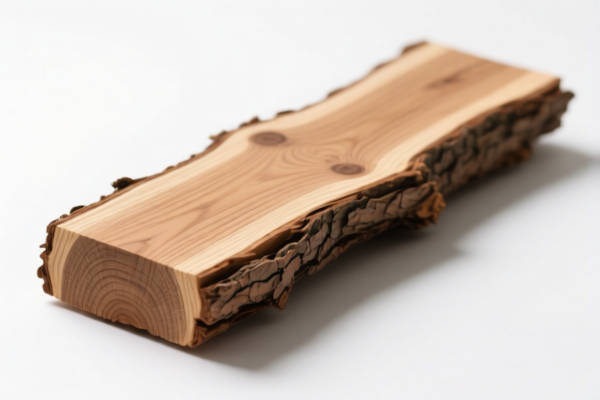
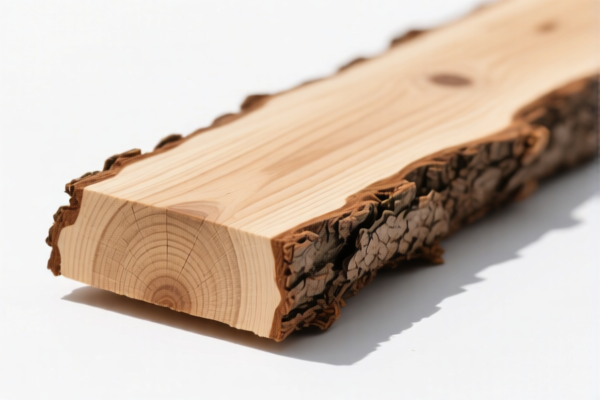
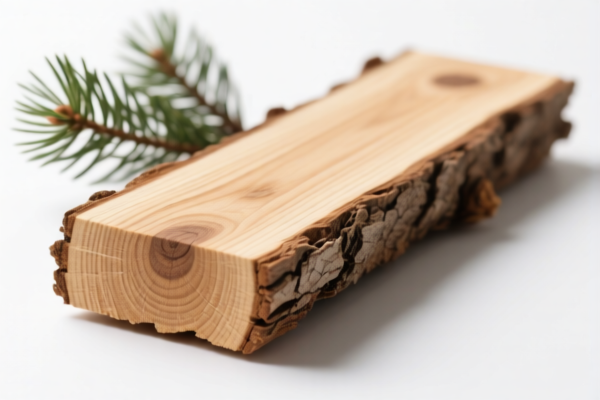
AI Analysis
🌲 Rough Coniferous Timber (Over 15 cm)
🌐 HS Code Reference & Customs Clearance Guide | 2026 Latest Tariff Full Analysis | Professional-Level Strategy
📌 I. Product Definition & Classification: Do You Really Understand "Rough Coniferous Timber"?
Rough coniferous timber, specifically referring to coniferous wood that is roughly squared, hewn, or simply sawn, with dimensions exceeding 15 cm, is a foundational material in the global wood products industry. In international trade, it is strictly categorized based on its processing level and dimensions.
Key Distinction Points:
- Dimensional Threshold: The critical cutoff for "roughly squared/hewn" vs. "sawn" often hinges on whether the cross-section exceeds specific measurements (typically 15 cm for classification purposes in this dataset).
- Processing Level: "Rough" implies minimal processing—no planing, no fine smoothing. It is distinct from plywood, veneer, or finished lumber.
- Species: "Coniferous" refers to softwoods (pine, spruce, fir, etc.), distinct from hardwoods.
⚠️ Critical Note for This Dataset:
All items in the provided<DATA>share the same total tax rate of 35.0% due to the specific combination of Base Tariff (0%), Additional Tariff (25%), and Section 122 Tariff (10%). This indicates a high-tariff environment, likely targeting specific Chinese-origin raw wood materials under current trade restrictions.
📦 II. HS Code Classification Details (2026 Latest Tariff Authority Cross-Reference)
The following HS Codes are extracted directly from the provided <DATA> for "Rough Coniferous Timber (over 15 cm)". Note that while the summaries vary slightly, they all pertain to roughly processed coniferous wood.
| HS Code | Summary Description | Key Features | Cross-Section/Size |
|---|---|---|---|
4403.25.01.64 |
Roughly squared/coniferous timber, size ≥15cm | Roughly squared/hewn | ≥ 15 cm |
4407.19.00.56 |
Roughly sawn coniferous timber, size ≥12.7cm | Roughly sawn | ≥ 12.7 cm |
4401.11.00.00 |
Roughly squared coniferous timber, for fuel | Fuel-grade, rough form | N/A (Fuel specific) |
4403.21.01.30 |
Roughly sawn/coniferous timber, cross-section ≥15cm | Roughly sawn/hewn | ≥ 15 cm |
4407.11.00.52 |
Roughly processed coniferous timber | General rough form | N/A (General) |
🔍 Important Clarification:
- 4403 vs. 4407: Generally, HS Code 4403 covers "Wood in the rough" (bark intact, roughly squared), while 4407 covers "Wood sawn or chipped lengthwise".
- 4401 is specifically for fuel wood, which is a critical distinction. If the timber is intended for burning,4401.11.00.00is the correct code, not for construction.
- All listed codes here carry the exact same tax structure, simplifying the cost analysis.
💰 III. 2026 Latest Tariff Rate Breakdown (Including Surtaxes & Policy Add-ons)
✅ Applicable Country: United States (US)
✅ Country of Origin: China (CN) (Implied by "Section 122" and "35%" structure)
✅ Effective Date: Current (2025-2026 period)
✅ Total Tax Rate: 35.0% for ALL listed HS Codes
🎯 Universal Tariff Structure for All Listed HS Codes
| Item | Content |
|---|---|
| Base Tariff | 0.0% (Standard MFN rate for rough wood) |
| Section 301 Surtax | +25.0% (USITC Additional Tariff on Chinese goods) |
| Section 122 Tariff | +10.0% (Specific additional tariff, likely related to trade remedy or specific executive orders) |
| Total Effective Rate | 35.0% |
| Tax Calculation | CIF Value × 35% |
| De Minimis Exemption | ❌ Not Applicable (Deny de minimis for Section 122/301 goods) |
| Legal Basis Path | USITC: 301 Footnote → Section 122 Statute → HS Code Specific |
📌 Explanation:
- The 25% Section 301 tariff is the standard additional duty on many Chinese wood products.
- The 10% Section 122 tariff adds an extra layer of cost, making this category exceptionally expensive to import.
- Total 35% means for every $10,000 worth of timber, you pay $3,500 in duties alone. This significantly impacts profit margins and requires careful supplier negotiation.
🛠️ IV. Customs Clearance Practical Advice (Real-World Pitfall Avoidance Guide)
✅ 1. Required Documentation Checklist (Non-Negotiable)
| Document | Must Provide | Explanation |
|---|---|---|
| ✅ Commercial Invoice | ✔️ | Must clearly state "Rough Coniferous Timber," HS Code, Country of Origin (China), and CIF Value. |
| ✅ Packing List | ✔️ | Detail dimensions, volume, and weight. Must match invoice. |
| ✅ Bill of Lading (B/L) | ✔️ | Original or Telex Release. Must match invoice description. |
| ✅ Phytosanitary Certificate | ✔️ | Critical for Wood. Issued by the exporting country's agricultural authority, certifying the wood is free from pests and diseases. |
| ✅ Wood Treatment Certificate | ✔️ | Proof of fumigation or heat treatment (ISPM 15 standard), if applicable. |
| ✅ Certificate of Origin (CO) | ✔️ | To confirm Chinese origin, which triggers the 35% tariff. |
| ✅ Freight Quote (Freight Invoice) | ✔️ | For customs valuation (CIF calculation). |
✅ 2. Declaration Tips (Key Mnemonic)
🔥 "Rough means raw, Section 122 hits hard, no de minimis, price is marked!"
| Scenario | Correct Declaration | Wrong Practice |
|---|---|---|
| Timber for Construction | 4403.25.01.64 or 4403.21.01.30 |
Mislabeling as "finished lumber" → Higher scrutiny |
| Timber for Fuel | 4401.11.00.00 |
Declaring as construction wood → Potential fraud penalty |
| Roughly Sawn (≥15cm) | 4407.11.00.52 (if not roughly squared) |
Using 4403 code for sawn wood → Classification error |
| Small Pieces (<12.7cm) | Check other codes | Declaring as 4407.19.00.56 (which requires ≥12.7cm) → Rejection |
✅ 3. Special Cases Handling
| Case | Handling Advice |
|---|---|
| Mixed Shipments | If the container has both rough timber and finished products, separate declarations are required. Mixing them can lead to the entire shipment being assessed at the highest tariff rate. |
| Dimension Disputes | Ensure all measurements are accurate. If a piece is 14.9 cm, it cannot be declared under codes requiring ≥15 cm (like 4403.25.01.64). This leads to re-classification and fines. |
| Pest Inspection | CBP (Customs and Border Protection) may require a physical inspection for phytosanitary compliance. Plan for potential delays at the port of entry. |
| Supplier Negotiation | Given the 35% tariff, negotiate DDP (Delivered Duty Paid) pricing with suppliers if possible, or clearly factor the 35% into your landed cost calculation. |
🌍 V. Global Market Comparison (2026 Latest)
| Country/Region | Recommended HS Code | Tariff Rate | Certification Required | Notes |
|---|---|---|---|---|
| 🇺🇸 USA | 4403.25.01.64 etc. |
35% | Phytosanitary + ISPM 15 | High tariff due to Section 301 & 122. |
| 🇨🇳 China | 4403.25.01.64 etc. |
Varies (Low/Zero) | Phytosanitary | Import duty may be lower, but export taxes from China apply. |
| 🇪🇺 EU | 4403.25.00 etc. |
0% - 3% | FLEGT License (if applicable) | No Section 122 equivalent. Lower barrier. |
| 🇨🇦 Canada | 4403.25.00 etc. |
0% | Phytosanitary | No significant surtax on Chinese wood. |
📌 Conclusion:
- The US market is the most expensive due to the 35% combined tariff.
- For non-US markets, the cost barrier is significantly lower.
- Consider sourcing from non-Chinese origins (e.g., Russia, Scandinavia) if targeting the US, to avoid the Section 301/122 surtax.
📌 VI. Common Errors & Pitfalls (Lessons Learned)
❌ Error 1: Declaring fuel wood (4401) as construction timber (4403).
👉 Consequence: Misdeclaration, potential fraud investigation, fines.
❌ Error 2: Ignoring the 12.7 cm vs. 15 cm dimensional threshold.
👉 Consequence: If your wood is 14 cm, you cannot use 4403.25.01.64 (≥15cm) or 4407.19.00.56 (≥12.7cm is okay, but check specific code limits). Misclassification leads to duty underpayment penalties.
❌ Error 3: Assuming De Minimis applies.
👉 Consequence: Section 122 and Section 301 tariffs do not benefit from the $800 de minimis exemption. Even small shipments are subject to the 35% tariff.
❌ Error 4: Incomplete Phytosanitary Certificate.
👉 Consequence: Shipment held at port for fumigation or destruction. Delay costs + demurrage fees.
✅ Correct Practice:
"Rough Coniferous Timber, Pine, Roughly Squared, Cross-section ≥15cm, Origin: China, HS Code: 4403.25.01.64, Phytosanitary Cert: Attached"
🎯 VII. Conclusion: Professional Declaration, Save Time, Reduce Costs!
🎯 Remember the Mnemonic:
🔹 "Rough wood is raw, Section 122 hits hard, 35% is the mark, de minimis doesn't work!"
🔹 "HS Code defines the cost, 15 cm is the line, declare accurately or pay the fine!"
📌 Pro Tip:
If your timber is originating from countries other than China, you may avoid the 25% Section 301 tariff, reducing the total to 10% (Section 122 only). Verify the country of origin carefully!
📣 Immediate Action:
📞 Contact a licensed customs broker. Provide product photos, dimensional specs, and origin proof.
🚀 Let your timber clear smoothly, efficiently, and profitably!
✨ Professional Clearance Starts with Accurate Classification!
💼 Your every cent of cost deserves precise calculation!
Customer Reviews
About HS Code Classification
The Harmonized System (HS) is an internationally standardized nomenclature developed by the World Customs Organization (WCO) to classify traded products. Over 200 countries use the HS system as the basis for customs tariffs, trade statistics, and import/export regulations.
Each HS code follows a hierarchical structure:
- Chapter (2 digits) — Broad category of goods (e.g., Chapter 84: Machinery and Mechanical Appliances)
- Heading (4 digits) — More specific grouping within the chapter
- Subheading (6 digits) — Internationally standardized breakdown, used by all WCO member countries
- National subdivisions (8-10 digits) — Country-specific extensions for further classification, such as US HTSUS 10-digit codes
Correct HS code classification is essential for smooth customs clearance, accurate duty payment, and compliance with trade regulations. Misclassification can lead to customs delays, overpayment of duties, or penalties.
When importing from CN to US, the applicable tariff rates may include:
- Most-Favored-Nation (MFN) rate — The standard duty rate applied to WTO members
- General rate — Applied to countries without trade agreements
- Trade remedy duties — Additional tariffs such as Section 301 (anti-dumping), Section 232 (national security), or countervailing duties
The information provided on this page is for reference purposes only. For official classification, please consult with your local customs authority or a licensed customs broker.