Silk Fabric Handbags (Patchwork)
CN → US| HS编码 | 关税税率 | 原产国 | 目的国 | 文档 |
|---|---|---|---|---|
| 4202227000 | 42.0% | CN | US | 官方文档 |
| 5007906090 | 38.9% | CN | US | 官方文档 |
| 4202224010 | 42.4% | CN | US | 官方文档 |
商品图片
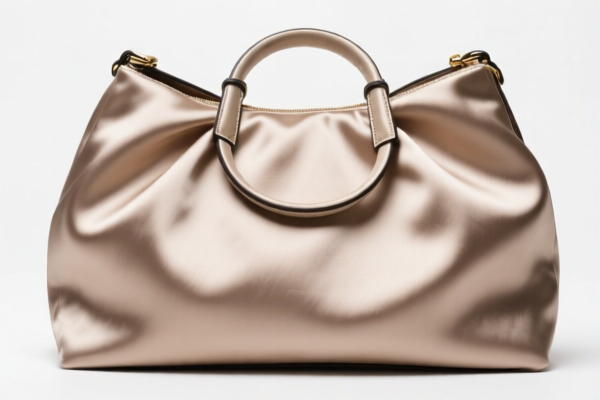
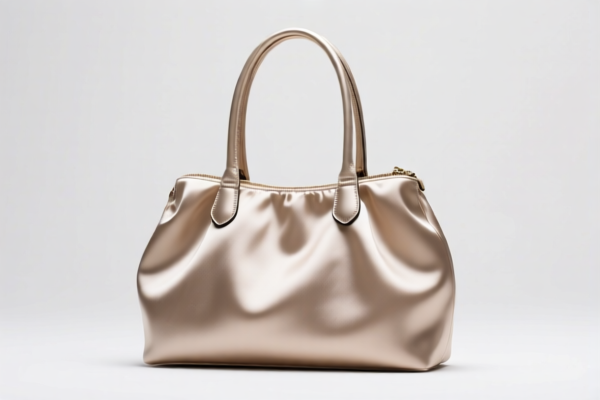
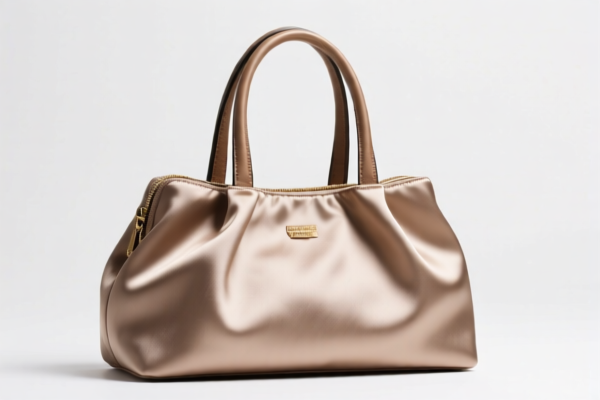
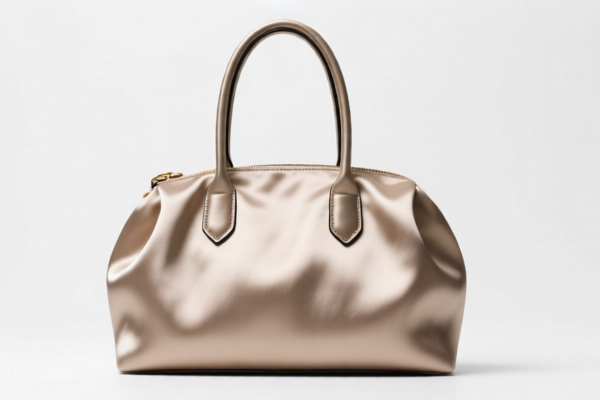
AI分析
👜 Silk Fabric Handbags (Patchwork) – HS Code Classification & 2026 Customs Clearance Guide
🌐 HS Code Reference & Customs Strategy | 2026 Latest Tariff Analysis | Professional Clearance Protocol
📌 I. Product Definition & Classification: Is it a Bag or Fabric?
Silk Fabric Handbags (Patchwork) are fashion accessories made primarily from silk materials, often featuring mixed-color or mixed-texture拼接 (patchwork) designs. In international trade, the critical distinction lies in whether the item is finished as a container (handbag) or remains as raw/semi-finished textile fabric.
Key Distinction Criteria: - Finished Handbag/Purse: Has a defined shape, lining, handles/straps, closure mechanisms (zipper, button, etc.), and is ready for use as a container → Chapter 42 (Articles of Leather; Saddle Harness; Travel Goods). - Silk Fabric/Textile: Rolls or loose pieces of woven silk, without shape or functional accessories for carrying items → Chapter 50 (Silk).
⚠️ Critical Judgment Point:
- If the item is a structured or semi-structured bag (even if patchwork), it is a handbag → HS 4202.
- If the item is loose silk fabric (even if silk), it is textile → HS 5007.
- Note: "Patchwork" describes the design technique, not the fundamental nature. A patchwork bag is still a bag.
📦 II. HS Code Classification Details (2026 Latest Tariff Data from )
Based on the provided dataset, here are the three possible classifications for "Silk Fabric Handbags (Patchwork)" depending on how the importer declares the product:
| HS Code | Product Description (Summary) | Key Characteristics | Tariff Rate (Total) |
|---|---|---|---|
4202.22.70.00 |
Silk Fabric Handbag (Silk fabric handbag, conforms to handbag form & silk material characteristics) |
• Structured or semi-structured bag • Made of silk fabric • Includes handles, lining, closures |
42.0% |
5007.90.60.90 |
Silk Fabric (Silk textile, matches silk material & textile form) |
• Rolls or loose fabric • No bag structure • Raw/semi-finished silk woven goods |
38.9% |
4202.22.40.10 |
Silk Handbag/Pouch (Silk handbag, conforms to textile material with silk content) |
• Often used for smaller pouches or unlined bags • Emphasizes "textile material containing silk" |
42.4% |
🔍 Key Insight:
- HS 4202.22.70.00 is the most accurate for a finished patchwork handbag because it explicitly mentions "handbag form" and "silk fabric."
- HS 5007.90.60.90 is incorrect if the item is a finished bag. Misclassifying a bag as fabric can lead to customs audits, penalties, or delays.
- HS 4202.22.40.10 may apply if the item is a simple pouch without structure, but 4202.22.70.00 is generally preferred for standard handbags.
💰 III. 2026 Latest Tariff Rate Breakdown (Including Supplementary Duties & Policy Surcharges)
✅ Applicable Country: United States (US)
✅ Country of Origin: China (CN)
✅ Effective Date: November 10, 2025 (including subsequent imports)
🎯 1. 4202.22.70.00 – Silk Fabric Handbag (Finished Goods)
| Item | Detail |
|---|---|
| Base Tariff | 7.0% |
| Trade War Tariff (Section 301) | +25.0% |
| Section 122 Tariff | +10.0% |
| Total Tariff Rate | 42.0% |
| Tax Calculation | CIF Value × 42.0% |
| De Minimis Exemption? | ❌ No (Section 321 exemption does not apply to Section 301/122 goods) |
| Legal Basis Path | Base: 7.0% + Section 301: 25.0% + Section 122: 10.0% = 42.0% |
📌 Explanation:
- The 7.0% base tariff is standard for leather/non-leather travel goods.
- The 25.0% Section 301 tariff applies to most Chinese-origin goods under US trade policy.
- The 10.0% Section 122 tariff is an additional surcharge on Chinese imports under specific emergency provisions.
- Total 42.0% is a high-cost barrier. Importers must factor this into pricing.
🎯 2. 5007.90.60.90 – Silk Fabric (Misclassification Risk)
| Item | Detail |
|---|---|
| Base Tariff | 3.9% |
| Trade War Tariff (Section 301) | +25.0% |
| Section 122 Tariff | +10.0% |
| Total Tariff Rate | 38.9% |
| Tax Calculation | CIF Value × 38.9% |
| De Minimis Exemption? | ❌ No |
⚠️ Warning:
- While the rate is slightly lower (38.9% vs. 42.0%), declaring a handbag as fabric is false declaration.
- Customs may reclassify the goods, impose penalties, and delay shipment.
- Do not use this code for finished bags.
🎯 3. 4202.22.40.10 – Silk Handbag/Pouch
| Item | Detail |
|---|---|
| Base Tariff | 7.4% |
| Trade War Tariff (Section 301) | +25.0% |
| Section 122 Tariff | +10.0% |
| Total Tariff Rate | 42.4% |
| Tax Calculation | CIF Value × 42.4% |
| De Minimis Exemption? | ❌ No |
📌 Note:
- This code has the highest total rate (42.4%).
- Use only if the product is a simple pouch or lacks standard handbag features.
- Avoid if4202.22.70.00is applicable to save 0.4% and reduce audit risk.
🛠️ IV. Customs Clearance Practical Advice (Real-World Pitfall Guide)
✅ 1. Required Documentation Checklist
| Document | Mandatory? | Notes |
|---|---|---|
| ✅ Product Photos | ✔️ | Clear images showing handles, lining, closures, and patchwork design. |
| ✅ Commercial Invoice | ✔️ | Must specify "Silk Fabric Handbag" or "Patchwork Handbag," NOT "Silk Fabric." |
| ✅ Packing List | ✔️ | Detail item weight, dimensions, and quantity. |
| ✅ Material Declaration | ✔️ | Confirm silk content (e.g., "100% Silk" or "Silk Blend"). |
| ✅ Country of Origin Certificate | ✔️ | Proof of Chinese origin (triggers 301/122 tariffs). |
| ✅ HS Code Pre-Ruling | ✔️ | Strongly Recommended to avoid misclassification disputes. |
✅ 2. Declaration Best Practices
🔥 "Declare as Bag, Not Fabric! Be Specific, Avoid Penalties!"
| Scenario | Correct Declaration | Incorrect Declaration | Risk |
|---|---|---|---|
| Finished Patchwork Handbag | 4202.22.70.00 – "Silk Fabric Handbag" |
5007.90.60.90 – "Silk Fabric" |
High Risk: Customs may reclassify, fine, or seize. |
| Simple Silk Pouch | 4202.22.40.10 – "Silk Pouch" |
5007.90.60.90 – "Silk Fabric" |
Medium Risk: May be accepted if no structure, but audit risk remains. |
| Loose Silk Fabric Rolls | 5007.90.60.90 – "Silk Textile" |
4202.22.70.00 – "Handbag" |
Low Risk: But overpaying tariffs (38.9% vs. 42.0% is small, but misdeclaration is still illegal). |
✅ 3. Special Scenarios
| Scenario | Recommendation |
|---|---|
| OEM Custom Patchwork Bags | Provide design specs to prove "finished good" status. |
| Mixed Material (Silk + Leather) | If leather dominates, may shift to Chapter 42 different subheading; if silk dominates, 4202.22.70.00 is correct. |
| De Minimis (Section 321) | ❌ Not applicable for Section 301/122 goods. Even under $800, duties apply. |
| Country of Origin Shifting | If bags are assembled in Vietnam/Mexico, apply for Certificate of Origin to potentially avoid US tariffs (subject to rules of origin). |
🌍 V. Global Market Comparison (2026)
| Market | Recommended HS Code | Total Tariff (China Origin) | Key Notes |
|---|---|---|---|
| 🇺🇸 USA | 4202.22.70.00 |
42.0% | High due to 301 + 122 tariffs. No de minimis exemption. |
| 🇨🇳 China | 4202.22.70.00 |
20% | No Section 301/122. Lower cost for domestic sales. |
| 🇪🇺 EU | 4202.22.70.00 |
12% | No Section 301. Standard EU tariff for non-leather bags. |
| 🇬🇧 UK | 4202.22.70.00 |
12% | Similar to EU post-Brexit. |
| 🇯🇵 Japan | 4202.22.70.00 |
10% | No US-style supplementary tariffs. |
📌 Conclusion:
- The US market is significantly more expensive due to political tariffs.
- EU/UK/Japan offer more favorable rates.
- Consider supply chain diversification (e.g., produce in Vietnam) if targeting the US.
📌 VI. Common Mistakes & Pitfalls (Lessons Learned)
❌ Mistake 1: Declaring a finished handbag as "Silk Fabric" to save 3.1%
👉 Result: Customs audit, fines, or seizure. Not worth it.
❌ Mistake 2: Ignoring Section 122 tariffs
👉 Result: Underpayment of duties. Always include the 10% surcharge.
❌ Mistake 3: Assuming "De Minimis" applies
👉 Result: Goods held at border. Section 321 does not exempt Section 301/122 goods.
✅ Correct Approach:
Declare as "Silk Fabric Handbag (Patchwork)" with HS Code
4202.22.70.00.
Prepare all documentation clearly.
Calculate costs based on 42.0% total tariff.
🎯 VII. Conclusion: Professional Declaration Saves Money & Time
🎯 Remember:
🔹 "Bag is Bag, Fabric is Fabric. Don't Mix Up!"
🔹 "42.0% is the Real Cost in the US. Plan Accordingly."
🔹 "De Minimis Doesn't Save You Here. Declare Correctly."
📌 Pro Tip:
If your handbags are originating from Vietnam, Mexico, or Thailand, apply for Certificate of Origin to potentially avoid US Section 301 & 122 tariffs.
Consider Advance Ruling from US Customs to confirm HS Code before shipping.
📣 Immediate Action:
📞 Consult a Customs Broker + Provide Product Photos + Apply for Pre-Ruling
🚀 Ensure Smooth Clearance, Avoid Penalties, Maximize Profit!
✨ Professional Clearance Starts with Accurate Classification!
💼 Every Dollar Counts – Declare Wisely!
用户评价
关于 HS 编码归类
协调制度(HS)是由世界海关组织(WCO)制定的国际贸易商品分类标准。全球 200 多个国家采用 HS 系统作为海关关税、贸易统计和进出口监管的基础。
每个 HS 编码遵循以下层级结构:
- 章(2 位)——商品大类(例如:第 84 章:机器和机械设备)
- 品目(4 位)——章内的更具体分类
- 子目(6 位)——国际通用细分,所有 WCO 成员国统一使用
- 本国细分(8-10 位)——各国自行扩展的细分编码,如美国 HTSUS 10 位编码
正确的 HS 编码归类对于顺利通关、准确缴纳关税和遵守贸易法规至关重要。错误归类可能导致海关延误、多缴关税或罚款。
从CN进口到US时,适用的关税税率可能包括:
- 最惠国(MFN)税率——适用于 WTO 成员国的标准关税税率
- 普通税率——适用于无贸易协定国家
- 贸易救济关税——附加关税,如 301 条款(反倾销)、232 条款(国家安全)或反补贴税
本页内容仅供参考。如需正式归类,请咨询当地海关或持牌报关代理。