Silk Fabric Handbags (Patchwork)
CN → US| HS Code | Tariff Rate | Origin | Destination | Doc |
|---|---|---|---|---|
| 4202227000 | 42.0% | CN | US | Official Doc |
| 5007906090 | 38.9% | CN | US | Official Doc |
| 4202224010 | 42.4% | CN | US | Official Doc |
Product Images
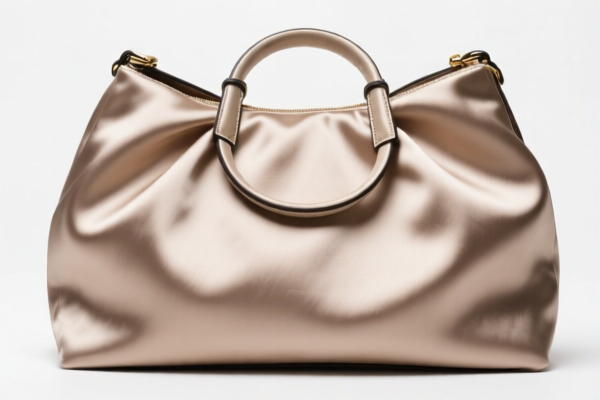
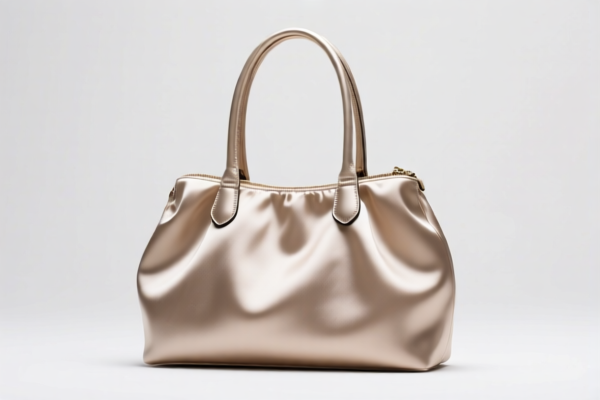
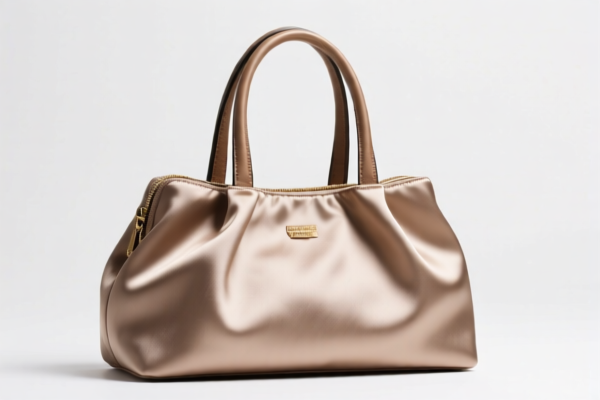
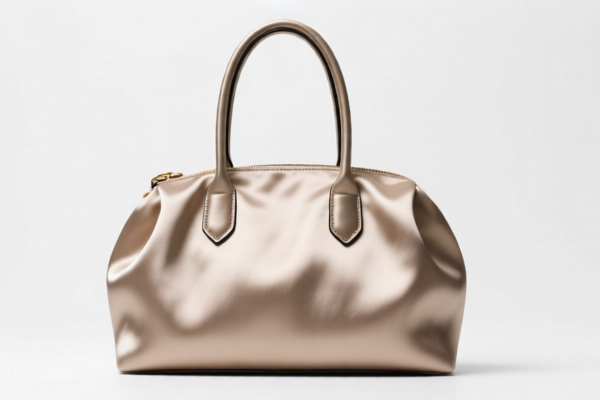
AI Analysis
👜 Silk Fabric Handbags (Patchwork) – HS Code Classification & 2026 Customs Clearance Guide
🌐 HS Code Reference & Customs Strategy | 2026 Latest Tariff Analysis | Professional Clearance Protocol
📌 I. Product Definition & Classification: Is it a Bag or Fabric?
Silk Fabric Handbags (Patchwork) are fashion accessories made primarily from silk materials, often featuring mixed-color or mixed-texture拼接 (patchwork) designs. In international trade, the critical distinction lies in whether the item is finished as a container (handbag) or remains as raw/semi-finished textile fabric.
Key Distinction Criteria: - Finished Handbag/Purse: Has a defined shape, lining, handles/straps, closure mechanisms (zipper, button, etc.), and is ready for use as a container → Chapter 42 (Articles of Leather; Saddle Harness; Travel Goods). - Silk Fabric/Textile: Rolls or loose pieces of woven silk, without shape or functional accessories for carrying items → Chapter 50 (Silk).
⚠️ Critical Judgment Point:
- If the item is a structured or semi-structured bag (even if patchwork), it is a handbag → HS 4202.
- If the item is loose silk fabric (even if silk), it is textile → HS 5007.
- Note: "Patchwork" describes the design technique, not the fundamental nature. A patchwork bag is still a bag.
📦 II. HS Code Classification Details (2026 Latest Tariff Data from )
Based on the provided dataset, here are the three possible classifications for "Silk Fabric Handbags (Patchwork)" depending on how the importer declares the product:
| HS Code | Product Description (Summary) | Key Characteristics | Tariff Rate (Total) |
|---|---|---|---|
4202.22.70.00 |
Silk Fabric Handbag (Silk fabric handbag, conforms to handbag form & silk material characteristics) |
• Structured or semi-structured bag • Made of silk fabric • Includes handles, lining, closures |
42.0% |
5007.90.60.90 |
Silk Fabric (Silk textile, matches silk material & textile form) |
• Rolls or loose fabric • No bag structure • Raw/semi-finished silk woven goods |
38.9% |
4202.22.40.10 |
Silk Handbag/Pouch (Silk handbag, conforms to textile material with silk content) |
• Often used for smaller pouches or unlined bags • Emphasizes "textile material containing silk" |
42.4% |
🔍 Key Insight:
- HS 4202.22.70.00 is the most accurate for a finished patchwork handbag because it explicitly mentions "handbag form" and "silk fabric."
- HS 5007.90.60.90 is incorrect if the item is a finished bag. Misclassifying a bag as fabric can lead to customs audits, penalties, or delays.
- HS 4202.22.40.10 may apply if the item is a simple pouch without structure, but 4202.22.70.00 is generally preferred for standard handbags.
💰 III. 2026 Latest Tariff Rate Breakdown (Including Supplementary Duties & Policy Surcharges)
✅ Applicable Country: United States (US)
✅ Country of Origin: China (CN)
✅ Effective Date: November 10, 2025 (including subsequent imports)
🎯 1. 4202.22.70.00 – Silk Fabric Handbag (Finished Goods)
| Item | Detail |
|---|---|
| Base Tariff | 7.0% |
| Trade War Tariff (Section 301) | +25.0% |
| Section 122 Tariff | +10.0% |
| Total Tariff Rate | 42.0% |
| Tax Calculation | CIF Value × 42.0% |
| De Minimis Exemption? | ❌ No (Section 321 exemption does not apply to Section 301/122 goods) |
| Legal Basis Path | Base: 7.0% + Section 301: 25.0% + Section 122: 10.0% = 42.0% |
📌 Explanation:
- The 7.0% base tariff is standard for leather/non-leather travel goods.
- The 25.0% Section 301 tariff applies to most Chinese-origin goods under US trade policy.
- The 10.0% Section 122 tariff is an additional surcharge on Chinese imports under specific emergency provisions.
- Total 42.0% is a high-cost barrier. Importers must factor this into pricing.
🎯 2. 5007.90.60.90 – Silk Fabric (Misclassification Risk)
| Item | Detail |
|---|---|
| Base Tariff | 3.9% |
| Trade War Tariff (Section 301) | +25.0% |
| Section 122 Tariff | +10.0% |
| Total Tariff Rate | 38.9% |
| Tax Calculation | CIF Value × 38.9% |
| De Minimis Exemption? | ❌ No |
⚠️ Warning:
- While the rate is slightly lower (38.9% vs. 42.0%), declaring a handbag as fabric is false declaration.
- Customs may reclassify the goods, impose penalties, and delay shipment.
- Do not use this code for finished bags.
🎯 3. 4202.22.40.10 – Silk Handbag/Pouch
| Item | Detail |
|---|---|
| Base Tariff | 7.4% |
| Trade War Tariff (Section 301) | +25.0% |
| Section 122 Tariff | +10.0% |
| Total Tariff Rate | 42.4% |
| Tax Calculation | CIF Value × 42.4% |
| De Minimis Exemption? | ❌ No |
📌 Note:
- This code has the highest total rate (42.4%).
- Use only if the product is a simple pouch or lacks standard handbag features.
- Avoid if4202.22.70.00is applicable to save 0.4% and reduce audit risk.
🛠️ IV. Customs Clearance Practical Advice (Real-World Pitfall Guide)
✅ 1. Required Documentation Checklist
| Document | Mandatory? | Notes |
|---|---|---|
| ✅ Product Photos | ✔️ | Clear images showing handles, lining, closures, and patchwork design. |
| ✅ Commercial Invoice | ✔️ | Must specify "Silk Fabric Handbag" or "Patchwork Handbag," NOT "Silk Fabric." |
| ✅ Packing List | ✔️ | Detail item weight, dimensions, and quantity. |
| ✅ Material Declaration | ✔️ | Confirm silk content (e.g., "100% Silk" or "Silk Blend"). |
| ✅ Country of Origin Certificate | ✔️ | Proof of Chinese origin (triggers 301/122 tariffs). |
| ✅ HS Code Pre-Ruling | ✔️ | Strongly Recommended to avoid misclassification disputes. |
✅ 2. Declaration Best Practices
🔥 "Declare as Bag, Not Fabric! Be Specific, Avoid Penalties!"
| Scenario | Correct Declaration | Incorrect Declaration | Risk |
|---|---|---|---|
| Finished Patchwork Handbag | 4202.22.70.00 – "Silk Fabric Handbag" |
5007.90.60.90 – "Silk Fabric" |
High Risk: Customs may reclassify, fine, or seize. |
| Simple Silk Pouch | 4202.22.40.10 – "Silk Pouch" |
5007.90.60.90 – "Silk Fabric" |
Medium Risk: May be accepted if no structure, but audit risk remains. |
| Loose Silk Fabric Rolls | 5007.90.60.90 – "Silk Textile" |
4202.22.70.00 – "Handbag" |
Low Risk: But overpaying tariffs (38.9% vs. 42.0% is small, but misdeclaration is still illegal). |
✅ 3. Special Scenarios
| Scenario | Recommendation |
|---|---|
| OEM Custom Patchwork Bags | Provide design specs to prove "finished good" status. |
| Mixed Material (Silk + Leather) | If leather dominates, may shift to Chapter 42 different subheading; if silk dominates, 4202.22.70.00 is correct. |
| De Minimis (Section 321) | ❌ Not applicable for Section 301/122 goods. Even under $800, duties apply. |
| Country of Origin Shifting | If bags are assembled in Vietnam/Mexico, apply for Certificate of Origin to potentially avoid US tariffs (subject to rules of origin). |
🌍 V. Global Market Comparison (2026)
| Market | Recommended HS Code | Total Tariff (China Origin) | Key Notes |
|---|---|---|---|
| 🇺🇸 USA | 4202.22.70.00 |
42.0% | High due to 301 + 122 tariffs. No de minimis exemption. |
| 🇨🇳 China | 4202.22.70.00 |
20% | No Section 301/122. Lower cost for domestic sales. |
| 🇪🇺 EU | 4202.22.70.00 |
12% | No Section 301. Standard EU tariff for non-leather bags. |
| 🇬🇧 UK | 4202.22.70.00 |
12% | Similar to EU post-Brexit. |
| 🇯🇵 Japan | 4202.22.70.00 |
10% | No US-style supplementary tariffs. |
📌 Conclusion:
- The US market is significantly more expensive due to political tariffs.
- EU/UK/Japan offer more favorable rates.
- Consider supply chain diversification (e.g., produce in Vietnam) if targeting the US.
📌 VI. Common Mistakes & Pitfalls (Lessons Learned)
❌ Mistake 1: Declaring a finished handbag as "Silk Fabric" to save 3.1%
👉 Result: Customs audit, fines, or seizure. Not worth it.
❌ Mistake 2: Ignoring Section 122 tariffs
👉 Result: Underpayment of duties. Always include the 10% surcharge.
❌ Mistake 3: Assuming "De Minimis" applies
👉 Result: Goods held at border. Section 321 does not exempt Section 301/122 goods.
✅ Correct Approach:
Declare as "Silk Fabric Handbag (Patchwork)" with HS Code
4202.22.70.00.
Prepare all documentation clearly.
Calculate costs based on 42.0% total tariff.
🎯 VII. Conclusion: Professional Declaration Saves Money & Time
🎯 Remember:
🔹 "Bag is Bag, Fabric is Fabric. Don't Mix Up!"
🔹 "42.0% is the Real Cost in the US. Plan Accordingly."
🔹 "De Minimis Doesn't Save You Here. Declare Correctly."
📌 Pro Tip:
If your handbags are originating from Vietnam, Mexico, or Thailand, apply for Certificate of Origin to potentially avoid US Section 301 & 122 tariffs.
Consider Advance Ruling from US Customs to confirm HS Code before shipping.
📣 Immediate Action:
📞 Consult a Customs Broker + Provide Product Photos + Apply for Pre-Ruling
🚀 Ensure Smooth Clearance, Avoid Penalties, Maximize Profit!
✨ Professional Clearance Starts with Accurate Classification!
💼 Every Dollar Counts – Declare Wisely!
Customer Reviews
About HS Code Classification
The Harmonized System (HS) is an internationally standardized nomenclature developed by the World Customs Organization (WCO) to classify traded products. Over 200 countries use the HS system as the basis for customs tariffs, trade statistics, and import/export regulations.
Each HS code follows a hierarchical structure:
- Chapter (2 digits) — Broad category of goods (e.g., Chapter 84: Machinery and Mechanical Appliances)
- Heading (4 digits) — More specific grouping within the chapter
- Subheading (6 digits) — Internationally standardized breakdown, used by all WCO member countries
- National subdivisions (8-10 digits) — Country-specific extensions for further classification, such as US HTSUS 10-digit codes
Correct HS code classification is essential for smooth customs clearance, accurate duty payment, and compliance with trade regulations. Misclassification can lead to customs delays, overpayment of duties, or penalties.
When importing from CN to US, the applicable tariff rates may include:
- Most-Favored-Nation (MFN) rate — The standard duty rate applied to WTO members
- General rate — Applied to countries without trade agreements
- Trade remedy duties — Additional tariffs such as Section 301 (anti-dumping), Section 232 (national security), or countervailing duties
The information provided on this page is for reference purposes only. For official classification, please consult with your local customs authority or a licensed customs broker.