Tire (HS Code 4011101050)
CN → US| HS编码 | 关税税率 | 原产国 | 目的国 | 文档 |
|---|---|---|---|---|
| 4011205030 | 38.4% | CN | US | 官方文档 |
| 4011205050 | 38.4% | CN | US | 官方文档 |
| 4011801010 | 35.0% | CN | US | 官方文档 |
商品图片
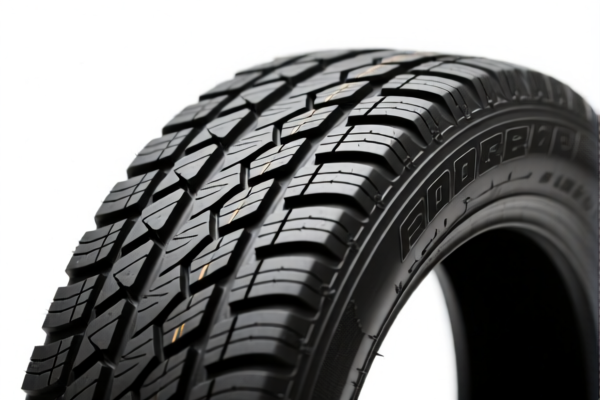
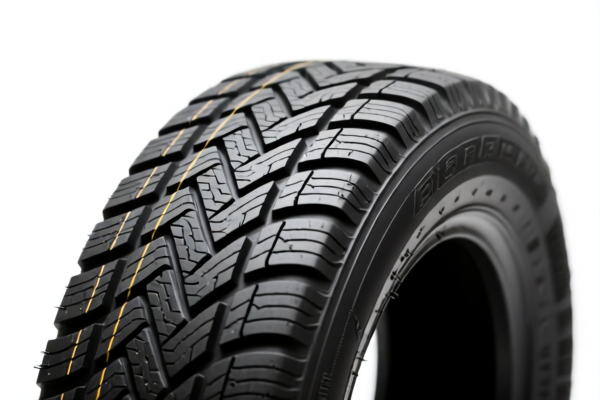
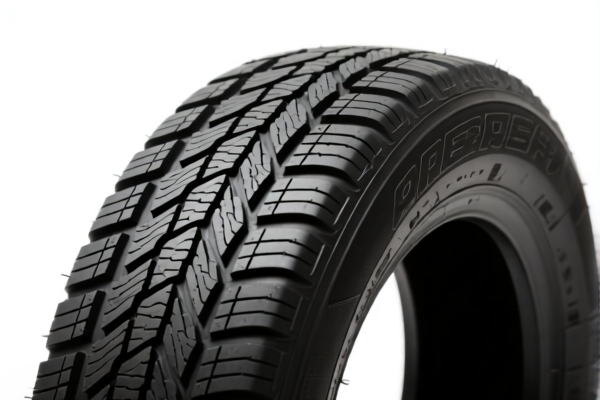
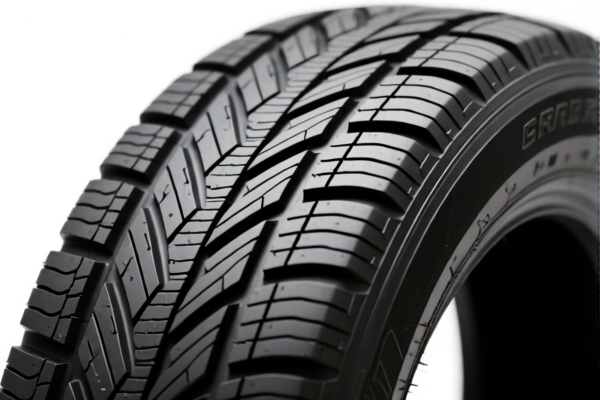
AI分析
🚛 Heavy-Duty Tire (Tire for Buses, Trucks, or Lorries)
🌐 HS Code Reference & Customs Clearance Guide | 2026 Latest Tariff Analysis | Professional Clearance Strategy
📌 I. Product Definition & Classification: Do You Truly Understand "Tires"?
In international trade, tires are classified based on material, structure (pneumatic vs. non-pneumatic), and vehicle type. The user input "Tire" (HS Code 4011101050) refers generally to rubber pneumatic tires, often for heavy vehicles. However, based on the provided <DATA> context, the actual classification depends on specific use cases and regulatory interpretations, leading to three primary HS Code possibilities with varying tax implications.
⚠️ Key Distinction Point:
- If explicitly for Buses/Trucks: Falls under 4011.20 (Pneumatic tires for buses/trucks).
- If for other non-road vehicles or unspecified uses: May fall under 4011.80 or general categories.
- Crucial Note: The input "4011101050" is not present in the<DATA>results. The<DATA>provides classifications for 4011.20 and 4011.80. We must align with the provided data.
📦 II. HS Code Classification Details (Based on Provided Data 2026)
| HS Code | Product Description | Application Scenario | Material/Structure |
|---|---|---|---|
4011.20.50.30 |
Pneumatic tires, of rubber, for buses, lorries (trucks) | Bus/Truck-related applications | Rubber, Pneumatic |
4011.20.50.50 |
Pneumatic tires, of rubber, other than those of heading 40.11... (Non-road/others) | Inferred as non-highway use or other specific rubber tires | Rubber, Pneumatic |
4011.80.10.10 |
Other pneumatic tires, of rubber (General/Other) | General purpose, covers core elements of rubber tires | Rubber, Pneumatic |
🔍 Critical Analysis:
- 4011.20.50.30: Direct match for Bus/Truck tires.
- 4011.20.50.50: Matches Rubber Pneumatic Tires generally, with inferred use for non-highway or other uses.
- 4011.80.10.10: A broader category for Other Rubber Pneumatic Tires, matching material and core function.
💰 III. 2026 Latest Tariff Rate Breakdown (Including Additional Duties)
✅ Applicable Country: United States (US)
✅ Origin: China (CN)
✅ Effective Date: Post-2025/2026 Trade Policy (Section 122 & 301)
🎯 1. 4011.20.50.30 —— Pneumatic Tires for Buses/Trucks
| Item | Details |
|---|---|
| Basic Tariff | 3.4% (Ad Valorem) |
| Additional Duty (Section 301) | +25.0% |
| Section 122 Duty | +10.0% |
| Total Tax Rate | 38.4% |
| Tax Calculation | CIF Value × 38.4% |
| De Minimis Exemption | ❌ Not Eligible (High-duty goods typically excluded) |
| Legal Basis | Base Rate 3.4% + Section 301 Add. 25% + Section 122 Add. 10% |
📌 Explanation:
- This is a high-tax category for heavy-duty tires from China.
- Section 122 (often related to specific trade remedies or emergency actions) adds 10%.
- Section 301 (Trade War Tariffs) adds 25%.
- Total Burden: Nearly 40% on top of CIF value.
🎯 2. 4011.20.50.50 —— Other Pneumatic Tires (Inferred Non-Road/Other)
| Item | Details |
|---|---|
| Basic Tariff | 3.4% |
| Additional Duty (Section 301) | +25.0% |
| Section 122 Duty | +10.0% |
| Total Tax Rate | 38.4% |
| Tax Calculation | CIF Value × 38.4% |
| De Minimis Exemption | ❌ Not Eligible |
| Legal Basis | Same as above: 3.4% Base + 25% Sec 301 + 10% Sec 122 |
📌 Note:
- Even if classified under "other" uses within the 4011.20 heading, the tax rate remains identical to bus/truck tires due to the same duty structure.
- The classification difference is regulatory, not fiscal, in this dataset.
🎯 3. 4011.80.10.10 —— Other Pneumatic Tires (General/Other)
| Item | Details |
|---|---|
| Basic Tariff | 0.0% |
| Additional Duty (Section 301) | +25.0% |
| Section 122 Duty | +10.0% |
| Total Tax Rate | 35.0% |
| Tax Calculation | CIF Value × 35.0% |
| De Minimis Exemption | ❌ Not Eligible |
| Legal Basis | 0% Base + 25% Sec 301 + 10% Sec 122 |
📌 Advantage:
- This is the lowest tax option among the three.
- Savings: 3.4% lower total tariff compared to 4011.20 codes.
- Applicability: Only if the tire does not strictly fall under "bus/truck" (4011.20) but still qualifies as a rubber pneumatic tire.
- Caution: Misclassification risk if the tire is actually for buses/trucks.
🛠️ IV. Customs Clearance Practical Advice (Real-World Pitfall Avoidance)
✅ 1. Required Documentation Checklist
| Document | Mandatory? | Description |
|---|---|---|
| ✅ Product Specification Sheet | ✔️ | Must include size, load index, speed rating, material (rubber type), and vehicle type compatibility. |
| ✅ Commercial Invoice | ✔️ | Clearly state "Rubber Pneumatic Tire" and intended vehicle type. |
| ✅ Packing List | ✔️ | Detail quantity, weight, and dimensions. |
| ✅ Certificate of Origin | ✔️ | Essential for determining origin-based duties (China vs. others). |
| ✅ Declaration of Use | ✔️ | Confirm if tires are for buses, trucks, off-road, or other vehicles. |
✅ 2. Classification Strategy (Key Mnemonic)
🔥 “Bus/Truck = 4011.20 (38.4%), Other = 4011.80 (35.0%)”
| Scenario | Recommended HS Code | Total Tax | Risk |
|---|---|---|---|
| Tires explicitly for Buses/Trucks | 4011.20.50.30 |
38.4% | Low (Direct Match) |
| Tires for Off-Road/Industrial | 4011.20.50.50 |
38.4% | Medium (Inferred Use) |
| Tires for General/Other Uses | 4011.80.10.10 |
35.0% | High (Must Prove Non-Bus/Truck) |
📌 Critical Advice:
- Do NOT misclassify bus/truck tires as "other" (4011.80) to save 3.4%. Customs will verify vehicle type. Penalties for misclassification can exceed the tax savings.
- If the tire is not for buses/trucks, 4011.80.10.10 is the optimal choice.
✅ 3. Special Cases & Mitigation
| Situation | Handling Strategy |
|---|---|
| OEM Custom Tires | Provide customer contracts specifying vehicle type. If for buses/trucks, use 4011.20. |
| Mixed Shipments | Separate declarations for bus/truck tires vs. other tires. Do not bundle under one code if uses differ. |
| Origin Not China | If tires are from Vietnam, Thailand, or EU, Section 301 and 122 may not apply. Check FTAs (e.g., USMCA, EU-US). |
| Pre-Ruling Request | Apply for Binding Ruling from US CBP if the tire’s use is ambiguous. This provides legal certainty. |
🌍 V. Global Market Comparison (2026)
| Country/Region | Recommended HS Code | Tariff (China Origin) | Notes |
|---|---|---|---|
| 🇺🇸 USA | 4011.80.10.10 (if eligible) |
35.0% | Includes 25% Sec 301 + 10% Sec 122 |
| 🇨🇳 China | 4011.10 / 4011.20 |
5%~10% | Import duty + VAT. No US-style add-on duties. |
| 🇪🇺 EU | 4011.20 |
0%~3% (Check EBA) | No Section 301. May require E-mark certification. |
| 🇦🇺 Australia | 4011.20 |
5% | No additional duties. AQIS inspection required. |
📌 Conclusion:
- US market is the most expensive due to layered tariffs.
- Diversify supply chain: Consider sourcing from non-China origins (e.g., Thailand, Germany) to avoid Section 301/122 duties.
- Accurate classification is vital: Even a 3.4% difference (38.4% vs 35.0%) adds significant cost on large shipments.
📌 VI. Common Mistakes & Pitfalls (Lessons Learned)
❌ Mistake 1: Classifying Bus/Truck Tires under 4011.80 to save tax
👉 Consequence: Customs audit → Back taxes + Penalties → Delayed shipment.
❌ Mistake 2: Ignoring Section 122 & 301 in cost calculation
👉 Consequence: Profit margin erosion → Unexpected 35-38% duty burden.
❌ Mistake 3: Using generic "Tire" description in Invoice
👉 Consequence: Customs clearance delay → Request for additional documentation.
✅ Correct Approach:
"Specify Vehicle Type: Bus/Truck vs. Other. Use 4011.20 for commercial vehicles, 4011.80 for others. Always include CIF value and origin."
🎯 VII. Conclusion: Precision in Classification Saves Money!
🎯 Key Takeaways:
🔹 Bus/Truck Tires:
4011.20.50.30/50→ 38.4%
🔹 Other Rubber Tires:4011.80.10.10→ 35.0%
🔹 Savings Opportunity: 3.4% if eligible for 4011.80.
🔹 High Risk: Misclassification leads to severe penalties.
📌 Pro Tip:
If your tires are not for buses/trucks, always claim
4011.80.10.10for the lower 35% rate. Provide proof of non-commercial/heavy vehicle use.
For US imports, consider Bonded Warehouses or FTZ (Foreign Trade Zones) to defer duties.
📣 Immediate Action:
📞 Consult a licensed customs broker.
📄 Obtain Pre-Ruling if uncertain.
🚀 Ensure your Invoice and Spec Sheet perfectly match the chosen HS Code.
✨ Professional clearance starts with accurate classification!
💼 Every percentage point counts in global trade!
用户评价
关于 HS 编码归类
协调制度(HS)是由世界海关组织(WCO)制定的国际贸易商品分类标准。全球 200 多个国家采用 HS 系统作为海关关税、贸易统计和进出口监管的基础。
每个 HS 编码遵循以下层级结构:
- 章(2 位)——商品大类(例如:第 84 章:机器和机械设备)
- 品目(4 位)——章内的更具体分类
- 子目(6 位)——国际通用细分,所有 WCO 成员国统一使用
- 本国细分(8-10 位)——各国自行扩展的细分编码,如美国 HTSUS 10 位编码
正确的 HS 编码归类对于顺利通关、准确缴纳关税和遵守贸易法规至关重要。错误归类可能导致海关延误、多缴关税或罚款。
从CN进口到US时,适用的关税税率可能包括:
- 最惠国(MFN)税率——适用于 WTO 成员国的标准关税税率
- 普通税率——适用于无贸易协定国家
- 贸易救济关税——附加关税,如 301 条款(反倾销)、232 条款(国家安全)或反补贴税
本页内容仅供参考。如需正式归类,请咨询当地海关或持牌报关代理。