Tire (HS Code 4011101050)
CN → US| HS Code | Tariff Rate | Origin | Destination | Doc |
|---|---|---|---|---|
| 4011205030 | 38.4% | CN | US | Official Doc |
| 4011205050 | 38.4% | CN | US | Official Doc |
| 4011801010 | 35.0% | CN | US | Official Doc |
Product Images
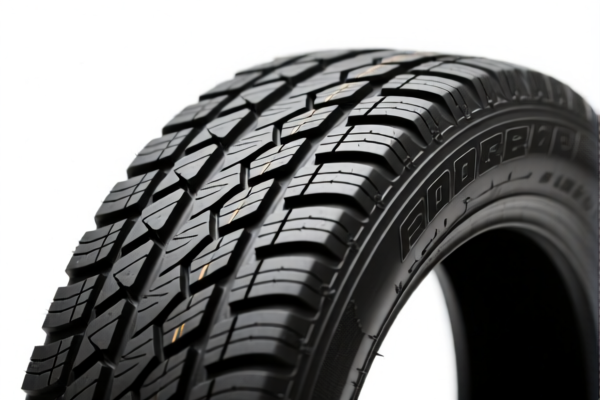
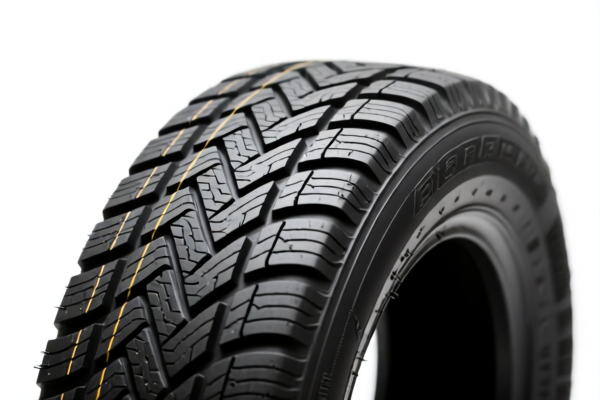
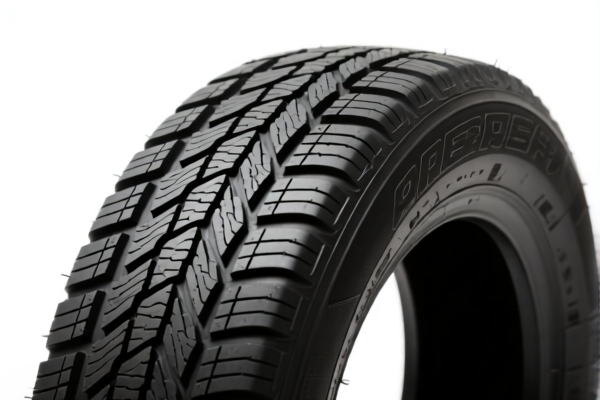
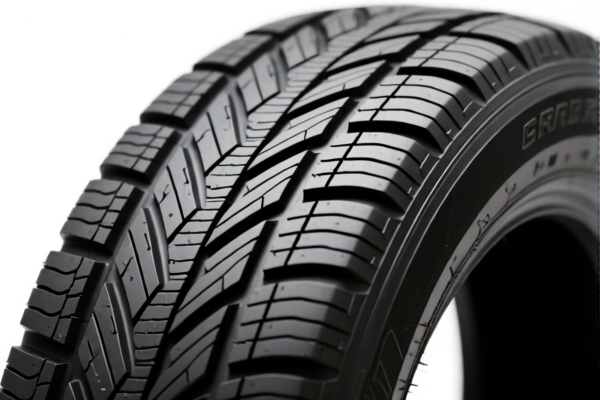
AI Analysis
🚛 Heavy-Duty Tire (Tire for Buses, Trucks, or Lorries)
🌐 HS Code Reference & Customs Clearance Guide | 2026 Latest Tariff Analysis | Professional Clearance Strategy
📌 I. Product Definition & Classification: Do You Truly Understand "Tires"?
In international trade, tires are classified based on material, structure (pneumatic vs. non-pneumatic), and vehicle type. The user input "Tire" (HS Code 4011101050) refers generally to rubber pneumatic tires, often for heavy vehicles. However, based on the provided <DATA> context, the actual classification depends on specific use cases and regulatory interpretations, leading to three primary HS Code possibilities with varying tax implications.
⚠️ Key Distinction Point:
- If explicitly for Buses/Trucks: Falls under 4011.20 (Pneumatic tires for buses/trucks).
- If for other non-road vehicles or unspecified uses: May fall under 4011.80 or general categories.
- Crucial Note: The input "4011101050" is not present in the<DATA>results. The<DATA>provides classifications for 4011.20 and 4011.80. We must align with the provided data.
📦 II. HS Code Classification Details (Based on Provided Data 2026)
| HS Code | Product Description | Application Scenario | Material/Structure |
|---|---|---|---|
4011.20.50.30 |
Pneumatic tires, of rubber, for buses, lorries (trucks) | Bus/Truck-related applications | Rubber, Pneumatic |
4011.20.50.50 |
Pneumatic tires, of rubber, other than those of heading 40.11... (Non-road/others) | Inferred as non-highway use or other specific rubber tires | Rubber, Pneumatic |
4011.80.10.10 |
Other pneumatic tires, of rubber (General/Other) | General purpose, covers core elements of rubber tires | Rubber, Pneumatic |
🔍 Critical Analysis:
- 4011.20.50.30: Direct match for Bus/Truck tires.
- 4011.20.50.50: Matches Rubber Pneumatic Tires generally, with inferred use for non-highway or other uses.
- 4011.80.10.10: A broader category for Other Rubber Pneumatic Tires, matching material and core function.
💰 III. 2026 Latest Tariff Rate Breakdown (Including Additional Duties)
✅ Applicable Country: United States (US)
✅ Origin: China (CN)
✅ Effective Date: Post-2025/2026 Trade Policy (Section 122 & 301)
🎯 1. 4011.20.50.30 —— Pneumatic Tires for Buses/Trucks
| Item | Details |
|---|---|
| Basic Tariff | 3.4% (Ad Valorem) |
| Additional Duty (Section 301) | +25.0% |
| Section 122 Duty | +10.0% |
| Total Tax Rate | 38.4% |
| Tax Calculation | CIF Value × 38.4% |
| De Minimis Exemption | ❌ Not Eligible (High-duty goods typically excluded) |
| Legal Basis | Base Rate 3.4% + Section 301 Add. 25% + Section 122 Add. 10% |
📌 Explanation:
- This is a high-tax category for heavy-duty tires from China.
- Section 122 (often related to specific trade remedies or emergency actions) adds 10%.
- Section 301 (Trade War Tariffs) adds 25%.
- Total Burden: Nearly 40% on top of CIF value.
🎯 2. 4011.20.50.50 —— Other Pneumatic Tires (Inferred Non-Road/Other)
| Item | Details |
|---|---|
| Basic Tariff | 3.4% |
| Additional Duty (Section 301) | +25.0% |
| Section 122 Duty | +10.0% |
| Total Tax Rate | 38.4% |
| Tax Calculation | CIF Value × 38.4% |
| De Minimis Exemption | ❌ Not Eligible |
| Legal Basis | Same as above: 3.4% Base + 25% Sec 301 + 10% Sec 122 |
📌 Note:
- Even if classified under "other" uses within the 4011.20 heading, the tax rate remains identical to bus/truck tires due to the same duty structure.
- The classification difference is regulatory, not fiscal, in this dataset.
🎯 3. 4011.80.10.10 —— Other Pneumatic Tires (General/Other)
| Item | Details |
|---|---|
| Basic Tariff | 0.0% |
| Additional Duty (Section 301) | +25.0% |
| Section 122 Duty | +10.0% |
| Total Tax Rate | 35.0% |
| Tax Calculation | CIF Value × 35.0% |
| De Minimis Exemption | ❌ Not Eligible |
| Legal Basis | 0% Base + 25% Sec 301 + 10% Sec 122 |
📌 Advantage:
- This is the lowest tax option among the three.
- Savings: 3.4% lower total tariff compared to 4011.20 codes.
- Applicability: Only if the tire does not strictly fall under "bus/truck" (4011.20) but still qualifies as a rubber pneumatic tire.
- Caution: Misclassification risk if the tire is actually for buses/trucks.
🛠️ IV. Customs Clearance Practical Advice (Real-World Pitfall Avoidance)
✅ 1. Required Documentation Checklist
| Document | Mandatory? | Description |
|---|---|---|
| ✅ Product Specification Sheet | ✔️ | Must include size, load index, speed rating, material (rubber type), and vehicle type compatibility. |
| ✅ Commercial Invoice | ✔️ | Clearly state "Rubber Pneumatic Tire" and intended vehicle type. |
| ✅ Packing List | ✔️ | Detail quantity, weight, and dimensions. |
| ✅ Certificate of Origin | ✔️ | Essential for determining origin-based duties (China vs. others). |
| ✅ Declaration of Use | ✔️ | Confirm if tires are for buses, trucks, off-road, or other vehicles. |
✅ 2. Classification Strategy (Key Mnemonic)
🔥 “Bus/Truck = 4011.20 (38.4%), Other = 4011.80 (35.0%)”
| Scenario | Recommended HS Code | Total Tax | Risk |
|---|---|---|---|
| Tires explicitly for Buses/Trucks | 4011.20.50.30 |
38.4% | Low (Direct Match) |
| Tires for Off-Road/Industrial | 4011.20.50.50 |
38.4% | Medium (Inferred Use) |
| Tires for General/Other Uses | 4011.80.10.10 |
35.0% | High (Must Prove Non-Bus/Truck) |
📌 Critical Advice:
- Do NOT misclassify bus/truck tires as "other" (4011.80) to save 3.4%. Customs will verify vehicle type. Penalties for misclassification can exceed the tax savings.
- If the tire is not for buses/trucks, 4011.80.10.10 is the optimal choice.
✅ 3. Special Cases & Mitigation
| Situation | Handling Strategy |
|---|---|
| OEM Custom Tires | Provide customer contracts specifying vehicle type. If for buses/trucks, use 4011.20. |
| Mixed Shipments | Separate declarations for bus/truck tires vs. other tires. Do not bundle under one code if uses differ. |
| Origin Not China | If tires are from Vietnam, Thailand, or EU, Section 301 and 122 may not apply. Check FTAs (e.g., USMCA, EU-US). |
| Pre-Ruling Request | Apply for Binding Ruling from US CBP if the tire’s use is ambiguous. This provides legal certainty. |
🌍 V. Global Market Comparison (2026)
| Country/Region | Recommended HS Code | Tariff (China Origin) | Notes |
|---|---|---|---|
| 🇺🇸 USA | 4011.80.10.10 (if eligible) |
35.0% | Includes 25% Sec 301 + 10% Sec 122 |
| 🇨🇳 China | 4011.10 / 4011.20 |
5%~10% | Import duty + VAT. No US-style add-on duties. |
| 🇪🇺 EU | 4011.20 |
0%~3% (Check EBA) | No Section 301. May require E-mark certification. |
| 🇦🇺 Australia | 4011.20 |
5% | No additional duties. AQIS inspection required. |
📌 Conclusion:
- US market is the most expensive due to layered tariffs.
- Diversify supply chain: Consider sourcing from non-China origins (e.g., Thailand, Germany) to avoid Section 301/122 duties.
- Accurate classification is vital: Even a 3.4% difference (38.4% vs 35.0%) adds significant cost on large shipments.
📌 VI. Common Mistakes & Pitfalls (Lessons Learned)
❌ Mistake 1: Classifying Bus/Truck Tires under 4011.80 to save tax
👉 Consequence: Customs audit → Back taxes + Penalties → Delayed shipment.
❌ Mistake 2: Ignoring Section 122 & 301 in cost calculation
👉 Consequence: Profit margin erosion → Unexpected 35-38% duty burden.
❌ Mistake 3: Using generic "Tire" description in Invoice
👉 Consequence: Customs clearance delay → Request for additional documentation.
✅ Correct Approach:
"Specify Vehicle Type: Bus/Truck vs. Other. Use 4011.20 for commercial vehicles, 4011.80 for others. Always include CIF value and origin."
🎯 VII. Conclusion: Precision in Classification Saves Money!
🎯 Key Takeaways:
🔹 Bus/Truck Tires:
4011.20.50.30/50→ 38.4%
🔹 Other Rubber Tires:4011.80.10.10→ 35.0%
🔹 Savings Opportunity: 3.4% if eligible for 4011.80.
🔹 High Risk: Misclassification leads to severe penalties.
📌 Pro Tip:
If your tires are not for buses/trucks, always claim
4011.80.10.10for the lower 35% rate. Provide proof of non-commercial/heavy vehicle use.
For US imports, consider Bonded Warehouses or FTZ (Foreign Trade Zones) to defer duties.
📣 Immediate Action:
📞 Consult a licensed customs broker.
📄 Obtain Pre-Ruling if uncertain.
🚀 Ensure your Invoice and Spec Sheet perfectly match the chosen HS Code.
✨ Professional clearance starts with accurate classification!
💼 Every percentage point counts in global trade!
Customer Reviews
About HS Code Classification
The Harmonized System (HS) is an internationally standardized nomenclature developed by the World Customs Organization (WCO) to classify traded products. Over 200 countries use the HS system as the basis for customs tariffs, trade statistics, and import/export regulations.
Each HS code follows a hierarchical structure:
- Chapter (2 digits) — Broad category of goods (e.g., Chapter 84: Machinery and Mechanical Appliances)
- Heading (4 digits) — More specific grouping within the chapter
- Subheading (6 digits) — Internationally standardized breakdown, used by all WCO member countries
- National subdivisions (8-10 digits) — Country-specific extensions for further classification, such as US HTSUS 10-digit codes
Correct HS code classification is essential for smooth customs clearance, accurate duty payment, and compliance with trade regulations. Misclassification can lead to customs delays, overpayment of duties, or penalties.
When importing from CN to US, the applicable tariff rates may include:
- Most-Favored-Nation (MFN) rate — The standard duty rate applied to WTO members
- General rate — Applied to countries without trade agreements
- Trade remedy duties — Additional tariffs such as Section 301 (anti-dumping), Section 232 (national security), or countervailing duties
The information provided on this page is for reference purposes only. For official classification, please consult with your local customs authority or a licensed customs broker.