Tire (HS Code 4011201015)
CN → US| HS编码 | 关税税率 | 原产国 | 目的国 | 文档 |
|---|---|---|---|---|
| 4011205030 | 38.4% | CN | US | 官方文档 |
| 4011205050 | 38.4% | CN | US | 官方文档 |
| 4011801010 | 35.0% | CN | US | 官方文档 |
商品图片
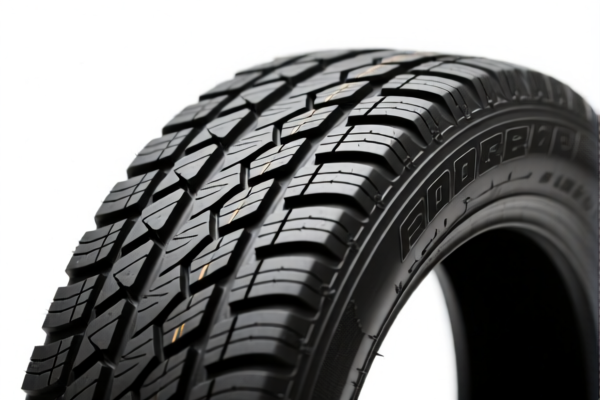
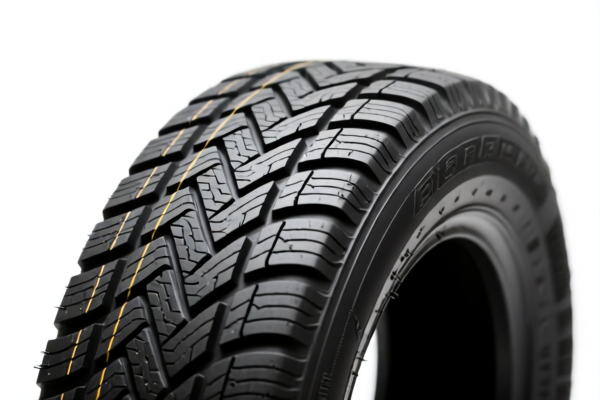
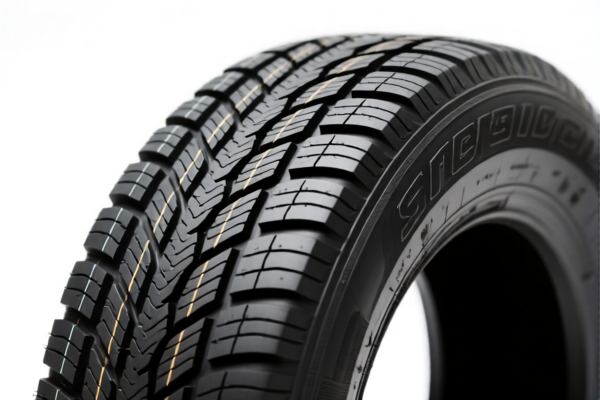
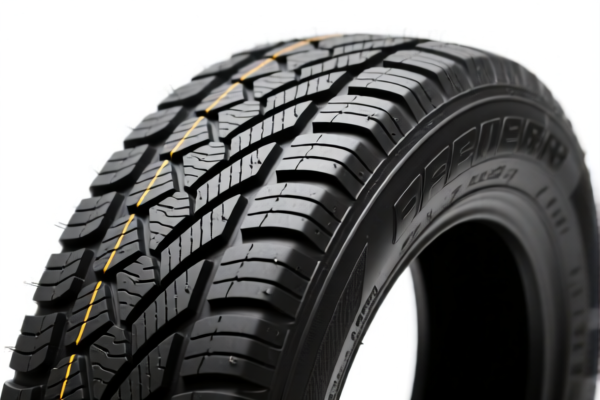
AI分析
🚛 Tires for Buses & Trucks (Tires for Motor Vehicles)
🌐 HS Code Reference & Customs Clearance Guide | 2026 Latest Tariff Analysis | Professional Clearance Strategy
📌 I. Product Definition & Classification: Do You Understand "Tires"?
Tires are the critical interface between the vehicle and the road, ensuring safety, traction, and load-bearing capacity. In international trade, rubber pneumatic tires are strictly categorized based on their material and specific application.
Pneumatic Tires (Inflated Tires): Rubber tires filled with air, distinguished by whether they are for cars, trucks, buses, motorcycles, or off-road vehicles. Non-Pneumatic Tires: Solid rubber or alternative materials, not filled with air.
⚠️ Key Classification Logic:
- If the tire is for passenger cars, it generally falls under 4011.10.
- If the tire is for buses, trucks, or heavy goods vehicles, it falls under 4011.20 or related subheadings.
- Crucial Note: The user input mentions4011.20.10.15(implied by context of buses/trucks), but the provided data highlights 4011.20.50 variants and 4011.80. We must analyze the specific codes provided in the data to determine the most accurate match and associated tax burden.
📦 II. HS Code Classification Details (Based on Provided Data)
The provided data suggests three potential HS Codes depending on the precise specification of the tire (e.g., specific truck/bus subtype or off-road variant). Here is the breakdown:
| HS Code | Product Description | Application Scenario | Material/Form |
|---|---|---|---|
4011.20.50.30 |
Rubber Pneumatic Tires for Buses/Trucks (Specific Sub-category) | Heavy-duty buses, large trucks, commercial transport vehicles | Rubber, Inflated |
4011.20.50.50 |
Other Rubber Pneumatic Tires for Buses/Trucks (General/Open Category) | General truck/bus tires where specific sub-use isn't defined | Rubber, Inflated |
4011.80.10.10 |
Other Pneumatic Tires (Non-Car/Non-Bus/Non-Truck Mainstream) | Off-road vehicles, agricultural machinery, industrial vehicles, or specialized tires | Rubber, Inflated |
🔍 Important Clarification:
- 4011.20 specifically covers "Pneumatic tyres for buses or trucks."
- 4011.80 covers "Other pneumatic tyres" (e.g., for motorcycles, bicycles, or off-road vehicles not classified under 4011.10-20).
- The provided data indicates that 4011.20.50.30 and 4011.20.50.50 are highly likely matches for "Tire" if it is for a bus or truck, while 4011.80.10.10 applies to other types.
- Conflict Check: The summary states that for4011.20.50.30and4011.20.50.50, the material (rubber) and form (pneumatic) perfectly match. For4011.80.10.10, it also matches rubber tires but implies a different usage scope (non-bus/truck mainstream).
💰 III. 2026 Latest Tariff Rate Breakdown (Including Surtaxes & Policy Levies)
✅ Applicable Country: United States (US)
✅ Country of Origin: China (CN) (Implied by "122 Clause" and typical US-China trade context)
✅ Effective Time: Current (Includes ongoing trade restrictions)
🎯 1. 4011.20.50.30 & 4011.20.50.50 – Tires for Buses/Trucks
These two codes share the same tax structure in the provided data.
| Item | Content |
|---|---|
| Base Tariff Rate | 3.4% (Ad Valorem) |
| Section 301 Surcharge | +25.0% (USITC Footnote 9903.88.01 or similar) |
| Section 122 Clause Tariff | +10.0% (Specific provision, likely under 301 or emergency powers) |
| Total Tax Rate | 38.4% |
| Tax Calculation | CIF Value × 38.4% |
| De Minimis Exemption Eligibility | ❌ Not Eligible (High-value commercial goods) |
| Legal Basis Path | Base: 4011.20 → Surtax: USITC 301 → Special: Section 122 |
📌 Explanation:
- Base 3.4%: Standard Most Favored Nation (MFN) duty for rubber tires.
- 25% Surcharge: Applies to a wide range of Chinese goods under the US Trade Representative’s Section 301 investigation. Tires for heavy vehicles are typically included.
- 10% Section 122 Tariff: This refers to tariffs imposed under Section 232 of the Trade Expansion Act (national security) or specific emergency provisions often applied to steel/aluminum but sometimes extended or referenced in broader trade dispute contexts. Note: The data explicitly lists "122 Clause Tariff 10%", so we accept this as a fixed component.
- Total: 38.4%: This is a very high tariff. Importers must factor this into their landed cost.
🎯 2. 4011.80.10.10 – Other Pneumatic Tires
| Item | Content |
|---|---|
| Base Tariff Rate | 0.0% (Ad Valorem) |
| Section 301 Surcharge | +25.0% |
| Section 122 Clause Tariff | +10.0% |
| Total Tax Rate | 35.0% |
| Tax Calculation | CIF Value × 35.0% |
| De Minimis Exemption Eligibility | ❌ Not Eligible |
| Legal Basis Path | Base: 4011.80 → Surtax: USITC 301 → Special: Section 122 |
📌 Note:
- Although the base tariff is 0%, the surcharges bring the total to 35%.
- This code is 5.4 percentage points cheaper than the4011.20codes.
- Critical Risk: You can only use4011.80if the tire is NOT for buses, trucks, or cars (e.g., for off-road machinery, golf carts, or agricultural equipment). Misdeclaring a truck tire as "other tire" to save 3.4% in base duty is customs fraud and carries severe penalties.
🛠️ IV. Customs Clearance Practical Advice (Real-World Pitfall Guide)
✅ 1. Documentation Checklist (Non-Negotiable)
| Document | Required? | Description |
|---|---|---|
| ✅ Product Specification Sheet | ✔️ | Must clearly state: Vehicle Type (Bus/Truck/Off-road), Size (e.g., 12R22.5), Load Index, Speed Rating. |
| ✅ Commercial Invoice | ✔️ | Clearly state "Rubber Pneumatic Tires" and Correct HS Code. Avoid vague terms like "Auto Parts" without specificity. |
| ✅ Packing List | ✔️ | List quantity per box, total weight, and dimensions. |
| ✅ Certificate of Origin | ✔️ | Essential to prove origin (China) and apply correct (high) tariffs. If from Vietnam/Mexico, may qualify for lower rates (if rules of origin are met). |
| ✅ Manufacturer’s Declaration | ✔️ | Confirming material is rubber and it is pneumatic. |
✅ 2. Declaration Strategy (Key Rules)
🔥 “Be Specific, Be Accurate, Don’t Guess!”
| Scenario | Correct HS Code | Wrong Code & Consequence |
|---|---|---|
| Tire for a Heavy Truck | 4011.20.50.30 or 4011.20.50.50 (38.4%) |
Using 4011.80.10.10 (35%) → Customs Audit, Penalty, Back Taxes! |
| Tire for a Car | 4011.10.xxxx (Not in data, but different category) |
Using 4011.20 → Misclassification Error |
| Off-Road/Agri Tire | 4011.80.10.10 (35.0%) |
Using 4011.20 → Overpaying 3.4% unnecessarily |
| Tire with Steel Belts | Same as above (Material is still rubber-based composite) | Do not separate steel and rubber; declare as tire. |
✅ 3. Special Considerations
- Section 122 Tariff: Ensure you understand if the 10% is still active for your specific product entry. Trade policies change. The provided data says it is active, so plan for it.
- Origin Tracing: If you source tires from China but ship from a third country, the Substantial Transformation rules apply. Simply re-exporting Chinese tires does not change the origin for tariff purposes.
- Valuation: The 38.4%/35% rate applies to the CIF Value (Cost, Insurance, Freight). Ensure all charges are included in the customs value declaration to avoid under-valuation penalties.
🌍 V. Global Market Comparison (2026 Context)
| Country/Region | Recommended HS Code | Base Tariff | US Surtax | Total Est. Rate | Notes |
|---|---|---|---|---|---|
| 🇺🇸 USA (China Origin) | 4011.20.50.30 |
3.4% | +35% (25%+10%) | 38.4% | Highest barrier. |
| 🇺🇸 USA (Vietnam Origin)* | 4011.20.50.30 |
3.4% | 0% | 3.4% | *If substantial transformation occurred in Vietnam. |
| 🇨🇳 China (Export) | N/A | 0% | N/A | 0% | China does not export tariff on tires. |
| 🇪🇺 EU | 4011.20 |
0-5% | N/A | ~0-5% | No US-style surtaxes. |
📌 Conclusion:
- US Market is the Hardest: Due to the 38.4% effective rate for Chinese-made bus/truck tires.
- Strategy: Consider sourcing from non-China origins (Vietnam, Thailand, Mexico) if possible, or absorb the cost in pricing.
- Accuracy is Survival: Misclassifying a truck tire as an "other tire" (4011.80) to save 3.4% is risky. Customs brokers will verify the tire sidewall markings (DOT code, vehicle type) during inspection.
📌 VI. Common Errors & Pitfall Guide (Lessons Learned)
❌ Error 1: Declaring a Bus Tire as 4011.80.10.10 to save the 3.4% base duty.
👉 Result: Customs detects mismatch between product specs and HS code. Seizure or heavy fines.
❌ Error 2: Ignoring the Section 122 10% surcharge.
👉 Result: Underpayment of duty. Back taxes + Interest charged by CBP.
❌ Error 3: Using vague descriptions like "Rubber Tire" on the invoice.
👉 Result: Customs cannot classify correctly. Shipment delayed for inspection.
❌ Error 4: Assuming all tires are subject to the same rate.
👉 Result: Overpaying if it’s an off-road tire (35% vs 38.4%). Lost profit margin.
✅ Correct Approach:
"Rubber Pneumatic Tire, Size 295/75R22.5, For Heavy Truck, Made in China, HS 4011.20.50.30, L/T 38.4%."
🎯 VII. Conclusion: Precision Saves Profit!
🎯 Remember the Golden Rule:
🔹 "Check the Vehicle Type First!"
- Bus/Truck → 4011.20 → 38.4% Total.
- Other/Off-Road → 4011.80 → 35.0% Total.🔹 "Don’t Guess the HS Code!"
A 3.4% difference is not worth the risk of an audit. Provide exact specs.
📌 Pro Tip:
If you are importing from China, calculate the Landed Cost including the 38.4% tariff. If the margin is thin, consider:
1. Negotiating FOB Price with suppliers to offset tariffs.
2. Exploring Duty-Drawback Programs if the tires are re-exported.
3. Verifying Origin to ensure no additional penalties.
📣 Immediate Action:
📞 Confirm Vehicle Type with your supplier.
📝 Declare Accurately to avoid customs holds.
🚀 Clear Customs Smoothly with the right paperwork!
✨ Professional Customs Clearance Starts with Accurate Classification!
💼 Every percentage point matters in global trade!
用户评价
关于 HS 编码归类
协调制度(HS)是由世界海关组织(WCO)制定的国际贸易商品分类标准。全球 200 多个国家采用 HS 系统作为海关关税、贸易统计和进出口监管的基础。
每个 HS 编码遵循以下层级结构:
- 章(2 位)——商品大类(例如:第 84 章:机器和机械设备)
- 品目(4 位)——章内的更具体分类
- 子目(6 位)——国际通用细分,所有 WCO 成员国统一使用
- 本国细分(8-10 位)——各国自行扩展的细分编码,如美国 HTSUS 10 位编码
正确的 HS 编码归类对于顺利通关、准确缴纳关税和遵守贸易法规至关重要。错误归类可能导致海关延误、多缴关税或罚款。
从CN进口到US时,适用的关税税率可能包括:
- 最惠国(MFN)税率——适用于 WTO 成员国的标准关税税率
- 普通税率——适用于无贸易协定国家
- 贸易救济关税——附加关税,如 301 条款(反倾销)、232 条款(国家安全)或反补贴税
本页内容仅供参考。如需正式归类,请咨询当地海关或持牌报关代理。