Tire (HS Code 4011201015)
CN → US| HS Code | Tariff Rate | Origin | Destination | Doc |
|---|---|---|---|---|
| 4011205030 | 38.4% | CN | US | Official Doc |
| 4011205050 | 38.4% | CN | US | Official Doc |
| 4011801010 | 35.0% | CN | US | Official Doc |
Product Images
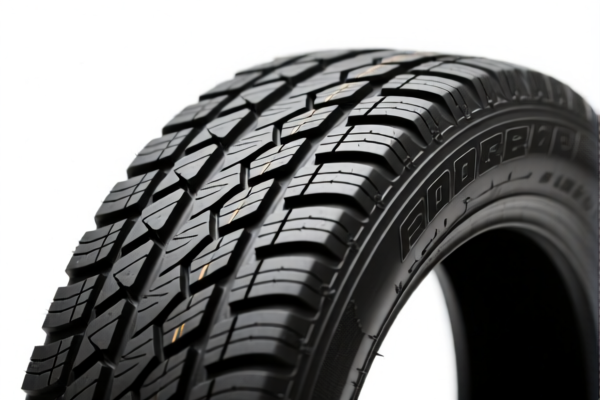
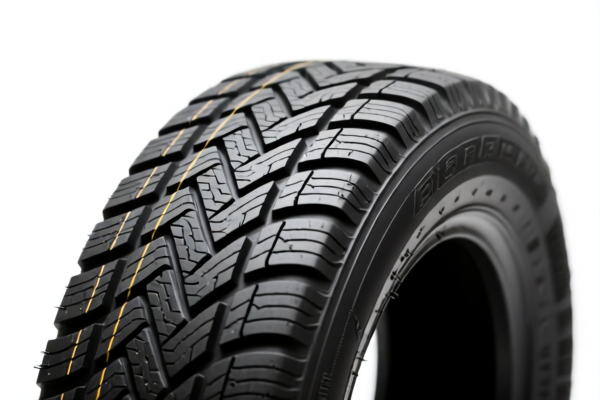
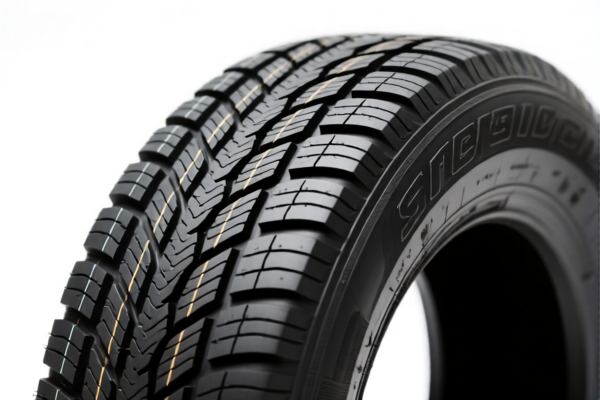
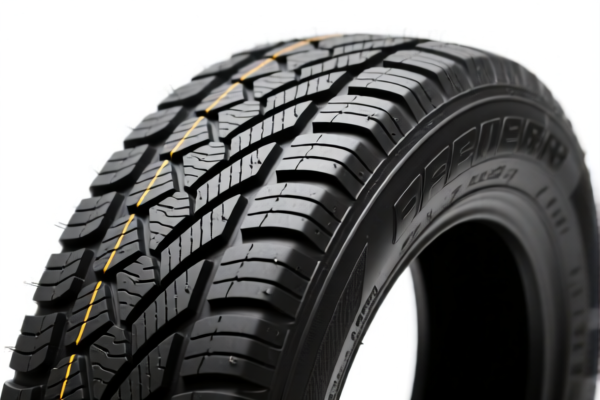
AI Analysis
🚛 Tires for Buses & Trucks (Tires for Motor Vehicles)
🌐 HS Code Reference & Customs Clearance Guide | 2026 Latest Tariff Analysis | Professional Clearance Strategy
📌 I. Product Definition & Classification: Do You Understand "Tires"?
Tires are the critical interface between the vehicle and the road, ensuring safety, traction, and load-bearing capacity. In international trade, rubber pneumatic tires are strictly categorized based on their material and specific application.
Pneumatic Tires (Inflated Tires): Rubber tires filled with air, distinguished by whether they are for cars, trucks, buses, motorcycles, or off-road vehicles. Non-Pneumatic Tires: Solid rubber or alternative materials, not filled with air.
⚠️ Key Classification Logic:
- If the tire is for passenger cars, it generally falls under 4011.10.
- If the tire is for buses, trucks, or heavy goods vehicles, it falls under 4011.20 or related subheadings.
- Crucial Note: The user input mentions4011.20.10.15(implied by context of buses/trucks), but the provided data highlights 4011.20.50 variants and 4011.80. We must analyze the specific codes provided in the data to determine the most accurate match and associated tax burden.
📦 II. HS Code Classification Details (Based on Provided Data)
The provided data suggests three potential HS Codes depending on the precise specification of the tire (e.g., specific truck/bus subtype or off-road variant). Here is the breakdown:
| HS Code | Product Description | Application Scenario | Material/Form |
|---|---|---|---|
4011.20.50.30 |
Rubber Pneumatic Tires for Buses/Trucks (Specific Sub-category) | Heavy-duty buses, large trucks, commercial transport vehicles | Rubber, Inflated |
4011.20.50.50 |
Other Rubber Pneumatic Tires for Buses/Trucks (General/Open Category) | General truck/bus tires where specific sub-use isn't defined | Rubber, Inflated |
4011.80.10.10 |
Other Pneumatic Tires (Non-Car/Non-Bus/Non-Truck Mainstream) | Off-road vehicles, agricultural machinery, industrial vehicles, or specialized tires | Rubber, Inflated |
🔍 Important Clarification:
- 4011.20 specifically covers "Pneumatic tyres for buses or trucks."
- 4011.80 covers "Other pneumatic tyres" (e.g., for motorcycles, bicycles, or off-road vehicles not classified under 4011.10-20).
- The provided data indicates that 4011.20.50.30 and 4011.20.50.50 are highly likely matches for "Tire" if it is for a bus or truck, while 4011.80.10.10 applies to other types.
- Conflict Check: The summary states that for4011.20.50.30and4011.20.50.50, the material (rubber) and form (pneumatic) perfectly match. For4011.80.10.10, it also matches rubber tires but implies a different usage scope (non-bus/truck mainstream).
💰 III. 2026 Latest Tariff Rate Breakdown (Including Surtaxes & Policy Levies)
✅ Applicable Country: United States (US)
✅ Country of Origin: China (CN) (Implied by "122 Clause" and typical US-China trade context)
✅ Effective Time: Current (Includes ongoing trade restrictions)
🎯 1. 4011.20.50.30 & 4011.20.50.50 – Tires for Buses/Trucks
These two codes share the same tax structure in the provided data.
| Item | Content |
|---|---|
| Base Tariff Rate | 3.4% (Ad Valorem) |
| Section 301 Surcharge | +25.0% (USITC Footnote 9903.88.01 or similar) |
| Section 122 Clause Tariff | +10.0% (Specific provision, likely under 301 or emergency powers) |
| Total Tax Rate | 38.4% |
| Tax Calculation | CIF Value × 38.4% |
| De Minimis Exemption Eligibility | ❌ Not Eligible (High-value commercial goods) |
| Legal Basis Path | Base: 4011.20 → Surtax: USITC 301 → Special: Section 122 |
📌 Explanation:
- Base 3.4%: Standard Most Favored Nation (MFN) duty for rubber tires.
- 25% Surcharge: Applies to a wide range of Chinese goods under the US Trade Representative’s Section 301 investigation. Tires for heavy vehicles are typically included.
- 10% Section 122 Tariff: This refers to tariffs imposed under Section 232 of the Trade Expansion Act (national security) or specific emergency provisions often applied to steel/aluminum but sometimes extended or referenced in broader trade dispute contexts. Note: The data explicitly lists "122 Clause Tariff 10%", so we accept this as a fixed component.
- Total: 38.4%: This is a very high tariff. Importers must factor this into their landed cost.
🎯 2. 4011.80.10.10 – Other Pneumatic Tires
| Item | Content |
|---|---|
| Base Tariff Rate | 0.0% (Ad Valorem) |
| Section 301 Surcharge | +25.0% |
| Section 122 Clause Tariff | +10.0% |
| Total Tax Rate | 35.0% |
| Tax Calculation | CIF Value × 35.0% |
| De Minimis Exemption Eligibility | ❌ Not Eligible |
| Legal Basis Path | Base: 4011.80 → Surtax: USITC 301 → Special: Section 122 |
📌 Note:
- Although the base tariff is 0%, the surcharges bring the total to 35%.
- This code is 5.4 percentage points cheaper than the4011.20codes.
- Critical Risk: You can only use4011.80if the tire is NOT for buses, trucks, or cars (e.g., for off-road machinery, golf carts, or agricultural equipment). Misdeclaring a truck tire as "other tire" to save 3.4% in base duty is customs fraud and carries severe penalties.
🛠️ IV. Customs Clearance Practical Advice (Real-World Pitfall Guide)
✅ 1. Documentation Checklist (Non-Negotiable)
| Document | Required? | Description |
|---|---|---|
| ✅ Product Specification Sheet | ✔️ | Must clearly state: Vehicle Type (Bus/Truck/Off-road), Size (e.g., 12R22.5), Load Index, Speed Rating. |
| ✅ Commercial Invoice | ✔️ | Clearly state "Rubber Pneumatic Tires" and Correct HS Code. Avoid vague terms like "Auto Parts" without specificity. |
| ✅ Packing List | ✔️ | List quantity per box, total weight, and dimensions. |
| ✅ Certificate of Origin | ✔️ | Essential to prove origin (China) and apply correct (high) tariffs. If from Vietnam/Mexico, may qualify for lower rates (if rules of origin are met). |
| ✅ Manufacturer’s Declaration | ✔️ | Confirming material is rubber and it is pneumatic. |
✅ 2. Declaration Strategy (Key Rules)
🔥 “Be Specific, Be Accurate, Don’t Guess!”
| Scenario | Correct HS Code | Wrong Code & Consequence |
|---|---|---|
| Tire for a Heavy Truck | 4011.20.50.30 or 4011.20.50.50 (38.4%) |
Using 4011.80.10.10 (35%) → Customs Audit, Penalty, Back Taxes! |
| Tire for a Car | 4011.10.xxxx (Not in data, but different category) |
Using 4011.20 → Misclassification Error |
| Off-Road/Agri Tire | 4011.80.10.10 (35.0%) |
Using 4011.20 → Overpaying 3.4% unnecessarily |
| Tire with Steel Belts | Same as above (Material is still rubber-based composite) | Do not separate steel and rubber; declare as tire. |
✅ 3. Special Considerations
- Section 122 Tariff: Ensure you understand if the 10% is still active for your specific product entry. Trade policies change. The provided data says it is active, so plan for it.
- Origin Tracing: If you source tires from China but ship from a third country, the Substantial Transformation rules apply. Simply re-exporting Chinese tires does not change the origin for tariff purposes.
- Valuation: The 38.4%/35% rate applies to the CIF Value (Cost, Insurance, Freight). Ensure all charges are included in the customs value declaration to avoid under-valuation penalties.
🌍 V. Global Market Comparison (2026 Context)
| Country/Region | Recommended HS Code | Base Tariff | US Surtax | Total Est. Rate | Notes |
|---|---|---|---|---|---|
| 🇺🇸 USA (China Origin) | 4011.20.50.30 |
3.4% | +35% (25%+10%) | 38.4% | Highest barrier. |
| 🇺🇸 USA (Vietnam Origin)* | 4011.20.50.30 |
3.4% | 0% | 3.4% | *If substantial transformation occurred in Vietnam. |
| 🇨🇳 China (Export) | N/A | 0% | N/A | 0% | China does not export tariff on tires. |
| 🇪🇺 EU | 4011.20 |
0-5% | N/A | ~0-5% | No US-style surtaxes. |
📌 Conclusion:
- US Market is the Hardest: Due to the 38.4% effective rate for Chinese-made bus/truck tires.
- Strategy: Consider sourcing from non-China origins (Vietnam, Thailand, Mexico) if possible, or absorb the cost in pricing.
- Accuracy is Survival: Misclassifying a truck tire as an "other tire" (4011.80) to save 3.4% is risky. Customs brokers will verify the tire sidewall markings (DOT code, vehicle type) during inspection.
📌 VI. Common Errors & Pitfall Guide (Lessons Learned)
❌ Error 1: Declaring a Bus Tire as 4011.80.10.10 to save the 3.4% base duty.
👉 Result: Customs detects mismatch between product specs and HS code. Seizure or heavy fines.
❌ Error 2: Ignoring the Section 122 10% surcharge.
👉 Result: Underpayment of duty. Back taxes + Interest charged by CBP.
❌ Error 3: Using vague descriptions like "Rubber Tire" on the invoice.
👉 Result: Customs cannot classify correctly. Shipment delayed for inspection.
❌ Error 4: Assuming all tires are subject to the same rate.
👉 Result: Overpaying if it’s an off-road tire (35% vs 38.4%). Lost profit margin.
✅ Correct Approach:
"Rubber Pneumatic Tire, Size 295/75R22.5, For Heavy Truck, Made in China, HS 4011.20.50.30, L/T 38.4%."
🎯 VII. Conclusion: Precision Saves Profit!
🎯 Remember the Golden Rule:
🔹 "Check the Vehicle Type First!"
- Bus/Truck → 4011.20 → 38.4% Total.
- Other/Off-Road → 4011.80 → 35.0% Total.🔹 "Don’t Guess the HS Code!"
A 3.4% difference is not worth the risk of an audit. Provide exact specs.
📌 Pro Tip:
If you are importing from China, calculate the Landed Cost including the 38.4% tariff. If the margin is thin, consider:
1. Negotiating FOB Price with suppliers to offset tariffs.
2. Exploring Duty-Drawback Programs if the tires are re-exported.
3. Verifying Origin to ensure no additional penalties.
📣 Immediate Action:
📞 Confirm Vehicle Type with your supplier.
📝 Declare Accurately to avoid customs holds.
🚀 Clear Customs Smoothly with the right paperwork!
✨ Professional Customs Clearance Starts with Accurate Classification!
💼 Every percentage point matters in global trade!
Customer Reviews
About HS Code Classification
The Harmonized System (HS) is an internationally standardized nomenclature developed by the World Customs Organization (WCO) to classify traded products. Over 200 countries use the HS system as the basis for customs tariffs, trade statistics, and import/export regulations.
Each HS code follows a hierarchical structure:
- Chapter (2 digits) — Broad category of goods (e.g., Chapter 84: Machinery and Mechanical Appliances)
- Heading (4 digits) — More specific grouping within the chapter
- Subheading (6 digits) — Internationally standardized breakdown, used by all WCO member countries
- National subdivisions (8-10 digits) — Country-specific extensions for further classification, such as US HTSUS 10-digit codes
Correct HS code classification is essential for smooth customs clearance, accurate duty payment, and compliance with trade regulations. Misclassification can lead to customs delays, overpayment of duties, or penalties.
When importing from CN to US, the applicable tariff rates may include:
- Most-Favored-Nation (MFN) rate — The standard duty rate applied to WTO members
- General rate — Applied to countries without trade agreements
- Trade remedy duties — Additional tariffs such as Section 301 (anti-dumping), Section 232 (national security), or countervailing duties
The information provided on this page is for reference purposes only. For official classification, please consult with your local customs authority or a licensed customs broker.