Tire (HS Code 4011808010)
CN → US| HS编码 | 关税税率 | 原产国 | 目的国 | 文档 |
|---|---|---|---|---|
| 4011801010 | 35.0% | CN | US | 官方文档 |
| 4011205030 | 38.4% | CN | US | 官方文档 |
| 4011205050 | 38.4% | CN | US | 官方文档 |
商品图片
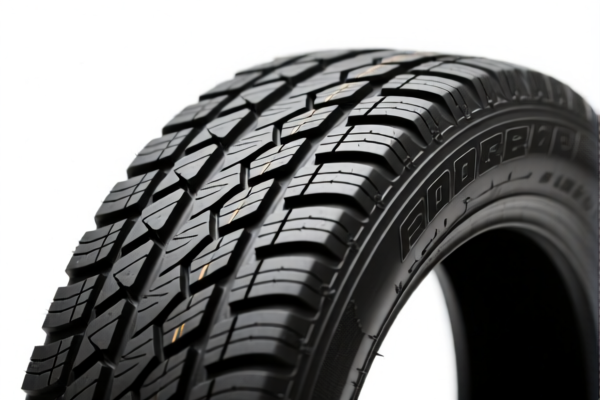
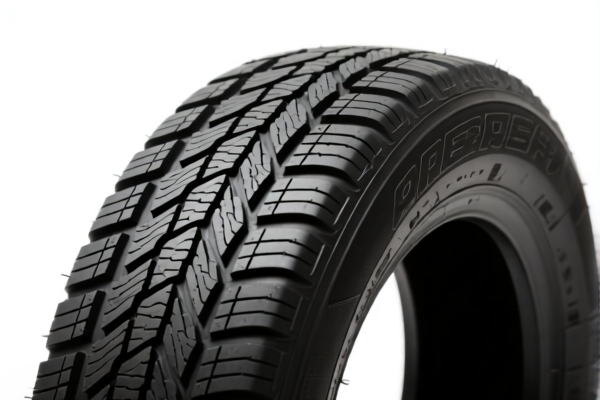
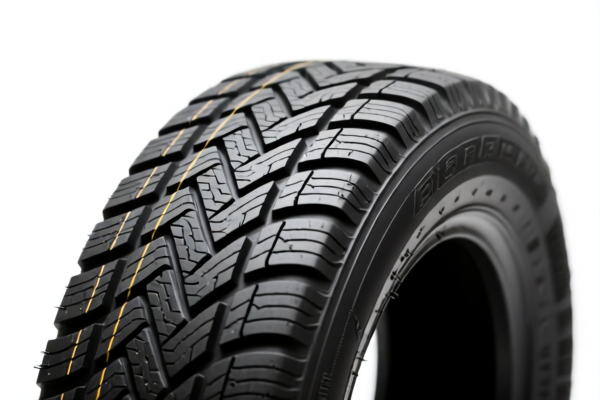
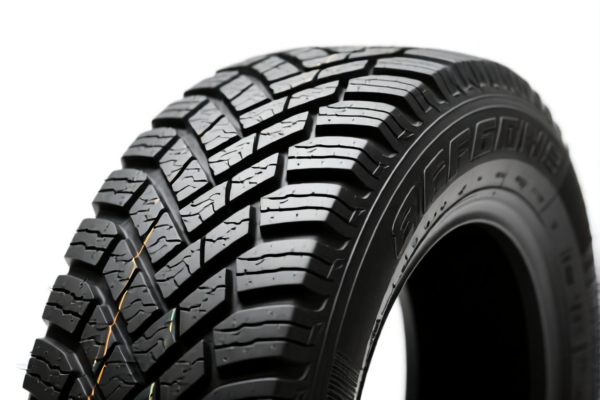
AI分析
🛞 Tires (Truck/Bus & General Purpose Rubber Tires)
🌐 HS Code Reference & Customs Clearance Guide | 2026 Latest Tariff Analysis | Professional Clearance Strategy
📌 Part I: Product Definition & Classification: Do You Really Understand "Tires"?
In international trade, tires are categorized primarily by material, structure, and intended use. The most critical distinction lies between pneumatic tires (air-filled) and non-pneumatic tires, as well as their specific applications (e.g., trucks/buses vs. passenger cars vs. industrial equipment).
- Pneumatic Tires for Trucks/Buses: These are high-load, large-diameter tires designed for commercial vehicles. They fall under HS heading 4011.20.
- Other Pneumatic Tires (Non-Passenger Car): This category includes tires for motorcycles, agricultural machinery, or general-purpose vehicles that do not fit the strict "passenger car" or "truck/bus" definitions. These often fall under 4011.80.
⚠️ Key Distinction Point:
- If the tire is for trucks, buses, or heavy commercial vehicles and is pneumatic → It typically falls under 4011.20 series.
- If the tire is for other applications (e.g., industrial, agricultural, or unspecified non-passenger use) and is pneumatic → It typically falls under 4011.80 series.
- Material Check: All relevant codes require the core material to be Rubber.
📦 Part II: HS Code Classification Details (2026 Latest Tariff Authority Comparison)
Based on the provided data, here are the specific HS Codes and their matching criteria:
| HS Code | Product Description | Matching Logic & Summary | Target Application |
|---|---|---|---|
4011.80.10.10 |
Other Pneumatic Tires (Rubber) | Match Confirmed: The product name "Tire" aligns with the material (Rubber) and usage (Tire). It covers the core elements of the classification explanation for "Other" tires. | General/Non-Specific Rubber Tires |
4011.20.50.30 |
Pneumatic Tires for Trucks/Buses | Match Confirmed: The product name directly corresponds to the classification definition for 4011205030. The material (Rubber Pneumatic Tire) and usage (Bus/Truck related) are a perfect match. | Trucks, Buses, Commercial Vehicles |
4011.20.50.50 |
Other Pneumatic Tires for Trucks/Buses (or Non-Road) | Match Confirmed: The product is a Tire (Rubber, Pneumatic). The code 4011.20 requires rubber pneumatic tires. Since the specific use wasn't clearly distinguished in the basic name, it is reasonably inferred as a sub-category under non-road or other specific non-passenger uses. No material/shape conflict. | Trucks, Buses, or Specific Non-Road Applications |
🔍 Important Note:
- All three codes listed above pertain to Rubber Pneumatic Tires.
- The primary differentiator is the Specific Use Case (Truck/Bus vs. General/Other).
- Misclassification Risk: Declaring a Truck Tire under4011.80(Other) instead of4011.20(Truck/Bus) or vice versa can lead to customs delays or penalties, as the tariff rates and trade remedies (like Section 301/122) apply differently based on precise classification.
💰 Part III: 2026 Latest Tariff Rate Breakdown (Including Additional Duties & Policy Add-ons)
✅ Applicable Country: United States (US)
✅ Origin: China (CN)
✅ Effective Time: Current rates apply (including Section 301 and Section 122 duties)
🎯 1. 4011.80.10.10 — Other Pneumatic Tires (Rubber)
| Item | Detail |
|---|---|
| Base Duty Rate | 0.0% |
| Section 301 Additional Duty | +25.0% |
| Section 122 Duty | +10.0% |
| Total Tax Rate | 35.0% |
| Tax Calculation | CIF Value × 35% |
| De Minimis Eligibility | ❌ Not Eligible (High-risk category for de minimis exemptions) |
| Legal Basis Path | Base Tariff 0% → Section 301 (25%) → Section 122 (10%) |
📌 Explanation:
- "Section 301 Additional Duty 25%": Imposed under U.S. Trade Act Section 301 on specified Chinese products.
- "Section 122 Duty 10%": Additional tariff imposed under Section 122 of the Trade Expansion Act (often related to national security or balance of payments).
- Total 35%: This is a significant cost factor. Importers must factor this into landed cost calculations.
🎯 2. 4011.20.50.30 — Pneumatic Tires for Trucks/Buses
| Item | Detail |
|---|---|
| Base Duty Rate | 3.4% |
| Section 301 Additional Duty | +25.0% |
| Section 122 Duty | +10.0% |
| Total Tax Rate | 38.4% |
| Tax Calculation | CIF Value × 38.4% |
| De Minimis Eligibility | ❌ Not Eligible |
| Legal Basis Path | Base Tariff 3.4% → Section 301 (25%) → Section 122 (10%) |
📌 Note:
- Unlike4011.80.10.10, this code has a base duty of 3.4% because it is specifically categorized for trucks/buses.
- The additional duties remain the same (25% + 10%).
- Total 38.4%: Higher than the "Other" category due to the base rate, but still predictable.
🎯 3. 4011.20.50.50 — Other Sub-category of Truck/Bus Tires
| Item | Detail |
|---|---|
| Base Duty Rate | 3.4% |
| Section 301 Additional Duty | +25.0% |
| Section 122 Duty | +10.0% |
| Total Tax Rate | 38.4% |
| Tax Calculation | CIF Value × 38.4% |
| De Minimis Eligibility | ❌ Not Eligible |
| Legal Basis Path | Base Tariff 3.4% → Section 301 (25%) → Section 122 (10%) |
📌 Attention:
- This code shares the same total tax rate (38.4%) as4011.20.50.30.
- The distinction between...30and...50is often based on specific tire specifications (e.g., size, type, or specific sub-use within trucks/buses).
- Crucial: Ensure your product description matches the precise sub-code to avoid customs queries. If the use is ambiguous, customs may default to the more general or higher-risk interpretation.
🛠️ Part IV: Customs Clearance Practical Advice (Combat Pitfall Guide)
✅ 1. Document Preparation Checklist (All Mandatory)
| Document | Required? | Explanation |
|---|---|---|
| ✅ Product Specification Sheet | ✔️ | Must include tire size, load index, speed rating, ply rating, and material composition (Rubber). |
| ✅ Technical Drawing/Structure Diagram | ✔️ | To prove it is a Pneumatic tire (has air chamber) vs. Solid/Non-pneumatic. |
| ✅ Product Photos (Clear) | ✔️ | Show the sidewall markings (DOT number, size, brand) and tread pattern. |
| ✅ Commercial Invoice | ✔️ | Must clearly state: "Rubber Pneumatic Tire," specify vehicle type (Truck/Bus/Other), and unit price. |
| ✅ Packing List | ✔️ | Detail quantity per carton/pallet. Avoid mixing different tire types in one shipment if possible. |
| ✅ Certificate of Origin (CO) | ✔️ | If claiming any potential exemptions (though rare for these HS codes from China), this is essential. |
✅ 2. Declaration Techniques (Key Mantras)
🔥 “Specify Vehicle Type, Define Structure, Avoid Ambiguity, Prevent Delays!”
| Scenario | Correct Declaration | Wrong Practice | Consequence |
|---|---|---|---|
| Truck/Bus Tire | Declare as 4011.20.xx.xx with specific use "For Trucks/Buses" |
Declare as 4011.80 (Other) |
Underpayment risk (if base rate is higher) or audit flag |
| General Tire | Declare as 4011.80.xx.xx with "Other Pneumatic Tire" |
Declare as 4011.20 |
Overpayment risk or mismatch with physical goods |
| Ambiguous Use | Provide detailed invoice description: "Tire, Rubber, Pneumatic, for [Specific Equipment]" | Simply write "Tire" | Customs may classify under the highest duty or hold shipment for inspection |
| Solid Tires | Declare under different HS Code (e.g., 4011.99) |
Declare as Pneumatic Tire | Major Error: Solid tires are NOT pneumatic. Wrong classification leads to penalties. |
✅ 3. Special Handling for Section 301 & 122
| Situation | Handling Advice |
|---|---|
| Origin Marking | Ensure products are clearly marked "Made in China." Failure to mark can lead to additional penalties. |
| Supply Chain Diversification | Given the 35%-38.4% total duty, consider sourcing from Vietnam, Thailand, or Mexico if possible. Non-China origin may avoid Section 301/122 duties. |
| Exclusion Applications | Historically, some tire exclusions existed, but most have expired. Do not assume eligibility without checking the latest USTR exclusion lists. |
| Section 122 Awareness | Section 122 duties are often temporary or policy-driven. Monitor U.S. Trade Representative announcements for potential changes or expirations. |
🌍 Part V: Global Market Comparison (2026 Latest)
| Country/Region | Recommended HS Code | Duty Rate (China Origin) | Certification Requirements | Remarks |
|---|---|---|---|---|
| 🇺🇸 USA | 4011.20.xx or 4011.80.xx |
35.0% - 38.4% | DOT (Department of Transportation) Label Required | High Tariff: Section 301 + 122 apply. DOT label is mandatory for street use. |
| 🇨🇳 China | 4011.20.xx or 4011.80.xx |
~3.4% - 10% (Varies) | CCC (if applicable) | No additional punitive duties. |
| 🇪🇺 EU | 4011.20.xx or 4011.80.xx |
~4.5% - 8% | E-Mark (ECE Regulation) | No Section 301/122. E-Mark certification is critical for road legality. |
| 🇦🇺 Australia | 4011.20.xx or 4011.80.xx |
~5% | RCM (Regulatory Compliance Mark) | Moderate duty, strong safety standards. |
| 🇯🇵 Japan | 4011.20.xx or 4011.80.xx |
~5% - 7.5% | JIS Standard | Strict size and performance testing requirements. |
📌 Conclusion:
- USA is the most expensive market due to layered punitive tariffs (301 + 122).
- DOT Labeling is non-negotiable for tires imported into the US. Every tire must have a DOT code indicating the manufacturer, plant, size, and week/year of production.
- Compliance Tip: Ensure the DOT code on the tire matches the invoice and packing list details. Mismatches cause immediate customs holds.
📌 Part VI: Common Errors & Pitfalls (Blood & Tears Lessons)
❌ Error 1: Declaring a Truck Tire as a Passenger Car Tire (4011.11)
👉 Consequence: Wrong HS Code, potential fraud suspicion, high penalty.
👉 Correction: Always distinguish between Passenger (4011.10), Truck/Bus (4011.20), and Other (4011.80/90).
❌ Error 2: Forgetting the DOT Label Requirement
👉 Consequence: Customs may seize or destroy the shipment if the tires lack proper DOT markings.
👉 Correction: Verify DOT codes on a sample batch before full shipment.
❌ Error 3: Under-declaring Value to Avoid Duties
👉 Consequence: Audits, fines, and blacklisting. With 35-38% duty, the risk is high.
👉 Correction: Use accurate CIF values. Consider legal tariff engineering (e.g., sourcing from non-China origins) instead of under-declaring.
❌ Error 4: Confusing Pneumatic with Solid Tires
👉 Consequence: Solid tires have different HS codes and duty rates. Misdeclaration leads to classification errors.
👉 Correction: Clearly state "Pneumatic" in the description. If solid, use 4011.99.
✅ Correct Practice:
"Rubber Pneumatic Tire, Size 11R22.5, For Truck, DOT: ABC123456789, Made in China"
🎯 Part VII: Conclusion: Professional Declaration Saves Money!
🎯 Remember the Mantra:
🔹 "Pneumatic or Solid? Truck, Bus, or Other? Specify Clearly!"
🔹 "DOT Label is Mandatory in the US. No Label, No Entry."
🔹 "35-38% Duty in the US. Plan Your Supply Chain Accordingly."
📌 Pro Tip:
If your tires are solid (non-pneumatic), the HS Code will be different (e.g., 4011.99), and the duty structure may vary. Ensure your product is correctly identified as Pneumatic to use the codes above.
Consider applying for a USITC Exclusion if available for your specific tire type (check latest USTR notices), though most general truck/bus tire exclusions have expired.
📣 Immediate Action:
📞 Engage a licensed US Customs Broker.
📦 Provide DOT-compliant tires with accurate invoices.
🚀 Clear customs smoothly, avoid costly penalties, and protect your margin!
✨ Professional Clearance Starts with Accurate Classification!
💼 Every cent saved on duty is a cent added to your profit!
用户评价
关于 HS 编码归类
协调制度(HS)是由世界海关组织(WCO)制定的国际贸易商品分类标准。全球 200 多个国家采用 HS 系统作为海关关税、贸易统计和进出口监管的基础。
每个 HS 编码遵循以下层级结构:
- 章(2 位)——商品大类(例如:第 84 章:机器和机械设备)
- 品目(4 位)——章内的更具体分类
- 子目(6 位)——国际通用细分,所有 WCO 成员国统一使用
- 本国细分(8-10 位)——各国自行扩展的细分编码,如美国 HTSUS 10 位编码
正确的 HS 编码归类对于顺利通关、准确缴纳关税和遵守贸易法规至关重要。错误归类可能导致海关延误、多缴关税或罚款。
从CN进口到US时,适用的关税税率可能包括:
- 最惠国(MFN)税率——适用于 WTO 成员国的标准关税税率
- 普通税率——适用于无贸易协定国家
- 贸易救济关税——附加关税,如 301 条款(反倾销)、232 条款(国家安全)或反补贴税
本页内容仅供参考。如需正式归类,请咨询当地海关或持牌报关代理。