Wide Film Roll (Non perforated)
CN → US| HS编码 | 关税税率 | 原产国 | 目的国 | 文档 |
|---|---|---|---|---|
| 3703206000 | 38.1% | CN | US | 官方文档 |
| 3702440160 | 38.7% | CN | US | 官方文档 |
| 3702420100 | 38.7% | CN | US | 官方文档 |
| 3701300000 | 35.0% | CN | US | 官方文档 |
| 3701996060 | 35.0% | CN | US | 官方文档 |
商品图片
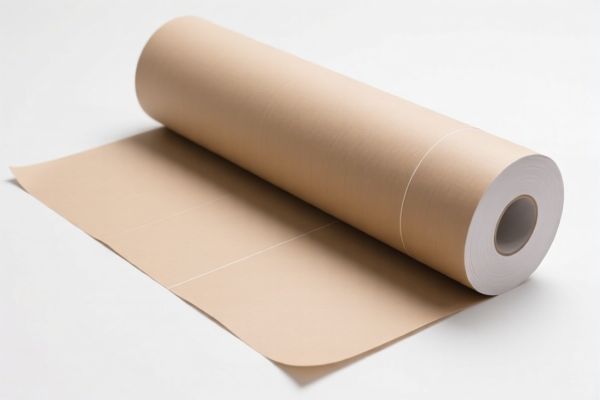
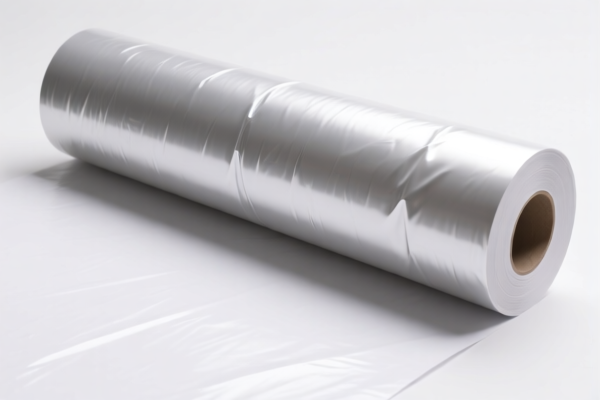
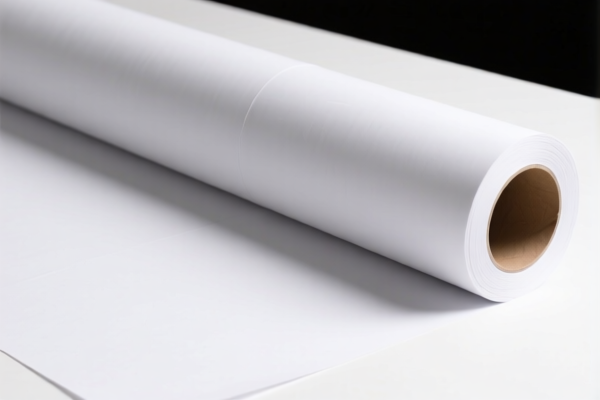
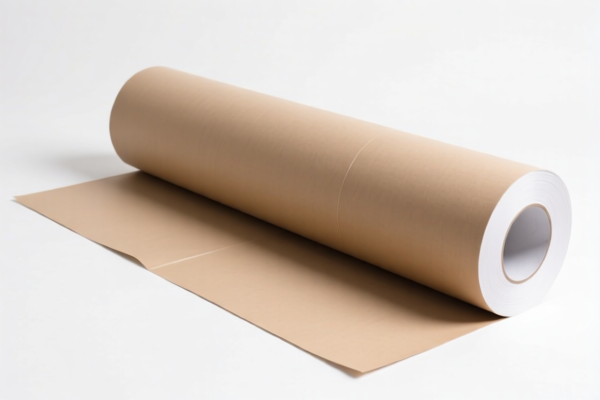
AI分析
🎞️ Wide Film Roll (Non-perforated)
🌐 HS Code Reference & Customs Clearance Guide | 2026 Latest Tariff Analysis | Professional Clearance Strategy
📌 I. Product Definition & Classification: What Exactly is "Wide Film Roll"?
"Wide Film Roll (Non-perforated)" refers to unexposed, light-sensitive photographic or printing materials on a roll substrate. The key characteristics are: 1. Width: Exceeds standard sizes (typically > 610mm or > 255mm depending on the specific HS heading). 2. State: Unexposed (raw material for printing, imaging, or further processing). 3. Surface: Non-perforated (no holes along the edges, distinguishing it from film used in specific mechanical cameras or scanners that require sprockets). 4. Substrate: Typically plastic base (cellulose acetate/triacetate/polyester), not paper or textile-based.
⚠️ Key Distinction:
- If it is unexposed, wide-format, and non-paper-based → It falls under Chapter 37 (Photographic Film).
- If it were exposed or printed, it might fall under Chapter 49 (Printed Matter) or Chapter 37 as "Processed Film," but the input data specifies "Unexposed" (未曝光).
- If it were on paper, it would fall under Chapter 49, but the data specifies Non-paper/Non-textile.
📦 II. HS Code Classification Details (2026 Latest Tariff Authority Mapping)
Based on the provided <DATA>, the product is classified into five specific HS Codes, all falling under Chapter 37 (Photographic or Cinematographic Goods).
| HS Code | Product Summary (Translated) | Key Attributes | Tax Detail Breakdown |
|---|---|---|---|
3703.20.60.00 |
Wide-format unprocessed rolls, material: light-sensitive film, unexposed state | General unexposed wide film | Total Tax: 38.1% • Base Tariff: 3.1% • Additional Tariff: 25.0% • Section 122 Tariff: 10% |
3702.44.01.60 |
Roll-unexposed wide-format film, non-paper/non-textile sensitive material, no perforations | Non-perforated, plastic base | Total Tax: 38.7% • Base Tariff: 3.7% • Additional Tariff: 25.0% • Section 122 Tariff: 10% |
3702.42.01.00 |
Sensitized rolls with width > 610mm, unprocessed, possibly non-color use | Ultra-wide format (>610mm) | Total Tax: 38.7% • Base Tariff: 3.7% • Additional Tariff: 25.0% • Section 122 Tariff: 10% |
3701.30.00.00 |
Sensitized film rolls, unexposed, width > 255mm wide format | Medium-wide format (>255mm) | Total Tax: 35.0% • Base Tariff: 0.0% • Additional Tariff: 25.0% • Section 122 Tariff: 10% |
3701.99.60.60 |
Unexposed wide-format printing rolls (Films), non-paper/non-textile sensitive material | Printing plates/films (non-paper) | Total Tax: 35.0% • Base Tariff: 0.0% • Additional Tariff: 25.0% • Section 122 Tariff: 10% |
🔍 Critical Note on Classification:
- Why these codes? All codes belong to Chapter 37 because the material is sensitized (light-sensitive) and unexposed.
- Width Matters:
-3701series generally covers X-ray films and wide-format printing films (>255mm).
-3702series covers other photographic cinematographic films.
-3703covers photographic plates and films for offset printing or other photographic uses.
- Perforation: The "Non-perforated" feature specifically aligns with3702.44.01.60(which explicitly mentions "no perforations" in the summary) or general unperforated rolls in3702.42.01.00.
💰 III. 2026 Latest Tariff Rate Breakdown (Detailed Tax Clauses)
✅ Applicable Country: United States (US)
✅ Origin: China (CN) (Implied by "Section 122" and "Additional Tariffs" which are typical US-China trade measures)
✅ Effective Time: 2025/2026 Context
🎯 1. The "38.1% - 38.7%" Tier (Codes: 3703.20.60.00, 3702.44.01.60, 3702.42.01.00)
| Item | Detail |
|---|---|
| Base Tariff Rate | 3.1% - 3.7% (Ad Valorem) |
| USITC Additional Tariff | +25.0% (Section 301 Duties) |
| Section 122 Tariff | +10.0% (Specific to certain Chinese imports under US Trade Law) |
| Total Effective Tax Rate | 38.1% - 38.7% |
| Tax Calculation | CIF Value × Total Rate |
| De Minimis Eligibility | ❌ NOT Eligible (High tariff goods are typically excluded from $800 de minimis exemption) |
| Legal Basis Path | HTSUS 3703/3702 → USITC Footnote → Section 301 (25%) → Section 122 (10%) |
📌 Interpretation:
- These codes attract the highest tax burden due to a non-zero base rate combined with both Section 301 and Section 122 penalties.
- Section 122 is a specific trade remedy provision often applied to goods from countries with currency manipulation concerns or specific trade deficits.
🎯 2. The "35.0%" Tier (Codes: 3701.30.00.00, 3701.99.60.60)
| Item | Detail |
|---|---|
| Base Tariff Rate | 0.0% (Free for many X-ray/Technical films) |
| USITC Additional Tariff | +25.0% (Section 301 Duties) |
| Section 122 Tariff | +10.0% |
| Total Effective Tax Rate | 35.0% |
| Tax Calculation | CIF Value × 35% |
| De Minimis Eligibility | ❌ NOT Eligible |
| Legal Basis Path | HTSUS 3701 → Section 301 (25%) → Section 122 (10%) |
📌 Interpretation:
- These codes have a 0% base rate because3701often covers X-ray films or specific technical films that are duty-free under normal trade.
- However, the 35% total rate still makes it expensive due to the 25% + 10% additions.
- Distinction: If your film is for X-ray or wide-format printing (>255mm), it may qualify for this lower tier compared to standard photographic rolls (3702/3703).
🛠️ IV. Customs Clearance Practical Advice (Pitfall Avoidance Guide)
✅ 1. Required Documentation Checklist (Mandatory)
| Document | Must Provide | Explanation |
|---|---|---|
| ✅ Product Specification Sheet | ✔️ | Must state: Unexposed, Non-perforated, Width (mm), Base Material (Plastic/Paper). |
| ✅ Photographic Properties Data | ✔️ | Light sensitivity, emulsion type. To prove it is "Sensitive Material" (Chapter 37). |
| ✅ Commercial Invoice | ✔️ | Clearly describe as: "Unexposed Wide-Format Sensitized Film Rolls, Non-Perforated, Plastic Base". Avoid vague terms like "Plastic Roll". |
| ✅ Packing List | ✔️ | Show gross/net weight and dimensions to verify "Wide Format" classification. |
| ✅ Origin Certificate | ✔️ | Required to confirm CN origin and assess Section 122/301 liability. |
| ✅ HS Code Pre-Ruling Request | ✔️ | Highly recommended due to complex tax breakdown. |
✅ 2. Declaration Strategy (Key Mnemonics)
🔥 "Width Defines Code, Unexposed Defines Chapter, Non-Paper Avoids 49!"
| Scenario | Correct Declaration | Consequence of Error |
|---|---|---|
| Width > 610mm, Non-perforated | 3702.42.01.00 or 3702.44.01.60 |
If declared as narrow film → Potential misclassification penalty. |
| X-ray or Printing Film (>255mm) | 3701.30.00.00 / 3701.99.60.60 |
Lower base rate (0%) but still 35% total. |
| General Photo Film (Unexposed) | 3703.20.60.00 |
Higher base rate (3.1%) → 38.1% total. |
| Paper-based Film | NOT Chapter 37 → Chapter 49 | If declared as Ch 37 but is paper → Rejection & Seizure. |
| Exposed/Printed Film | Chapter 49 or 37 (processed) | If declared as "Unexposed" but is exposed → Fraudulent declaration. |
⚠️ Critical Warning:
- Do NOT use "Paper": The data explicitly states "Non-paper/Non-textile". If your product is on paper base, these HS codes are WRONG.
- Perforation Status: If the film HAS perforations,3702.44.01.60(which specifies "no perforations") may be incorrect. Check3702.44.00.00general subheadings or other perforated-specific codes.
- Width Measurement: Ensure the width measurement is taken without perforated edges if applicable. For3702.42.01.00, >610mm is a hard cutoff.
✅ 3. Special Case Handling
| Scenario | Handling Advice |
|---|---|
| Sample Shipments | Even small samples are subject to full tax if classified under these high-tariff codes. No de minimis exemption. |
| Mixed Shipments | If mixing "Exposable" and "Unexposed", declare separately. Exposed films may have different tax treatments. |
| OEM/White Label | Provide manufacturer declaration to prove "Unexposed" status. Customs may require lab tests. |
| Destination Port | Some ports may request X-ray images of the rolls to verify "Unexposed" status and content. |
🌍 V. Global Market Comparison (2026 Latest)
| Country/Region | Recommended HS Code | Estimated Tax | Certification | Note |
|---|---|---|---|---|
| 🇺🇸 USA | 3701.30.00.00 / 3702.44.01.60 |
35% - 38.7% | None specific | High tariffs due to Section 301 & 122. |
| 🇨🇳 China | 3701 / 3702 |
0% - 5% | None | Low import duty for raw materials. |
| 🇪🇺 EU | 3701 / 3702 |
0% - 4.5% | REACH (if chemicals involved) | No Section 122 equivalent. |
| 🇦🇺 Australia | 3701 / 3702 |
5% | TGA (if medical X-ray) | Lower overall burden. |
📌 Conclusion:
- USA is the most expensive market for this product due to the叠加 (stacking) of Base Tariff + Section 301 (25%) + Section 122 (10%).
- Strategy: Consider supply chain diversification (e.g., manufacturing in Vietnam/Mexico) to avoid Section 122/301 if targeting the US market.
📌 VI. Common Mistakes & Pitfalls (Lessons Learned)
❌ Mistake 1: Declaring as "Plastic Rolls" without mentioning "Light-Sensitive/Unexposed"
👉 Consequence: Misclassification (Ch 39) → Penalties for undeclared sensitive materials.
❌ Mistake 2: Assuming "Non-Perforated" means it's not photographic film
👉 Consequence: Missed classification under 3702.44.01.60 → Incorrect tax calculation.
❌ Mistake 3: Ignoring the Base Tariff Difference
👉 Consequence: Thinking all Ch 37 films are 0% tax. False! 3703 has a 3.1% base, while 3701 has 0%. Always check the first 4 digits.
❌ Mistake 4: Failing to declare Section 122 liability
👉 Consequence: Underpayment of duty → Customs audit & seizure.
✅ Correct Declaration Example:
"Unexposed Wide-Format Sensitized Photographic Film Rolls, Non-Perforated, Polyester Base, Width: 914mm, HS Code: 3702.44.01.60, Subject to Section 301 & 122 Duties."
🎯 VII. Conclusion: Professional Clearance for Sensitive Materials
🎯 Remember the Rules:
🔹 "Width is King: >610mm vs >255mm dictates the Subheading."
🔹 "Unexposed + Sensitive = Chapter 37."
🔹 "China Origin + US Destination = 35-38% Tax Burden."
🔹 "No Paper, No Perforations = Specific Subcodes for Precision."
📌 Pro Tip:
- If you are importing into the US, apply for a Section 301 Exclusion if available for your specific HTS code (though Section 122 often cannot be excluded).
- For Medical X-ray Films, 3701.30.00.00 is your friend (0% base). For Printing/Photographic, 3702/3703 is the path (3.1-3.7% base).
📣 Immediate Action:
📞 Consult a Customs Broker to verify the exact width and base material.
🚀 Pre-classify goods to avoid port delays.
💼 Calculate Landed Cost including 35-38% tax before quoting customers!
✨ Precise Classification Saves Money!
💼 Every Percent Counts in Tariff Strategy!
用户评价
关于 HS 编码归类
协调制度(HS)是由世界海关组织(WCO)制定的国际贸易商品分类标准。全球 200 多个国家采用 HS 系统作为海关关税、贸易统计和进出口监管的基础。
每个 HS 编码遵循以下层级结构:
- 章(2 位)——商品大类(例如:第 84 章:机器和机械设备)
- 品目(4 位)——章内的更具体分类
- 子目(6 位)——国际通用细分,所有 WCO 成员国统一使用
- 本国细分(8-10 位)——各国自行扩展的细分编码,如美国 HTSUS 10 位编码
正确的 HS 编码归类对于顺利通关、准确缴纳关税和遵守贸易法规至关重要。错误归类可能导致海关延误、多缴关税或罚款。
从CN进口到US时,适用的关税税率可能包括:
- 最惠国(MFN)税率——适用于 WTO 成员国的标准关税税率
- 普通税率——适用于无贸易协定国家
- 贸易救济关税——附加关税,如 301 条款(反倾销)、232 条款(国家安全)或反补贴税
本页内容仅供参考。如需正式归类,请咨询当地海关或持牌报关代理。