Wide Film Roll (Non perforated)
CN → US| HS Code | Tariff Rate | Origin | Destination | Doc |
|---|---|---|---|---|
| 3703206000 | 38.1% | CN | US | Official Doc |
| 3702440160 | 38.7% | CN | US | Official Doc |
| 3702420100 | 38.7% | CN | US | Official Doc |
| 3701300000 | 35.0% | CN | US | Official Doc |
| 3701996060 | 35.0% | CN | US | Official Doc |
Product Images
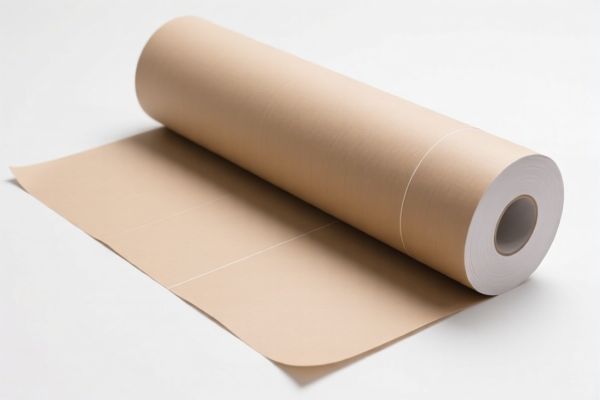
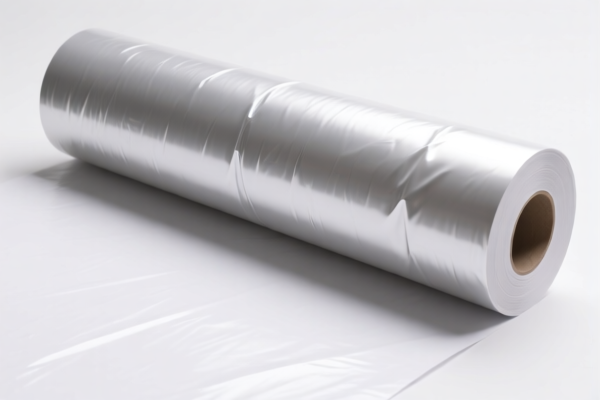
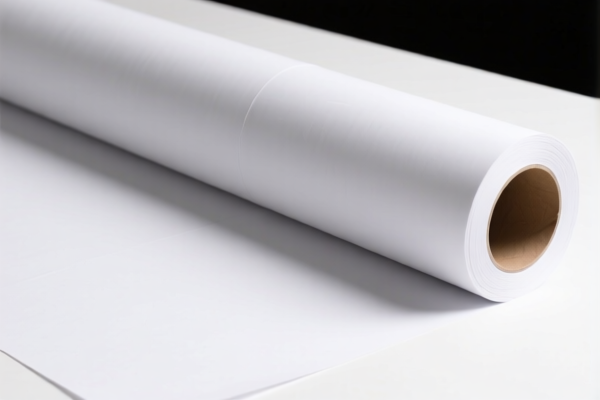
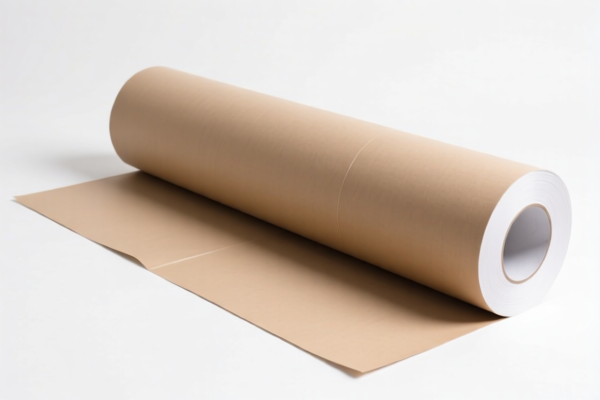
AI Analysis
🎞️ Wide Film Roll (Non-perforated)
🌐 HS Code Reference & Customs Clearance Guide | 2026 Latest Tariff Analysis | Professional Clearance Strategy
📌 I. Product Definition & Classification: What Exactly is "Wide Film Roll"?
"Wide Film Roll (Non-perforated)" refers to unexposed, light-sensitive photographic or printing materials on a roll substrate. The key characteristics are: 1. Width: Exceeds standard sizes (typically > 610mm or > 255mm depending on the specific HS heading). 2. State: Unexposed (raw material for printing, imaging, or further processing). 3. Surface: Non-perforated (no holes along the edges, distinguishing it from film used in specific mechanical cameras or scanners that require sprockets). 4. Substrate: Typically plastic base (cellulose acetate/triacetate/polyester), not paper or textile-based.
⚠️ Key Distinction:
- If it is unexposed, wide-format, and non-paper-based → It falls under Chapter 37 (Photographic Film).
- If it were exposed or printed, it might fall under Chapter 49 (Printed Matter) or Chapter 37 as "Processed Film," but the input data specifies "Unexposed" (未曝光).
- If it were on paper, it would fall under Chapter 49, but the data specifies Non-paper/Non-textile.
📦 II. HS Code Classification Details (2026 Latest Tariff Authority Mapping)
Based on the provided <DATA>, the product is classified into five specific HS Codes, all falling under Chapter 37 (Photographic or Cinematographic Goods).
| HS Code | Product Summary (Translated) | Key Attributes | Tax Detail Breakdown |
|---|---|---|---|
3703.20.60.00 |
Wide-format unprocessed rolls, material: light-sensitive film, unexposed state | General unexposed wide film | Total Tax: 38.1% • Base Tariff: 3.1% • Additional Tariff: 25.0% • Section 122 Tariff: 10% |
3702.44.01.60 |
Roll-unexposed wide-format film, non-paper/non-textile sensitive material, no perforations | Non-perforated, plastic base | Total Tax: 38.7% • Base Tariff: 3.7% • Additional Tariff: 25.0% • Section 122 Tariff: 10% |
3702.42.01.00 |
Sensitized rolls with width > 610mm, unprocessed, possibly non-color use | Ultra-wide format (>610mm) | Total Tax: 38.7% • Base Tariff: 3.7% • Additional Tariff: 25.0% • Section 122 Tariff: 10% |
3701.30.00.00 |
Sensitized film rolls, unexposed, width > 255mm wide format | Medium-wide format (>255mm) | Total Tax: 35.0% • Base Tariff: 0.0% • Additional Tariff: 25.0% • Section 122 Tariff: 10% |
3701.99.60.60 |
Unexposed wide-format printing rolls (Films), non-paper/non-textile sensitive material | Printing plates/films (non-paper) | Total Tax: 35.0% • Base Tariff: 0.0% • Additional Tariff: 25.0% • Section 122 Tariff: 10% |
🔍 Critical Note on Classification:
- Why these codes? All codes belong to Chapter 37 because the material is sensitized (light-sensitive) and unexposed.
- Width Matters:
-3701series generally covers X-ray films and wide-format printing films (>255mm).
-3702series covers other photographic cinematographic films.
-3703covers photographic plates and films for offset printing or other photographic uses.
- Perforation: The "Non-perforated" feature specifically aligns with3702.44.01.60(which explicitly mentions "no perforations" in the summary) or general unperforated rolls in3702.42.01.00.
💰 III. 2026 Latest Tariff Rate Breakdown (Detailed Tax Clauses)
✅ Applicable Country: United States (US)
✅ Origin: China (CN) (Implied by "Section 122" and "Additional Tariffs" which are typical US-China trade measures)
✅ Effective Time: 2025/2026 Context
🎯 1. The "38.1% - 38.7%" Tier (Codes: 3703.20.60.00, 3702.44.01.60, 3702.42.01.00)
| Item | Detail |
|---|---|
| Base Tariff Rate | 3.1% - 3.7% (Ad Valorem) |
| USITC Additional Tariff | +25.0% (Section 301 Duties) |
| Section 122 Tariff | +10.0% (Specific to certain Chinese imports under US Trade Law) |
| Total Effective Tax Rate | 38.1% - 38.7% |
| Tax Calculation | CIF Value × Total Rate |
| De Minimis Eligibility | ❌ NOT Eligible (High tariff goods are typically excluded from $800 de minimis exemption) |
| Legal Basis Path | HTSUS 3703/3702 → USITC Footnote → Section 301 (25%) → Section 122 (10%) |
📌 Interpretation:
- These codes attract the highest tax burden due to a non-zero base rate combined with both Section 301 and Section 122 penalties.
- Section 122 is a specific trade remedy provision often applied to goods from countries with currency manipulation concerns or specific trade deficits.
🎯 2. The "35.0%" Tier (Codes: 3701.30.00.00, 3701.99.60.60)
| Item | Detail |
|---|---|
| Base Tariff Rate | 0.0% (Free for many X-ray/Technical films) |
| USITC Additional Tariff | +25.0% (Section 301 Duties) |
| Section 122 Tariff | +10.0% |
| Total Effective Tax Rate | 35.0% |
| Tax Calculation | CIF Value × 35% |
| De Minimis Eligibility | ❌ NOT Eligible |
| Legal Basis Path | HTSUS 3701 → Section 301 (25%) → Section 122 (10%) |
📌 Interpretation:
- These codes have a 0% base rate because3701often covers X-ray films or specific technical films that are duty-free under normal trade.
- However, the 35% total rate still makes it expensive due to the 25% + 10% additions.
- Distinction: If your film is for X-ray or wide-format printing (>255mm), it may qualify for this lower tier compared to standard photographic rolls (3702/3703).
🛠️ IV. Customs Clearance Practical Advice (Pitfall Avoidance Guide)
✅ 1. Required Documentation Checklist (Mandatory)
| Document | Must Provide | Explanation |
|---|---|---|
| ✅ Product Specification Sheet | ✔️ | Must state: Unexposed, Non-perforated, Width (mm), Base Material (Plastic/Paper). |
| ✅ Photographic Properties Data | ✔️ | Light sensitivity, emulsion type. To prove it is "Sensitive Material" (Chapter 37). |
| ✅ Commercial Invoice | ✔️ | Clearly describe as: "Unexposed Wide-Format Sensitized Film Rolls, Non-Perforated, Plastic Base". Avoid vague terms like "Plastic Roll". |
| ✅ Packing List | ✔️ | Show gross/net weight and dimensions to verify "Wide Format" classification. |
| ✅ Origin Certificate | ✔️ | Required to confirm CN origin and assess Section 122/301 liability. |
| ✅ HS Code Pre-Ruling Request | ✔️ | Highly recommended due to complex tax breakdown. |
✅ 2. Declaration Strategy (Key Mnemonics)
🔥 "Width Defines Code, Unexposed Defines Chapter, Non-Paper Avoids 49!"
| Scenario | Correct Declaration | Consequence of Error |
|---|---|---|
| Width > 610mm, Non-perforated | 3702.42.01.00 or 3702.44.01.60 |
If declared as narrow film → Potential misclassification penalty. |
| X-ray or Printing Film (>255mm) | 3701.30.00.00 / 3701.99.60.60 |
Lower base rate (0%) but still 35% total. |
| General Photo Film (Unexposed) | 3703.20.60.00 |
Higher base rate (3.1%) → 38.1% total. |
| Paper-based Film | NOT Chapter 37 → Chapter 49 | If declared as Ch 37 but is paper → Rejection & Seizure. |
| Exposed/Printed Film | Chapter 49 or 37 (processed) | If declared as "Unexposed" but is exposed → Fraudulent declaration. |
⚠️ Critical Warning:
- Do NOT use "Paper": The data explicitly states "Non-paper/Non-textile". If your product is on paper base, these HS codes are WRONG.
- Perforation Status: If the film HAS perforations,3702.44.01.60(which specifies "no perforations") may be incorrect. Check3702.44.00.00general subheadings or other perforated-specific codes.
- Width Measurement: Ensure the width measurement is taken without perforated edges if applicable. For3702.42.01.00, >610mm is a hard cutoff.
✅ 3. Special Case Handling
| Scenario | Handling Advice |
|---|---|
| Sample Shipments | Even small samples are subject to full tax if classified under these high-tariff codes. No de minimis exemption. |
| Mixed Shipments | If mixing "Exposable" and "Unexposed", declare separately. Exposed films may have different tax treatments. |
| OEM/White Label | Provide manufacturer declaration to prove "Unexposed" status. Customs may require lab tests. |
| Destination Port | Some ports may request X-ray images of the rolls to verify "Unexposed" status and content. |
🌍 V. Global Market Comparison (2026 Latest)
| Country/Region | Recommended HS Code | Estimated Tax | Certification | Note |
|---|---|---|---|---|
| 🇺🇸 USA | 3701.30.00.00 / 3702.44.01.60 |
35% - 38.7% | None specific | High tariffs due to Section 301 & 122. |
| 🇨🇳 China | 3701 / 3702 |
0% - 5% | None | Low import duty for raw materials. |
| 🇪🇺 EU | 3701 / 3702 |
0% - 4.5% | REACH (if chemicals involved) | No Section 122 equivalent. |
| 🇦🇺 Australia | 3701 / 3702 |
5% | TGA (if medical X-ray) | Lower overall burden. |
📌 Conclusion:
- USA is the most expensive market for this product due to the叠加 (stacking) of Base Tariff + Section 301 (25%) + Section 122 (10%).
- Strategy: Consider supply chain diversification (e.g., manufacturing in Vietnam/Mexico) to avoid Section 122/301 if targeting the US market.
📌 VI. Common Mistakes & Pitfalls (Lessons Learned)
❌ Mistake 1: Declaring as "Plastic Rolls" without mentioning "Light-Sensitive/Unexposed"
👉 Consequence: Misclassification (Ch 39) → Penalties for undeclared sensitive materials.
❌ Mistake 2: Assuming "Non-Perforated" means it's not photographic film
👉 Consequence: Missed classification under 3702.44.01.60 → Incorrect tax calculation.
❌ Mistake 3: Ignoring the Base Tariff Difference
👉 Consequence: Thinking all Ch 37 films are 0% tax. False! 3703 has a 3.1% base, while 3701 has 0%. Always check the first 4 digits.
❌ Mistake 4: Failing to declare Section 122 liability
👉 Consequence: Underpayment of duty → Customs audit & seizure.
✅ Correct Declaration Example:
"Unexposed Wide-Format Sensitized Photographic Film Rolls, Non-Perforated, Polyester Base, Width: 914mm, HS Code: 3702.44.01.60, Subject to Section 301 & 122 Duties."
🎯 VII. Conclusion: Professional Clearance for Sensitive Materials
🎯 Remember the Rules:
🔹 "Width is King: >610mm vs >255mm dictates the Subheading."
🔹 "Unexposed + Sensitive = Chapter 37."
🔹 "China Origin + US Destination = 35-38% Tax Burden."
🔹 "No Paper, No Perforations = Specific Subcodes for Precision."
📌 Pro Tip:
- If you are importing into the US, apply for a Section 301 Exclusion if available for your specific HTS code (though Section 122 often cannot be excluded).
- For Medical X-ray Films, 3701.30.00.00 is your friend (0% base). For Printing/Photographic, 3702/3703 is the path (3.1-3.7% base).
📣 Immediate Action:
📞 Consult a Customs Broker to verify the exact width and base material.
🚀 Pre-classify goods to avoid port delays.
💼 Calculate Landed Cost including 35-38% tax before quoting customers!
✨ Precise Classification Saves Money!
💼 Every Percent Counts in Tariff Strategy!
Customer Reviews
About HS Code Classification
The Harmonized System (HS) is an internationally standardized nomenclature developed by the World Customs Organization (WCO) to classify traded products. Over 200 countries use the HS system as the basis for customs tariffs, trade statistics, and import/export regulations.
Each HS code follows a hierarchical structure:
- Chapter (2 digits) — Broad category of goods (e.g., Chapter 84: Machinery and Mechanical Appliances)
- Heading (4 digits) — More specific grouping within the chapter
- Subheading (6 digits) — Internationally standardized breakdown, used by all WCO member countries
- National subdivisions (8-10 digits) — Country-specific extensions for further classification, such as US HTSUS 10-digit codes
Correct HS code classification is essential for smooth customs clearance, accurate duty payment, and compliance with trade regulations. Misclassification can lead to customs delays, overpayment of duties, or penalties.
When importing from CN to US, the applicable tariff rates may include:
- Most-Favored-Nation (MFN) rate — The standard duty rate applied to WTO members
- General rate — Applied to countries without trade agreements
- Trade remedy duties — Additional tariffs such as Section 301 (anti-dumping), Section 232 (national security), or countervailing duties
The information provided on this page is for reference purposes only. For official classification, please consult with your local customs authority or a licensed customs broker.