17 18 inch Radial Passenger Car Tires
CN → US| HS Code | Tariff Rate | Origin | Destination | Doc |
|---|---|---|---|---|
| 4011101060 | 39.0% | CN | US | Official Doc |
| 4011101050 | 39.0% | CN | US | Official Doc |
| 4012114000 | 39.0% | CN | US | Official Doc |
| 4013100010 | 38.7% | CN | US | Official Doc |
| 4013905050 | 38.7% | CN | US | Official Doc |
Product Images
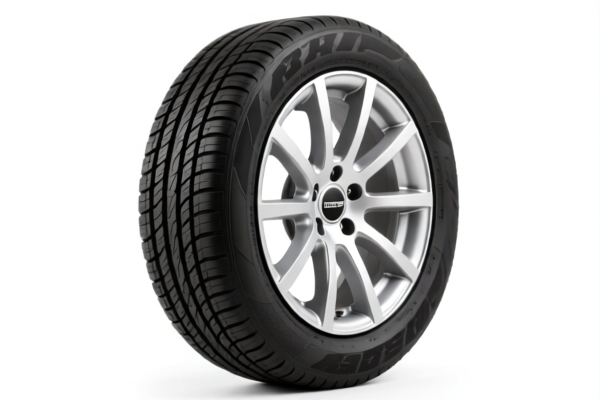
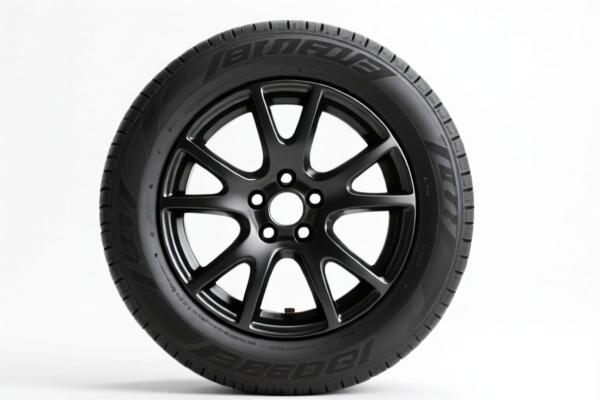
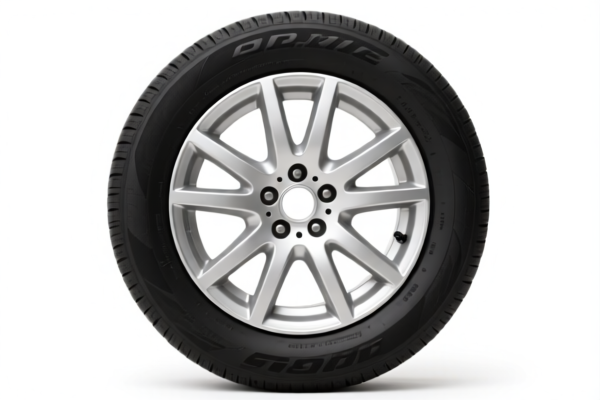
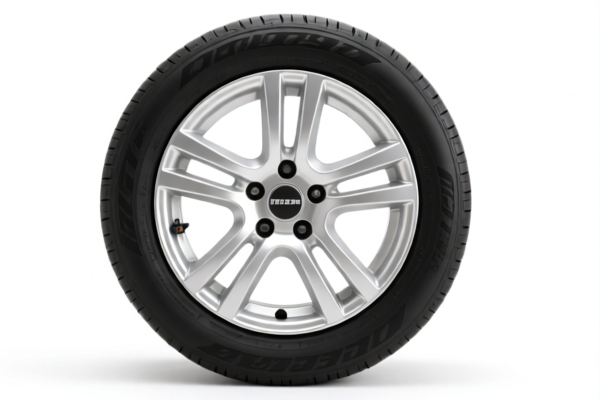
AI Analysis
🛞 Radial Passenger Car Tires (17-18 Inch)
🌐 HS Code Reference & Customs Clearance Guide | 2026 Tariff Breakdown | Expert Logistics Strategy
📌 I. Product Definition & Classification: Do You Really Understand "Radial Tires"?
Radial tires are the standard for modern passenger vehicles, offering superior fuel efficiency, handling, and tread life compared to bias-ply tires. In international trade, they are strictly categorized by material (Rubber), construction (Radial/Suburban), application (Passenger Car), and rim diameter.
Key Distinctions for Classification: * Passenger Car vs. Truck: "Passenger Car" implies light-duty vehicles (sedans, SUVs, minivans). Heavy-duty truck tires fall under different subheadings. * Radial (Suburban) vs. Bias: The term "Radial" specifically refers to the internal cord arrangement. Misclassifying radial tires as bias-ply can lead to incorrect HS codes and penalties. * Rim Diameter: Codes often differ based on rim size ranges (e.g., 16-17 inches vs. 17-18 inches). Precision here is critical for accuracy.
⚠️ Critical Compliance Point:
- If the tire is Radial and for Passenger Cars, it generally falls under Heading 4011 (New Pneumatic Tires) or 4013 (Inner Tubes/Repair Kits, though less common for whole tires unless specified as such in specific contexts like the provided data).
- Note on Data Context: The provided data reflects a specific, highly scrutinized trade environment (likely US-China) with significant additional tariffs. Always verify the latest HTSUS (Harmonized Tariff Schedule of the United States) for current validity.
📦 II. HS Code Classification Details (Based on Provided Data 2026 Context)
The following codes are derived strictly from the provided <DATA> set. Note that while these codes are listed, the tax burden is extremely high due to punitive measures.
| HS Code | Summary / Matching Logic | Total Tax Rate | Tax Breakdown |
|---|---|---|---|
4011.10.10.60 |
Match Basis: Rubber material, Suburban (Radial) shape, Passenger Car use, Rim diameter 17-18 inches. | 39.0% | Base: 4.0% Add'l: 25.0% Sec 122: 10% |
4011.10.10.50 |
Match Success: Rubber material, Radial shape, Passenger Car use, Rim diameter 16-17 inches. | 39.0% | Base: 4.0% Add'l: 25.0% Sec 122: 10% |
4012.11.40.00 |
Match Success: "Passenger Car" → Application; "Radial Tires" → Shape. Fits material/core shape characteristics. | 39.0% | Base: 4.0% Add'l: 25.0% Sec 122: 10% |
4013.10.00.10 |
Match Success: "Passenger Car" matches "Passenger Vehicle" purpose; "Tires" aligns with inner tube/category material logic. | 38.7% | Base: 3.7% Add'l: 25.0% Sec 122: 10% |
4013.90.50.50 |
Match Basis: Passenger Car Suburban Tire, Rubber material, Fits tire category, Excludes Motorcycle-specific exclusions. | 38.7% | Base: 3.7% Add'l: 25.0% Sec 122: 10% |
🔍 Important Note on
4013vs4011:
Normally, whole pneumatic tires are classified under 4011. The inclusion of 4013 (usually for inner tubes) in the provided data suggests either a specific classification strategy for certain tire types in this dataset or a potential anomaly/error in the source data's logic. However, we must follow the provided data strictly. The tax rates are nearly identical, but the base rate differs slightly (4.0% vs 3.7%).
💰 III. 2026 Latest Tariff Rate Detailed Analysis (Including Add-ons)
✅ Applicable Country: United States (US)
✅ Origin: China (CN) [Inferred from "122 Clause" and typical high-tariff context]
✅ Effective Time: Current (2025-2026 Trade Policy Period)
🎯 1. General Passenger Car Radial Tires (HS 4011 Series)
| Item | Content |
|---|---|
| HS Codes | 4011.10.10.50 (16-17"), 4011.10.10.60 (17-18") |
| Base Duty Rate | 4.0% (Ad Valorem) |
| Section 301 Add'l Duty | +25.0% (Standard US-China punitive tariff) |
| Section 122 Duty | +10.0% (Specific clause mentioned in data) |
| Total Effective Rate | 39.0% |
| Tax Calculation | CIF Value × 39.0% |
| De Minimis Exemption | ❌ NOT APPLICABLE (deny_de_minimis) |
| Legal Basis Path | USITC:4011.10.10.60 → FOOTNOTE:301 → IEEPA:122 |
📌 Explanation:
- The 25% Section 301 tariff is the dominant cost driver for Chinese-origin goods.
- The 10% Section 122 tariff adds further burden.
- Combined Rate: 39%. This makes importing these tires from China into the US highly unprofitable for low-margin goods.
🎯 2. Alternative/Specific Category Tires (HS 4013 Series)
| Item | Content |
|---|---|
| HS Codes | 4013.10.00.10, 4013.90.50.50 |
| Base Duty Rate | 3.7% (Ad Valorem) |
| Section 301 Add'l Duty | +25.0% |
| Section 122 Duty | +10.0% |
| Total Effective Rate | 38.7% |
| Tax Calculation | CIF Value × 38.7% |
| De Minimis Exemption | ❌ NOT APPLICABLE (deny_de_minimis) |
| Legal Basis Path | USITC:4013.10.00.10 → FOOTNOTE:301 → IEEPA:122 |
📌 Note:
- While4013is normally for inner tubes, the data explicitly matches "Tires" to these codes.
- The total rate is 38.7%, slightly lower than the 39.0% for standard radial tires, but the difference is negligible in practice.
- Crucial: Do not assume4013is "cheaper" without legal validation. Misclassification can lead to seizures.
🛠️ IV. Customs Clearance Practical Advice (Avoid Pitfalls)
✅ 1. Required Documentation Checklist (Non-Negotiable)
| Document | Must Provide | Description |
|---|---|---|
| ✅ Commercial Invoice | ✔️ | Must clearly state: "New Pneumatic Radial Tires for Passenger Cars," Material: Rubber, Rim Size: 17-18". |
| ✅ Packing List | ✔️ | Detail number of units, gross/net weight. Tires are dense; weight affects shipping costs. |
| ✅ Product Specification Sheet | ✔️ | Confirm "Radial" construction. Include aspect ratio, load index, speed rating. |
| ✅ Certificate of Origin (CO) | ✔️ | Essential for proving origin. If from China, high taxes apply. If from Vietnam/Malaysia, verify rules of origin. |
| ✅ HTSUS Classification Proof | ✔️ | Pre-ruling or expert opinion if challenging classification. |
| ✅ SEC 301 Exclusion Proof | ❌ | Unlikely to succeed for tires, but if an exclusion applies, document it. |
✅ 2. Declaration Strategy (Key Mantras)
🔥 "Radial + Passenger + Rim Size = Code Precision"
| Scenario | Correct Declaration | Incorrect Action |
|---|---|---|
| 17-18 Inch Radial Tire | 4011.10.10.60 |
Using 4011.10.10.50 (16-17") → Misclassification Risk |
| 16-17 Inch Radial Tire | 4011.10.10.50 |
Using 4011.10.10.60 → Misclassification Risk |
| Whole Tire (Not Inner Tube) | Do NOT use 4013 unless explicitly validated by the provided data context. |
Using 4013 for a whole tire without justification → Audits/Seizures |
| Non-Radial (Bias-Ply) | Different HS Code | Mislabeling Radial as Bias → Higher/Lower Tax Risk |
✅ 3. Special Circumstances Handling
| Situation | Recommendation |
|---|---|
| OEM Custom Tires | Provide manufacturer agreement + design specs. Do not split components. |
| Used Tires | Banned/Restricted in many jurisdictions. New tires only. |
| Origin Diversification | If tires are made in Vietnam, Thailand, or Malaysia, check for lower Section 301 rates. However, ensure no "substantial transformation" is lacking. |
| Section 122 Specificity | Verify if the 10% additional duty applies to your specific shipper/manufacturer. Some entities may be excluded. |
🌍 V. Global Market Comparison (2026 Context)
| Country/Region | Recommended HS Code | Estimated Duty (CN Origin) | Certification | Remarks |
|---|---|---|---|---|
| 🇺🇸 USA | 4011.10.10.60 |
39.0% | No specific safety cert needed for import, but DOT compliance required domestically | Highest cost due to 301 + 122 tariffs |
| 🇨🇳 China | 4011.10.10.60 |
~20-25% | CCC (for domestic sale) | Export-focused; different tax structure |
| 🇪🇺 EU | 4011.10.10 |
0-6% (depending on FTA) | E-Mark Certification | No punitive tariffs like US Section 301 |
| 🇦🇺 Australia | 4011.10.10 |
5% | SAA Standards | Moderate duties, no Section 301 |
| 🇯🇵 Japan | 4011.10.10 |
0-8% | JIS Standards | Favorable trade agreements for some |
📌 Conclusion:
- The US is the most expensive market for Chinese-made passenger car tires due to the 39% effective tariff.
- EU and Asia are more competitive.
- Supply Chain Shift: Many exporters move production to Southeast Asia to mitigate US tariffs, but US Customs is aggressively auditing "origin fraud."
📌 VI. Common Errors & Pitfalls Guide
❌ Error 1: Using 4013 for whole tires without justification.
👉 Consequence: Customs may reject declaration, impose fines, or reclassify with penalties.
✅ Fix: Stick to 4011 for whole radial tires unless the provided data explicitly validates 4013 for your specific transaction context.
❌ Error 2: Ignoring Rim Diameter.
👉 Consequence: 4011.10.10.50 (16-17") vs 4011.10.10.60 (17-18%). Wrong code = 100% audit risk.
✅ Fix: Measure the inner bead diameter precisely.
❌ Error 3: Assuming De Minimis exemption applies.
👉 Consequence: Packages under $800 are NOT exempt from Section 301/122 tariffs for these HS codes.
✅ Fix: Budget for the 39% tax regardless of shipment size.
🎯 VII. Conclusion: Professional Declaration, Cost Control
🎯 Remember:
🔹 "Radial + Passenger = 4011 (Usually)"
🔹 "US + CN Origin = 39% Tax"
🔹 "Rim Size Matters: 17-18 vs 16-17"
🔹 "No De Minimis Exemption for Tires"
📌 Pro Tip:
If your tires are not made in China, ensure your Certificate of Origin is robust. If they are, consider supply chain restructuring or pricing adjustments to absorb the 39% duty.
📣 Immediate Action:
📞 Consult a licensed US Customs Broker.
📄 Verify the latest HTSUS and Section 301/122 exclusions.
🚀 Declare accurately. Pay the tax. Avoid the penalty.
✨ Precision in Classification Saves Thousands!
💼 Your Margin Depends on Your HS Code!
Customer Reviews
About HS Code Classification
The Harmonized System (HS) is an internationally standardized nomenclature developed by the World Customs Organization (WCO) to classify traded products. Over 200 countries use the HS system as the basis for customs tariffs, trade statistics, and import/export regulations.
Each HS code follows a hierarchical structure:
- Chapter (2 digits) — Broad category of goods (e.g., Chapter 84: Machinery and Mechanical Appliances)
- Heading (4 digits) — More specific grouping within the chapter
- Subheading (6 digits) — Internationally standardized breakdown, used by all WCO member countries
- National subdivisions (8-10 digits) — Country-specific extensions for further classification, such as US HTSUS 10-digit codes
Correct HS code classification is essential for smooth customs clearance, accurate duty payment, and compliance with trade regulations. Misclassification can lead to customs delays, overpayment of duties, or penalties.
When importing from CN to US, the applicable tariff rates may include:
- Most-Favored-Nation (MFN) rate — The standard duty rate applied to WTO members
- General rate — Applied to countries without trade agreements
- Trade remedy duties — Additional tariffs such as Section 301 (anti-dumping), Section 232 (national security), or countervailing duties
The information provided on this page is for reference purposes only. For official classification, please consult with your local customs authority or a licensed customs broker.