4 strand workwear fabric
CN → US| HS Code | Tariff Rate | Origin | Destination | Doc |
|---|---|---|---|---|
| 5801360020 | 27.3% | CN | US | Official Doc |
| 6304996040 | 20.7% | CN | US | Official Doc |
| 5801260020 | 35.0% | CN | US | Official Doc |
| 7312101050 | 85.0% | CN | US | Official Doc |
| 7312103020 | 85.0% | CN | US | Official Doc |
Product Images
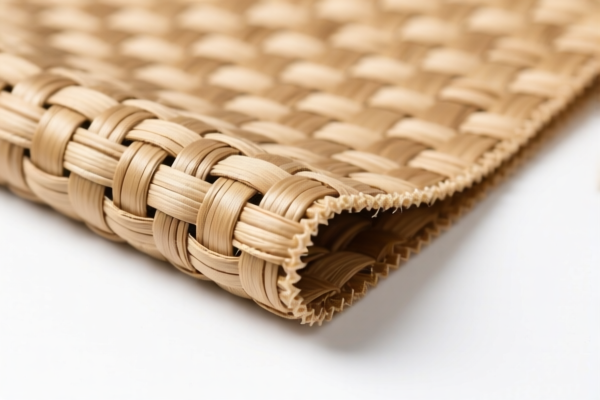
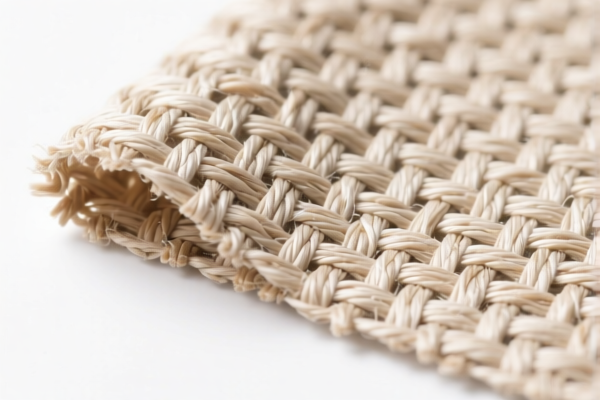
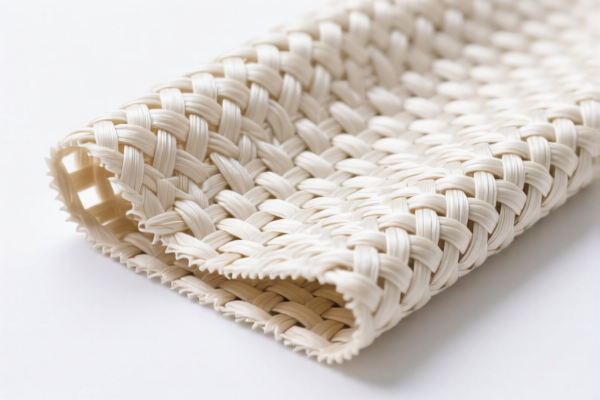
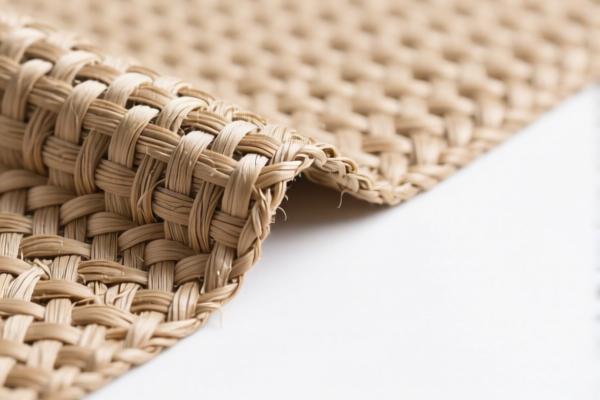
AI Analysis
🧵 4 Strand Workwear Fabric (Textile Materials)
🌐 HS Code Reference & Customs Clearance Guide | 2026 Latest Tariff Analysis | Professional Entry Strategy
📌 I. Product Definition & Classification: What is "4 Strand Workwear Fabric"?
"4 Strand Workwear Fabric" generally refers to a durable textile material constructed with four twisted or braided threads/strands. In international trade, the classification heavily depends on the material composition (e.g., steel, cotton, synthetic) and the final form (woven fabric vs. cord/rope). Since "Workwear" implies durability and utility, the goods are likely classified under specific textile or metal product headings based on the underlying substance.
⚠️ Key Distinction Point:
- If made of Steel/Iron: It may be classified as Steel Cord/Rope (Metal Products).
- If made of Cotton/Synthetic: It is classified as Chenille Woven Fabric or Other Woven Fabrics (Textiles).
- The "4 Strand" description often triggers classification under specific sub-headings for "Chenille" or "Cord/Rope" structures.
📦 II. HS Code Classification Details (2026 Latest Tariff Authority Cross-Reference)
Based on the provided data, here are the four possible HS Code classifications and their rationales:
| HS Code | Product Description | Rationale from Data | Applicable Scenario |
|--------|----------|--------------------------|
| 5801.36.00.20 | Chenille Woven Fabric (Other) | Matches the "fabric" form attribute; no conflict with "Other Chenille Fabrics". | Fabric made of synthetic fibers (e.g., polyester/nylon) with a chenille structure, used for workwear. |
| 6304.99.60.40 | Other Furnishings (Non-knitted) | Identified as fabric for workwear; belongs to non-knitted/hooked textile materials, fitting the "Other" category. | Specialized workwear fabric that doesn't fit standard apparel headings, potentially treated as a technical textile/furnishing. |
| 5801.26.00.20 | Cotton Chenille Fabric | Matches form (fabric) and use (workwear); inferred as cotton-based or fiber-based fabric, fitting the "catch-all" logic. | Fabric made primarily of cotton, woven in a chenille style, for durable work garments. |
| 7312.10.30.20 / 7312.10.10.50 | Steel Cord/Rope/Cable | Matches form (stranded/braided) and material inference (steel/iron); "thread" fits "Cord/Rope" category; no material conflict with "Steel". | CRITICAL: If the "4 strand" refers to steel cables used in industrial workwear (e.g., anti-cut gloves, safety harnesses), it falls under metal products. |
🔍 Important Note:
- If the product is textile (cotton/polyester), use HS Codes 5801 or 6304.
- If the product is metallic (steel wire for anti-cut workwear), use HS Code 7312.
- The term "4 Strand" is ambiguous; customs may inspect the material. Metallic strands = High Tariff (85%); Textile strands = Medium Tariff (20-35%).
💰 III. 2026 Latest Tariff Rate Breakdown (Including Surtaxes & Policy Add-ons)
✅ Applicable Country: United States (US)
✅ Origin: China (CN)
✅ Effective Date: November 10, 2025 (including subsequent imports)
🎯 1. 5801.36.00.20 —— Synthetic Chenille Woven Fabric
| Item | Content |
|---|---|
| Base Tariff | 9.8% |
| Surtax (Section 301) | +7.5% |
| 122 Clause Tariff | +10% |
| Total Tariff Rate | 27.3% |
| Tax Calculation | CIF Value × 27.3% |
| De Minimis Eligibility | ❌ No (High tariff prevents de minimis relief) |
| Legal Basis Path | Base:9.8% → 301:7.5% → 122:10% |
📌 Explanation:
- Base 9.8%: Standard HTSUS duty for chenille fabrics.
- Section 301 (7.5%): Additional duty on Chinese textiles.
- 122 Clause (10%): Specific surtax for certain textile/apparel categories.
- Total 27.3%: Significant cost impact. Pre-plan pricing accordingly.
🎯 2. 6304.99.60.40 —— Other Non-Knitted Textile Furnishings (Workwear Fabric)
| Item | Content |
|---|---|
| Base Tariff | 3.2% |
| Surtax (Section 301) | +7.5% |
| 122 Clause Tariff | +10% |
| Total Tariff Rate | 20.7% |
| Tax Calculation | CIF Value × 20.7% |
| De Minimis Eligibility | ❌ No |
| Legal Basis Path | Base:3.2% → 301:7.5% → 122:10% |
📌 Note:
- This classification offers the lowest total tariff (20.7%) among textile options.
- However, justification must be strong: "Non-knitted," "Workwear," and "Other" (not standard apparel).
- Risk: Customs may reclassify as standard apparel (higher tariff). Ensure product specs support "furnishing" or "technical textile" status.
🎯 3. 5801.26.00.20 —— Cotton Chenille Woven Fabric
| Item | Content |
|---|---|
| Base Tariff | 0.0% |
| Surtax (Section 301) | +25.0% |
| 122 Clause Tariff | +10% |
| Total Tariff Rate | 35.0% |
| Tax Calculation | CIF Value × 35.0% |
| De Minimis Eligibility | ❌ No |
| Legal Basis Path | Base:0.0% → 301:25.0% → 122:10% |
📌 Warning:
- Although Base Tariff is 0%, the Section 301 Surtax is 25% (higher than synthetic).
- Total 35% is the highest textile tariff.
- Cotton imports face stricter scrutiny and higher punitive tariffs under current US-China trade policies.
🎯 4. 7312.10.10.50 / 7312.10.30.20 —— Steel Cord/Rope (Metal Product)
| Item | Content |
|---|---|
| Base Tariff | 0.0% |
| Surtax (Section 301) | +25.0% |
| 122 Clause Tariff | +10% |
| Steel/Aluminum/Copper Surtax | +50.0% |
| Total Tariff Rate | 85.0% |
| Tax Calculation | CIF Value × 85.0% |
| De Minimis Eligibility | ❌ No |
| Legal Basis Path | Base:0.0% → 301:25.0% → 122:10% → Steel Surtax:50% |
🚨 CRITICAL ALERT:
- If your "4 Strand Workwear Fabric" contains steel strands (e.g., for cut-resistant gloves, industrial safety), it is classified as Steel.
- Total Tariff: 85%!
- Steel, Aluminum, Copper attract an additional 50% surtax on top of Section 301 and 122 duties.
- Recommendation: If possible, avoid steel classification. If unavoidable, price accordingly. This is a prohibitive tariff level.
🛠️ IV. Customs Clearance Operational Advice (Practical Pitfall Avoidance)
✅ 1. Preparation Checklist (Non-negotiable)
| Document | Required | Description |
|---|---|---|
| ✅ Product Specification Sheet | ✔️ | Must detail: Material (Cotton/Poly/Steel), Weave Structure (Chenille/Cord), Strand Count (4), End Use (Workwear). |
| ✅ Material Composition Label | ✔️ | Exact % of Cotton, Polyester, Steel, etc. Customs may deny lower rates if composition is vague. |
| ✅ Product Photos | ✔️ | Close-ups of the "4-strand" structure. Differentiate between textile fiber and metal wire. |
| ✅ Commercial Invoice | ✔️ | Clear description: "4-Strand Chenille Workwear Fabric, Synthetic, Non-Knitted" or "Steel Strand Safety Cord". |
| ✅ Certificate of Origin (CO) | ✔️ | If not CN, may reduce 301/122 duties. |
✅ 2. Declaration Tips (Key Mnemonics)
🔥 "Textile vs. Metal: Know Your Strand! Steel = 85%, Cotton = 35%, Synthetic = 27%, Other = 20%."
| Scenario | Correct Declaration | Incorrect Declaration | Consequence |
|---|---|---|---|
| Polyester Chenille Fabric | 5801.36.00.20 |
6304.99.60.40 |
Risk of reclassification to 35% or 27.3%. Stick to specific chenille heading. |
| Cotton Workwear Fabric | 5801.26.00.20 |
6203.xx (Apparel) |
If sold as fabric, not garment, do NOT declare as apparel. |
| Steel Cord (Anti-cut) | 7312.10.xx.xx |
5801.xx (Textile) |
Major Error: Declaring steel as textile to avoid 85% tariff leads to fraud charges & penalties. |
| Mixed Material | Disclose all | "Textile" only | Partial tariff evasion. Full disclosure required. |
✅ 3. Special Case Handling
| Situation | Recommendation |
|---|---|
| OEM Custom Fabric | Provide design specs to prove it’s not a standard consumer good. May support 6304.99.60.40 (20.7%). |
| Anti-Cut Gloves Fabric | If it contains steel, accept 7312 (85%). Consider sourcing from non-China origin to avoid 301/122/50% if possible. |
| Bulk Roll vs. Cut Pieces | Declare as "Fabric in Rolls" if under certain lengths. If cut to size, may be considered "Parts" or "Garments," changing HS Code entirely. |
| Sample Shipment | Still subject to full tariffs. De minimis does NOT apply due to high tariff rates. |
🌍 V. Global Market Comparison (2026 Latest)
| Country/Region | Recommended HS Code (Textile) | Tariff Rate (China Origin) | Certification | Note |
|---|---|---|---|---|
| 🇺🇸 USA | 5801.36.00.20 or 6304.99.60.40 |
20.7% – 27.3% | No special certs for raw fabric | Steel: 85% |
| 🇨🇳 China | 5801.36.00 |
~5-9% | None | Low base duty, no surtaxes |
| 🇪🇺 EU | 5801.36 |
0-4% | REACH (if chemical treated) | No Section 301/122 equivalent |
| 🇦🇺 Australia | 5801.36 |
5% | N/A | Moderate tariff |
📌 Conclusion:
- USA is the most expensive market for these goods due to Section 301 + 122 + Steel Surtax.
- Textile classification (5801/6304) is strongly preferred over Metal (7312) unless the product is unequivocally steel-based.
- Cotton (5801.26) is penalized higher than synthetic (5801.36). Use synthetic if possible.
📌 VI. Common Mistakes & Pitfall Guide (Lessons Learned)
❌ Mistake 1: Declaring Steel Cord as "Textile Fabric"
👉 Consequence: Customs detects metal content → 85% tariff applies retroactively + Penalties.
👉 Fix: Always declare material accurately. If steel, accept the 85%.
❌ Mistake 2: Using HS 6304.99.60.40 without proof
👉 Consequence: Customs argues it’s standard chenille (5801.36.00.20) → Tariff increases from 20.7% to 27.3%.
👉 Fix: Provide documentation that it’s "non-standard" or "technical furnishing."
❌ Mistake 3: Ignoring 122 Clause
👉 Consequence: Under-declaration → 10% shortfall + Interest.
👉 Fix: Include 10% in all cost calculations for textile imports.
❌ Mistake 4: Mixing Cotton and Synthetic without disclosure
👉 Consequence: Customs applies highest applicable rate or demands split billing.
👉 Fix: Declare exact composition. If >50% cotton, use Cotton HS Code.
✅ Correct Approach:
"4-Strand Synthetic Chenille Workwear Fabric, Polyester, Woven, for Industrial Use, HS 5801.36.00.20"
🎯 VII. Conclusion: Professional Classification, Cost Optimization!
🎯 Remember the Golden Rules:
🔹 "Metal = 85%, Cotton = 35%, Synthetic Chenille = 27.3%, Other Textile = 20.7%."
🔹 "Strand count doesn’t matter as much as Material Composition."
🔹 "122 Clause is non-negotiable for textiles. Factor it in!"
📌 Pro Tip:
If your workwear fabric is not made in China (e.g., Vietnam, Bangladesh), you may avoid Section 301 (7.5%-25%) and 122 Clause (10%) depending on trade agreements.
Recommendation: Apply for Advance Ruling if unsure about Material Classification (Steel vs. Textile). Avoid the 85% trap!
📣 Immediate Action:
📞 Consult Customs Broker + Provide Material SWOT Test (Burn Test for Cotton vs. Synthetic, Magnet Test for Steel) + Confirm HS Code Pre-Ruling
🚀 Clear Your Goods Smoothly, Maximize Margins, Avoid Surprises!
✨ Professional Clearance Starts with Accurate Classification!
💼 Every Percent of Tariff Counts! Calculate Precisely!
Customer Reviews
About HS Code Classification
The Harmonized System (HS) is an internationally standardized nomenclature developed by the World Customs Organization (WCO) to classify traded products. Over 200 countries use the HS system as the basis for customs tariffs, trade statistics, and import/export regulations.
Each HS code follows a hierarchical structure:
- Chapter (2 digits) — Broad category of goods (e.g., Chapter 84: Machinery and Mechanical Appliances)
- Heading (4 digits) — More specific grouping within the chapter
- Subheading (6 digits) — Internationally standardized breakdown, used by all WCO member countries
- National subdivisions (8-10 digits) — Country-specific extensions for further classification, such as US HTSUS 10-digit codes
Correct HS code classification is essential for smooth customs clearance, accurate duty payment, and compliance with trade regulations. Misclassification can lead to customs delays, overpayment of duties, or penalties.
When importing from CN to US, the applicable tariff rates may include:
- Most-Favored-Nation (MFN) rate — The standard duty rate applied to WTO members
- General rate — Applied to countries without trade agreements
- Trade remedy duties — Additional tariffs such as Section 301 (anti-dumping), Section 232 (national security), or countervailing duties
The information provided on this page is for reference purposes only. For official classification, please consult with your local customs authority or a licensed customs broker.