Amino Resin Anti corrosion Boards
CN → US| HS Code | Tariff Rate | Origin | Destination | Doc |
|---|---|---|---|---|
| 4410190060 | 35.0% | CN | US | Official Doc |
| 4410190030 | 35.0% | CN | US | Official Doc |
| 3921905050 | 39.8% | CN | US | Official Doc |
| 3921190090 | 41.5% | CN | US | Official Doc |
| 4410190060 | 35.0% | CN | US | Official Doc |
Product Images
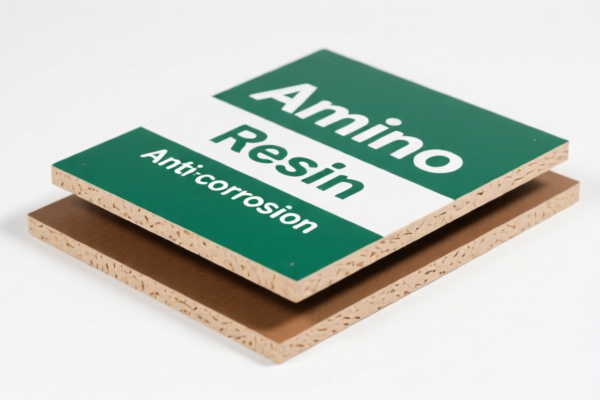
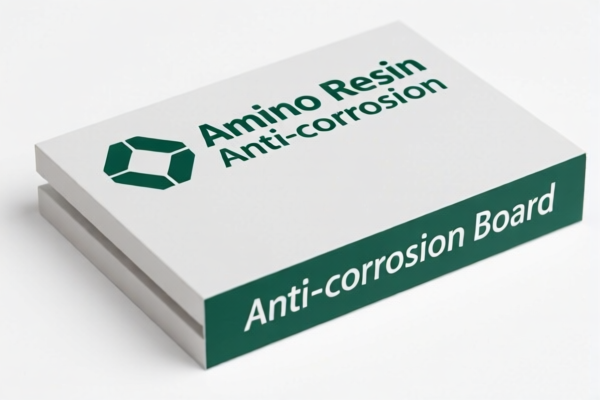
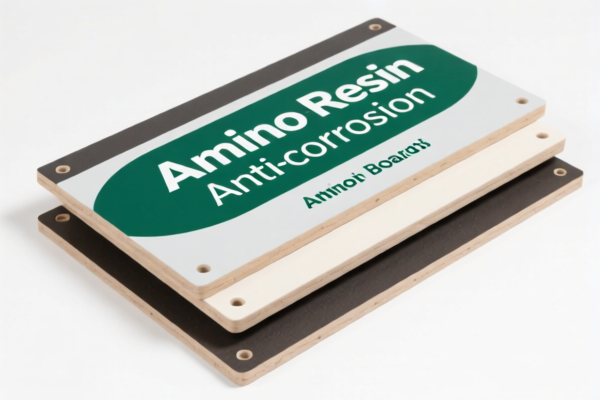
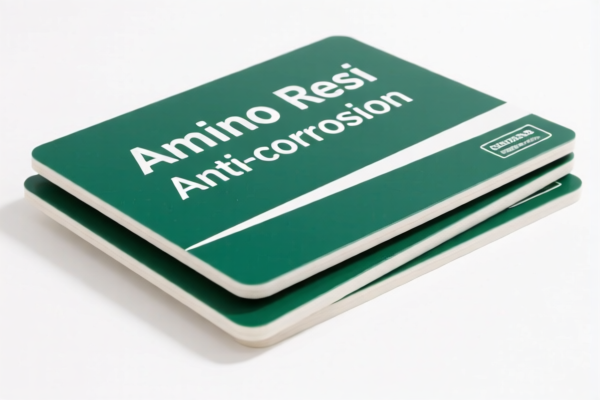
AI Analysis
🛡️ Amino Resin Anti-Corrosion Boards: The Ultimate HS Code & Customs Clearance Guide (2026 Update)
🌐 HS Code Classification & Customs Clearance Guide | 2026 Latest Tariff Analysis | Professional Strategy for Amino Resin Boards
📌 I. Product Definition: What Exactly Are "Amino Resin Anti-Corrosion Boards"?
Amino resin anti-corrosion boards are engineered materials formed by treating wood-based substrates (such as particle board, fiberboard, or similar lignocellulosic materials) with chemical impregnations of amino resins (e.g., urea-formaldehyde, melamine-formaldehyde). They are designed to resist chemical degradation, moisture, and environmental wear.
⚠️ Critical Classification Distinction: The classification depends entirely on the primary material composition and physical structure: 1. Wood-Based (Impregnated): If the core is wood/fiber and the amino resin is a coating/impregnant → Chapter 44 (Wood & Wood Products). 2. Plastic/Synthetic-Based: If the board is primarily made of molded amino resin (phenolic/melamine plastic) without a wood core → Chapter 39 (Plastics and Articles Thereof).
📦 II. HS Code Classification Details (2026 Authoritative Reference)
Based on the specific product attributes, here are the precise HS codes and their corresponding tax structures.
| HS Code | Product Description | Material Basis | Key Classification Logic |
|---|---|---|---|
| 4410.19.00.30 | Amino Resin Anti-Corrosion Board (Wood-Based Type A) | Wood-based substrate + Chemical Treatment | Matches wood-based boards treated with chemicals. Classified under "Particle boards, OSB, etc., of wood." |
| 4410.19.00.60 | Amino Resin Anti-Corrosion Board (Wood-Based Type B) | Resin + Wood Fiber Composite | Matches characteristics of wood particle boards or similar lignocellulosic composites impregnated with resin. |
| 3921.90.50.50 | Amino Resin Flame Retardant Board (Plastic Type) | Pure Amino Resin (Plastic) | Board shape, plastic/synthetic resin material. Classified under "Other plates, sheets, film, foil, and strip of plastics." |
| 3921.19.00.90 | Amino Resin Flame Retardant Board (Plastic Type B) | Pure Amino Resin (Plastic) | Fits characteristics of other plastic plates/sheets. Specifically for boards where the plastic content is dominant. |
🔍 Key Insight:
- 4410 series applies when the board is essentially wood that has been chemically enhanced.
- 3921 series applies when the board is essentially plastic (resin) that may have wood fibers or is purely synthetic.
- Note: The term "Anti-Corrosion" often overlaps with "Flame Retardant" in customs descriptions if the resin provides both properties. The HS code difference hinges on the primary material (Wood vs. Plastic).
💰 III. 2026 Latest Tariff Rate Breakdown (Detailed Tax Analysis)
✅ Applicable Market: United States (US)
✅ Origin: China (CN)
✅ Effective Date: Rates include base tariffs, Section 301 Additional Duties, and Section 122 Duties.
🎯 1. Wood-Based Classification: 4410.19.00.30 & 4410.19.00.60
These codes share the same tariff structure as they fall under similar wood-based subheadings for anti-corrosion treatments.
| Item | Details |
|---|---|
| Base Tariff | 0.0% (Ad Valorem) |
| Section 301 Additional Duty | +25.0% (USITC Footnote 9903.88.01) |
| Section 122 Duty | +10.0% (Specific to certain wood/plastic composites from China) |
| Total Effective Rate | 35.0% |
| Calculation Basis | CIF Value × 35% |
| De Minimis Exemption | ❌ Not Eligible (Deny De Minimis) |
| Legal Reference Path | USITC:4410.19.00 → Section 301: Footnote 9903.88.01 → Section 122: 10% surcharge |
📌 Explanation:
- The 0% base rate reflects the low duty on raw wood products.
- The 35% total rate is driven by the 25% Section 301 tariff (trade war related) and 10% Section 122 tariff (specifically targeting certain Chinese wood/plastic composite imports).
- Warning: This is a high-cost entry. Importers must factor in 35% additional cost.
🎯 2. Plastic-Based Classification: 3921.90.50.50
This code applies to boards made primarily of amino resin (plastic).
| Item | Details |
|---|---|
| Base Tariff | 4.8% (Ad Valorem) |
| Section 301 Additional Duty | +25.0% (USITC Footnote 9903.88.01) |
| Section 122 Duty | +10.0% |
| Total Effective Rate | 39.8% |
| Calculation Basis | CIF Value × 39.8% |
| De Minimis Exemption | ❌ Not Eligible |
| Legal Reference Path | USITC:3921.90.50 → Section 301 → Section 122 |
📌 Explanation:
- Unlike wood-based boards, plastic-based resin boards have a non-zero base rate (4.8%).
- Adding the 25% and 10% surcharges results in a 39.8% total duty.
- Implication: This is more expensive than the wood-based classification due to the higher base tariff.
🎯 3. Plastic-Based Classification: 3921.19.00.90
Another plastic-based option, often for different thicknesses or specific plastic sheeting types.
| Item | Details |
|---|---|
| Base Tariff | 6.5% (Ad Valorem) |
| Section 301 Additional Duty | +25.0% (USITC Footnote 9903.88.01) |
| Section 122 Duty | +10.0% |
| Total Effective Rate | 41.5% |
| Calculation Basis | CIF Value × 41.5% |
| De Minimis Exemption | ❌ Not Eligible |
| Legal Reference Path | USITC:3921.19.00 → Section 301 → Section 122 |
📌 Explanation:
- This is the most expensive classification in the dataset.
- The higher base rate (6.5%) combined with surcharges pushes the total to 41.5%.
- Strategy: Avoid this code if possible unless the product strictly fits this specific plastic sheeting definition.
🛠️ IV. Customs Clearance Practical Advice (Risk Mitigation)
✅ 1. Documentation Checklist (Mandatory)
| Document | Requirement | Purpose |
|---|---|---|
| Product Spec Sheet | ✔️ Mandatory | Must specify: Base material (Wood vs. Resin), Resin type (Urea/Melamine), Thickness, Dimensions. |
| Material Composition Report | ✔️ Mandatory | Third-party lab test proving % of Wood Fiber vs. Resin. Critical for 4410 vs. 3921 decision. |
| Commercial Invoice | ✔️ Mandatory | Must clearly state "Amino Resin Impregnated Wood Board" OR "Amino Resin Plastic Board." Avoid vague terms like "Decorative Panel." |
| Country of Origin Certificate | ✔️ Mandatory | To confirm CN origin and apply correct surcharges. |
| Photos | ✔️ Recommended | Show cross-section to prove wood core presence (for 4410) or homogeneous plastic structure (for 3921). |
✅ 2. Classification Strategy & Pitfalls
🔥 Golden Rule:
"If it smells like wood and is held together by resin, it’s likely 4410. If it’s molded plastic, it’s 3921."
| Scenario | Recommended HS Code | Risk if Incorrect |
|---|---|---|
| Wood Core + Resin Coating | 4410.19.00.30 or .60 |
Misclassifying as plastic (3921) may lead to underpayment (35% vs 39.8%/41.5%). Customs may assess back duties + penalties. |
| Pure Resin/Plastic Board | 3921.90.50.50 or .19.00.90 |
Misclassifying as wood (4410) leads to overpayment (35% vs 41.5%). While less penalized, it affects cost efficiency. |
| Mixed Composition | Must Provide Lab Test | Without a material breakdown, Customs may default to the highest duty rate (41.5%) for risk mitigation. |
✅ 3. Special Notes on Section 122 & 301
- Section 301 (25%): Applies to all Chinese-origin products in Chapters 44 and 39. No exemption unless specific HTS exclusions apply (which are rare for engineered wood/plastics).
- Section 122 (10%): Specifically targets certain wood and plastic composite imports. Always assume this 10% applies unless you have a specific legal ruling otherwise.
- De Minimis (Section 321): ❌ NOT APPLICABLE. These goods exceed the $800 threshold for duty-free entry under Section 321. Full formal entry is required.
🌍 V. Global Market Comparison (2026)
| Market | Recommended HS Code | Estimated Duty (China Origin) | Key Requirements |
|---|---|---|---|
| 🇺🇸 USA | 4410.19.00.30 / 3921... |
35.0% - 41.5% | FCC (if electronic), CARB/TSCA Title VI (if wood-based formaldehyde emissions). |
| 🇨🇳 China | 4410.19.00 / 3921... |
5% - 8% (Base) | CCC (if applicable), ISO standards. |
| 🇪🇺 EU | 4410 / 3921 |
0% - 5% (Base) | REACH Compliance (Chemicals), EUTR (Wood legality). |
| 🇬🇧 UK | 4410 / 3921 |
0% - 6% | UKCA Marking, REUK Compliance. |
📌 Conclusion:
The US market is the most challenging due to the 35%-41.5% duty burden. Importers must carefully select the correct HS code to avoid overpaying (if plastic is misclassified as wood) or underpaying (if wood is misclassified as plastic, leading to penalties).
📌 VI. Common Mistakes & Best Practices
❌ Mistake 1: Calling the product "Decorative Laminates" without specifying the base material.
👉 Consequence: Customs may classify under generic plastic codes (3921) with higher duties.
❌ Mistake 2: Assuming "Anti-Corrosion" implies a chemical product (Chapter 38).
👉 Consequence: Incorrect Chapter 38 classification (e.g., 3824) may carry different duties and is often rejected for board-shaped goods.
❌ Mistake 3: Ignoring the Section 122 duty.
👉 Consequence: Underpayment by 10% on every shipment. Always add 10% to the 301 duty calculation.
✅ Best Practice:
Provide a Material Safety Data Sheet (MSDS) and a Formal Composition Report stating:
"70% Wood Fiber, 30% Urea-Formaldehyde Resin" → Supports HS 4410.
"100% Melamine-Formaldehyde Plastic" → Supports HS 3921.
🎯 VII. Final Recommendation
🎯 For Importers:
1. Audit your product: Is there a wood core? If yes, aim for HS 4410.19.00.30 (35% total duty).
2. If pure plastic: Compare HS 3921.90.50.50 (39.8%) vs. HS 3921.19.00.90 (41.5%). Choose the former if possible.
3. Budget for 35%+ duties: Do not plan margins based on base tariffs alone.
4. Pre-classification Ruling: Consider filing an Advance Ruling Request with CBP to secure the correct HS code before shipment.
📣 Immediate Action:
📞 Contact your customs broker with the product's cross-section photo and chemical composition report.
🚀 Verify HS Code before booking freight to avoid port delays and unexpected 35%-41.5% duty surprises.
✨ Professional Clearance, Precise Classification, Maximized Profit!
💼 Your board's value depends on its code. Choose wisely.
Customer Reviews
About HS Code Classification
The Harmonized System (HS) is an internationally standardized nomenclature developed by the World Customs Organization (WCO) to classify traded products. Over 200 countries use the HS system as the basis for customs tariffs, trade statistics, and import/export regulations.
Each HS code follows a hierarchical structure:
- Chapter (2 digits) — Broad category of goods (e.g., Chapter 84: Machinery and Mechanical Appliances)
- Heading (4 digits) — More specific grouping within the chapter
- Subheading (6 digits) — Internationally standardized breakdown, used by all WCO member countries
- National subdivisions (8-10 digits) — Country-specific extensions for further classification, such as US HTSUS 10-digit codes
Correct HS code classification is essential for smooth customs clearance, accurate duty payment, and compliance with trade regulations. Misclassification can lead to customs delays, overpayment of duties, or penalties.
When importing from CN to US, the applicable tariff rates may include:
- Most-Favored-Nation (MFN) rate — The standard duty rate applied to WTO members
- General rate — Applied to countries without trade agreements
- Trade remedy duties — Additional tariffs such as Section 301 (anti-dumping), Section 232 (national security), or countervailing duties
The information provided on this page is for reference purposes only. For official classification, please consult with your local customs authority or a licensed customs broker.