Animal Hair Carpet (Non Tufted/Non Flocked, Unfinished)
CN → US| HS Code | Tariff Rate | Origin | Destination | Doc |
|---|---|---|---|---|
| 5701101300 | 35.0% | CN | US | Official Doc |
| 5701101600 | 35.0% | CN | US | Official Doc |
Product Images
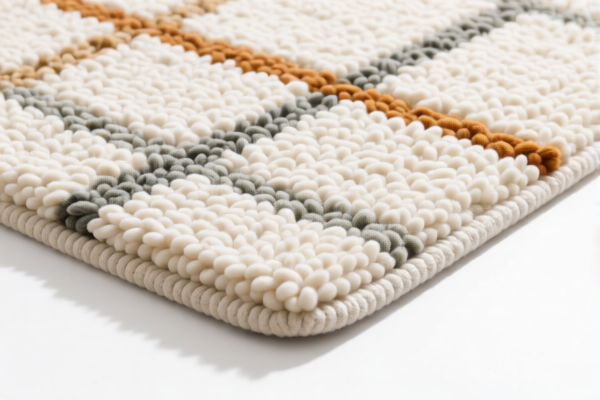
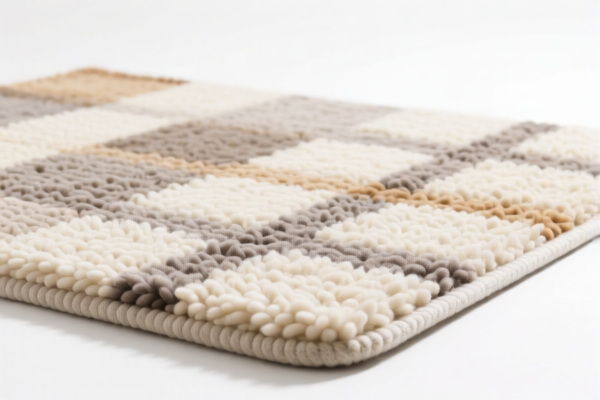
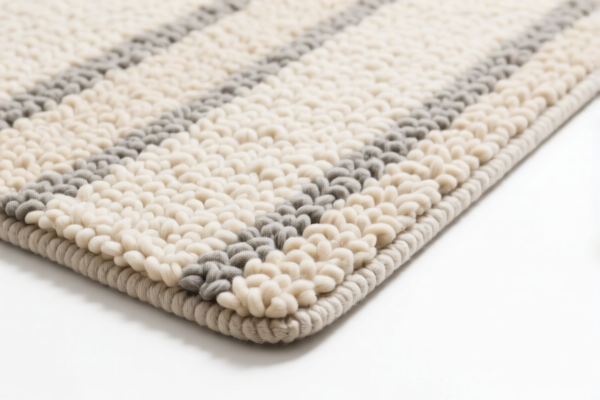
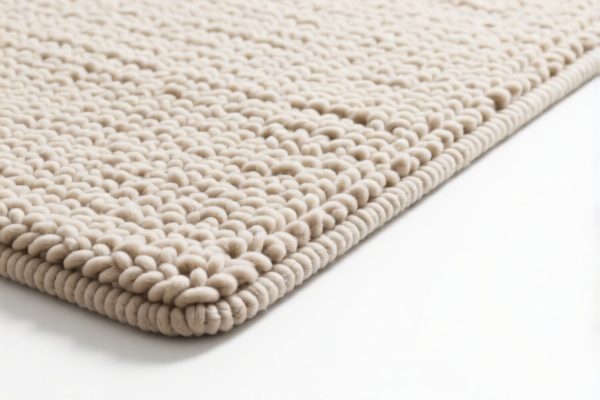
AI Analysis
🧶 Animal Hair Carpets: Hand-Knotted, Alpaca & Llama (5701.10.13.00 / 5701.10.16.00)
🌐 HS Code Reference & Customs Clearance Guide | 2026 Latest Tariff Analysis | Professional Clearance Strategy
📌 I. Product Definition & Classification: Understanding "Animal Hair Carpets"
In the context of international trade, "Animal Hair Carpets" refer to textile floor coverings made from wool or fine animal hair (such as alpaca, llama, guanaco, etc.), specifically excluding tufted or flocked types. These products are traditionally handmade and valued for their durability and folklore craftsmanship.
Based on the provided data, these carpets are classified under HS Code 5701 (Knotted carpets). The classification depends on two key factors: 1. Material Composition: Over 50% by weight of the pile must be hair from specific animals (Alpaca, Guanaco, Huarizo, Llama, Misti, Suri, or combinations). 2. Manufacturing Method: The pile must be hand-inserted or hand-knotted during weaving/knitting.
⚠️ Critical Distinction:
- If the carpet is certified as hand-loomed folklore products, it falls under 5701.10.13.00.
- If it meets the material and hand-knotted criteria but is not certified as a folklore product, it falls under 5701.10.16.00.
- Note: Both categories carry the same total tariff rate in this dataset.
📦 II. HS Code Classification Details (2026 Latest Tariff Reference)
| HS Code | Product Description | Key Criteria | Tax Rate |
|---|---|---|---|
| 5701.10.13.00 | Carpets, knotted, of wool/fine animal hair (Alpaca/Llama/etc., >50% pile weight), hand-inserted/knotted, Certified hand-loomed and folklore products. | ✅ Certified Folklore ✅ Hand-knotted ✅ >50% Specific Animal Hair |
25.0% |
| 5701.10.16.00 | Carpets, knotted, of wool/fine animal hair (Alpaca/Llama/etc., >50% pile weight), hand-inserted/knotted, Other. | ❌ Not Certified Folklore ✅ Hand-knotted ✅ >50% Specific Animal Hair |
25.0% |
🔍 Key Reminder:
- The Total Tax Rate is 25.0% for both codes.
- Breakdown: Base Tariff: 0.0% + Additional Tariff: 25.0%.
- Crucial Condition: The pile MUST be hand-knotted/inserted. If machine-made, these codes do not apply.
- Material Requirement: The pile must contain >50% by weight of hair from the specified Andean animals (Alpaca, Llama, etc.).
💰 III. 2026 Latest Tariff Rate Detailed Explanation
✅ Applicable Country: United States (US)
✅ Origin: China (CN) (Implied by the "Additional Tariff" structure typical of US-China trade data)
✅ Effective Date: 2025+ (Current Tariff Regime)
🎯 1. 5701.10.13.00 —— Certified Hand-Loomed Folklore Carpets
| Item | Content |
|---|---|
| Base Tariff | 0.0% (Ad Valorem) |
| Additional Tariff | +25.0% (Section 301 / Trade Remediation) |
| Total Tariff Rate | 25.0% |
| Tax Calculation | CIF Value × 25% |
| De Minimis Exemption | ❌ Not Applicable (Standard commercial shipment) |
| Legal Basis | HTSUS 5701.10.13.00 + Section 301 Additional Duties |
📌 Explanation:
- Despite being "Folklore" products, they are subject to the standard 25% additional tariff if originating from China.
- The "Base Tariff" of 0% is a benefit for certain textile categories, but the Additional Tariff negates this advantage, resulting in a flat 25% duty.
- Certification is mandatory: To use this code, you must provide proof of "Folklore Product" status (e.g., artisan association certification).
🎯 2. 5701.10.16.00 —— Other Hand-Knotted Animal Hair Carpets
| Item | Content |
|---|---|
| Base Tariff | 0.0% (Ad Valorem) |
| Additional Tariff | +25.0% (Section 301 / Trade Remediation) |
| Total Tariff Rate | 25.0% |
| Tax Calculation | CIF Value × 25% |
| De Minimis Exemption | ❌ Not Applicable |
| Legal Basis | HTSUS 5701.10.16.00 + Section 301 Additional Duties |
📌 Note:
- This code applies if the carpet is hand-knotted and meets the material composition but lacks the specific folklore certification.
- The tax burden is identical to the certified version. Therefore, obtaining folklore certification does not reduce the tariff in this specific dataset but may be required for other trade benefits (e.g., GSP, if applicable, though often excluded for China).
🛠️ IV. Customs Clearance Practical Advice (Real-World Pitfall Avoidance)
✅ 1. Preparation Checklist (Essential Documents)
| Document | Required? | Description |
|---|---|---|
| ✅ Product Description | ✔️ | Must explicitly state: "Hand-knotted," "Alpaca/Llama Hair >50%," "Folklore Certified" (if applicable). |
| ✅ Certificate of Origin | ✔️ | Required to prove country of origin. If from Peru/Bolivia, check for preferential agreements (but data shows 25% tax, implying China origin or no preference). |
| ✅ Fiber Composition Test Report | ✔️ | Critical: Must prove >50% of the pile is specific animal hair (Alpaca/Llama). Generic "wool" reports may lead to misclassification. |
| ✅ Photos of Construction | ✔️ | Clear images showing the knotting technique (not tufted/flocked). |
| ✅ Commercial Invoice | ✔️ | Must match HS Code and describe "Knotted Carpet," not just "Rug." |
| ✅ Packaging List | ✔️ | Detail weight, dimensions, and number of pieces. |
✅ 2. Declaration Tips (Key Mnemonics)
🔥 "Hand-Knot, High Content, Certify or Not, 25% is Got!"
| Scenario | Correct Declaration | Incorrect Action |
|---|---|---|
| Machine-made Alpaca Rug | DO NOT USE 5701.10.xxxx → Use 5702 or 5703 (Different Tax) | Using 5701 → Misclassification Penalty |
| Tufted (not knotted) Carpet | Use 5702.51.00 or 5703.xxxx | Using 5701 → Clearance Delay |
| Folklore Certified | 5701.10.13.00 + Certification Docs |
Using 5701.10.16.00 → No harm, but less specific |
| Non-Certified Hand-Knotted | 5701.10.16.00 |
Using 5701.10.13.00 without proof → Audit Risk |
| Pile <50% Specific Hair | DO NOT USE 5701.10.1x → Check other 5701 subheadings | Using 5701.10.1x → Reclassification + Fine |
✅ 3. Special Case Handling
| Situation | Handling Advice |
|---|---|
| Mixed Fibers | If the pile contains >50% Alpaca/Llama but also synthetic fibers, 5701.10.1x may still apply. If synthetic >50%, it likely falls under 5703 or 5704. |
| Unfinished Carpets | The prompt mentions "Unfinished." If the carpet is not yet bound/edged, it is still considered "made up" for HS 5701 if the pile is complete. Ensure description says "Unfinished Edging" but "Complete Pile." |
| Origin Confusion | If the carpet is made in Peru (using local alpaca) but exported via China, ensure Certificate of Origin reflects Peru. However, if the data assumes China origin, the 25% tax applies regardless of fiber source. |
🌍 V. Global Market Comparison (2026 Latest)
| Country/Region | Recommended HS Code | Tariff (Approx.) | Notes |
|---|---|---|---|
| 🇺🇸 USA | 5701.10.13.00 / 5701.10.16.00 |
25.0% | Base 0% + Add. 25%. |
| 🇨🇳 China | 5701.10.13.00 / 5701.10.16.00 | ~8-10% | Import duty for finished carpets. |
| 🇪🇺 EU | 5701.10.10 | ~12% | Standard MFN rate. No additional "Section 301" style taxes. |
| 🇨🇦 Canada | 5701.10.10.00 | 0-12% | Varies by origin. FTAA/USMCA may apply if from Andean countries. |
📌 Conclusion:
- The 25% tariff is specific to US imports from China under current trade policies.
- For other markets, tariffs may be lower, but compliance with "Hand-Knotted" and "Material Composition" definitions is global.
📌 VI. Common Errors & Pitfalls (Lessons Learned)
❌ Error 1: Declaring as "Tufted Carpet" when it is "Knotted"
👉 Consequence: Misclassification. Tufted carpets (5703) often have different tax rates and less scrutiny on hand-labor. Customs may fine for misrepresentation.
❌ Error 2: Ignoring the ">50% by Weight" Rule
👉 Consequence: If the pile is mostly synthetic with some alpaca accents, it falls under 5703 (Other carpeting). The 25% tax might still apply, but the HS Code is wrong, leading to data mismatch.
❌ Error 3: Lack of "Folklore" Certification for Code .13
👉 Consequence: If you declare 5701.10.13.00 without proof, customs may reclassify to .16.00 or question the "Hand-made" status, causing delays.
❌ Error 4: Not specifying "Alpaca/Llama"
👉 Consequence: Generic "Animal Hair" is vague. Customs requires specific fiber identification to apply the correct subheading.
✅ Correct Practice:
"Hand-Knotted Alpaca Carpet, 5'x7', Pile: 70% Alpaca, 30% Wool, Folklore Certified, Unfinished Edges, Model XYZ"
🎯 VII. Conclusion: Professional Clearance for Textile Art
🎯 Remember the Rules:
🔹 "Hand-Knotted is Key, >50% Hair is Must, Certification Defines Code, 25% Tax is Trust."
🔹 "HS Code 5701.10, Don't Confuse with Tufted, Fiber Content Proves Quality."
📌 Tip:
- Always include a Fiber Analysis Report with shipments.
- Clearly mark "Folklore Certified" on the invoice if using .13.00.
- Verify if the "Unfinished" state affects valuation (it usually doesn't for HS classification, but may affect duty-free status in some preferential regimes).
📣 Immediate Action:
📞 Confirm fiber content with your supplier.
📦 Prepare certification documents for "Folklore" status.
🚀 Declare accurately to avoid 25% + penalties risk!
✨ Professional Clearance Starts with Accurate Classification!
💼 Your profit margin depends on correct HS Codes!
Customer Reviews
About HS Code Classification
The Harmonized System (HS) is an internationally standardized nomenclature developed by the World Customs Organization (WCO) to classify traded products. Over 200 countries use the HS system as the basis for customs tariffs, trade statistics, and import/export regulations.
Each HS code follows a hierarchical structure:
- Chapter (2 digits) — Broad category of goods (e.g., Chapter 84: Machinery and Mechanical Appliances)
- Heading (4 digits) — More specific grouping within the chapter
- Subheading (6 digits) — Internationally standardized breakdown, used by all WCO member countries
- National subdivisions (8-10 digits) — Country-specific extensions for further classification, such as US HTSUS 10-digit codes
Correct HS code classification is essential for smooth customs clearance, accurate duty payment, and compliance with trade regulations. Misclassification can lead to customs delays, overpayment of duties, or penalties.
When importing from CN to US, the applicable tariff rates may include:
- Most-Favored-Nation (MFN) rate — The standard duty rate applied to WTO members
- General rate — Applied to countries without trade agreements
- Trade remedy duties — Additional tariffs such as Section 301 (anti-dumping), Section 232 (national security), or countervailing duties
The information provided on this page is for reference purposes only. For official classification, please consult with your local customs authority or a licensed customs broker.