Anti theft Alarm
CN → US| HS Code | Tariff Rate | Origin | Destination | Doc |
|---|---|---|---|---|
| 8531100035 | 36.3% | CN | US | Official Doc |
| 8531100045 | 11.3% | CN | US | Official Doc |
| 8543709860 | 37.6% | CN | US | Official Doc |
| 8543706000 | 35.0% | CN | US | Official Doc |
| 8531200040 | 35.0% | CN | US | Official Doc |
Product Images
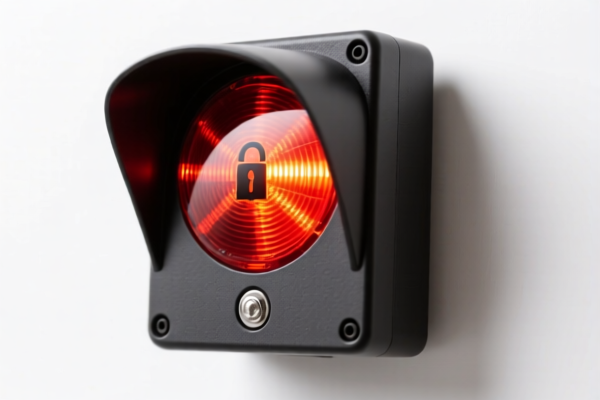
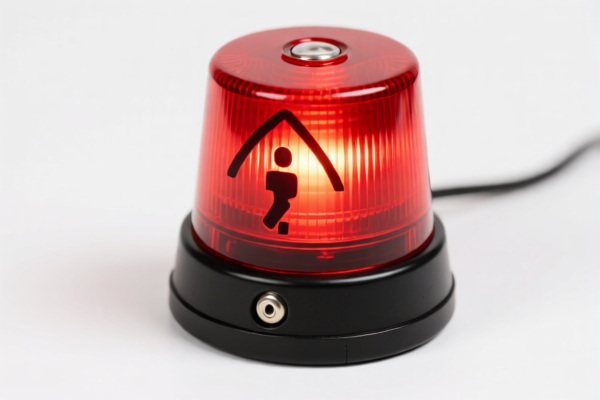
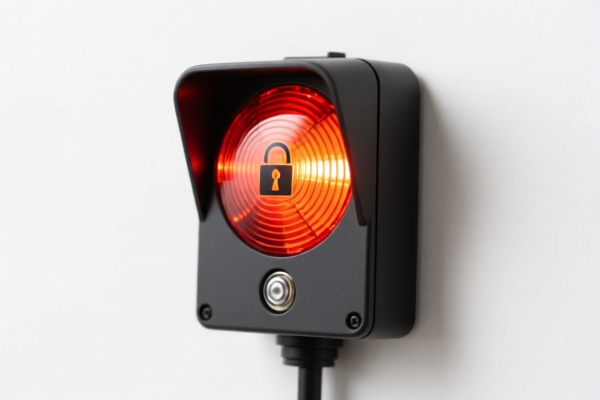
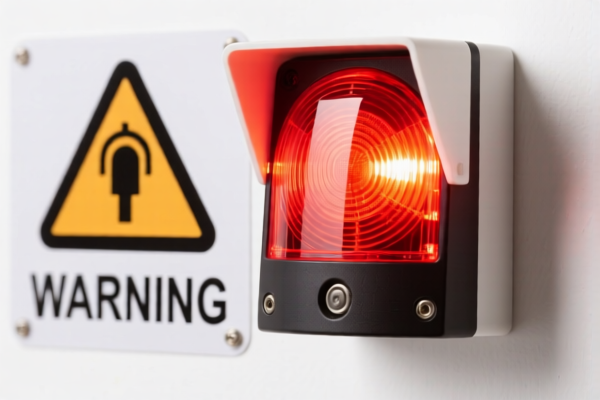
AI Analysis
🔔 Anti-Theft Alarm Systems (Security Alarms)
🌐 HS Code Reference & Customs Clearance Guide | 2026 Latest Tariff Breakdown | Professional Entry Strategy for US Imports
📌 I. Product Definition: What is an "Anti-Theft Alarm"?
An Anti-Theft Alarm is a security device designed to detect unauthorized entry, intrusion, or potential threats (such as fire or theft) and trigger an audible/visual alert. In international trade, the classification depends heavily on functionality and technical architecture:
- Simple Signaling Devices: Standalone horns, sirens, or visual indicators without complex logic processing.
- Complex Electronic Systems: Devices with independent functions, network connectivity, or specific logic circuits for detection and communication.
⚠️ Key Distinction Point: * If it is a standalone audible/visual signal (e.g., a siren connected to an existing system) → Usually 8531.10 or 8531.20. * If it is a complete, independent unit with its own processing logic (e.g., a smart hub, IoT sensor, or specialized electronic appliance) → Often 8543.70.
📦 II. HS Code Classification Matrix (2026 Data Analysis)
Based on the provided data, here is the precise breakdown for Anti-Theft Alarms entering the US market. Note that while some HS codes share a prefix, their tariff structures differ significantly due to specific "Section 301" and "122 Clause" additions.
| HS Code | Product Description | Key Characteristics | Total Tax Rate* |
|---|---|---|---|
8531.10.00.35 |
Anti-theft Alarm (Theft-specific) | Deducted as "Theft Alarm Device"; No material conflict. | 36.3% |
8531.10.00.45 |
Anti-theft Alarm (Fire/Theft Hybrid / Catch-all) | Used for theft OR fire alarms; Considered "Other" catch-all category. | 11.3% |
8543.70.98.60 |
Independent Electrical Appliance | Classified as "Other Machines/Apparatus" with independent function. | 37.6% |
8543.70.60.00 |
Network-Connected Electronic Device | Designed to connect to networks or instruments. | 35.0% |
8531.20.00.40 |
Anti-Theft Warning Light | Classified as "Electro-acoustic or Visual Signaling Equipment." | 35.0% |
*Rates include Base Tariff + Additional Duties (Section 301/122). See Section III for detailed calculation.
💰 III. Detailed Tariff Structure & Legal Basis
✅ Applicable Country: United States (US)
✅ Origin: China (CN)
✅ Effective Time: Current applicable rates as per 2026 data.
🎯 1. The "Gold Standard" for Simple Alarms: 8531.10.00.45
⭐ RECOMMENDED FOR LOWEST COST
| Item | Details |
|---|---|
| Base Tariff | 1.3% |
| Section 301 Additional | 0.0% (Crucial Advantage!) |
| Clause 122 Additional | 10.0% |
| Total Rate | 11.3% |
| Legal Basis | Base: 1.3% + 122 Clause: 10% |
📌 Why this matters:
This is the most cost-effective classification for standard anti-theft alarms, provided the product can be justified as a "Theft or Fire Alarm" falling under the "Other" catch-all definition. It avoids the heavy 25% Section 301 tariff applied to other sub-categories.
🎯 2. Specific Theft Alarm: 8531.10.00.35
| Item | Details |
|---|---|
| Base Tariff | 1.3% |
| Section 301 Additional | 25.0% |
| Clause 122 Additional | 10.0% |
| Total Rate | 36.3% |
| Legal Basis | Base: 1.3% + 301: 25.0% + 122: 10% |
📌 Risk Alert:
If Customs determines the device is specifically for theft and not a "fire/theft hybrid" or "other," they may apply the 25% additional tariff. This is a 25% higher cost than code.45.
🎯 3. Complex/Smart Devices: 8543.70.98.60 & 8543.70.60.00
| HS Code | Base | 301 Add. | 122 Add. | Total | Note |
|---|---|---|---|---|---|
8543.70.98.60 |
2.6% | 25.0% | 10.0% | 37.6% | Independent Function |
8543.70.60.00 |
0.0% | 25.0% | 10.0% | 35.0% | Network/Instrument Connection |
📌 Analysis:
Devices with independent processing functions or network capabilities are treated as "Machines/Apparatus." They incur the full 25% Section 301 tariff. While8543.70.60.00has 0% base duty, the 25% add-on makes it more expensive than the simple alarm category (.45).
🎯 4. Warning Lights: 8531.20.00.40
| Item | Details |
|---|---|
| Base Tariff | 0.0% |
| Section 301 Additional | 25.0% |
| Clause 122 Additional | 10.0% |
| Total Rate | 35.0% |
📌 Clarification:
If your product is primarily a visual warning device (e.g., flashing LED strobe for security) rather than an electronic alarm controller, it falls here. Same tax burden as smart networked devices.
🛠️ IV. Customs Clearance Practical Advice
✅ 1. Critical Documentation Checklist
| Document | Requirement | Purpose |
|---|---|---|
| Product Specification Sheet | Must clearly state "Anti-Theft Alarm" or "Fire/Security Alarm." | Determines if it fits 8531.10 (Signaling) or 8543.70 (Machine). |
| Technical Diagrams | Show if it has independent logic boards or is just a sensor/siren. | Proves whether it is a "component" or a "finished article." |
| Commercial Invoice | Clearly list HS Code and Product Name. Avoid vague terms like "Gadget." | Prevents valuation disputes and delays. |
| Certifications | FCC ID, UL, CE, RoHS. | Mandatory for electronic security devices in the US. |
| Origin Certificate | Proof of manufacture in China. | Triggers the correct 25%/10% additional duties. |
✅ 2. Strategic Classification Tips (How to Save Money)
🔥 Strategy: Aim for
8531.10.00.45(11.3%)
- Emphasize "Fire/Theft" Dual Purpose: If your alarm has any capability related to fire detection or general security, describe it as a "Multi-Function Security and Fire Alarm". This supports the "Other" catch-all classification under
.45, avoiding the 25% Section 301 tariff. - Avoid "Smart/IoT" Labels in Primary Description: If you classify as
8543.70, you pay 35%+. Try to describe the device as a "Signaling Device" or "Audible/Visual Alarm" rather than a "Networked Intelligent System" in the technical summary, if technically accurate. - Distinguish Sirens from Controllers:
- If selling a standalone Siren/Horn, argue for 8531.10/8531.20.
- If selling a Control Panel/Hub with network features, it will likely fall under 8543.70.
✅ 3. Common Pitfalls & Avoidance
| Pitfall | Consequence | Solution |
|---|---|---|
| Misclassifying as "Other Electrical Parts" (8538) | Incorrect classification, potential penalties. | Alarms are complete articles, not parts. Use 8531 or 8543. |
| Ignoring Clause 122 | Underpayment of taxes (10% penalty). | Ensure all Chinese-origin electronics are accounted for the 122 clause. |
| Confusing "Theft" vs. "Fire/Theft" | Audit risk. | Provide clear marketing material showing fire-related features if claiming .45. |
| Assuming 0% Base = 0% Tax | Shock at checkout. | Even with 0% base (e.g., 8543.70.60.00), the 35% total tax is high. Compare vs. 11.3% for .45. |
🌍 V. Summary & Recommendation
| Scenario | Recommended HS Code | Total Tax | Action |
|---|---|---|---|
| Standard Burglar Alarm / Siren | 8531.10.00.45 |
11.3% | BEST OPTION. Describe as "Security/Fire Alarm System." |
| Dedicated Theft Detector | 8531.10.00.35 |
36.3% | Only if it cannot be classified as fire-related or general signaling. |
| Smart/IoT Alarm Hub | 8543.70.60.00 |
35.0% | Inevitable if network-dependent. Budget accordingly. |
| Visual Warning Light | 8531.20.00.40 |
35.0% | Use only for pure visual strobe/siren units. |
🚀 Final Pro Tip:
For maximum tax efficiency, structure your product line to include multi-sensor capabilities (e.g., smoke + intrusion) or market the device broadly as a "General Security Signaling Device" to leverage the 11.3% rate under8531.10.00.45. Always consult a licensed customs broker to validate the "Fire/Security" dual-purpose claim before shipment.
✨ Accurate Classification Saves Thousands!
💼 Don't let a 25% difference destroy your margin. Classify Smart!
Customer Reviews
About HS Code Classification
The Harmonized System (HS) is an internationally standardized nomenclature developed by the World Customs Organization (WCO) to classify traded products. Over 200 countries use the HS system as the basis for customs tariffs, trade statistics, and import/export regulations.
Each HS code follows a hierarchical structure:
- Chapter (2 digits) — Broad category of goods (e.g., Chapter 84: Machinery and Mechanical Appliances)
- Heading (4 digits) — More specific grouping within the chapter
- Subheading (6 digits) — Internationally standardized breakdown, used by all WCO member countries
- National subdivisions (8-10 digits) — Country-specific extensions for further classification, such as US HTSUS 10-digit codes
Correct HS code classification is essential for smooth customs clearance, accurate duty payment, and compliance with trade regulations. Misclassification can lead to customs delays, overpayment of duties, or penalties.
When importing from CN to US, the applicable tariff rates may include:
- Most-Favored-Nation (MFN) rate — The standard duty rate applied to WTO members
- General rate — Applied to countries without trade agreements
- Trade remedy duties — Additional tariffs such as Section 301 (anti-dumping), Section 232 (national security), or countervailing duties
The information provided on this page is for reference purposes only. For official classification, please consult with your local customs authority or a licensed customs broker.