Aquarium Tubing
CN → US| HS Code | Tariff Rate | Origin | Destination | Doc |
|---|---|---|---|---|
| 3917290090 | 38.1% | CN | US | Official Doc |
| 4009120050 | 20.0% | CN | US | Official Doc |
| 3917230000 | 38.1% | CN | US | Official Doc |
| 4009110000 | 37.5% | CN | US | Official Doc |
Product Images
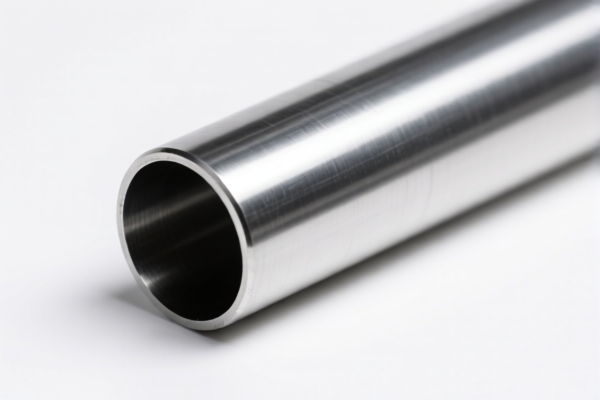
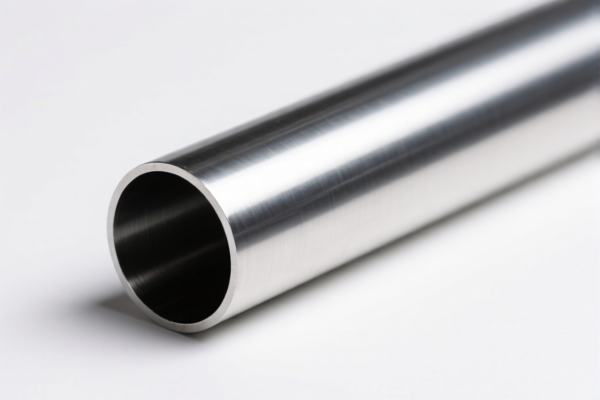
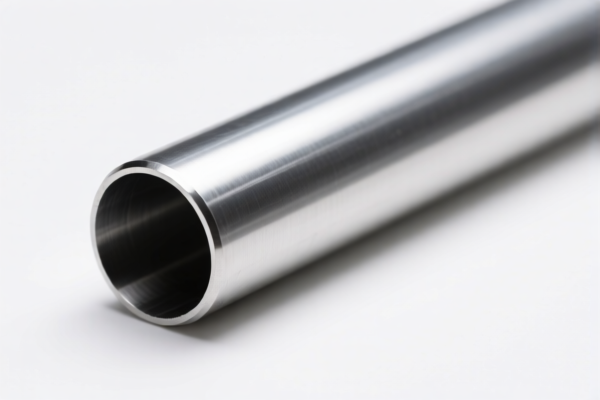
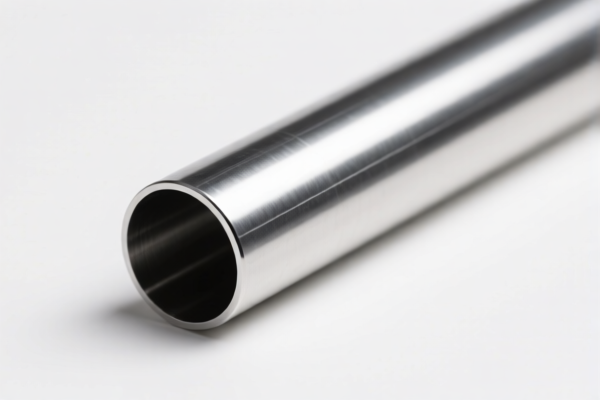
AI Analysis
🐠 Aquarium Tubing: HS Code Classification & U.S. Customs Clearance Guide
🌐 HS Code Reference & Clearance Strategy | 2026 Latest Tariff Analysis | Professional Level Compliance
📌 I. Product Definition & Classification: Do You Really Understand "Aquarium Tubing"?
Aquarium tubing (often referred to as "tubing," "hose," or "flexible pipe") is a critical component in aquatic systems, used for water circulation, filtration intake/exhaust, and air supply. In international trade, classification depends heavily on the material and structure.
There are two primary categories based on HS Nomenclature:
1. Plastic Tubing (Plastics and articles thereof)
- Material: Polyethylene (PE), Polyvinyl Chloride (PVC), Silicone, or other polymers.
- Key Feature: Synthetic polymer-based. If reinforced, it must still be predominantly plastic.
- Common HS Codes: 3917.23.00.00 (PVC), 3917.29.00.90 (Other plastics).
2. Rubber Tubing (Rubber and articles thereof)
- Material: Natural rubber, synthetic rubber (e.g., EPDM, NBR), or vulcanized rubber.
- Key Feature: Elastic, often used for high-pressure or temperature-resist applications.
- Common HS Codes: 4009.11.00.00, 4009.12.00.50.
⚠️ Critical Distinction Point:
- If the tube is primarily plastic (even if colored or flexible) → Chapter 39
- If the tube is primarily rubber (vulcanized) → Chapter 40
- Reinforced Tubes: If reinforced with textile, metal, or other materials, but the rubber/plastic remains the essential character, it still falls under Chapter 39 or 40, not Chapter 39/40 "reinforced" subcategories unless specified otherwise.
📦 II. HS Code Classification Details (2026 Latest Tariff Authority)
Below is the detailed breakdown of the HS Codes found in your reference data, tailored for Aquarium Tubing.
| HS Code | Product Description | Material Basis | Relevance to Aquarium Tubing |
|---|---|---|---|
3917.29.00.90 |
Tubes, pipes, and hoses, of plastics (other than hard plastics) | Plastic (e.g., PE, PP, Silicone, non-PVC plastics) | ✅ Most Common for standard flexible aquarium hoses (non-PVC). |
4009.12.00.50 |
Tubes, pipes, and hoses, of vulcanized rubber, without fittings | Rubber (Vulcanized) | ✅ For high-end or commercial aquariums using rubber hoses. |
3917.23.00.00 |
Tubes, pipes, and hoses, of polymers of vinyl chloride (PVC) | PVC | ✅ For rigid or semi-rigid PVC aquarium tubing (often for pumps). |
4009.11.00.00 |
Tubes, pipes, and hoses, of rubber or plastics, without fittings | Rubber/Plastic (Generic/Sub-class) | ⚠️ Note: This code is ambiguous in some tariff schedules; however, in the provided data, it is linked to "Rubber or Plastic" tubular hoses. Often used for mixed or specific rubber/plastic hybrids. |
🔍 Important Reminder:
- Material is King: You must declare the exact polymer or rubber type. Misdeclaring "Plastic" when it is "Rubber" can lead to misclassification penalties.
- "Without Fittings": All these codes specify hoses/tubes without assembled fittings (like barbed connectors). If sold with pre-attached nozzles or ends, classification may shift.
💰 III. 2026 Latest Tariff Rate Breakdown (Including Additional Duties)
✅ Applicable Country: United States (US)
✅ Country of Origin: China (CN)
✅ Effective Date: From November 10, 2025 (and subsequent imports)
🎯 1. 3917.29.00.90 – Other Plastic Tubes/Pipes/Hoses
| Item | Detail |
|---|---|
| Base Tariff | 3.1% (Ad Valorem) |
| Section 301 Tariff | +25.0% (U.S. Trade Law Section 301) |
| Section 122 Tariff | +10.0% (Specific import restrictions/duties) |
| Total Tax Rate | 38.1% |
| Tax Calculation | CIF Value × 38.1% |
| De Minimis Eligibility | ❌ No (deny_de_minimis) |
| Legal Basis Path | Section 301: 9903.88.01 → Section 122 → USITC:3917.29.00.90 |
📌 Explanation:
- This is the most common code for aquarium tubing made of PE, PP, or Silicone.
- The total tax burden is high (38.1%).
- No de minimis exemption: Even small shipments for personal use or sample purposes are subject to full duty if declared as commercial goods.
🎯 2. 4009.12.00.50 – Vulcanized Rubber Tubes
| Item | Detail |
|---|---|
| Base Tariff | 2.5% |
| Section 301 Tariff | +7.5% |
| Section 122 Tariff | +10.0% |
| Total Tax Rate | 20.0% |
| Tax Calculation | CIF Value × 20.0% |
| De Minimis Eligibility | ❌ No |
| Legal Basis Path | Section 301: 9903.01.25 → Section 122 → USITC:4009.12.00.50 |
📌 Note:
- Rubber tubing benefits from a lower Section 301 rate (7.5%) compared to plastic (25.0%).
- Total tax is 20.0%, significantly cheaper than plastic alternatives.
- Ensure the product is indeed vulcanized rubber, not plastic-rubber blend (which may fall under plastic).
🎯 3. 3917.23.00.00 – PVC Plastic Tubes
| Item | Detail |
|---|---|
| Base Tariff | 3.1% |
| Section 301 Tariff | +25.0% |
| Section 122 Tariff | +10.0% |
| Total Tax Rate | 38.1% |
| Tax Calculation | CIF Value × 38.1% |
| De Minimis Eligibility | ❌ No |
| Legal Basis Path | Section 301: 9903.88.01 → Section 122 → USITC:3917.23.00.00 |
📌 Warning:
- PVC tubing is common for rigid aquarium filters but less so for flexible hoses due to stiffness.
- Same high tax rate as other plastics: 38.1%.
🎯 4. 4009.11.00.00 – Rubber or Plastic Tubular Hoses
| Item | Detail |
|---|---|
| Base Tariff | 2.5% |
| Section 301 Tariff | +25.0% |
| Section 122 Tariff | +10.0% |
| Total Tax Rate | 37.5% |
| Tax Calculation | CIF Value × 37.5% |
| De Minimis Eligibility | ❌ No |
| Legal Basis Path | Section 301: 9903.01.24 → Section 122 → USITC:4009.11.00.00 |
📌 Caution:
- This code is broader and may include hybrid materials.
- While base tariff is low (2.5%), the 25% Section 301 applies, making it nearly as expensive as standard plastic.
- Only use if the product’s composition is ambiguous or specifically classified here by USITC rulings.
🛠️ IV. Customs Clearance Practical Advice (Avoid Pitfalls)
✅ 1. Document Checklist (Mandatory)
| Document | Required? | Purpose |
|---|---|---|
| ✅ Product Specification Sheet | ✔️ | Must state material (e.g., "100% Silicone", "Vulcanized Rubber") and dimensions. |
| ✅ Material Composition Certificate | ✔️ | Crucial for distinguishing between Chapter 39 (Plastic) and Chapter 40 (Rubber). |
| ✅ Product Photos | ✔️ | Show cross-section, flexibility, and any printed markings (e.g., "PVC Free"). |
| ✅ Commercial Invoice | ✔️ | Clearly describe as "Aquarium Tubing" or "Flexible Hose for Aquatic Use," not generic "Pipe." |
| ✅ Packing List | ✔️ | Specify net/gross weight, dimensions, and quantity. |
| ✅ Origin Certificate (CO) | ✔️ | If claiming origin from non-China countries (e.g., Vietnam, Thailand), this may exempt Section 301 duties. |
✅ 2. Declaration Tips (Key Mnemonics)
🔥 "Material First, Chapter Clear; No Fittings, Code Clear!"
| Scenario | Correct Declaration | Incorrect Declaration | Consequence |
|---|---|---|---|
| Silicone/PE Hose | 3917.29.00.90 |
4009.11.00.00 |
Misclassification penalty; potential 17.5% difference in tax. |
| Vulcanized Rubber Hose | 4009.12.00.50 |
3917.29.00.90 |
Underpayment of duty; back taxes + interest. |
| PVC Rigid Tube | 3917.23.00.00 |
3917.29.00.90 |
Minor risk, but specificity is required for audit. |
| Hose with Attached Nozzle | Split Declaration | Single code 3917.29.00.90 |
Nozzle may be classified separately (e.g., as plastic article), triggering different rates. |
✅ 3. Special Cases
| Case | Handling Advice |
|---|---|
| OEM Custom Tubing | Provide design specs and material MSDS (Material Safety Data Sheet) to prove non-food grade if applicable. |
| Reinforced Tubing (Textile/Metal) | If rubber/plastic is essential character, still use Ch. 39/40. If metal dominant, may shift to Ch. 73. |
| Origin from Vietnam/Thailand | Apply for Form E or DSE to claim 0% Section 301 duty. Total tax could drop to ~3-5%. |
| Sample/Personal Use | Even for de minimis shipments, Section 301 and 122 duties apply if total value exceeds $800? No, de minimis is $800, but Section 301 applies to de minimis since Nov 2024. So, $800 exemption does NOT apply to Chinese goods with Section 301 duties. |
🌍 V. Global Market Comparison (2026)
| Country/Region | Recommended HS Code | Base Duty | Additional Duties (CN Origin) | Total Est. Duty | Notes |
|---|---|---|---|---|---|
| 🇺🇸 USA | 3917.29.00.90 |
3.1% | 35% (301 + 122) | 38.1% | High barrier. Consider non-CN origin. |
| 🇨🇳 China | 3917.29.00.90 |
3.1% | 0% | 3.1% | Low import duty. |
| 🇪🇺 EU | 3917.29.00 |
6.5% | 0% (no Section 301) | 6.5% | No retaliatory tariffs. |
| 🇬🇧 UK | 3917.29.00 |
6.5% | 0% | 6.5% | Post-Brexit tariff alignment with EU. |
| 🇦🇺 Australia | 3917.29.00 |
5.0% | 0% | 5.0% | No Section 301 impact. |
📌 Conclusion:
- USA is the most expensive market due to Section 301 and Section 122 tariffs.
- Diversify Supply Chain: Sourcing aquarium tubing from Vietnam, Thailand, or Malaysia can save 25–35% in duties.
📌 VI. Common Mistakes & Pitfalls (Lessons Learned)
❌ Mistake 1: Declaring "Aquarium Hoses" as "Plastic Pipes" under 3917.39.00.00 (Rigid Pipes)
👉 Result: If flexible, customs may reclassify to 3917.29.00.90. Delay + penalty.
❌ Mistake 2: Ignoring Section 122 Tariffs
👉 Result: Budget only for Section 301 (25%), but 10% extra hits unexpectedly. Total is 38.1%, not 28.1%.
❌ Mistake 3: Claiming "De Minimis" ($800) for Chinese-origin tubing
👉 Result: Illegal since Nov 2024. Section 301 and 122 duties apply even to small packages. Customs will seize or bill retroactively.
❌ Mistake 4: Not specifying "Without Fittings"
👉 Result: If sold with connectors, the code may change, or items may be split, increasing complexity and risk.
✅ Correct Approach:
"Flexible Aquarium Tubing, Material: 100% Silicone Rubber, Length: 10m, Without Fittings, Origin: China"
🎯 VII. Conclusion: Precise Classification Saves Money!
🎯 Remember the Key Rules:
🔹 "Plastic = 38.1% | Rubber = 20% | Non-CN Origin = 0–6.5%"
🔹 "Section 122 is the Silent Killer: Always add 10%."
🔹 "No De Minimis for China: Every dollar counts."
📌 Pro Tip:
If you are importing aquarium tubing into the US from China, consider:
1. Switching to Rubber (4009.12.00.50) to save ~18% in duties.
2. Sourcing from Vietnam/Thailand to eliminate Section 301 duties entirely.
3. Applying for an Advance Ruling from CBP to confirm HS Code before shipping.
📣 Immediate Action:
📞 Consult a licensed customs broker.
📄 Prepare Material Safety Data Sheets (MSDS).
🌍 Evaluate non-China supply chains.
🚀 Optimize your supply chain to maximize profit margins!
✨ Professional clearance starts with accurate classification.
💼 Every percentage point in duty is a percentage point in profit.
Customer Reviews
About HS Code Classification
The Harmonized System (HS) is an internationally standardized nomenclature developed by the World Customs Organization (WCO) to classify traded products. Over 200 countries use the HS system as the basis for customs tariffs, trade statistics, and import/export regulations.
Each HS code follows a hierarchical structure:
- Chapter (2 digits) — Broad category of goods (e.g., Chapter 84: Machinery and Mechanical Appliances)
- Heading (4 digits) — More specific grouping within the chapter
- Subheading (6 digits) — Internationally standardized breakdown, used by all WCO member countries
- National subdivisions (8-10 digits) — Country-specific extensions for further classification, such as US HTSUS 10-digit codes
Correct HS code classification is essential for smooth customs clearance, accurate duty payment, and compliance with trade regulations. Misclassification can lead to customs delays, overpayment of duties, or penalties.
When importing from CN to US, the applicable tariff rates may include:
- Most-Favored-Nation (MFN) rate — The standard duty rate applied to WTO members
- General rate — Applied to countries without trade agreements
- Trade remedy duties — Additional tariffs such as Section 301 (anti-dumping), Section 232 (national security), or countervailing duties
The information provided on this page is for reference purposes only. For official classification, please consult with your local customs authority or a licensed customs broker.