Automatic Can Opener
CN → US| HS Code | Tariff Rate | Origin | Destination | Doc |
|---|---|---|---|---|
| 8509805040 | 14.2% | CN | US | Official Doc |
| 8438800000 | 35.0% | CN | US | Official Doc |
| 8438909090 | 37.8% | CN | US | Official Doc |
| 8438800000 | 35.0% | CN | US | Official Doc |
| 8509805040 | 14.2% | CN | US | Official Doc |
Product Images
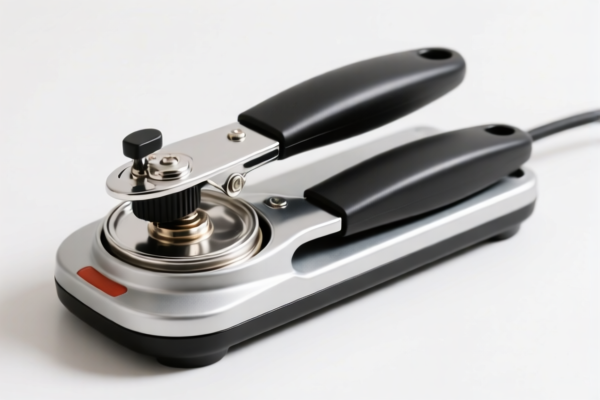
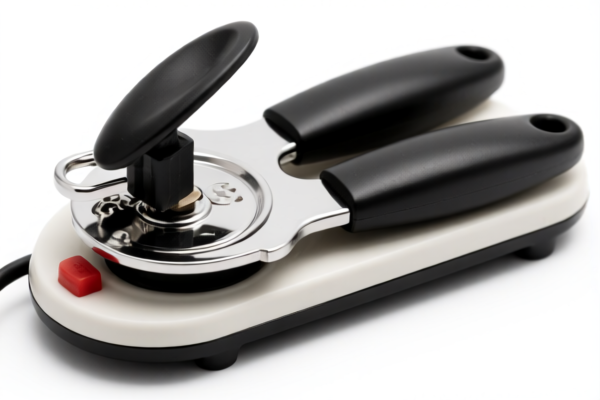
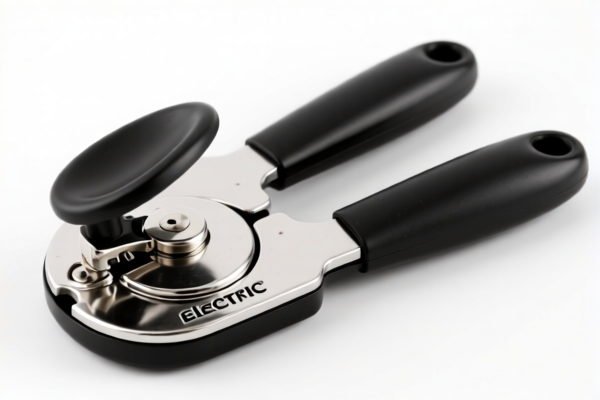
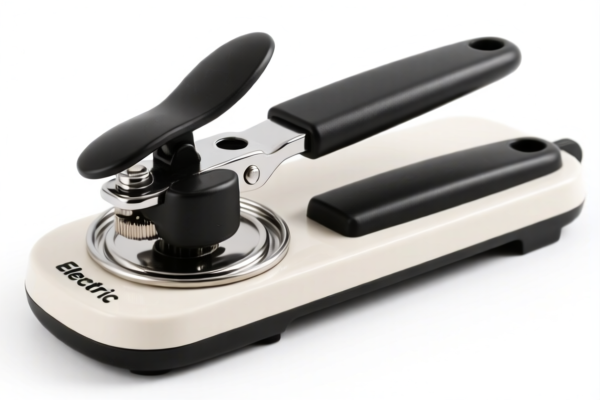
AI Analysis
🥫 Automatic Can Opener: The Great Classification Debate
🌐 HS Code Reference & Customs Clearance Guide | 2026 Latest Tariff Analysis | Professional Strategy for Home vs. Industrial Goods
📌 I. Product Definition & The Critical Distinction: Home Appliance vs. Food Processing Machinery
The "Automatic Can Opener" is a deceptively simple device, but in international trade, its classification depends entirely on intended use and technical design. Misclassification leads to drastic tax differences (14.2% vs. 35%+).
There are two distinct categories in the provided data:
-
Household/Personal Electric Can Openers: Designed for individual home use, small kitchens, or personal convenience. They are considered electro-thermic/non-thermic household appliances.
- Key Feature: Portable, low power, single-user operation.
- HS Code Cluster: 8509.80.50.40
-
Industrial Food Processing Machinery: Designed for factories, restaurants, or large-scale food preparation lines. These are machinery for preparing food or drinks.
- Key Feature: High throughput, integrated into production lines, "portable" here may mean movable within a factory, not for home use.
- HS Code Cluster: 8438.80.00.00
⚠️ Critical Distinction Point:
- If it is a single-unit, home-style device → Go to 8509.80.50.40 (Lower Tax).
- If it is commercial/industrial equipment (even if "portable" for factory use) → Go to 8438.80.00.00 (Higher Tax).
- Do not mix these up! The US Customs and Border Protection (CBP) scrutinizes "portable" claims for industrial goods heavily.
📦 II. HS Code Classification Details (Based on Provided Data)
| HS Code | Product Description | Classification Logic | Tariff Profile |
|---|---|---|---|
8509.80.50.40 |
Electric Can Opener (Home/Personal Use) |
Summary: "Electric can opener, purpose and function identical to electric can openers." Also applies to: "Portable electric can opener, electric attributes and can-opening purpose match." Why? It is classified as a household electro-mechanical appliance (Heading 8509). |
Total Tax: 14.2% - Base: 4.2% - Section 301: 0.0% - Section 122: 10% |
8438.80.00.00 |
Machinery for Preparing Food/Drinks (Industrial/Commercial Use) |
Summary: "Machinery for industrial preparation or manufacture of food or beverages." Also applies to: "Portable electric can opener, classified as food processing machinery." Why? It is classified as food processing machinery (Heading 8438). Even if "portable," if it’s for industrial scale, it falls here. |
Total Tax: 35.0% - Base: 0.0% - Section 301: 25.0% - Section 122: 10% |
8438.90.90.90 |
Parts/Accessories for Food Machinery | Summary: "Parts/components for industrial food or beverage preparation machinery." Why? If you are importing only the blades, motors, or casings for an industrial can opener, not the whole unit. |
Total Tax: 37.8% - Base: 2.8% - Section 301: 25.0% - Section 122: 10% |
🔍 Key Insight:
- The same physical device (a portable electric can opener) can have two different HS Codes depending on how you declare its primary function. -8509= Household Appliance (Lower Tax). -8438= Industrial Machinery (Higher Tax).
💰 III. 2026 Latest Tariff Rate Breakdown (Detailed)
✅ Applicable Country: United States (US)
✅ Origin: China (CN)
✅ Effective Date: Current tariff structure as per data provided
🎯 1. 8509.80.50.40 – Household Electric Can Opener
| Item | Detail |
|---|---|
| Base Tariff | 4.2% (Standard MFN rate) |
| Section 301 Tariff | 0.0% (Exempt or not listed for this subheading in this specific dataset) |
| Section 122 Tariff | 10.0% (Additional duty under Section 122 of the USTR) |
| Total Effective Rate | 14.2% |
| Calculation | CIF Value × 14.2% |
| De Minimis Eligibility | ❌ No (Section 301/122 duties typically negate de minimis relief for China-origin goods in this bracket) |
| Legal Basis | USITC HTS 8509.80.50.40 + USTR Section 122 List |
📌 Explanation:
- This is the preferred classification for standard home kitchen gadgets.
- The Section 122 tariff (10%) is applied uniformly, but the absence of the Section 301 (25%) tariff makes this significantly cheaper than the industrial classification.
🎯 2. 8438.80.00.00 – Industrial Food Processing Machinery
| Item | Detail |
|---|---|
| Base Tariff | 0.0% (Free for many machinery items) |
| Section 301 Tariff | 25.0% (High penalty for industrial goods from China) |
| Section 122 Tariff | 10.0% (Additional duty) |
| Total Effective Rate | 35.0% |
| Calculation | CIF Value × 35.0% |
| De Minimis Eligibility | ❌ No |
| Legal Basis | USITC HTS 8438.80.00.00 + USITC Footnote 301 + USTR Section 122 |
📌 Explanation:
- Even though the base rate is 0%, the 25% Section 301 tariff dominates the cost.
- This rate applies if the can opener is deemed industrial-grade or if customs officers believe it is part of a larger food production line.
🎯 3. 8438.90.90.90 – Parts for Industrial Machinery
| Item | Detail |
|---|---|
| Base Tariff | 2.8% |
| Section 301 Tariff | 25.0% |
| Section 122 Tariff | 10.0% |
| Total Effective Rate | 37.8% |
| Calculation | CIF Value × 37.8% |
| Use Case | Importing replacement blades, motors, or housing for industrial units only. |
🛠️ IV. Customs Clearance Practical Advice (Avoid Pitfalls)
✅ 1. Documentation Checklist (Non-Negotiable)
| Document | Required? | Purpose |
|---|---|---|
| Product Specification Sheet | ✅ Yes | Must clearly state: "For Home Use" OR "For Industrial Food Processing." |
| Photos of Product & Packaging | ✅ Yes | Show label, voltage, and usage instructions. If label says "Home Kitchen," use 8509. |
| Commercial Invoice | ✅ Yes | Describe item precisely. Avoid vague terms like "Tool." Use "Electric Can Opener for Household Use." |
| Manufacturer Declaration | ✅ Recommended | States intended use. Crucial for arguing against 8438 classification. |
| Certifications | ✅ Yes | UL, ETL, or CE marks support the "electrical appliance" classification (8509). |
✅ 2. Declaration Strategy (Key Tactics)
🔥 "Know Your Buyer, Know Your HS: Home = 14.2%, Industry = 35%!"
| Scenario | Correct HS Code | Risk if Misclassified |
|---|---|---|
| Selling to Amazon Home/Kitchen Sellers | 8509.80.50.40 |
High risk of audit if packaging looks industrial. |
| Selling to Restaurant Suppliers | 8438.80.00.00 |
If you claim 8509 but sell to a factory, CBP will seize/penalize. |
| Portable Unit (Ambiguous) | 8509.80.50.40 if designed for homes |
Must prove portability and low power. CBP may challenge if it looks like factory equipment. |
| Importing Spare Parts | 8438.90.90.90 |
Do not bundle parts with whole units unless declared separately. |
📌 Pro Tip:
- For 8509.80.50.40, emphasize "Household," "Personal," "Kitchen Appliance."
- For 8438.80.00.00, emphasize "Industrial," "Production Line," "Food Processing Facility."
- Do not use the word "Industrial" if you want to classify under 8509.
- Do not hide the "Home Use" label if you want 8509.
✅ 3. Special Cases & Handling
| Case | Recommendation |
|---|---|
| "Portable" Industrial Opener | If it’s light but designed for factory lines, it’s still 8438. CBP looks at design intent, not just weight. |
| Bundled Sales (Opener + Jar) | Declare can opener separately. Do not bundle unless necessary; if bundled, declare the primary item. |
| OEM Private Label | Ensure the label does not say "Industrial" if you are classifying as Home Use. Contradictory labels cause delays. |
| Section 301 Exemptions | Check if any specific exemptions apply, but generally, Section 301 on 8438 is strict. |
🌍 V. Global Market Comparison (Quick Reference)
| Market | HS Code | Est. Tax | Note |
|---|---|---|---|
| 🇺🇸 USA | 8509.80.50.40 |
14.2% | Best option for home goods. |
| 🇺🇸 USA | 8438.80.00.00 |
35.0% | Heavy tax for industrial goods. |
| 🇪🇺 EU | 8509.80 (General) | ~1.9% + VAT | Lower base, no Section 301/122. |
| 🇨🇳 China | 8509.80 | 10% + VAT | Standard import duty. |
📌 Conclusion:
- The US market is unique due to Section 301 (25%) and Section 122 (10%).
- Classification is the single most important factor in determining landed cost.
- A misclassification error can result in a 20.8% cost increase (35% - 14.2%).
📌 VI. Common Mistakes & Pitfalls (Lessons Learned)
❌ Mistake 1: Calling a "Commercial Can Opener" a "Home Can Opener" to save tax.
👉 Result: CBP audit, retroactive tax bill of 35%, plus penalties and interest.
❌ Mistake 2: Using "Portable" to justify 8509 for a factory machine.
👉 Result: CBP rejects "portable" argument if the device is not suitable for home use (e.g., heavy duty, high amperage).
❌ Mistake 3: Ignoring Section 122.
👉 Result: Assuming 0% base tax means low total tax. Forgetting the extra 10% leads to budget shortfalls.
❌ Mistake 4: Mixing parts and units in one shipment without clear separation.
👉 Result: Parts taxed at 37.8%, units at 35% or 14.2%. Complex clearance delays.
✅ Best Practice:
Declare accurately based on END-USE.
- If for Home:8509.80.50.40→ 14.2%
- If for Industry:8438.80.00.00→ 35.0%
🎯 VII. Conclusion: Strategic Sourcing & Clearance
🎯 Key Takeaway:
The "Automatic Can Opener" is not one product in customs. It is two.
- Home Version: Cheap, easy, 14.2% tax.
- Industrial Version: Expensive, strict, 35% tax.
📌 Recommendation:
1. For Home Goods Suppliers: Ensure packaging and labels clearly state "For Household Use." Apply for CBP Ruling if in doubt.
2. For Industrial Suppliers: Budget for 35% tax. Consider supply chain diversification if tariffs are prohibitive.
3. Never guess: If the product can be used in both settings, designate one primary use in documentation.
📣 Immediate Action:
📞 Consult a Customs Broker: Provide product photos and intended use statement.
📝 Request an Advance Ruling (Prelinary Determination): From US CBP to lock in the 14.2% rate if applicable.
🚀 Optimize Landed Cost: Save up to 20.8% per unit by choosing the correct HS Code!
✨ Precision in Classification = Profit in Your Pocket!
💼 Don’t let tax errors eat your margin.
Customer Reviews
About HS Code Classification
The Harmonized System (HS) is an internationally standardized nomenclature developed by the World Customs Organization (WCO) to classify traded products. Over 200 countries use the HS system as the basis for customs tariffs, trade statistics, and import/export regulations.
Each HS code follows a hierarchical structure:
- Chapter (2 digits) — Broad category of goods (e.g., Chapter 84: Machinery and Mechanical Appliances)
- Heading (4 digits) — More specific grouping within the chapter
- Subheading (6 digits) — Internationally standardized breakdown, used by all WCO member countries
- National subdivisions (8-10 digits) — Country-specific extensions for further classification, such as US HTSUS 10-digit codes
Correct HS code classification is essential for smooth customs clearance, accurate duty payment, and compliance with trade regulations. Misclassification can lead to customs delays, overpayment of duties, or penalties.
When importing from CN to US, the applicable tariff rates may include:
- Most-Favored-Nation (MFN) rate — The standard duty rate applied to WTO members
- General rate — Applied to countries without trade agreements
- Trade remedy duties — Additional tariffs such as Section 301 (anti-dumping), Section 232 (national security), or countervailing duties
The information provided on this page is for reference purposes only. For official classification, please consult with your local customs authority or a licensed customs broker.