BOWL
CN → US| HS Code | Tariff Rate | Origin | Destination | Doc |
|---|---|---|---|---|
| 6911108010 | 38.3% | CN | US | Official Doc |
| 6909195095 | 39.0% | CN | US | Official Doc |
| 6912003550 | 19.8% | CN | US | Official Doc |
| 6911103550 | 43.5% | CN | US | Official Doc |
| 6912003950 | 14.5% | CN | US | Official Doc |
Product Images
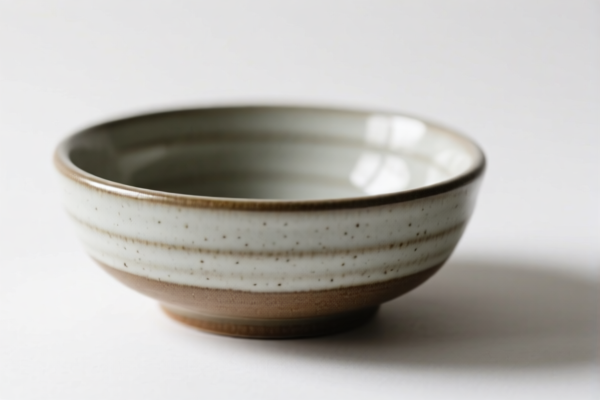
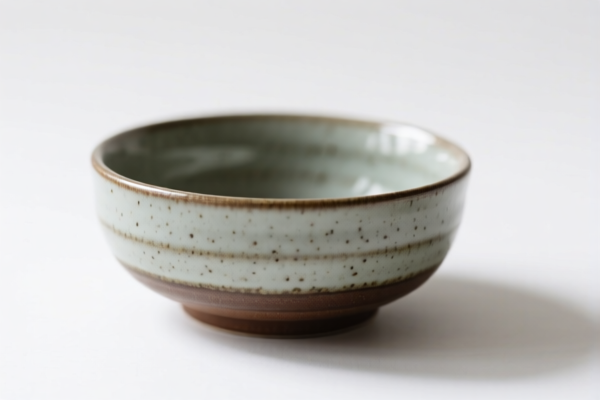


AI Analysis
🥣 Bowls: The Ultimate Guide to HS Code Classification & US Customs Clearance Strategy
🌐 HS Code Reference & Customs Clearance Guide | 2026 Latest Tariff Analysis | Professional Clearance Strategy
📌 I. Product Definition & Classification: Do You Really Understand "Bowls"?
In international trade, the term "Bowl" is a broad category that can fall into entirely different chapters depending on material, usage, and manufacturing process. Misclassification is the #1 cause of customs delays and unexpected taxes.
There are three primary categories for bowls: 1. Ceramic Tableware (Porcelain/Non-Porcelain): Used for dining, kitchen, and food service. Governed by Chapter 69 (Articles of Stone, Plaster, Cement, Asbestos, Mica or Similar Mineral Substances). 2. Laboratory Technical Ware: Used for scientific, medical, or industrial testing. Governed by Chapter 69 but distinct subheadings. 3. Glass Bowls: (Note: Not present in the provided DATA, but typically Chapter 70. We focus strictly on the provided Ceramic data below.)
⚠️ Key Distinction Point:
- If it is for eating/cooking → It is Tableware (HS 6911 or 6912).
- If it is for science/labs → It is Technical Ware (HS 6909).
- If it is Porcelain (high-fired, translucent) → It falls under 6911.
- If it is Earthenware/Ceramic (non-porous but not porcelain) → It falls under 6912.
📦 II. HS Code Classification Details (Based on Provided Data)
The following table maps the specific HS Codes from your dataset to their product descriptions and tax implications.
| HS Code | Product Description | Material Type | Usage Scenario | Total Tax Rate |
|---|---|---|---|---|
6912.00.39.50 |
Ceramic Bowl, Other (Catch-all), Tableware & Kitchen Supplies | Non-Porcelain Ceramic | General dining, generic kitchen use | 14.5% |
6912.00.35.50 |
Ceramic Bowl, Non-Porcelain, Tableware & Kitchen Supplies | Non-Porcelain Ceramic | Standard earthenware/majolica | 19.8% |
6911.10.80.10 |
Ceramic Bowl, Porcelain, Tableware & Kitchen Supplies | Porcelain | High-quality dinnerware | 38.3% |
6909.19.50.95 |
Ceramic Bowl, Laboratory/Technical Use Ware | Technical Ceramic | Labs, hospitals, industrial testing | 39.0% |
6911.10.35.50 |
Ceramic Bowl, Porcelain, Tableware & Kitchen Supplies | Porcelain | Specific porcelain dinnerware variant | 43.5% |
🔍 Critical Analysis:
- Tableware (6911/6912) is subject to varying base tariffs based on whether it is porcelain (6911) or other ceramic (6912).
- Laboratory Ware (6909) has a lower base tariff (4.0%) but incurs a massive 25% "Section 301" additional tariff, resulting in a high total of 39.0%.
- The "Catch-all" Option (6912.00.39.50) offers the lowest total tax burden at 14.5% due to a 0% additional tariff.
💰 III. 2026 Latest Tariff Rate Breakdown (Including Surcharges & Policy Add-ons)
✅ Applicable Country: United States (US)
✅ Origin: China (CN) (Inferred from "122 Tariff" and Section 301 context in tax details)
✅ Effective Date: Current US Trade Policy (Section 301 & 122 measures)
🎯 1. 6912.00.39.50 – Ceramic Bowl (Non-Porcelain, Other)
The Most Cost-Effective Option
| Item | Content |
|---|---|
| Base Tariff | 4.5% |
| Section 301 Additional Tariff | 0.0% |
| Section 122 Tariff (Trade Deficit) | 10.0% |
| Total Tariff Rate | 14.5% |
| Tax Calculation | CIF Value × 14.5% |
| De Minimis Eligibility | ❌ No (Typically denied for China-origin goods under current rules) |
| Legal Basis Path | HTSUS:6912.00.39.50 → USITC:Section 122 |
📌 Explanation:
- This code has zero Section 301 tariffs, which is rare for Chinese ceramics.
- The total cost is driven mainly by the standard base duty and the 10% deficit-related tariff.
- Strategy: If your product qualifies as "Other" non-porcelain ceramic, this is the cheapest path.
🎯 2. 6912.00.35.50 – Ceramic Bowl (Non-Porcelain, Standard)
Standard Earthenware Path
| Item | Content |
|---|---|
| Base Tariff | 9.8% |
| Section 301 Additional Tariff | 0.0% |
| Section 122 Tariff | 10.0% |
| Total Tariff Rate | 19.8% |
| Tax Calculation | CIF Value × 19.8% |
| De Minimis Eligibility | ❌ No |
| Legal Basis Path | HTSUS:6912.00.35.50 → USITC:Section 122 |
📌 Explanation:
- Slightly higher base tariff than the "catch-all" category.
- Still benefits from 0% Section 301 tariff.
- Ideal for standard earthenware, stoneware, or matte-finish ceramics that are clearly not porcelain.
🎯 3. 6911.10.80.10 – Ceramic Bowl (Porcelain)
Premium Dinnerware Path
| Item | Content |
|---|---|
| Base Tariff | 20.8% |
| Section 301 Additional Tariff | 7.5% |
| Section 122 Tariff | 10.0% |
| Total Tariff Rate | 38.3% |
| Tax Calculation | CIF Value × 38.3% |
| De Minimis Eligibility | ❌ No |
| Legal Basis Path | HTSUS:6911.10.80.10 → USITC:Section 301 + Section 122 |
📌 Explanation:
- Porcelain attracts a significant base tariff (20.8%).
- It incurs a 7.5% Section 301 tariff, unlike the 6912 codes.
- Warning: Ensure your product is truly "Porcelain" (high-fired, white, translucent). If misclassified, customs may reclassify to a higher penalty category.
🎯 4. 6909.19.50.95 – Ceramic Bowl (Laboratory/Technical)
The High-Tax Specialist Path
| Item | Content |
|---|---|
| Base Tariff | 4.0% |
| Section 301 Additional Tariff | 25.0% |
| Section 122 Tariff | 10.0% |
| Total Tariff Rate | 39.0% |
| Tax Calculation | CIF Value × 39.0% |
| De Minimis Eligibility | ❌ No |
| Legal Basis Path | HTSUS:6909.19.50.95 → USITC:Section 301 + Section 122 |
📌 Explanation:
- CRITICAL WARNING: Although the base tariff is low (4.0%), the 25% Section 301 tariff makes this one of the most expensive options.
- Do NOT use this code for tableware! If you ship a dinner bowl and label it "Laboratory Ware," you risk severe penalties for false classification.
- Use only for true lab equipment (e.g., crucibles, reaction vessels).
🎯 5. 6911.10.35.50 – Ceramic Bowl (Porcelain, Specific)
Highest Tax Burden for Tableware
| Item | Content |
|---|---|
| Base Tariff | 26.0% |
| Section 301 Additional Tariff | 7.5% |
| Section 122 Tariff | 10.0% |
| Total Tariff Rate | 43.5% |
| Tax Calculation | CIF Value × 43.5% |
| De Minimis Eligibility | ❌ No |
| Legal Basis Path | HTSUS:6911.10.35.50 → USITC:Section 301 + Section 122 |
📌 Explanation:
- This is the most expensive classification for ceramic tableware in the provided data.
- High base tariff (26.0%) + Section 301 (7.5%) + Section 122 (10%).
- Likely applies to specific, high-end, or decorated porcelain items that do not fit the broader6911.10.80.10category.
🛠️ IV. Customs Clearance Practical Advice (Real-World Pitfall Guide)
✅ 1. Documentation Checklist (Non-Negotiable)
| Document | Must Provide | Explanation |
|---|---|---|
| ✅ Product Specification Sheet | ✔️ | Must clearly state: Material (Porcelain vs. Ceramic), Firing Temperature, Glaze Type. |
| ✅ Commercial Invoice | ✔️ | Description must match HS Code exactly (e.g., "Porcelain Dinner Bowl" vs. "Lab Ceramic Bowl"). |
| ✅ Packing List | ✔️ | Item count and weight. |
| ✅ Origin Certificate | ✔️ | Proves CN origin (triggers Section 301/122). |
| ✅ Product Photos | ✔️ | Show shape, material texture, and any markings (e.g., "Made in China"). |
✅ 2. Classification Strategy (Key Mantra)
🔥 "Material First, Usage Second, Tax Optimization Third!"
| Scenario | Correct HS Code | Estimated Tax | Why? |
|---|---|---|---|
| Standard White Ceramic Dinner Bowl | 6912.00.39.50 |
14.5% | Lowest tax; "Other" ceramic; 0% Section 301. |
| High-End White Translucent Bowl | 6911.10.80.10 |
38.3% | Porcelain requires higher base tariff + 7.5% Section 301. |
| Lab Beaker/Reactor Vessel | 6909.19.50.95 |
39.0% | High Section 301 (25%) despite low base tariff. |
| Decorated Fine China Plate/Bowl | 6911.10.35.50 |
43.5% | Specific porcelain subtype with highest base tariff. |
📌 Note:
- Porcelain (6911) always incurs Section 301 tariffs (7.5% or more).
- Non-Porcelain Ceramic (6912) currently enjoys 0% Section 301 tariffs, making it the strategic choice for cost-saving if the material allows.
✅ 3. Special Handling & Risk Management
| Situation | Recommendation |
|---|---|
| Mixed Materials | If a bowl has a porcelain body but a non-ceramic base (e.g., wood/silicone), consult a specialist. Mixed materials may be classified under the principal component. |
| "Laboratory" Labeling | Never label tableware as "Laboratory Ware" to save taxes. Customs cross-references usage. If you ship a soup bowl and call it a "Lab Bowl," you will be audited. |
| Section 122 Tariff (10%) | This applies to most Chinese ceramics regardless of HS code. It is a "deficit reduction" tariff. No exemption available for standard goods. |
| Pre-Ruling Application | Given the tax variance from 14.5% to 43.5%, file an Advance Ruling with US CBP if you are uncertain whether your product is "Porcelain" or "Other Ceramic." |
🌍 V. Global Market Comparison (Contextual)
| Market | Recommended HS Code | Tariff (Est.) | Key Certifications | Notes |
|---|---|---|---|---|
| 🇺🇸 USA | 6912.00.39.50 |
14.5% | FDA (if food contact) | Best option due to 0% Section 301. |
| 🇺🇸 USA | 6911.10.80.10 |
38.3% | FDA | High tax for porcelain. |
| 🇪🇺 EU | 6911.10 / 6912.00 |
~0-8% | LFGB, REACH | No Section 301/122. Much lower cost. |
| 🇨🇳 China | 6911.10 / 6912.00 |
~5-15% | CCC (if applicable) | Standard export tariffs. |
📌 Conclusion:
- The US market is highly punitive for Chinese ceramics due to Section 301 and 122 tariffs.
- Strategy: If possible, design products to fall under Non-Porcelain Ceramic (6912) to utilize the 0% Section 301 rate. Avoid Porcelain (6911) if tax minimization is the primary goal, unless your brand value justifies the 38-43% tax.
📌 VI. Common Errors & Pitfalls (Lessons Learned)
❌ Error 1: Classifying Porcelain as Laboratory Ware
👉 Consequence: Customs detects misuse. Penalties + Back Taxes.
✅ Correct: Porcelain dinnerware → 6911.10.xxxxx.
❌ Error 2: Using General Description ("Ceramic Bowl")
👉 Consequence: Customs may choose the highest applicable rate (6911.10.35.50 @ 43.5%).
✅ Correct: Specify material: "Non-Porcelain Ceramic Bowl" → 6912.00.39.50 @ 14.5%.
❌ Error 3: Ignoring Section 122 Tariff
👉 Consequence: Underestimating landed cost by 10%.
✅ Correct: Always budget for the additional 10% deficit tariff on Chinese ceramics.
🎯 VII. Conclusion: Smart Classification Saves Money!
🎯 Remember the Mantra:
🔹 "Non-Porcelain Wins on Tax: 14.5% vs 38%+!"
🔹 "Porcelain Pays Premium: 38-43% Total Tax."
🔹 "Never Mix Lab & Tableware: One Mislabel, All Rejected."
📌 Pro Tip:
If your product is semi-porcelain or stoneware, argue for 6912 (Non-Porcelain) classification to secure the 0% Section 301 tariff. This alone saves ~24% in taxes compared to porcelain!
📣 Immediate Action:
📞 Verify material composition (Porcelain vs. Ceramic).
🚀 Apply for CBP Advance Ruling if unsure.
💼 Choose6912.00.39.50for maximum profitability!
✨ Professional clearance starts with precise classification!
💼 Every point of tax difference is pure profit!
Customer Reviews
About HS Code Classification
The Harmonized System (HS) is an internationally standardized nomenclature developed by the World Customs Organization (WCO) to classify traded products. Over 200 countries use the HS system as the basis for customs tariffs, trade statistics, and import/export regulations.
Each HS code follows a hierarchical structure:
- Chapter (2 digits) — Broad category of goods (e.g., Chapter 84: Machinery and Mechanical Appliances)
- Heading (4 digits) — More specific grouping within the chapter
- Subheading (6 digits) — Internationally standardized breakdown, used by all WCO member countries
- National subdivisions (8-10 digits) — Country-specific extensions for further classification, such as US HTSUS 10-digit codes
Correct HS code classification is essential for smooth customs clearance, accurate duty payment, and compliance with trade regulations. Misclassification can lead to customs delays, overpayment of duties, or penalties.
When importing from CN to US, the applicable tariff rates may include:
- Most-Favored-Nation (MFN) rate — The standard duty rate applied to WTO members
- General rate — Applied to countries without trade agreements
- Trade remedy duties — Additional tariffs such as Section 301 (anti-dumping), Section 232 (national security), or countervailing duties
The information provided on this page is for reference purposes only. For official classification, please consult with your local customs authority or a licensed customs broker.