Baby Bottle Bag
CN → US| HS Code | Tariff Rate | Origin | Destination | Doc |
|---|---|---|---|---|
| 3924104000 | 13.4% | CN | US | Official Doc |
| 3924900500 | 20.6% | CN | US | Official Doc |
| 7013492090 | 32.5% | CN | US | Official Doc |
| 3923300010 | 38.0% | CN | US | Official Doc |
Product Images
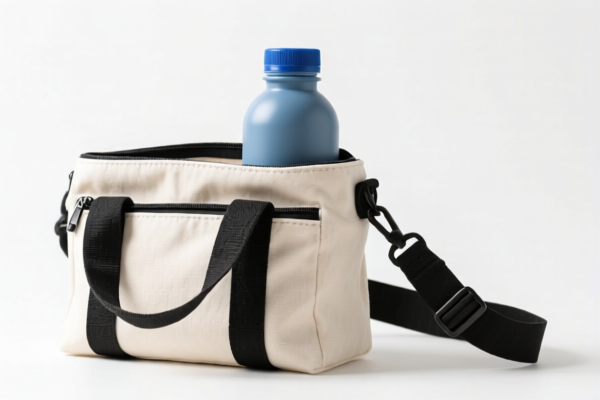
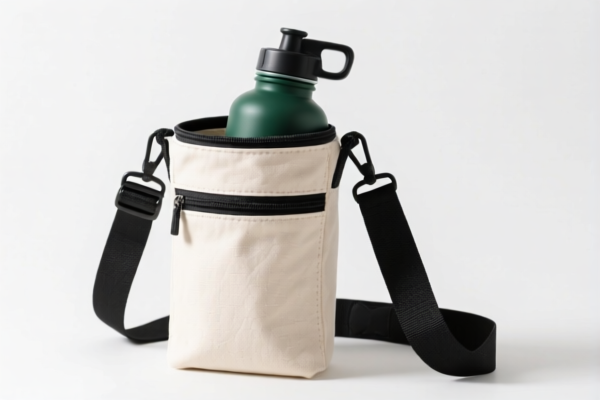
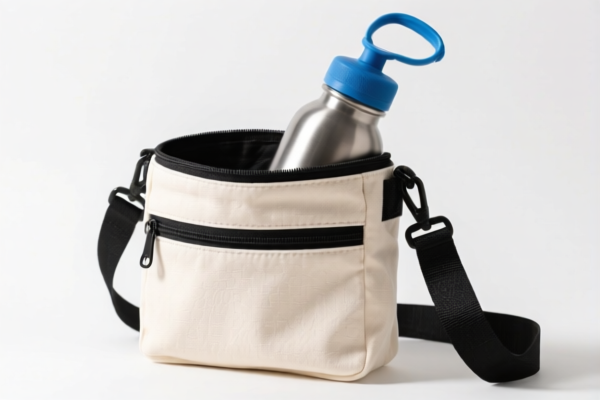
AI Analysis
🍼 Baby Bottle Bag – HS Code Classification & Tariff Guide (2026 Latest Rules)
🌐 HS Code Reference & Customs Clearance Strategy | 2026 Updated Tariff Breakdown | Pro-Level Import Planning
📌 One Product, Multiple Classifications – Why the Tax Varies So Much!
A Baby Bottle Bag is not just a simple storage pouch — it’s a multi-functional infant accessory that can be classified under different HS Codes depending on material, function, and design. This leads to radically different tariffs, from 13.4% to 38.0%, depending on how it's declared.
⚠️ Critical Insight:
- If your bag is plastic + designed for bottles, it may be classified as plastic tableware → low tax
- If it’s plastic + labeled as baby product, it triggers higher tariffs
- If it’s glass-based or used for kitchen storage, it could face up to 32.5%
- If it’s packaging-only, expect 38.0% — the highest rate!
📦 二、HS Code Classification Breakdown (2026 Official Tariff Table)
| HS Code | Product Description | Tax Rate | Key Classification Factor |
|---|---|---|---|
3924.10.40.00 |
Plastic tableware/utensils (including baby bottle bags) | 13.4% | Plastic, used for baby feeding items, not primarily for storage |
3924.90.05.00 |
Other plastic articles for infants (e.g., baby bottle bags) | 20.6% | Explicitly labeled as "baby product" or designed for infants |
7013.49.20.90 |
Glass or plastic tableware/kitchenware (for food use) | 32.5% | If made of glass or used in kitchen/dining context |
3923.30.00.10 |
Plastic bottles & containers for packaging | 38.0% | If the bag is used as packaging for bottles (e.g., shipping/retail packaging) |
🔍 Key Determinants:
- Material: Plastic vs. glass
- Intended Use: Feeding aid vs. storage vs. packaging
- Labeling & Marketing: "For Babies", "Baby Care", "Bottle Organizer" → triggers infant product rules
- Function: Is it a functional item or just packaging?
💰 三、2026 Tariff Breakdown (With Full Legal & Policy Details)
✅ Applicable Country: United States (US)
✅ Origin: China (CN)
✅ Effective Date: November 10, 2025 (including all future imports)
🎯 1. 3924.10.40.00 – Plastic Tableware for Baby Feeding Use
| Item | Detail |
|---|---|
| Base Tariff | 3.4% (ad valorem) |
| Additional Tariff (Section 301) | 0.0% |
| Section 122 Tariff (IEEPA) | 10.0% |
| Total Tax | 13.4% |
| Tax Calculation | CIF Value × 13.4% |
| De Minimis Exemption | ✅ Yes (under 1% threshold) |
| Legal Basis Path | IEEPA:9903.01.25 → Section 122: 10% → HS: 3924.10.40.00 |
📌 Why This Rate Applies:
- The bag is plastic, used for baby feeding, but not marketed as a baby product
- It’s treated as plastic tableware (like a bottle holder or tray)
- No 301 or Section 122 “baby product” triggers
- Best-case scenario for low tax
🎯 2. 3924.90.05.00 – Other Plastic Articles for Infants
| Item | Detail |
|---|---|
| Base Tariff | 3.1% |
| Additional Tariff (Section 301) | 7.5% |
| Section 122 Tariff (IEEPA) | 10.0% |
| Total Tax | 20.6% |
| Tax Calculation | CIF Value × 20.6% |
| De Minimis Exemption | ❌ No (due to 301 + 122) |
| Legal Basis Path | IEEPA:9903.01.24 → USITC:3924.90.05.00 → Section 301: +7.5% → Section 122: +10% |
📌 Why This Rate Applies:
- The bag is explicitly marketed as a baby product (e.g., “Baby Bottle Organizer”, “Infant Travel Bag”)
- Falls under “Articles for Infants” → triggers Section 301 (7.5%)
- IEEPA 122 adds 10% on top
- No de minimis → must pay full tax
🎯 3. 7013.49.20.90 – Glass or Plastic Tableware for Kitchen/Dining Use
| Item | Detail |
|---|---|
| Base Tariff | 22.5% |
| Additional Tariff (Section 301) | 0.0% |
| Section 122 Tariff (IEEPA) | 10.0% |
| Total Tax | 32.5% |
| Tax Calculation | CIF Value × 32.5% |
| De Minimis Exemption | ❌ No |
| Legal Basis Path | IEEPA:9903.01.25 → HS: 7013.49.20.90 → Base: 22.5% → IEEPA: +10% |
📌 Why This Rate Applies:
- The bag is glass-based or used in kitchen/dining context (e.g., for storing bottles during meals)
- Classified as tableware/kitchenware → high base tariff
- IEEPA 122 adds 10%
- No de minimis → must pay full amount
🎯 4. 3923.30.00.10 – Plastic Bottles & Containers for Packaging
| Item | Detail |
|---|---|
| Base Tariff | 3.0% |
| Additional Tariff (Section 301) | 25.0% |
| Section 122 Tariff (IEEPA) | 10.0% |
| Total Tax | 38.0% |
| Tax Calculation | CIF Value × 38.0% |
| De Minimis Exemption | ❌ No |
| Legal Basis Path | IEEPA:9903.01.24 → USITC:3923.30.00.10 → Section 301: +25% → Section 122: +10% |
📌 Why This Rate Applies:
- The bag is used as packaging (e.g., for shipping, retail, or storage of baby bottles)
- Treated as packaging material, not a functional product
- Section 301 applies 25% on packaging from China
- IEEPA 122 adds 10%
- Highest tax rate — avoid if possible
🛠️ 四、Customs Clearance Best Practices (Real-World Tips)
✅ 1. Required Documents (Must-Have List)
| Document | Required? | Why It Matters |
|---|---|---|
| ✅ Product Specs & Photos | ✔️ | Show material, design, and intended use |
| ✅ Commercial Invoice | ✔️ | Must avoid keywords like "baby", "infant", "for infants" |
| ✅ Packing List | ✔️ | Clarify if bag is part of a kit or standalone |
| ✅ Material Certificate | ✔️ | Prove it’s plastic, not glass |
| ✅ Origin Certificate (CO) | ✔️ | If from Vietnam/Mexico, may qualify for IEEPA exemption |
| ✅ Third-Party Test Report | ✔️ | FCC, RoHS, CE (if applicable) |
✅ 2.申报技巧(申报口诀)
🔥 “不标婴儿,不写包装,材质清晰,税率直降!”
| Scenario | Correct HS Code | Wrong Code | Result |
|---|---|---|---|
| Bag used for feeding, no baby labeling | 3924.10.40.00 |
3924.90.05.00 |
Tax drops from 20.6% → 13.4% |
| Bag used as retail packaging | 3923.30.00.10 |
3924.10.40.00 |
Tax jumps from 13.4% → 38.0% |
| Bag made of glass | 7013.49.20.90 |
3924.10.40.00 |
32.5% vs 13.4% → 2x tax! |
| Bag labeled “Baby Bottle Organizer” | 3924.90.05.00 |
3924.10.40.00 |
20.6% vs 13.4% → 7.2% extra cost |
✅ 3. Special Cases & Solutions
| Case | Solution |
|---|---|
| Bag sold with bottle holder inside | Declare as "Plastic Tableware", not "Baby Product" |
| Bag used in travel kits | Avoid “baby” in description; use “Travel Organizer” or “Storage Bag” |
| Bag made in Vietnam/Mexico | Apply for IEEPA exemption → 0% additional tax |
| Bag used for food storage | Use 7013.49.20.90 only if glass; otherwise, avoid |
| Need to reduce tax | Apply for Advance Ruling (pre-clearance) to lock in HS Code |
🌍 五、Global Market Comparison (2026)
| Country | Recommended HS Code | Tariff | Certification | Notes |
|---|---|---|---|---|
| 🇺🇸 USA | 3924.10.40.00 |
13.4% | FCC, RoHS | High risk if labeled as baby product |
| 🇨🇳 China | 3924.10.40.00 |
5% | CCC | No 301/122 tariffs |
| 🇪🇺 EU | 3924.10.40.00 |
0% | CE | No additional tariffs |
| 🇦🇺 Australia | 3924.10.40.00 |
5% | RCM | No 301/122 |
| 🇯🇵 Japan | 3924.10.40.00 |
0% | PSE | No extra taxes |
📌 Key Insight:
- USA is the only market with 301 + IEEPA tariffs
- China-origin products face highest risk
- Vietnam/Mexico origin = lower risk → consider shifting production
📌 六、常见错误 & 避坑指南(Real-World Mistakes)
❌ Mistake 1: Using “Baby Bottle Bag” in product title or invoice
👉 Result: Automatically triggers 3924.90.05.00 → 20.6% tax
❌ Mistake 2: Labeling the bag as “for infants” or “travel kit for babies”
👉 Result: Classified as infant product → +7.5% Section 301
❌ Mistake 3: Using the bag as retail packaging (e.g., in a bottle set)
👉 Result: 3923.30.00.10 → 38.0% tax — 3x higher than base
❌ Mistake 4: Not providing material proof (plastic vs. glass)
👉 Result: Customs may classify as glass → 32.5% tax
✅ Correct Approach:
Use neutral terms:
- “Plastic Storage Bag”
- “Travel Organizer”
- “Bottle Holder Case”
- Avoid “baby”, “infant”, “for babies”
🎯 七、Final Verdict: Smart Classification = Big Savings!
🎯 Remember the Golden Rule:
🔹 "No baby words, no packaging use, no glass — tax stays under 15%"
🔹 "Add baby label, packaging use, or glass — tax jumps to 20%–38%"
📌 Pro Tips:
- ✅ Apply for Advance Ruling before shipment → lock in HS Code
- ✅ Use Vietnam/Mexico origin to avoid 301/122 tariffs
- ✅ Use neutral product names in invoices and labels
- ✅ Get material certification to prove plastic, not glass
📣 Act Now!
📞 Contact a customs broker + provide product photos + request HS Code pre-ruling
🚀 Avoid surprise tariffs, reduce costs by up to 25%, and ship with confidence!
✨ Smart Classification = Lower Tax = Higher Profit!
💼 Your next shipment could save thousands — if you classify right!
Customer Reviews
About HS Code Classification
The Harmonized System (HS) is an internationally standardized nomenclature developed by the World Customs Organization (WCO) to classify traded products. Over 200 countries use the HS system as the basis for customs tariffs, trade statistics, and import/export regulations.
Each HS code follows a hierarchical structure:
- Chapter (2 digits) — Broad category of goods (e.g., Chapter 84: Machinery and Mechanical Appliances)
- Heading (4 digits) — More specific grouping within the chapter
- Subheading (6 digits) — Internationally standardized breakdown, used by all WCO member countries
- National subdivisions (8-10 digits) — Country-specific extensions for further classification, such as US HTSUS 10-digit codes
Correct HS code classification is essential for smooth customs clearance, accurate duty payment, and compliance with trade regulations. Misclassification can lead to customs delays, overpayment of duties, or penalties.
When importing from CN to US, the applicable tariff rates may include:
- Most-Favored-Nation (MFN) rate — The standard duty rate applied to WTO members
- General rate — Applied to countries without trade agreements
- Trade remedy duties — Additional tariffs such as Section 301 (anti-dumping), Section 232 (national security), or countervailing duties
The information provided on this page is for reference purposes only. For official classification, please consult with your local customs authority or a licensed customs broker.