Baking Mat
CN → US| HS Code | Tariff Rate | Origin | Destination | Doc |
|---|---|---|---|---|
| 3924901050 | 13.3% | CN | US | Official Doc |
| 3926909989 | 22.8% | CN | US | Official Doc |
| 7013495090 | 25.0% | CN | US | Official Doc |
| 3924104000 | 13.4% | CN | US | Official Doc |
| 3926100000 | 15.3% | CN | US | Official Doc |
Product Images

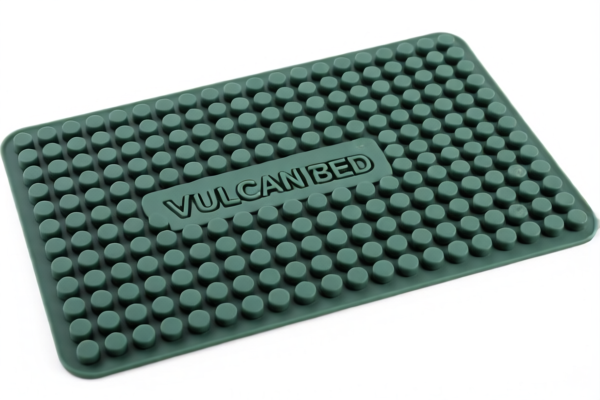
AI Analysis
🧁 Baking Mats (Silicone & Non-Stick Mats)
🌐 HS Code Reference & Customs Clearance Guide | 2026 Tariff Breakdown | Strategic Import Solutions
📌 I. Product Definition: What Exactly is a "Baking Mat"?
Baking Mats are essential kitchen tools designed for oven use, providing a non-stick surface for rolling dough, baking cookies, and roasting vegetables. They are typically made of food-grade silicone or PTFE (Teflon-coated fiberglass), eliminating the need for parchment paper.
⚠️ Critical Classification Logic:
- Material Composition: The HS Code depends heavily on whether the primary material is classified as "Plastic/Silicone" (Chapter 39) or "Glass" (Chapter 70). - Function: Kitchenware vs. Other Household Goods. - Destination: The provided data focuses on US Import Tariffs (China origin), heavily influenced by Section 301 (Add-ons) and Section 122 (New Tariffs).
📦 II. HS Code Classification Matrix (Based on Provided Data)
| HS Code | Material Inference | Product Form | Tax Logic Summary |
|---|---|---|---|
| 3924.90.10.50 | Plastic / Silicone | Tray Liners / Mats | Fits "Other household goods" under Plastics. |
| 3926.90.99.89 | Silicone or PTFE (Teflon) | General Plastic Articles | Fits "Other plastics articles" classification logic. |
| 7013.49.50.90 | Glass or Heat-Resistant Silicone | Kitchenware | Fits "Other kitchenware" under Glass or similar heat-resistant materials. |
| 3924.10.40.00 | Plastic / Silicone | Tableware & Cookware | Fits "Tableware/Kitchen utensils" (Other). |
| 3926.10.00.00 | Plastic (Silicone) | Plastic Articles | Fits "Other plastic articles" general category. |
💰 III. 2026 Tariff Rate Deep Dive (US Import from China)
✅ Country of Origin: China (CN)
✅ Market: United States (US)
⚠️ Note: All tariffs below include the base rate + Section 301 Add-ons + Section 122 (10%).
🎯 1. HS Code 3924.90.10.50 – The "Tray Liner" Classification
Best for: Standard silicone baking mats used as liners on trays.
| Component | Rate | Detail |
|---|---|---|
| Base Duty | 3.3% | Standard Most-Favored-Nation (MFN) rate for household goods. |
| Section 301 Add-on | 0.0% | No additional Section 301 surcharge for this specific subheading. |
| Section 122 | 10.0% | New Tariff: Additional 10% tax for specific Chinese imports. |
| TOTAL DUTY | 13.3% | Final Landing Cost |
📌 Logic: This code treats the mat as a "household good" rather than a specific kitchen utensil, minimizing the base duty but still hitting the 122 tax.
🎯 2. HS Code 3926.90.99.89 – The "General Plastic" Catch-All
Best for: Mats with complex compositions (e.g., Silicone + Fiberglass backing with Teflon).
| Component | Rate | Detail |
|---|---|---|
| Base Duty | 5.3% | Standard rate for "Other articles of plastics". |
| Section 301 Add-on | 7.5% | Crucial Add-on: This subheading carries the 301 surcharge. |
| Section 122 | 10.0% | Additional 10% tax for Section 122 compliance. |
| TOTAL DUTY | 22.8% | Highest Risk Rate |
📌 Logic: If the customs broker classifies the mat as a "general plastic article" (Chapter 39.26) instead of "household goods," you face a 22.8% burden. Avoid this if possible.
🎯 3. HS Code 7013.49.50.90 – The "Glass/Heat-Resistant" Route
Best for: High-end mats labeled as glass-ceramic or specialized heat-resistant glass composites.
| Component | Rate | Detail |
|---|---|---|
| Base Duty | 15.0% | Higher base rate for glassware. |
| Section 301 Add-on | 0.0% | No 301 surcharge for this glassware category. |
| Section 122 | 10.0% | Additional 10% tax for Section 122 compliance. |
| TOTAL DUTY | 25.0% | Most Expensive Option |
📌 Logic: While "Glass" sounds exotic, the base duty (15%) makes this the most expensive option. Only use if the product is genuinely glass or marketed as such.
🎯 4. HS Code 3924.10.40.00 – The "Kitchen Utensil" Sweet Spot
Best for: Mats clearly defined as kitchen utensils/cookware accessories.
| Component | Rate | Detail |
|---|---|---|
| Base Duty | 3.4% | Low base rate for specific kitchen plastic goods. |
| Section 301 Add-on | 0.0% | No 301 surcharge. |
| Section 122 | 10.0% | Additional 10% tax for Section 122 compliance. |
| TOTAL DUTY | 13.4% | Competitive & Efficient |
📌 Logic: This is the best balance for most silicone mats. It avoids the 301 surcharge and keeps the base duty low, resulting in a 13.4% total.
🎯 5. HS Code 3926.10.00.00 – The "Plastic Sheet" Category
Best for: Simple rolls of silicone or plastic mats sold by the meter.
| Component | Rate | Detail |
|---|---|---|
| Base Duty | 5.3% | Standard rate for other plastic articles. |
| Section 301 Add-on | 0.0% | No 301 surcharge. |
| Section 122 | 10.0% | Additional 10% tax for Section 122 compliance. |
| TOTAL DUTY | 15.3% | Moderate Cost |
📌 Logic: A middle-ground option if the product doesn't fit neatly into "Tableware" (3924.10) but is still primarily plastic.
🛠️ IV. Customs Clearance Strategy & Tips
✅ 1. Optimize Your HS Code Selection
To minimize costs (avoiding the 22.8% trap): * Aim for 3924.90.10.50 or 3924.10.40.00: These offer the lowest total duty (13.3% - 13.4%). * Avoid 3926.90.99.89: Unless your product has no other definition, this attracts the Section 301 (7.5%) surcharge. * Avoid 7013.49.50.90: Unless it is actual glass, the base duty makes it too expensive.
✅ 2. Documentation Checklist
To prove your classification (especially to avoid 3926 vs. 3924 disputes): | Document | Why It Matters | |----------|----------------| | Product Specification Sheet | Must explicitly state "Food Grade Silicone" or "PTFE Coated". | | Material Composition Diagram | Proves it is a "Plastic/Silicone" article, justifying 3924 over 3926 if needed. | | Usage Photos | Show the mat on a baking tray (supports "Household Good" classification). | | Labeling | Must clearly state "Oven Safe", "Baking Mat", or "Pastry Mat". |
✅ 3. The "Section 122" Reality
- What is it? A new 10% tariff targeting specific Chinese imports (often related to rubber/plastics or specific industrial/household goods).
- Impact: No avoidance. It applies to ALL the HS Codes listed above.
- Strategy: Since the 122 tax is unavoidable for these items, focus entirely on minimizing the Base Duty + Section 301.
✅ 4. Naming Convention for Customs
- DO NOT say: "Plastic Sheet", "General Article".
- DO say: "Silicone Baking Mat", "Non-Stick Pastry Mat for Kitchen Use", "Food-Grade Silicone Tray Liner".
- Why? The word "Kitchen" or "Tableware" pushes the classification toward 3924.10 (lower duty) rather than 3926 (higher duty).
📊 V. Summary: The Cost Comparison
| HS Code | Total Tax Rate | Verdict | Recommendation |
|---|---|---|---|
| 3924.90.10.50 | 13.3% | 🏆 Best | Use for standard silicone mats. |
| 3924.10.40.00 | 13.4% | 🥈 Great | Use if classified as kitchen utensils. |
| 3926.10.00.00 | 15.3% | 🥉 Okay | Use for rolls or generic plastic mats. |
| 3926.90.99.89 | 22.8% | ❌ Avoid | Traps you with extra Section 301 tax. |
| 7013.49.50.90 | 25.0% | 🚫 Worst | Only if product is actually glass. |
🚀 Final Advice:
Ensure your supplier and broker agree on 3924.90.10.50 or 3924.10.40.00 to save ~9-12% in duties compared to the worst-case scenario. Always declare the material as "Silicone" and the function as "Baking/Kitchen" to justify the lower tax bracket.
✨ Clear Shipping, Smart Tariffs!
💡 Remember: A small difference in HS Code classification can save you thousands in landed costs.
Customer Reviews
About HS Code Classification
The Harmonized System (HS) is an internationally standardized nomenclature developed by the World Customs Organization (WCO) to classify traded products. Over 200 countries use the HS system as the basis for customs tariffs, trade statistics, and import/export regulations.
Each HS code follows a hierarchical structure:
- Chapter (2 digits) — Broad category of goods (e.g., Chapter 84: Machinery and Mechanical Appliances)
- Heading (4 digits) — More specific grouping within the chapter
- Subheading (6 digits) — Internationally standardized breakdown, used by all WCO member countries
- National subdivisions (8-10 digits) — Country-specific extensions for further classification, such as US HTSUS 10-digit codes
Correct HS code classification is essential for smooth customs clearance, accurate duty payment, and compliance with trade regulations. Misclassification can lead to customs delays, overpayment of duties, or penalties.
When importing from CN to US, the applicable tariff rates may include:
- Most-Favored-Nation (MFN) rate — The standard duty rate applied to WTO members
- General rate — Applied to countries without trade agreements
- Trade remedy duties — Additional tariffs such as Section 301 (anti-dumping), Section 232 (national security), or countervailing duties
The information provided on this page is for reference purposes only. For official classification, please consult with your local customs authority or a licensed customs broker.