Bamboo Disposable Plates (Biodegradable)
CN → US| HS Code | Tariff Rate | Origin | Destination | Doc |
|---|---|---|---|---|
| 4823610020 | 35.0% | CN | US | Official Doc |
| 4823610040 | 35.0% | CN | US | Official Doc |
| 4602110700 | 35.0% | CN | US | Official Doc |
| 4602110900 | 45.0% | CN | US | Official Doc |
| 4823610020 | 35.0% | CN | US | Official Doc |
Product Images
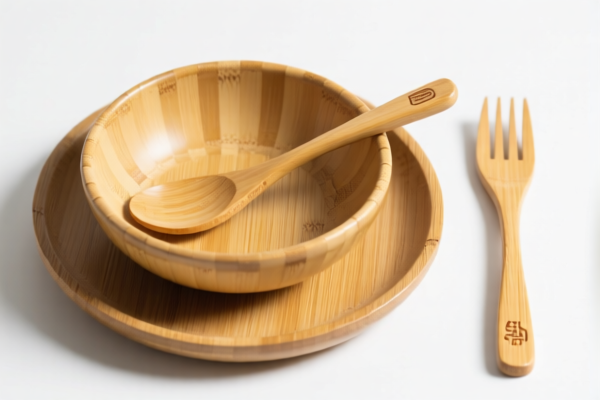
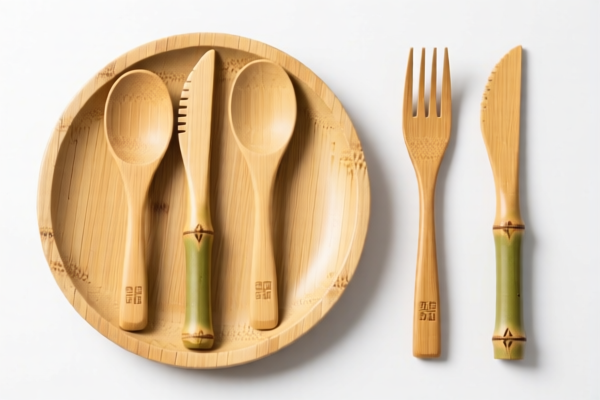
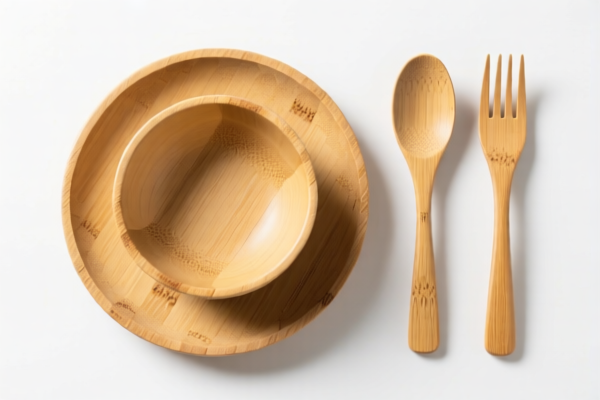
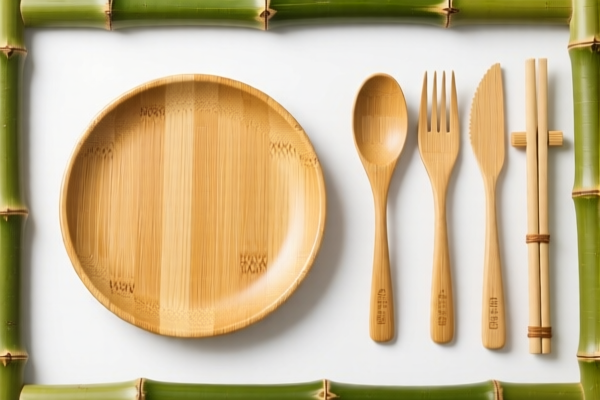
AI Analysis
🎋 Bamboo Disposable Plates (Biodegradable)
🌐 HS Code Reference & Customs Clearance Guide | 2026 Latest Tariff Analysis | Professional Compliance Strategy
📌 I. Product Definition & Classification: What Exactly Are "Bamboo Plates"?
Bamboo disposable plates are eco-friendly tableware made from bamboo fibers or processed bamboo sheets. In international trade, they fall under two main categories based on manufacturing method and material structure:
Paper/Pulp Products (Chapter 48): Plates made from bamboo pulp, pressed into shape, similar to paper plates but with bamboo content. Basketware/Woven Products (Chapter 46): Plates made from woven bamboo strips or processed bamboo fibers, retaining the structural integrity of natural fibers.
⚠️ Key Distinction Point:
- If the plate is made from bamboo pulp/paper (molded fiber) → It falls under HS Code 4823 (Paper/Pulp products).
- If the plate is woven or made from processed bamboo strips (biodegradable woven structure) → It falls under HS Code 4602 (Basketware/Plaiting products).
- Crucial: Even if "biodegradable," the physical form determines the chapter, not just the material.
📦 II. HS Code Classification Details (2026 Latest Tariff Authority Comparison)
| HS Code | Product Description | Application Scenario | Material/Structure Match |
|---|---|---|---|
4823.61.00.20 |
Bamboo disposable plates, classified as bamboo food containers | Molded bamboo pulp plates, single-use food service | ✅ Yes (Paper/Pulp category) |
4823.61.00.40 |
Bamboo plates, material and form match, no conflict | Generic bamboo fiber plates, non-woven | ✅ Yes (Paper/Pulp category) |
4602.11.07.00 |
Bamboo woven products, suitable for disposable plates & biodegradable attributes | Woven bamboo strip plates, traditional style | ✅ Yes (Basketware category) |
4602.11.09.00 |
Other bamboo products, applicable to biodegradable plates, no obvious material conflict | Other processed bamboo fiber plates not specified elsewhere | ✅ Yes (Basketware category) |
🔍 Key Reminder:
- "Disposable" does not automatically mean "Paper" (Ch 48). If it's woven, it's Ch 46.
- Biodegradability is a marketing claim, not a tariff determinant. The physical construction dictates the HS Code.
- Codes4823.61.00.20and4823.61.00.40are often used interchangeably for molded bamboo plates depending on specific sub-classification nuances in import declarations.
💰 III. 2026 Latest Tariff Rate Details (Including Additional Taxes, Policy Add-ons)
✅ Applicable Country: United States (US)
✅ Origin: China (CN)
✅ Effective Date: November 10, 2025 onwards (including subsequent imports)
🎯 1. 4823.61.00.20 & 4823.61.00.40 —— Bamboo Disposable Plates (Paper/Pulp Category)
| Item | Content |
|---|---|
| Basic Tariff Rate | 0% (ad valorem) |
| Section 301 Additional Tariff | +25% (From USITC Footnote 9903.88.01) |
| Section 122 Tariff (IEEPA) | +10% (For China/HK products, effective Nov 10, 2025) |
| Total Tariff Rate | 35% |
| Tax Calculation | CIF Value × 35% |
| De Minimis Exemption Eligible? | ❌ No (deny_de_minimis) |
| Legal Basis Path | IEEPA:9903.01.25 → IEEPA:9903.01.24 → USITC:4823.61.00.20 → FOOTNOTE:9903.88.01 |
📌 Explanation:
- The "25% Section 301 Tariff" is applied to a wide range of Chinese imports, including paper/pulp tableware.
- The "10% Section 122 Tariff" is a new additional levy targeting Chinese products under the International Emergency Economic Powers Act.
- Combined Rate: 35%. This is a high tariff that must be factored into pricing strategies.
🎯 2. 4602.11.07.00 —— Bamboo Woven Products
| Item | Content |
|---|---|
| Basic Tariff Rate | 0% (ad valorem) |
| Section 301 Additional Tariff | +25% |
| Section 122 Tariff (IEEPA) | +10% |
| Total Tariff Rate | 35% |
| Tax Calculation | CIF Value × 35% |
| De Minimis Exemption Eligible? | ❌ No (deny_de_minimis) |
| Legal Basis Path | IEEPA:9903.01.25 → IEEPA:9903.01.24 → USITC:4602.11.07.00 → FOOTNOTE:9903.88.01 |
📌 Note:
- Same tax structure as the paper/pulp category.
- Woven bamboo products are not exempt from Section 301.
🎯 3. 4602.11.09.00 —— Other Bamboo Products
| Item | Content |
|---|---|
| Basic Tariff Rate | 10% (ad valorem) |
| Section 301 Additional Tariff | +25% |
| Section 122 Tariff (IEEPA) | +10% |
| Total Tariff Rate | 45% |
| Tax Calculation | CIF Value × 45% |
| De Minimis Exemption Eligible? | ❌ No (deny_de_minimis) |
| Legal Basis Path | IEEPA:9903.01.25 → IEEPA:9903.01.24 → USITC:4602.11.09.00 → FOOTNOTE:9903.88.01 |
📌 Warning:
- This code has a higher base rate (10%) because it is a "catch-all" for bamboo products not specifically listed elsewhere.
- Total Rate: 45%. This is the most expensive classification. Avoid this code if possible by ensuring the product fits4602.11.07.00(woven) or4823(pulp).
🛠️ IV. Customs Clearance Practical Advice (Real-World Pitfall Avoidance)
✅ 1. Documentation Checklist (Missing Any = Delays)
| Document | Required | Explanation |
|---|---|---|
| ✅ Product Specifications | ✔️ | Must specify: Material (Bamboo Pulp vs. Woven), Dimensions, Biodegradable Claim |
| ✅ Material Composition Report | ✔️ | Proof of bamboo content vs. any binders/adhesives used |
| ✅ Product Photos (Clear) | ✔️ | Show texture (woven vs. molded), branding, and any certifications |
| ✅ Third-Party Test Reports | ✔️ | FDA Food Contact, ASTM D6400 (Compostable), or ISO 17088 (Biodegradable) |
| ✅ Commercial Invoice | ✔️ | Clearly state "Bamboo Disposable Plates" and HS Code |
| ✅ Packing List | ✔️ | Detail weight, quantity, and carton dimensions |
✅ 2. Declaration Tips (Key Mnemonics)
🔥 "Structure Defines Code, Bio is Marketing, 35% is Standard, 45% is Risk!"
| Scenario | Correct Declaration | Wrong Practice |
|---|---|---|
| Molded Bamboo Pulp Plates | 4823.61.00.20 or 4823.61.00.40 |
Misclassified as woven → 45% |
| Woven Bamboo Strip Plates | 4602.11.07.00 |
Misclassified as "other" → 45% |
| Unspecified Bamboo Plates | Avoid 4602.11.09.00 unless necessary |
Using catch-all code → Highest tax |
| Mixed Pack (Plates + Cups) | Declare separately if possible | Mixed HS Code → Potential audit |
✅ 3. Special Cases Handling
| Scenario | Recommendation |
|---|---|
| OEM Custom Plates | Provide design drawings to prove "woven" or "molded" structure |
| Biodegradable Certification | Provide ASTM D6400 report to support eco-friendly claims, but note it doesn't change HS Code |
| Food Contact Safety | Ensure FDA compliance documentation is ready; customs may request proof of food-safe materials |
| Bulk vs. Retail Packaging | Declare as bulk if shipped in master cartons; retail packaging may require additional labeling compliance |
🌍 V. Global Market Comparison (2026 Latest)
| Country/Region | Recommended HS Code | Tariff | Certification | Notes |
|---|---|---|---|---|
| 🇺🇸 USA | 4823.61.00.20 / 4602.11.07.00 |
35% (China Origin) | FDA + ASTM D6400 | 45% for misclassified |
| 🇨🇳 China | 4823.61.00.20 / 4602.11.07.00 |
5-10% | CCC (if applicable) | No additional tariffs |
| 🇪🇺 EU | 4823.69 / 4602.11 |
0-5% (if GSP/EPA) | CE + LFGB | Strict food contact rules |
| 🇬🇧 UK | 4823.69 / 4602.11 |
5-10% | UKCA | Post-Brexit regulations |
| 🇦🇺 Australia | 4823.69 / 4602.11 |
5% | RCM | No special add-ons |
📌 Conclusion:
- USA imposes the highest barriers with 35-45% total tariffs.
- EU and UK are stricter on food safety (LFGB/FDA equivalents) but lower on tariffs.
- Cost competitiveness in the US market is severely impacted by the 35-45% tariff.
📌 VI. Common Mistakes & Pitfall Guide (Lessons Learned)
❌ Mistake 1: Using "Biodegradable" as the sole description
👉 Consequence: Customs may reject vague declarations → Delay + Inspection
❌ Mistake 2: Classifying woven plates as paper products (4823)
👉 Consequence: Potential misclassification audit → Penalties + Back Taxes
❌ Mistake 3: Using the "Other" code (4602.11.09.00) when a specific code exists
👉 Consequence: Unnecessarily high tax rate (45% vs 35%) → Profit Erosion
❌ Mistake 4: Ignoring Section 122 Tariff
👉 Consequence: Underpayment by 10% → Seizure + Fines
✅ Correct Practice:
"Molded Bamboo Pulp Plates, 9-inch, Biodegradable, FDA Compliant, Model XYZ"
or
"Woven Bamboo Strip Plates, 9-inch, Traditional Style, Biodegradable, Model ABC"
🎯 VII. Conclusion: Professional Classification Saves Money!
🎯 Remember the Mnemonic:
🔹 "Molded = 4823 (35%), Woven = 4602.07 (35%), Other = 4602.09 (45%)"
🔹 "HS Code is King, Tariff is Queen, Misclassification is Death!"
📌 Pro Tip:
If your bamboo plates are originally from Vietnam, Malaysia, or Indonesia, you may avoid Section 301 and Section 122 tariffs, reducing the rate to basic tariff only (0-10%).
Consider supply chain diversification or final assembly in third-party countries to mitigate US tariff risks.
📣 Call to Action:
📞 Consult with a licensed customs broker + Provide product samples + Apply for Advance Ruling
🚀 Ensure your bamboo plates clear customs smoothly, maximize profit, and stay compliant!
✨ Professional Clearance Starts with Accurate Classification!
💼 Every Dollar Saved in Tariffs is Pure Profit!
Customer Reviews
About HS Code Classification
The Harmonized System (HS) is an internationally standardized nomenclature developed by the World Customs Organization (WCO) to classify traded products. Over 200 countries use the HS system as the basis for customs tariffs, trade statistics, and import/export regulations.
Each HS code follows a hierarchical structure:
- Chapter (2 digits) — Broad category of goods (e.g., Chapter 84: Machinery and Mechanical Appliances)
- Heading (4 digits) — More specific grouping within the chapter
- Subheading (6 digits) — Internationally standardized breakdown, used by all WCO member countries
- National subdivisions (8-10 digits) — Country-specific extensions for further classification, such as US HTSUS 10-digit codes
Correct HS code classification is essential for smooth customs clearance, accurate duty payment, and compliance with trade regulations. Misclassification can lead to customs delays, overpayment of duties, or penalties.
When importing from CN to US, the applicable tariff rates may include:
- Most-Favored-Nation (MFN) rate — The standard duty rate applied to WTO members
- General rate — Applied to countries without trade agreements
- Trade remedy duties — Additional tariffs such as Section 301 (anti-dumping), Section 232 (national security), or countervailing duties
The information provided on this page is for reference purposes only. For official classification, please consult with your local customs authority or a licensed customs broker.