Bamboo Fish Trap
CN → US| HS Code | Tariff Rate | Origin | Destination | Doc |
|---|---|---|---|---|
| 4602110500 | 40.0% | CN | US | Official Doc |
| 4602190500 | 40.0% | CN | US | Official Doc |
Product Images
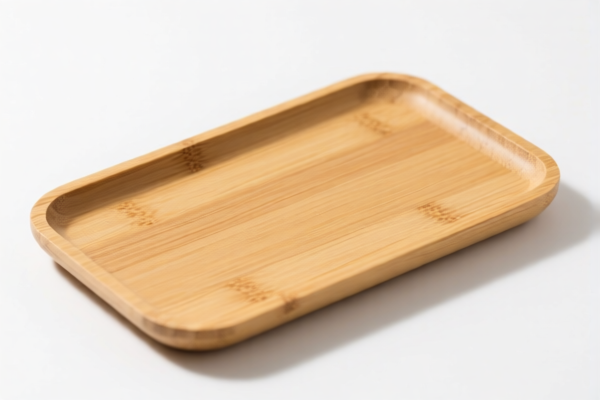
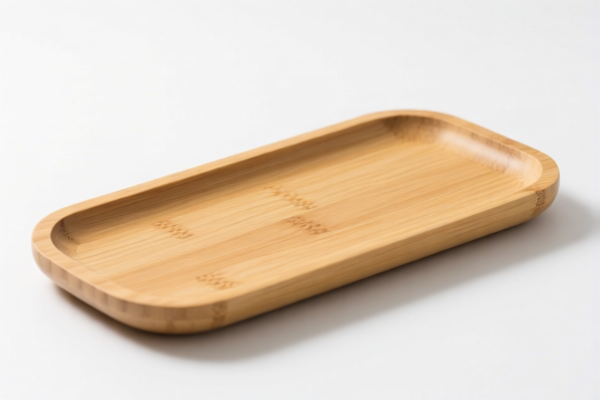
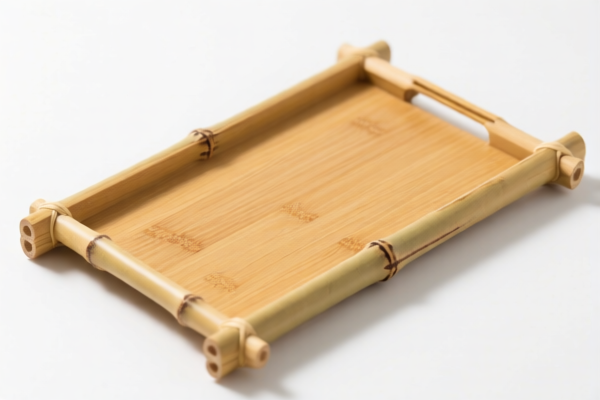
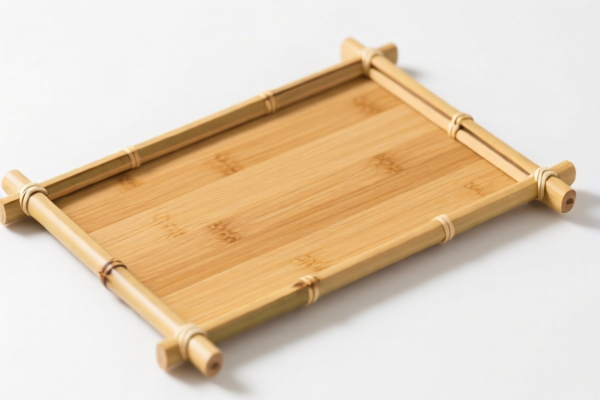
AI Analysis
🎣 Bamboo Fish Trap (Fishing Baskets/Creels)
🌐 HS Code Reference & Customs Clearance Guide | 2026 Latest Tariff Analysis | Professional Clearance Strategy
📌 Part 1: Product Definition and Classification: What Exactly is a "Bamboo Fish Trap"?
A Bamboo Fish Trap is a traditional, handcrafted fishing device made from plaited bamboo strips or other vegetable materials. In international trade, these items are classified under Chapter 46 (Articles of vegetable plaiting materials; basketwork, wickerwork and other articles).
The critical distinction in classification lies in the material and the specific use: * Material: Specifically made from Bamboo (a vegetable material). * Product Type: Specifically designed as Fishing baskets or creels (traps), not general storage baskets. * Structure: Made directly to shape from plaiting materials or made up from such articles.
⚠️ Key Distinction:
- If made from Bamboo and used for fishing → Classified under 4602.11 or 4602.19 depending on the specific sub-category definition in the local tariff schedule.
- If made from Rattan, Wicker, or other vegetable materials (not bamboo) → May fall under different sub-headings.
- If used for general storage (not fishing) → Different HS code entirely.
📦 Part 2: HS Code Classification Details (2026 Latest Tariff Authority Comparison)
Based on the provided data, there are two specific HS codes for Bamboo Fishing Traps, differentiated by the specific regulatory sub-heading (likely reflecting regional tariff schedules or specific material nuances in the source data).
| HS Code | Product Description | Applicable Scenario | Key Characteristics |
|---|---|---|---|
4602.11.05.00 |
Basketwork, wickerwork... Of vegetable materials: Of bamboo: Fishing baskets or creels | Bamboo-made fishing traps | ✅ Bamboo Material ✅ Fishing Use ❌ Subject to Additional Tariffs |
4602.19.05.00 |
Basketwork, wickerwork... Of vegetable materials: Other: Fishing baskets or creels | General vegetable material fishing traps (Note: Data shows 0% tax, potentially covering non-bamboo or specific exempted categories) | ✅ Fishing Use ❌ May Not Be Bamboo (or exempt category) ✅ Zero Additional Tariffs |
🔍 Important Note on the Provided Data:
The data explicitly lists4602.11.05.00for Bamboo fishing baskets and4602.19.05.00for Other vegetable material fishing baskets.
- If your product is explicitly made of Bamboo, you must use4602.11.05.00.
- If your product is made of other vegetable materials (e.g., rattan, reed, grass) but functions as a fish trap, you may qualify for4602.19.05.00, which currently shows 0% total tax in the provided dataset.
- Misclassification Risk: Declaring a bamboo product under "Other" (4602.19) to avoid tariffs can lead to severe penalties.
💰 Part 3: 2026 Latest Tariff Rate Detailed Breakdown
✅ Applicable Country: United States (US) (Inferred from "Additional Tariffs" structure typical of US-China trade data)
✅ Origin: China (CN) (Inferred from "Additional Tariffs" context)
✅ Effective Time: Current active rates
🎯 1. 4602.11.05.00 —— Bamboo Fishing Baskets or Creels
| Item | Detail |
|---|---|
| Base Tariff Rate | 5.0% (Ad Valorem) |
| Additional Tariff (Section 301) | 25.0% |
| Total Tax Rate | 30.0% |
| Tax Calculation | CIF Value × 30.0% |
| De Minimis Exemption | ❌ Not Applicable (General merchandise over $800 is subject to full duty) |
| Legal Basis | HTSUS 4602.11.05.00 + Section 301 List 3/4 (Subject to change based on current enforcement) |
📌 Explanation:
- The 5.0% is the standard Most Favored Nation (MFN) duty for basketwork of bamboo.
- The 25.0% is the additional duty imposed under Section 301 of the Trade Act of 1974 on specific Chinese imports.
- Total Cost: You pay 30% on the landed value of the bamboo fish traps. This is a high tariff for a simple handicraft item.
🎯 2. 4602.19.05.00 —— Other Vegetable Material Fishing Baskets
| Item | Detail |
|---|---|
| Base Tariff Rate | 0.0% |
| Additional Tariff | 0.0% |
| Total Tax Rate | 0.0% |
| Tax Calculation | $0 |
| De Minimis Exemption | ✅ Applicable if under $800 (but generally 0% regardless) |
| Legal Basis | HTSUS 4602.19.05.00 |
📌 Explanation:
- This code applies to fishing baskets made from other vegetable materials (not bamboo).
- Strategic Opportunity: If possible, changing the material from Bamboo to another eligible vegetable material (e.g., rattan, seagrass, etc.) that falls under "Other" could reduce your tariff from 30% to 0%.
- ⚠️ Warning: This must be done based on actual material composition, not just declaration. Customs will inspect the product. If it is bamboo, using this code is fraud.
🛠️ Part 4: Customs Clearance Practical Advice (Pitfall Avoidance Guide)
✅ 1. Documentation Checklist (Must-Have)
| Document | Required | Purpose |
|---|---|---|
| ✅ Product Specification | ✔️ | Clearly state material (e.g., "100% Moso Bamboo") and use (e.g., "For catching fish"). |
| ✅ Material Composition Statement | ✔️ | Critical for distinguishing between 4602.11 (Bamboo) and 4602.19 (Other). |
| ✅ Product Photos | ✔️ | Show close-ups of the weave to prove it is plaited vegetable material. |
| ✅ Commercial Invoice | ✔️ | Description must match HS code: "Bamboo Fishing Trap" vs "Wicker Fishing Basket". |
| ✅ Packing List | ✔️ | Weight and dimensions for customs verification. |
✅ 2. Declaration Tips (Key Mantras)
🔥 "Material Defines Code, Use Defines Sub-Code, Accuracy Saves 30%!"
| Scenario | Correct Declaration | Wrong Declaration | Consequence |
|---|---|---|---|
| Product is Bamboo | HS: 4602.11.05.00 Desc: "Bamboo Fishing Trap" |
HS: 4602.19.05.00 Desc: "Vegetable Fiber Basket" |
Severe Penalty: Audits, back duties, fines, potential seizure. |
| Product is Rattan/Reed | HS: 4602.19.05.00 Desc: "Rattan Fishing Trap" |
HS: 4602.11.05.00 Desc: "Bamboo Fishing Trap" |
Overpayment: You pay 30% instead of 0%. |
| Product is for Decor | Different HS Code (e.g., 4602.19.05.00 may not apply if not for fishing) |
HS: 4602.19.05.00 Desc: "Fishing Trap" |
Misuse: Customs may reclassify and apply different duties. |
✅ 3. Special Handling Cases
| Case | Recommendation |
|---|---|
| Mixed Materials | If the trap is 90% bamboo and 10% wire, it is still classified as Bamboo (Chapter 46). The tariff remains 30%. |
| Finished vs. Semi-Finished | If sold as pre-assembled traps, declare as 4602. If sold as kits, consult a customs broker; parts may be classified separately. |
| Samples | Even samples can be subject to duty if declared for commercial resale. For personal samples, use courier services with proper de minimis handling. |
🌍 Part 5: Global Market Comparison (2026 Latest)
| Country/Region | Recommended HS Code | Tariff (China Origin) | Certification/Notes |
|---|---|---|---|
| 🇺🇸 USA | 4602.11.05.00 (Bamboo) |
30% (5% Base + 25% Add.) | Strict material verification. |
| 🇺🇸 USA | 4602.19.05.00 (Other) |
0% | Only if NOT bamboo. |
| 🇨🇳 China | 4602.11 |
Low/Zero | Export from China. |
| 🇪🇺 EU | 4602.11 |
5-10% | No Section 301 tariffs. |
| 🇬🇧 UK | 4602.11 |
5-10% | Post-Brexit tariff schedule. |
📌 Conclusion:
- The US is the only market in this dataset with high additional tariffs on bamboo products.
- EU/UK do not have the 25% Section 301 tariff, making them much cheaper to import bamboo fish traps into (approx. 5-10% total vs 30% in US).
- Supply Chain Strategy: If targeting the US market, consider material substitution (if design allows) or warehousing in third countries (though rules of origin must be carefully managed to avoid transshipment violations).
📌 Part 6: Common Errors & Pitfall Guide (Lessons Learned)
❌ Error 1: Declaring Bamboo Traps as "Wickerware" to avoid the 25% tariff.
👉 Consequence: Customs inspection reveals bamboo fibers. Penalty: 30% back-taxes + fines + possible criminal charges for fraud.
❌ Error 2: Using "Fishing Trap" description for decorative baskets.
👉 Consequence: Misclassification. Decorative baskets may have different duty rates or regulatory requirements.
❌ Error 3: Ignoring the "Bamboo" label in the description.
👉 Consequence: Ambiguity leads to customs holding goods for inspection, causing delays and demurrage fees.
✅ Correct Action:
"Handmade Bamboo Fish Trap, Plaited, for Commercial Fishing Use, Country of Origin: China, Material: 100% Bamboo"
🎯 Part 7: Conclusion: Smart Classification Saves Money!
🎯 Remember the Mantra:
🔹 "Bamboo = 30% in US; Other = 0% in US; Declare Accurately!"
🔹 "Material is Key; Use is Secondary; Don't Gamble with Fraud!"
📌 Pro Tip:
If you are shipping less than $800 (de minimis threshold) to the US via postal/courier, duties may not be collected, but this does not apply to commercial bulk shipments. For commercial imports, plan for the 30% tariff if using bamboo.
📣 Immediate Action:
📞 Consult a Customs Broker: Confirm the exact material composition.
📊 Analyze Supply Chain: Can you switch to non-bamboo vegetable materials to save 30%?
🚀 Optimize Costs: If staying with bamboo, calculate the 30% impact on your profit margin.
✨ Professional Clearance Starts with Accurate Classification!
💼 Your Cost Savings Are Worth the Extra Minute of Verification!
Customer Reviews
About HS Code Classification
The Harmonized System (HS) is an internationally standardized nomenclature developed by the World Customs Organization (WCO) to classify traded products. Over 200 countries use the HS system as the basis for customs tariffs, trade statistics, and import/export regulations.
Each HS code follows a hierarchical structure:
- Chapter (2 digits) — Broad category of goods (e.g., Chapter 84: Machinery and Mechanical Appliances)
- Heading (4 digits) — More specific grouping within the chapter
- Subheading (6 digits) — Internationally standardized breakdown, used by all WCO member countries
- National subdivisions (8-10 digits) — Country-specific extensions for further classification, such as US HTSUS 10-digit codes
Correct HS code classification is essential for smooth customs clearance, accurate duty payment, and compliance with trade regulations. Misclassification can lead to customs delays, overpayment of duties, or penalties.
When importing from CN to US, the applicable tariff rates may include:
- Most-Favored-Nation (MFN) rate — The standard duty rate applied to WTO members
- General rate — Applied to countries without trade agreements
- Trade remedy duties — Additional tariffs such as Section 301 (anti-dumping), Section 232 (national security), or countervailing duties
The information provided on this page is for reference purposes only. For official classification, please consult with your local customs authority or a licensed customs broker.