Bamboo Rattan Basket
CN → US| HS Code | Tariff Rate | Origin | Destination | Doc |
|---|---|---|---|---|
| 4602110700 | 35.0% | CN | US | Official Doc |
| 4602121600 | 40.0% | CN | US | Official Doc |
| 4602110900 | 45.0% | CN | US | Official Doc |
| 4602110700 | 35.0% | CN | US | Official Doc |
| 4602121600 | 40.0% | CN | US | Official Doc |
Product Images
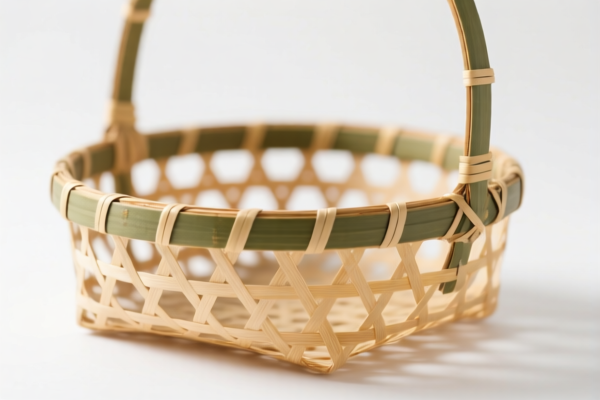
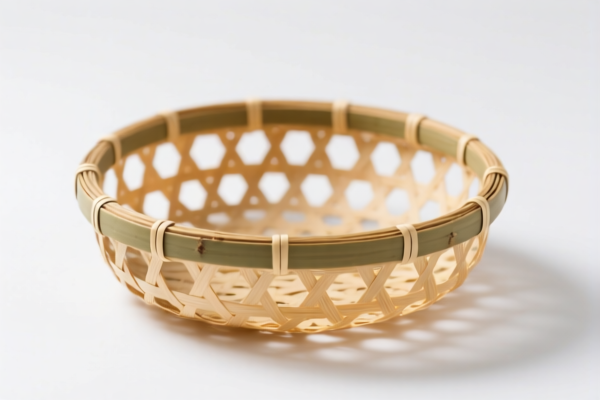
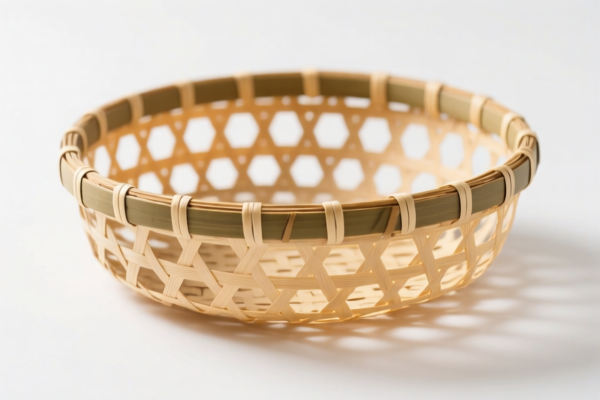
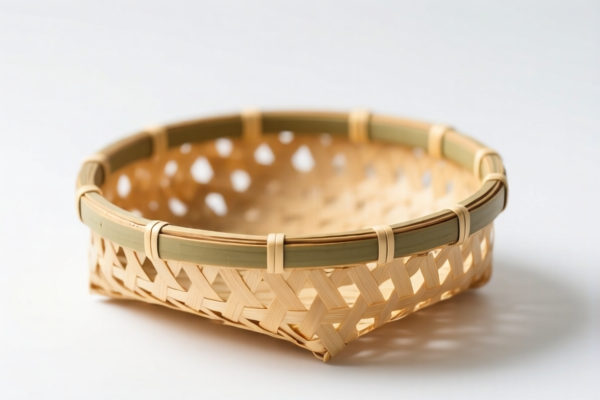
AI Analysis
🧺 Bamboo & Rattan Baskets (Woven Basketry Articles)
🌐 HS Code Reference & Customs Clearance Guide | 2026 Latest Tariff Analysis | Professional Entry Strategy
📌 1. Product Definition & Classification: Do You Really Know "Woven Baskets"?
Bamboo and rattan baskets, classified under Chapter 46 of the HS Nomenclature, are handcrafted or machine-made articles constructed from vegetable plaiting materials. In international trade, they are primarily categorized by material type (Bamboo vs. Rattan) and function (Storage/Decorative).
Key Distinction Criteria: * Bamboo (竹): Rigid, hollow stems of grasses in the Bambusoideae subfamily. Products include rigid baskets, trays, and boxes. * Rattan (藤): Flexible stems of climbing palms. Products include flexible baskets, mats, and woven containers. * Other Vegetable Fibers: Includes straw, willow, reed, etc.
⚠️ Critical Classification Rule:
- If made of Bamboo → Generally falls under 4602.11.xxxx
- If made of Rattan → Generally falls under 4602.12.xxxx
- If made of Other Plant Fibers (e.g., Willow, Straw) → Falls under 4602.11.09 or similar residual categories.
📦 2. HS Code Classification Details (2026 Latest Tariff对照)
Based on the provided <DATA>, here are the specific HS Codes, descriptions, and applicable scenarios:
| HS Code | Product Description (Summary) | Material | Form | Applicable Scenario |
|---|---|---|---|---|
4602.11.07.00 |
Woven baskets of bamboo, material: bamboo, form: basket | Bamboo | Basket | Standard bamboo woven baskets |
4602.12.16.00 |
Rattan baskets, material: rattan, form: basket | Rattan | Basket | Standard rattan woven baskets |
4602.11.09.00 |
Baskets of other vegetable plaiting materials, form: basket | Other Plant Fibers | Basket | Willow, reed, straw, or mixed non-bamboo/rattan fibers |
4602.11.07.00 |
Woven baskets of bamboo/willow/etc., form: basket | Bamboo/Willow | Basket | Bamboo or willow woven baskets (Note: Code same as pure bamboo in this dataset) |
4602.12.16.00 |
Rattan basketry articles, material: rattan, form: basket | Rattan | Basket | Rattan baskets (Duplicate entry for confirmation) |
🔍 Key Reminder:
- Bamboo (4602.11) and Rattan (4602.12) have different base tariffs. Misclassification can lead to significant duty differences. -4602.11.09.00is the catch-all for other plant materials. If your product uses willow, straw, or reed, do not use the bamboo code.
💰 3. 2026 Latest Tariff Rate Breakdown (Including Surcharges)
✅ Applicable Country: USA (US)
✅ Origin: China (CN)
✅ Effective Time: Current 2026 Tariff Structure (including Trade Act 301 & Section 122)
🎯 1. 4602.11.07.00 — Bamboo Woven Baskets
| Item | Content |
|---|---|
| Base MFN Rate | 0.0% (Most Favored Nation) |
| Section 301 Surcharge | +25.0% (USITC Footnote 9903.88.01 / Trade Act 301) |
| Section 122 Surcharge | +10.0% (Specific to certain textile/plastic/bamboo articles under current enforcement) |
| Total Effective Rate | 35.0% |
| Tax Calculation | CIF Value × 35% |
| De Minimis Exemption | ❌ Not Applicable (Deny de minimis for Section 301/122 goods) |
| Legal Basis Path | 301:4602.11.07.00 → Section 122:4602.11.07.00 |
📌 Explanation:
- Although the base duty is 0%, the Section 301 tariff (25%) and Section 122 tariff (10%) significantly increase the cost. - Total 35% is applied on the declared value (CIF). - Do not assume "low base duty" means low total cost. The surcharges are additive.
🎯 2. 4602.12.16.00 — Rattan Woven Baskets
| Item | Content |
|---|---|
| Base MFN Rate | 5.0% |
| Section 301 Surcharge | +25.0% |
| Section 122 Surcharge | +10.0% |
| Total Effective Rate | 40.0% |
| Tax Calculation | CIF Value × 40% |
| De Minimis Exemption | ❌ Not Applicable |
| Legal Basis Path | 301:4602.12.16.00 → Section 122:4602.12.16.00 |
📌 Note:
- Rattan baskets have a 5% base duty, which is higher than bamboo’s 0%. - Total 40% makes rattan baskets 5% more expensive in duties than bamboo baskets. - Ensure accurate material identification; mislabeling rattan as bamboo could result in penalties for undervaluation of duties.
🎯 3. 4602.11.09.00 — Other Vegetable Fiber Baskets (e.g., Willow/Straw)
| Item | Content |
|---|---|
| Base MFN Rate | 10.0% |
| Section 301 Surcharge | +25.0% |
| Section 122 Surcharge | +10.0% |
| Total Effective Rate | 45.0% |
| Tax Calculation | CIF Value × 45% |
| De Minimis Exemption | ❌ Not Applicable |
| Legal Basis Path | 301:4602.11.09.00 → Section 122:4602.11.09.00 |
📌 Warning:
- This is the highest tax bracket among the listed items. - Many "eco-friendly" baskets made of straw, seagrass, or willow fall here. - Do not misclassify these as bamboo (4602.11.07) to save 10%; customs audits are strict on material composition.
🛠️ 4. Customs Clearance Practical Advice (Pitfall Avoidance Guide)
✅ 1. Required Documentation Checklist
| Document | Mandatory? | Description |
|---|---|---|
| ✅ Product Specification Sheet | ✔️ | Must specify material (Bamboo, Rattan, Willow, etc.) and weaving technique. |
| ✅ Material Composition Statement | ✔️ | Detailed % of each plant fiber if mixed. |
| ✅ Commercial Invoice | ✔️ | Must explicitly state "Bamboo/Rattan Woven Basket" and HS Code. |
| ✅ Packing List | ✔️ | Clear description of contents; avoid vague terms like "Home Decor." |
| ✅ Photos of Product & Label | ✔️ | Show texture, handle, and any material tags. |
| ✅ Origin Certificate (if applicable) | ✔️ | Proves Chinese origin; essential for determining surcharge applicability. |
✅ 2. Declaration Tips (Key Mantras)
🔥 "Material First, Code Second, Description Accurate, Tax Avoided!"
| Scenario | Correct Declaration | Incorrect Practice |
|---|---|---|
| Bamboo Basket | 4602.11.07.00 |
Using 4602.12.16.00 (Rattan) → Overpayment |
| Rattan Basket | 4602.12.16.00 |
Using 4602.11.07.00 (Bamboo) → Underpayment & Penalty |
| Willow/Straw Basket | 4602.11.09.00 |
Using 4602.11.07.00 (Bamboo) → Customs Audit & Back Taxes |
| Mixed Material Basket | Declare dominant material + % | Vague description "Woven Basket" → Customs Rejection |
✅ 3. Special Cases Handling
| Situation | Handling Advice |
|---|---|
| Mixed Materials (e.g., Bamboo + Cotton Handle) | If bamboo is the primary material (>50%), use 4602.11.07.00. |
| Painted/Lacquered Baskets | Still classified under Chapter 46 if the weaving is the essential character. Do not misclassify as furniture (Chapter 94). |
| Gift Sets (Basket + Contents) | If the basket is essential for display, the entire set may be classified under the basket code. |
| Drop Shipping/De Minimis | ❌ High Risk. Section 301 and 122 surcharges generally cannot be waived under de minimis ($800) if specifically excluded. Check current CBP exemptions. |
🌍 5. Global Market Clearance Comparison (2026 Latest)
| Country/Region | Recommended HS Code | Base Tariff | Total Effective Tariff (CN Origin) | Notes |
|---|---|---|---|---|
| 🇺🇸 USA | 4602.11.07.00 (Bamboo) |
0% + 25% + 10% = 35% | High | Strict material verification |
| 🇺🇸 USA | 4602.12.16.00 (Rattan) |
5% + 25% + 10% = 40% | Very High | Rattan is more expensive |
| 🇺🇸 USA | 4602.11.09.00 (Other) |
10% + 25% + 10% = 45% | Highest | Straw/Willow faces highest duty |
| 🇪🇺 EU | 4602.11 / 4602.12 |
0% - 5% | 0% - 5% | No Section 301/122 equivalents |
| 🇨🇳 China | 4602.11 / 4602.12 |
0% - 10% | 0% - 10% | Low import duties |
| 🇯🇵 Japan | 4602.11 / 4602.12 |
0% - 5% | 0% - 5% | Generally low tariffs |
📌 Conclusion:
- USA is the most expensive market due to Section 301 (25%) and Section 122 (10%) surcharges. - EU and Asia offer significantly lower duties. Consider supply chain diversification if targeting the US market.
📌 6. Common Mistakes & Pitfalls (Lessons Learned)
❌ Mistake 1: Labeling "Willow Basket" as "Bamboo Basket"
👉 Consequence: Customs inspection finds different material → Back taxes (45% - 35% = 10% penalty) + Fines.
❌ Mistake 2: Assuming "Woven Basket" is one HS Code
👉 Consequence: Misclassification → Delay in clearance + Storage fees.
❌ Mistake 3: Ignoring Section 122 Tariff
👉 Consequence: Under-declaring value → Seizure of goods.
❌ Mistake 4: Using De Minimis for Large Shipments
👉 Consequence: CBP scrutinizes high-value or restricted items → Detention and audit.
✅ Correct Approach:
"Bamboo Woven Storage Basket, Handmade, Natural Finish, Model XYZ, HS Code 4602.11.07.00"
🎯 7. Conclusion: Precise Classification Saves Money!
🎯 Remember:
🔹 "Bamboo is 35%, Rattan is 40%, Other Fibers are 45%. Don't Guess, Verify!"
🔹 "Base Duty is Not the Whole Story. Surcharges Add 35-45%!"
📌 Pro Tip:
If your baskets are made in Vietnam, Indonesia, or Thailand, they may qualify for lower or no Section 301 surcharges.
- Recommendation: Conduct a supply chain review. If possible, source from non-China origins to reduce tax burden by up to 25-35%.
- Action: Apply for a Pre-Ruling from CBP if your product is complex or mixed-material.
📣 Immediate Action:
📞 Contact your customs broker with photos and material specs.
🚀 Optimize your HS Code to avoid overpayment or underpayment penalties.
✨ Professional Clearance Starts with Accurate Classification!
💼 Every Dollar Saved in Tariffs is Pure Profit!
Customer Reviews
About HS Code Classification
The Harmonized System (HS) is an internationally standardized nomenclature developed by the World Customs Organization (WCO) to classify traded products. Over 200 countries use the HS system as the basis for customs tariffs, trade statistics, and import/export regulations.
Each HS code follows a hierarchical structure:
- Chapter (2 digits) — Broad category of goods (e.g., Chapter 84: Machinery and Mechanical Appliances)
- Heading (4 digits) — More specific grouping within the chapter
- Subheading (6 digits) — Internationally standardized breakdown, used by all WCO member countries
- National subdivisions (8-10 digits) — Country-specific extensions for further classification, such as US HTSUS 10-digit codes
Correct HS code classification is essential for smooth customs clearance, accurate duty payment, and compliance with trade regulations. Misclassification can lead to customs delays, overpayment of duties, or penalties.
When importing from CN to US, the applicable tariff rates may include:
- Most-Favored-Nation (MFN) rate — The standard duty rate applied to WTO members
- General rate — Applied to countries without trade agreements
- Trade remedy duties — Additional tariffs such as Section 301 (anti-dumping), Section 232 (national security), or countervailing duties
The information provided on this page is for reference purposes only. For official classification, please consult with your local customs authority or a licensed customs broker.